Where to Stay & What to Eat in Cappadocia
Where to Stay and What to Eat in Cappadocia
Choosing where to stay in Cappadocia affects much more than the view from the room. Hotel location influences balloon mornings, restaurant access, tour pickups, evening transportation and the amount of walking required each day. Göreme, Uçhisar, Ürgüp, Avanos, Ortahisar and Çavuşin each offer a different balance of convenience, scenery and quiet.
Food planning also deserves attention. Cappadocia is known for pottery kebab, regional oven dishes, grape products, local wines and long breakfasts, but the quality of the experience depends on preparation time, restaurant location and the rhythm of the day.
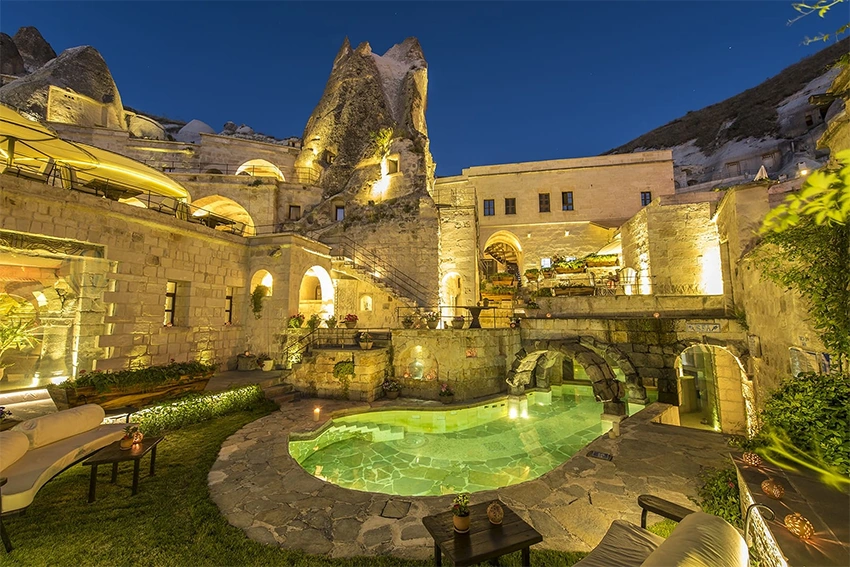
1. Where to Stay in Cappadocia
The best area to stay in Cappadocia depends on whether you value walking access, balloon views, a quiet cave hotel, restaurants, wine culture or easy road connections. The region is not one compact town, and changing areas every evening usually creates more inconvenience than benefit.
Göreme: practical for a first visit
Göreme is the most convenient base for many first-time travelers. Restaurants, tour offices, cave hotels and several sunrise terraces are concentrated within a relatively small area. It is also one of the easier towns for visitors traveling without a rental car.
The trade-off is activity. Central streets can feel busy in high season, and some hotels are reached by steep lanes or steps. A property described as central may still sit above the town, so check the walking route rather than relying only on the map distance.
Uçhisar: views, quiet and boutique hotels
Uçhisar sits above the central valleys and offers broad views toward Göreme and the surrounding ridges. It suits couples, honeymoon travelers and guests who prefer a quieter hotel environment.
The balloon view is generally wider and more distant than in central Göreme. Restaurant choice is smaller, and late evening walks may involve slopes. A private transfer or taxi plan is useful when dinner is booked in another town.
Ürgüp: restaurants, stone mansions and wine
Ürgüp has a more settled town atmosphere, with boutique hotels, restored stone houses, restaurants and wine cellars. It is a useful base for travelers who want evenings outside the hotel and easier access toward Mustafapaşa and the southern villages.
Related Tours
Popular experiences for this destination
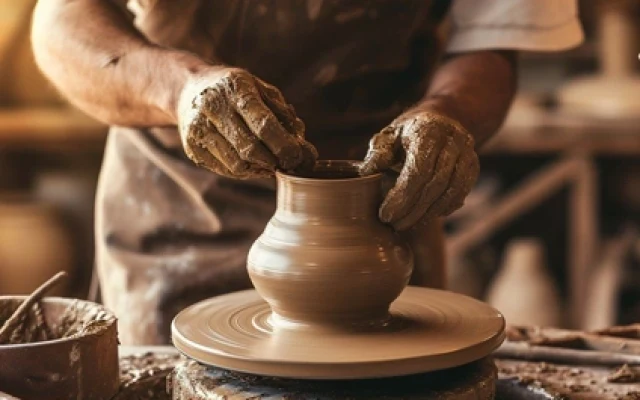
Pottery Workshop Cappadocia
Learn the ancient art of pottery from Avanos masters, try shaping clay…
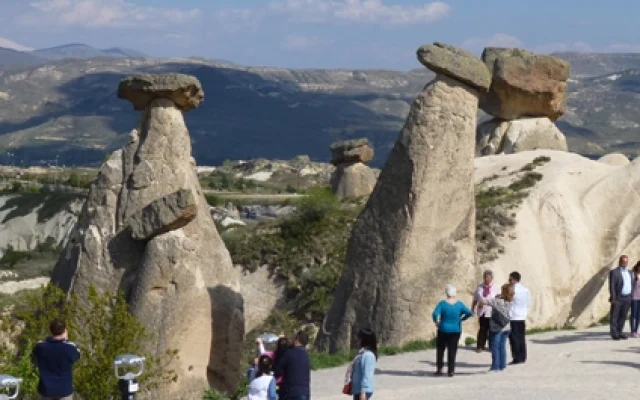 Red Tour
Red Tour Cappadocia
Discover Göreme Open-Air Museum, Avanos pottery workshops, and breatht…
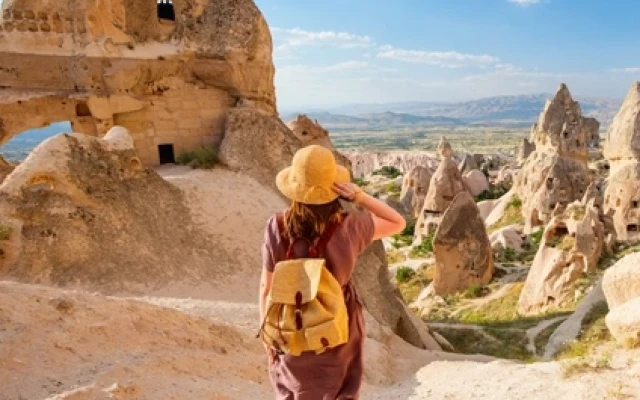 Adventure
Trekking Tours Cappadocia
Hike Cappadocia’s spectacular valleys, fairy chimneys, and cave dwelli…
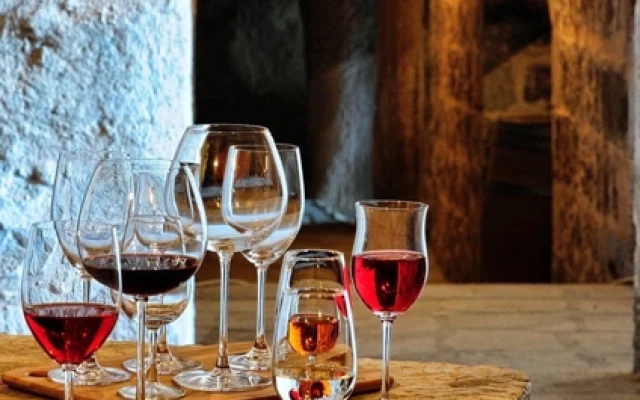
Wine Tasting Tour Cappadocia
Taste Cappadocia’s finest local wines in ancient vineyards and wine ho…
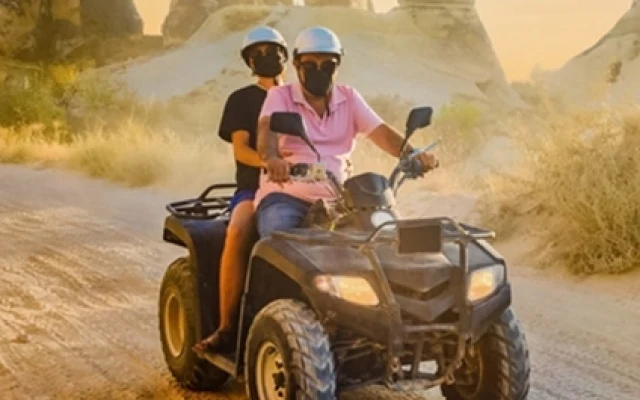 Adventure
ATV Tour Cappadocia
Ride powerful ATVs through Cappadocia’s unique valleys, fairy chimneys…
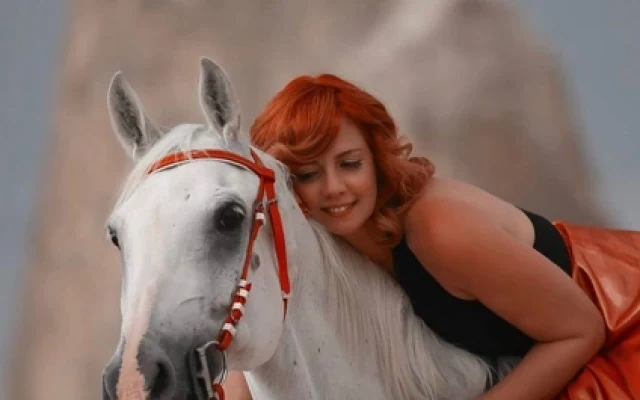 Adventure
Horseback Riding Tour Cappadocia
Experience Cappadocia on horseback, riding through valleys, hidden tra…
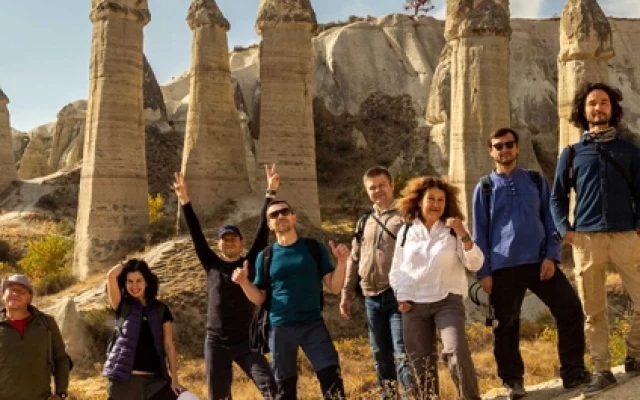
Vip Mix Tour Cappadocia
Experience the ultimate Cappadocia highlights in comfort-historic vall…
 Balloon
Cappadocia Hot Air Balloon Tour
See Cappadocia from the air at sunrise on a professionally operated ho…
Professional Photo Shoot Cappadocia
Capture your Cappadocia moments with a guided professional photo shoot…
 Balloon
Balloon Watching Tour Cappadocia
Watch the magical sight of hundreds of hot air balloons rising at sunr…
 Green Tour
Green Tour Cappadocia
Explore Derinkuyu underground city, the beautiful Ihlara Valley, and S…
Turkish Night Show Cappadocia
Enjoy a traditional Turkish dinner with live music, folk dances, and w…
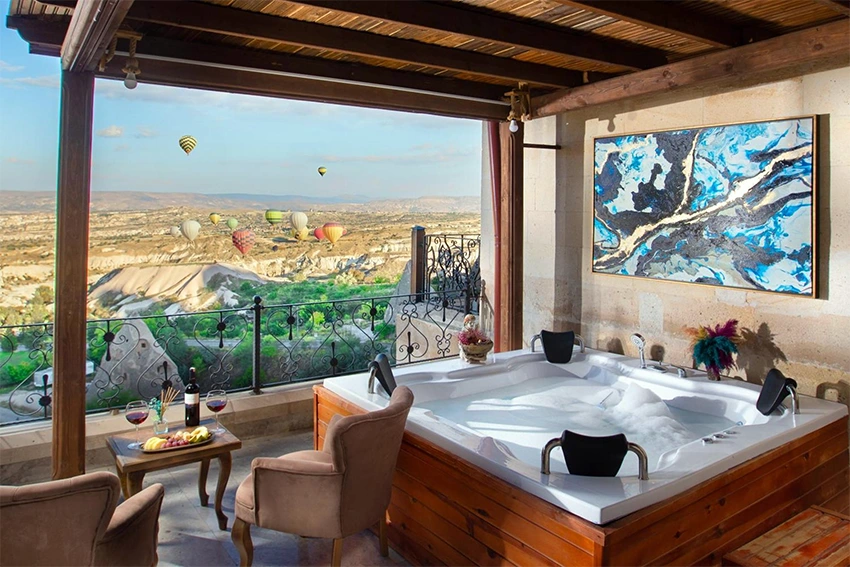
Balloon views vary more by hotel location, so a strong room or terrace photograph should not be treated as a daily guarantee.
Avanos, Ortahisar and Çavuşin
- Avanos: suitable for pottery, riverside walks and a flatter town layout. It is calmer than Göreme and works well with arranged transportation.
- Ortahisar: a quieter village setting with boutique stone hotels and road access toward both Ürgüp and the central valleys.
- Çavuşin: useful for nearby valley walks and old rock-cut settlement areas, with fewer evening services than the larger towns.
Hotel styles and price levels
| Hotel style | Common areas | What to check |
|---|---|---|
| Luxury cave or stone suites | Uçhisar, Göreme, Ürgüp | Suite location, terrace privacy, stairs, pool or jacuzzi conditions and vehicle access. |
| Mid-range boutique hotels | Göreme, Ürgüp, Avanos, Ortahisar | Room construction, breakfast, heating, ventilation and distance from the town center. |
| Guesthouses and pensions | Göreme, Ortahisar, Çavuşin, Avanos | Bathroom type, sound insulation, luggage access and whether reception operates late. |
2. What to Check Before Booking a Cave Hotel
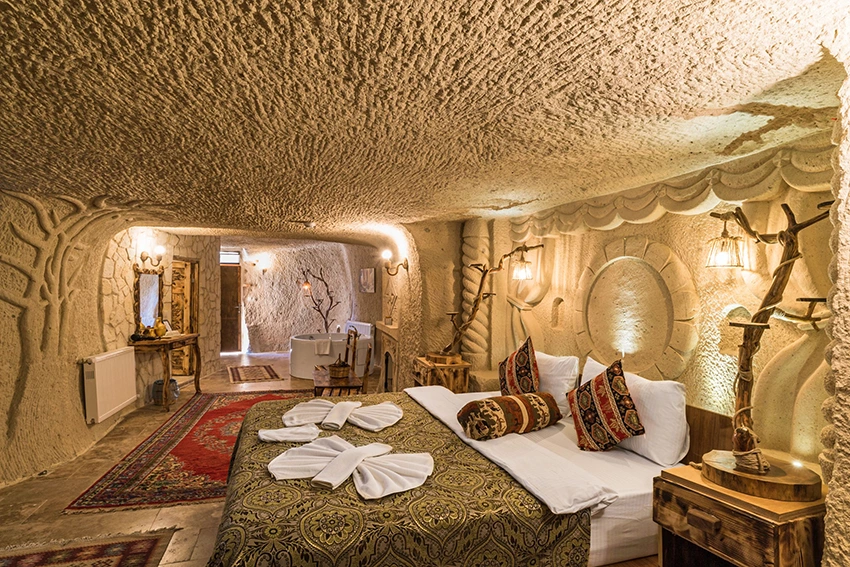
Cave hotels in Cappadocia range from restored historic rooms to modern stone buildings designed in a regional style. Neither type is automatically better. Comfort depends on the individual room and the quality of the restoration.
- Room construction: ask whether the room is carved into rock, built from stone or combines both.
- Ventilation and humidity: true cave rooms may need mechanical ventilation, heating or dehumidification.
- Natural light: some rooms have small windows or no direct exterior window.
- Stairs: terraces and upper rooms may require several flights of uneven steps.
- Vehicle access: old streets can be narrow, and the transfer vehicle may not stop directly at reception.
- Terrace use: confirm whether the terrace is private, shared and open before sunrise.
- Balloon direction: balloon routes change with the wind, so no hotel can guarantee the same view every morning.
The Cappadocia trip planning guide explains how hotel location should be coordinated with transfers, tours and balloon timing.
3. What to Eat in Cappadocia
Cappadocia food reflects Central Anatolian home cooking, winter storage traditions, local grains, vineyards and the pottery culture of Avanos. Many dishes are slow-cooked, filling and better suited to an unhurried lunch or dinner than a short stop between tours.
Pottery kebab
Pottery kebab, or testi kebabı, is the region’s best-known dish. Meat and vegetables are sealed inside a clay pot and cooked until tender before the pot is opened for service.
A traditional version needs preparation time. Restaurants serving it immediately may use a pot prepared earlier and reheated or finished for service. This is not necessarily poor quality, but travelers looking for a freshly prepared dish should order in advance and ask about the cooking method.
Nevşehir tava
Nevşehir tava is an oven-baked combination of meat, peppers, tomatoes, garlic and seasoning. It is served hot from a tray and works well after a long sightseeing day.
Ürgüp köfte
Ürgüp köfte combines minced meat with grated potato. The potato changes the texture and makes it distinct from a standard grilled meatball.
Related Tours
Popular experiences for this destination
Pottery Workshop Cappadocia
Learn the ancient art of pottery from Avanos masters, try shaping clay…
Red TourRed Tour Cappadocia
Discover Göreme Open-Air Museum, Avanos pottery workshops, and breatht…
AdventureTrekking Tours Cappadocia
Hike Cappadocia’s spectacular valleys, fairy chimneys, and cave dwelli…
Wine Tasting Tour Cappadocia
Taste Cappadocia’s finest local wines in ancient vineyards and wine ho…
AdventureATV Tour Cappadocia
Ride powerful ATVs through Cappadocia’s unique valleys, fairy chimneys…
AdventureHorseback Riding Tour Cappadocia
Experience Cappadocia on horseback, riding through valleys, hidden tra…
Vip Mix Tour Cappadocia
Experience the ultimate Cappadocia highlights in comfort-historic vall…
BalloonCappadocia Hot Air Balloon Tour
See Cappadocia from the air at sunrise on a professionally operated ho…
Professional Photo Shoot Cappadocia
Capture your Cappadocia moments with a guided professional photo shoot…
BalloonBalloon Watching Tour Cappadocia
Watch the magical sight of hundreds of hot air balloons rising at sunr…
Green TourGreen Tour Cappadocia
Explore Derinkuyu underground city, the beautiful Ihlara Valley, and S…
Turkish Night Show Cappadocia
Enjoy a traditional Turkish dinner with live music, folk dances, and w…
Clay-pot beans and regional home cooking
Beans cooked in earthenware, soups, stuffed vegetables, bulgur dishes and seasonal stews are common examples of local comfort food. Family-run restaurants may offer fewer menu choices but more traditional daily cooking.
Local sweets and grape products
Aside, dolaz, köftür and grape molasses reflect the region’s vineyard and winter-preservation traditions. These desserts are generally simple, dense and based on flour, butter, nuts or grape products rather than elaborate pastry.
Vegetarian and vegan food
Vegetarian travelers can usually find lentil or bulgur soups, mezes, stuffed vine leaves, vegetable stews, salads and gözleme. Vegan travelers should ask specifically about butter, yogurt, cheese, meat stock and egg.
Göreme and Ürgüp generally offer the widest range of clearly labeled vegetarian and international options. Smaller villages may require more direct explanation.
4. Breakfast and International Dining
A long Turkish or Anatolian breakfast can include cheese, olives, tomatoes, cucumbers, eggs, bread, honey, molasses, jams and tea. It is enjoyable on a free morning but may be impractical immediately before a full-day tour departure.
The Anatolian breakfast guide explains typical ingredients and the difference between a hotel buffet and a prepared village-style table.
Göreme, Uçhisar and Ürgüp also have brasseries, Mediterranean restaurants, pizza, Asian-inspired food and Indian menus. These options are useful on longer stays or for travelers with dietary requirements.
- Choose a lighter lunch before hiking, ATV or horseback riding.
- Reserve terrace tables when sunset timing matters.
- Confirm opening days outside the main travel season.
- Tell the restaurant about allergies before arrival rather than during service.
5. Cappadocia Wine Culture
Wine has a long history in Cappadocia. Volcanic soil, a dry climate and rock-cut storage spaces have supported vineyard and cellar traditions across the region.
Ürgüp and Uçhisar are commonly associated with cellar visits, while restaurants and tasting rooms in Göreme and Avanos may also offer regional wines. A visit should be arranged around transportation when several wines are included.
Grapes commonly encountered
- Emir: a white grape closely associated with Cappadocia, often producing fresh and mineral wines.
- Narince: a Turkish white variety used in balanced and aromatic styles.
- Kalecik Karası: a lighter red variety known for soft fruit character.
- Öküzgözü and Boğazkere: important red grapes from Türkiye that may appear in blends and fuller wines.
A cellar visit is most useful when it includes an explanation of the grapes, production and storage rather than only a quick tasting. The guide to Cappadocia wine cellars provides additional background.
Harvest-related dates and events vary each year. Confirm current schedules before organizing a trip around a festival or vineyard program.
6. A Practical Food Plan for One Day
| Time | Meal idea | Planning consideration |
|---|---|---|
| Morning | Hotel breakfast or a prepared Anatolian breakfast | Keep the timing short when a tour pickup follows. |
| Lunch | Soup, gözleme, mantı or a local daily plate | A lighter meal is easier before an active afternoon. |
| Afternoon | Coffee, tea, pumpkin seeds or a short wine tasting | Coordinate alcohol with transportation and sunset plans. |
| Dinner | Pottery kebab, Nevşehir tava or regional home cooking | Reserve slow-cooked dishes and popular terraces in advance. |
Edible souvenirs may include roasted pumpkin seeds, köftür, grape molasses and regional wine. Pottery from Avanos is not edible, but small functional pieces can connect the food experience with the town’s craft tradition. A hands-on Avanos pottery workshop should be booked separately from a short demonstration included in a tour.
7. Common Hotel and Dining Mistakes
- Booking a cave room without checking ventilation, humidity and stairs.
- Assuming every terrace has a close balloon view.
- Choosing a hotel far from evening plans without considering return transportation.
- Expecting freshly prepared pottery kebab without ordering ahead.
- Arriving at a popular sunset restaurant without a reservation.
- Scheduling a heavy lunch immediately before a valley or adventure activity.
- Planning a wine tasting without arranging a driver or return transfer.
- Relying on old menus, seasonal opening hours or outdated restaurant lists.
8. Matching the Hotel and Food Plan
The most convenient dining plan usually stays close to the day’s route. Göreme and Uçhisar work well after central sightseeing, Ürgüp fits routes toward Mustafapaşa, and Avanos is practical after pottery or northern Cappadocia.
Before confirming the hotel, check the evening transportation as carefully as the morning pickup. For a plan based on travel dates, hotel area, dietary needs and restaurant priorities, send the details through the contact page.