Göreme Open-Air Museum
Göreme Open-Air Museum Guide: Rock-Cut Churches and Byzantine Frescoes
Just outside Göreme, the Göreme Open-Air Museum preserves a concentrated group of rock-cut churches, chapels, monastic rooms and communal spaces. It is the clearest place in central Cappadocia to examine how Byzantine religious communities adapted the region's volcanic rock for worship, daily activity and painted decoration.
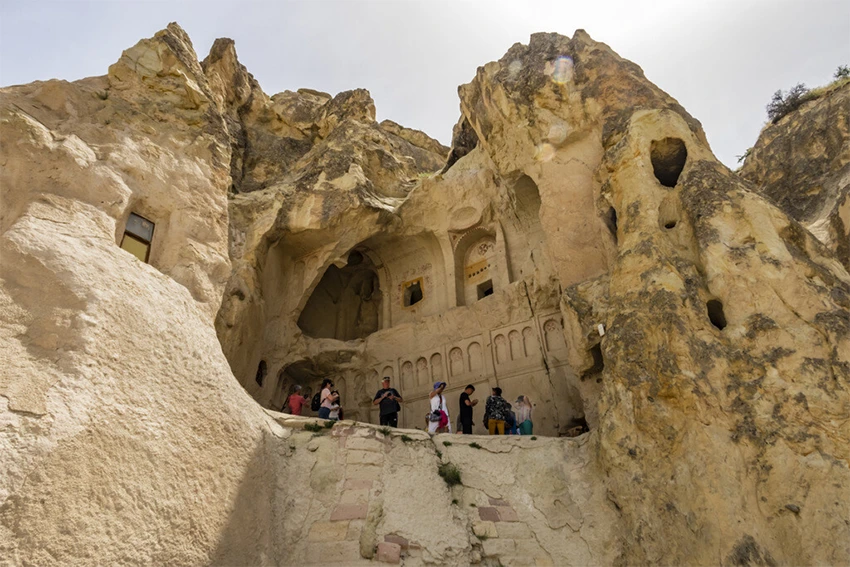
From the entrance, the site may first appear to be a compact group of caves and eroded rock formations. The interiors reveal a deliberate architectural order. Churches were planned around worship, painted scenes followed a religious hierarchy, and nearby rooms supported food preparation, storage and communal life.
The museum forms part of Göreme National Park and the Rock Sites of Cappadocia, inscribed on the UNESCO World Heritage List in 1985. The designation covers a wider cultural landscape in which natural erosion and long-term human settlement produced rock-cut homes, churches, monasteries and underground spaces.
The strongest first visit combines three levels of observation: the wider rock landscape, the carved architecture and the painted interiors. Rushing directly from one church door to the next makes the monuments feel repetitive, while a slower route shows how differently each community used the same geological material.
Early Monastic Life in Cappadocia
The first signs of organized monastic activity in Cappadocia are generally associated with the 4th century. Small anchorite communities lived in rock-cut cells and followed religious traditions connected with Basil the Great, Bishop of Caesarea, present-day Kayseri.
Basil's teachings emphasized prayer, work, discipline and responsibility toward the wider community rather than permanent isolation alone. Monastic life in Cappadocia developed in several forms, from individual cells to organized groups sharing worship spaces and areas used for everyday tasks.
Over time, these communities created churches, chapels, kitchens, refectories, storage areas and living quarters. Builders worked inward by removing volcanic rock, so rooms, vaults and architectural details were shaped from the same mass rather than assembled with conventional walls and roofs.
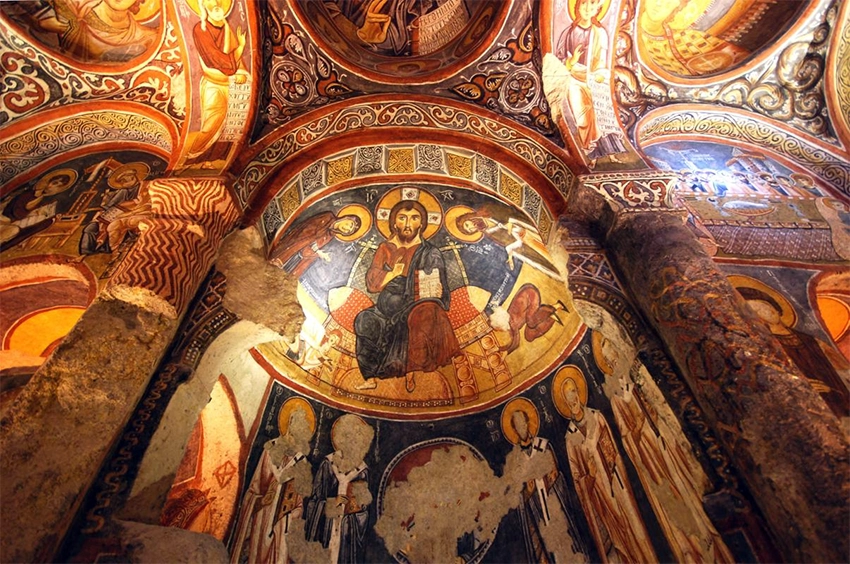
This method explains the unusual character of Cappadocian rock-cut architecture. Columns, arches, domes and vaults often imitate features used in masonry churches, although inside solid rock they did not always serve the same structural purpose.
During the Iconoclastic period, conventionally dated from 725 to 842, decoration in many Cappadocian sanctuaries remained restrained. Carved or painted crosses, geometric forms and other symbols commonly replaced extensive narrative imagery.
After 842, figurative painting expanded across the region. Church interiors were covered with images of Christ, the Virgin Mary, apostles, prophets and saints, together with narrative scenes from the Bible.
This historical background is explored further in the guide to Christianity in Cappadocia.
Main Churches Inside and Around the Museum
The churches of Göreme Open-Air Museum were not carved at the same time or decorated by one workshop. Their plans, colors and painting programs preserve different stages of Byzantine religious and artistic life.
Related Tours
Popular experiences for this destination
 Red Tour
Red Tour Cappadocia
Discover Göreme Open-Air Museum, Avanos pottery workshops, and breatht…
 Adventure
Trekking Tours Cappadocia
Hike Cappadocia’s spectacular valleys, fairy chimneys, and cave dwelli…
 Adventure
ATV Tour Cappadocia
Ride powerful ATVs through Cappadocia’s unique valleys, fairy chimneys…
 Adventure
Horseback Riding Tour Cappadocia
Experience Cappadocia on horseback, riding through valleys, hidden tra…
Pottery Workshop Cappadocia
Learn the ancient art of pottery from Avanos masters, try shaping clay…
Vip Mix Tour Cappadocia
Experience the ultimate Cappadocia highlights in comfort-historic vall…
 Blue Tour
Blue Tour Cappadocia
Explore hidden valleys, ancient churches, and cultural gems on Cappado…
 Green Tour
Green Tour Cappadocia
Explore Derinkuyu underground city, the beautiful Ihlara Valley, and S…

Cappadocia Rent A Car
Explore Cappadocia freely at your own pace with flexible car rental op…
 Balloon
Cappadocia Hot Air Balloon Tour
See Cappadocia from the air at sunrise on a professionally operated ho…
Turkish Night Show Cappadocia
Enjoy a traditional Turkish dinner with live music, folk dances, and w…
Professional Photo Shoot Cappadocia
Capture your Cappadocia moments with a guided professional photo shoot…
- Tokalı Church: A large, multi-part church whose painted cycles follow the life of Christ across long narrative bands. Its scale, blue backgrounds and dense 10th-century program distinguish it from the smaller churches inside the main museum enclosure.
- Dark Church: Known for deep colors and a carefully arranged painting cycle. Limited daylight reduced long-term exposure, helping scenes such as the Crucifixion, Baptism, Transfiguration and Last Supper retain stronger pigments than those in many other churches.
- Elmalı, Yılanlı and Çarıklı Churches: Three churches with different plans, groups of saints and biblical scenes. Comparing them side by side helps show how artists adapted a shared religious language to rooms of different size and shape.
- Chapel of Saint Basil: A small rock-cut chapel named for Basil the Great. Its compact plan and burial features make it useful for understanding how modest chapels functioned beside the larger painted churches.
- Saint Barbara Church: Recognizable by its red-painted crosses, geometric designs, symbolic figures and selected narrative scenes. Its decoration is especially useful for comparing symbolic painting with later, denser figurative programs.
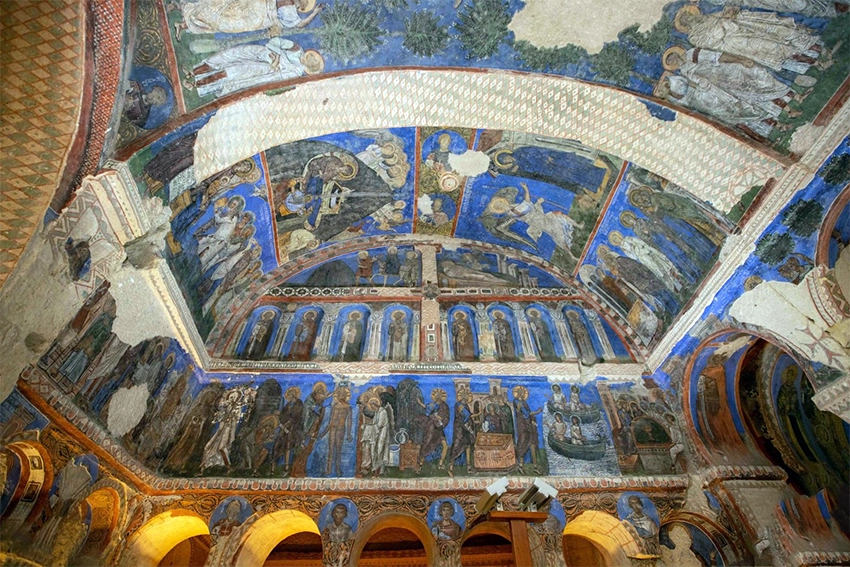
UNESCO identifies Tokalı Church and El Nazar Church as 10th-century examples. Saint Barbara Church and Hidden Church are associated with the 11th century, while Elmalı Church and Dark Church are generally dated to the end of the 12th century or the beginning of the 13th century.
These dates are not simply labels on separate monuments. They show that the Göreme complex preserves several phases of architectural planning, painting technique and religious practice rather than one single moment of construction.
Dark Church: Why the Colors Are Better Preserved
Dark Church, known in Turkish as Karanlık Kilise, receives only a limited amount of natural light. Lower exposure helped protect its painted surfaces, which is why the color appears noticeably stronger than in many more open churches.
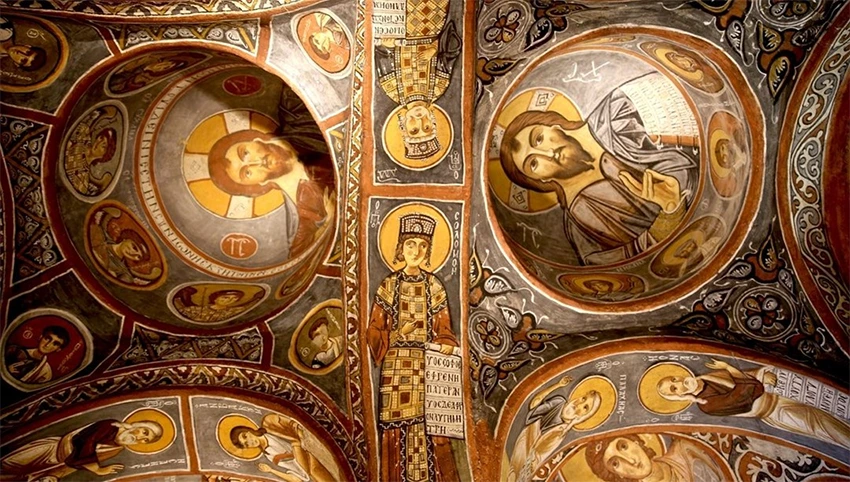
Blue, red and ochre tones remain visible across the upper walls and vaults. Rather than looking at one scene in isolation, follow the way the images continue across curved surfaces and respond to the shape of the church.
Ticket note: Dark Church commonly operates as a separately ticketed section within the museum. Check the current arrangement at the main desk before starting the route. The extra stop is most valuable for travelers who want to compare pigment preservation and painting layout, not simply add another church to the list.
The interior is small, and staff may limit entry when it becomes crowded. Waiting briefly can improve the visit because narrow sightlines make it difficult to follow the complete painting program when a large group fills the room.
Before entering, identify the apse and the main vault from the doorway. This gives the eye a clear route once inside and prevents the short visit from becoming a search for individual famous scenes.
Tokalı Church: The Major Monument Outside the Main Circuit
Tokalı Church, also called the Church of the Buckle, stands outside the main enclosed museum circuit. Visitors who follow only the central pathway can leave without realizing that one of the largest and most extensively painted monuments is still nearby.
Keep the main admission ticket until the Tokalı Church entrance has been checked. Access arrangements can change during restoration or operational updates, so confirm the current route before returning to Göreme.
The complex includes the Old Church, New Church, a side chapel and a lower section. Long narrative registers present episodes from the infancy, ministry, miracles and Passion of Christ, allowing the viewer to follow an extended sequence rather than isolated scenes.
The New Church is especially notable for its blue background and broad painted surfaces. Its scale changes the viewing experience: instead of examining a compact chapel scene by scene, the visitor is surrounded by a continuous visual narrative.
Because the Old and New Churches belong to different phases, Tokalı is also useful for comparing changes in composition and painting style within one connected monument. Look for the shift in scale and narrative organization rather than expecting every section to appear visually uniform.
How to Read the Frescoes
The paintings were not placed randomly to fill empty rock surfaces. Their position followed a visual order connected with worship, theology and the architecture of the church.
Specialist knowledge is not required to begin reading that order. Start with the highest part of the interior, then move gradually toward the sanctuary, narrative bands and lower walls.
- Look at the dome or highest vault: The uppermost space was normally reserved for figures connected with divine authority. Christ Pantocrator, meaning Christ as ruler of all, may occupy the dome, vault or another visually dominant position.
- Move toward the sanctuary and apse: The Virgin Mary, Christ, angels and scenes connected with the sacred function of the altar often appear in or near the apse.
- Follow the narrative scenes across the vaults: Episodes from the life of Christ may be arranged in sequence. The Annunciation, Nativity, Baptism, Transfiguration, Crucifixion, Anastasis and Ascension can form parts of a larger visual story.
- Examine the lower walls: Saints, bishops, Church Fathers, monks and martyrs often appear closer to eye level. Their placement created a symbolic community surrounding the people worshipping inside.
- Look for inscriptions and repeated figures: Greek inscriptions, names and abbreviations helped identify the people and scenes represented.
The same scene can look different from one church to another. Artists adjusted the number of figures, colors, gestures and surrounding details according to the available surface, workshop style and the wider decorative program.
In Tokalı Church, the story of Christ unfolds across long narrative bands. Dark Church organizes major scenes within a more compact interior. Saint Barbara Church combines crosses, geometric forms and simpler painted symbols with selected figurative images.
Once this hierarchy becomes visible, the interiors no longer appear to be isolated collections of old images. Architecture and painting begin to work together as a visual text.
Related Tours
Popular experiences for this destination
Red TourRed Tour Cappadocia
Discover Göreme Open-Air Museum, Avanos pottery workshops, and breatht…
AdventureTrekking Tours Cappadocia
Hike Cappadocia’s spectacular valleys, fairy chimneys, and cave dwelli…
AdventureATV Tour Cappadocia
Ride powerful ATVs through Cappadocia’s unique valleys, fairy chimneys…
AdventureHorseback Riding Tour Cappadocia
Experience Cappadocia on horseback, riding through valleys, hidden tra…
Pottery Workshop Cappadocia
Learn the ancient art of pottery from Avanos masters, try shaping clay…
Vip Mix Tour Cappadocia
Experience the ultimate Cappadocia highlights in comfort-historic vall…
Blue TourBlue Tour Cappadocia
Explore hidden valleys, ancient churches, and cultural gems on Cappado…
Green TourGreen Tour Cappadocia
Explore Derinkuyu underground city, the beautiful Ihlara Valley, and S…
Cappadocia Rent A Car
Explore Cappadocia freely at your own pace with flexible car rental op…
BalloonCappadocia Hot Air Balloon Tour
See Cappadocia from the air at sunrise on a professionally operated ho…
Turkish Night Show Cappadocia
Enjoy a traditional Turkish dinner with live music, folk dances, and w…
Professional Photo Shoot Cappadocia
Capture your Cappadocia moments with a guided professional photo shoot…
Scenes to Look For
Several biblical scenes appear repeatedly in the churches of Göreme, but their location and details vary.
- Baptism of Christ: Usually shows Christ standing in the River Jordan, accompanied by John the Baptist and angels.
- Transfiguration: Christ appears in radiant glory with selected disciples and Old Testament figures.
- Crucifixion: One of the central images of the Passion cycle, often placed in a visually important section of the church.
- Anastasis: Christ descends into the realm of the dead and raises Adam and Eve, representing victory over death.
- Ascension: Christ rises above the apostles, frequently with the Virgin Mary positioned among them.
- Hospitality of Abraham: Three angelic visitors seated at a table, traditionally interpreted in connection with the Holy Trinity.
- Last Supper: Christ and the apostles gathered around a table, often with details that vary between churches.
Do not worry if you cannot identify every figure. Even recognising the order of dome, apse, narrative vaults and lower saints will make the museum easier to understand.
Symbols from Early Christian Art
Before large narrative fresco cycles became widespread, Christian communities often used compact symbols to express beliefs in a form that could be recognized quickly.
The Chi-Rho combines the first two Greek letters of the word Christos. The Ichthys fish became an early reference to Christ, while the dove could represent peace or the Holy Spirit.
The anchor was associated with hope and spiritual security. Bread and wine referred to the Eucharist, one of the central elements of Christian worship.
These symbols belong to the wider language of early Christian art. They should not be expected in every church at Göreme, but recognising them helps visitors understand the development from simpler symbolic decoration to large figurative fresco cycles.
A Sensible Route Through the Museum
The museum is easier to understand when it is treated as a sequence rather than a race between church doors.
A practical route should also account for crowd direction. Small churches may develop a queue when several tour groups arrive together, so visiting the next open monument and returning later is often more efficient than waiting in a congested passage.
Begin with the smaller chapels and symbolic decoration, then continue toward churches with larger figurative programs. This order makes the shift in scale and visual complexity easier to recognize.
Allow extra time for Dark Church and the monuments with extensive narrative paintings. Reserve enough time and attention for Tokalı Church instead of treating it as an optional final stop.
Many visitors spend more time photographing the outdoor landscape than examining the interiors. The rock scenery provides the setting, but the painted churches are the main reason Göreme holds such an important place in Byzantine art history.
Visitor Information and Practical Advice
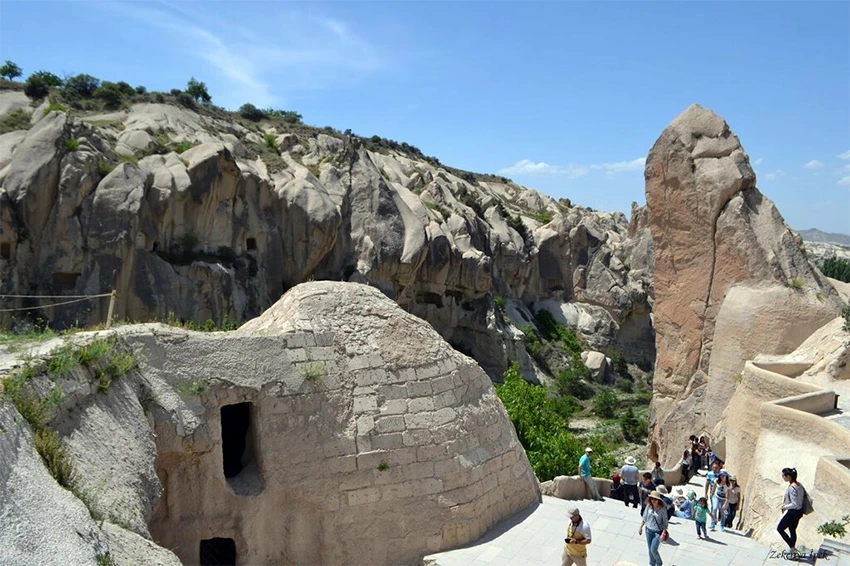
- Location: The museum is just outside central Göreme. Walking from town is possible, but the paved road climbs gradually and provides limited shade in hot weather. A taxi or organized tour is more comfortable during the hottest part of a summer day.
- Opening hours: Visiting hours can change with the season, public holidays, restoration work and official decisions. Check the current schedule before traveling.
- Admission: Ticket prices, Museum Pass conditions and separate church access rules may change. Ask specifically about Dark Church and keep the main ticket until Tokalı Church access has been confirmed.
- Time needed: Plan about two hours for a balanced first visit. Travelers examining the paintings carefully, using a guide or waiting for crowded interiors to clear may need longer, especially when Tokalı Church is included.
- Walking conditions: The museum contains carved steps, polished stone, narrow entrances and uneven slopes. Surfaces may become slippery after rain or snow, while repeated foot traffic can make interior steps smooth even in dry weather.
- Photography: Photography is restricted inside several painted churches. Follow the current signs and staff instructions rather than assuming that photography is allowed when the flash is turned off.
- Summer visits: Much of the outdoor route is exposed to direct sun. Early morning is generally more comfortable and gives visitors more room around small church entrances than the middle of the day.
- Winter visits: Snow changes the appearance of the museum landscape, but shaded steps and rock surfaces may remain icy after roads and open areas have started to clear.
- Inside the churches: Interiors can feel much cooler than the exposed outdoor path. Do not use painted or carved walls for balance, even in narrow spaces, because repeated contact damages vulnerable surfaces.
Visiting with Children or Limited Mobility
Families can visit the museum comfortably with realistic expectations. The route includes steps, narrow entrances and periods of waiting outside small interiors, so a stroller is not practical for every section.
Children should remain close to an adult around exposed rock edges and polished steps. A shorter route focused on several major churches often works better than trying to enter every available space.
The natural terrain and carved architecture make complete wheelchair access difficult. Travelers with limited mobility should confirm the current accessible route in advance, because several church interiors require steps or narrow entrances.
Visitors who cannot enter every church can still understand much of the site from the outdoor route, where monastery facades, carved openings and the relationship between the buildings and valley walls remain visible.
Visiting with a Guide
A licensed guide helps separate monuments that may appear similar from the outside and connects them within a clear historical sequence.
Useful interpretation goes beyond church names. It connects approximate dates, architectural plans, painting placement, biblical scenes and the likely functions of nearby monastic spaces.
Guidance is particularly valuable inside Tokalı Church and Dark Church, where the number of figures and scenes can feel overwhelming without a clear visual starting point.
The museum is commonly included in the Cappadocia Red Tour. Travelers who prefer a slower visit, need flexible timing or want to combine the museum with selected valleys and viewpoints can consider a private Cappadocia Mix Tour.
What to See Nearby
The museum can be combined with several important sites around central Cappadocia.
- Göreme: Explore the town center, cave architecture, viewpoints and nearby valley entrances before or after the museum.
- Zemi Valley: A nearby walking landscape with vegetation, rock-cut spaces and several possible routes. Confirm the intended entrance and exit before beginning a longer walk.
- Göreme Sunset Point: An elevated ridge above the town that works well as a separate sunrise or sunset stop.
- El Nazar Church: A separate 10th-century rock-cut church outside the enclosed museum route. Access can change, so check its current status before planning the walk.
- Hidden Church: Another painted monument associated with the wider Göreme landscape. It should be treated as a separate visit rather than assumed to be part of the museum ticket.
Why the Museum Matters in a Cappadocia Itinerary
Göreme Open-Air Museum preserves the relationship between faith, painting, architecture, communal life and Cappadocia's volcanic landscape within one walkable complex.
The churches show how builders created domes, vaults, columns and sanctuaries by carving inward. Their paintings reveal how Byzantine artists organized sacred stories across those surfaces and directed attention from the highest parts of the church toward the sanctuary and lower walls.
The visit becomes clearer once attention shifts from choosing the “best” church to noticing how each interior was designed to be read.
Dark Church demonstrates the effect of preserved color. Tokalı Church reveals the scale and ambition of Cappadocian narrative painting. Smaller chapels show how crosses, geometric forms and limited surfaces could carry complex religious meaning.
Together, these monuments preserve a direct connection between Cappadocia's physical landscape and the communities that transformed it into a center of Byzantine religious art.