Three Beauties
Three Beauties Cappadocia: Üç Güzeller Near Ürgüp
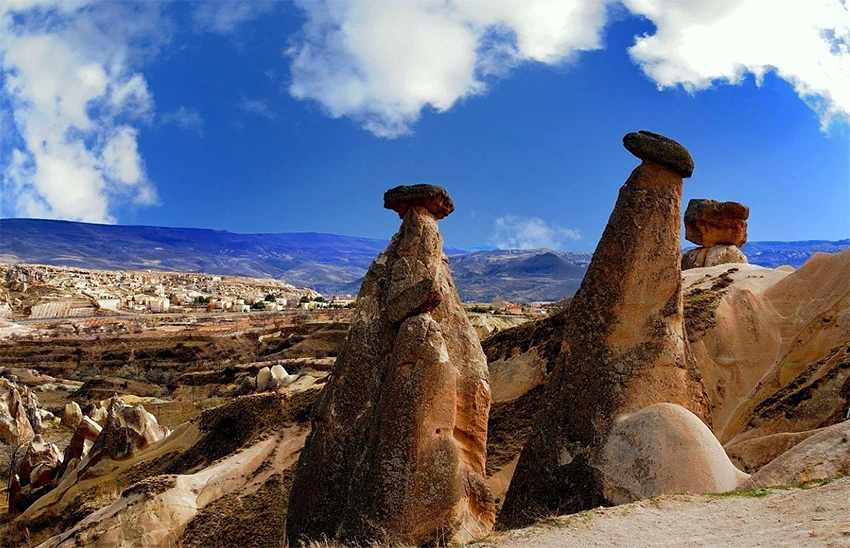
The Three Beauties, known in Turkish as Üç Güzeller, are three capped fairy chimneys near Ürgüp. Their clear silhouettes, visible contrast between the rock bodies and caps, and well-known family legend have made them one of the most recognizable landmarks in Cappadocia.
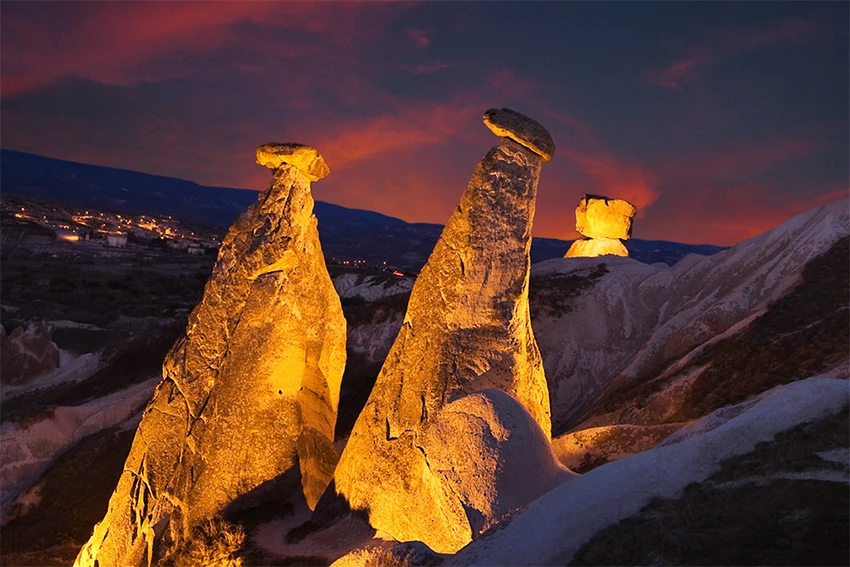
From the established viewpoint, the formations appear to stand together like a family. The two larger chimneys are commonly described as the mother and father, while the smaller formation between them represents their child.
Their shape is geological rather than human-made. Softer volcanic material has eroded more quickly than the resistant sections above it, leaving three columns protected by broader caps. Rainwater, surface runoff, fractures, temperature changes and gravity continue to alter the formations today.
The Three Beauties Cappadocia viewpoint is usually a short stop rather than a long walking destination. Even so, looking closely at the caps, vertical erosion lines and surrounding slope makes the visit more meaningful than taking one photograph and immediately leaving.
Why Are They Called the Three Beauties?
The name reflects the way the three formations appear together from the main observation area. Each chimney has a different outline, but their close arrangement creates one balanced composition.
Many visitors interpret the group as a mother, father and child. In the best-known local story, they represent a princess, a shepherd and their baby. The identity assigned to each formation can change slightly according to the storyteller or viewing angle.
The family image remains consistent. It gave the formations an emotional meaning beyond their geological form and helped establish them as a symbol of love, family and unity in the Ürgüp landscape.
Like many names attached to unusual rock formations, Üç Güzeller is shaped partly by what people see in the landscape. The arrangement is memorable because the eye naturally reads the three separate forms as one group.
The Legend of the Princess and the Shepherd
One widely told Cappadocian legend begins with a princess who falls in love with a shepherd. Her father, the king, refuses to accept the relationship because he does not consider the shepherd a suitable match for his daughter.
The couple leaves the palace and builds a life away from the royal family. They later have a child and live peacefully for a time, believing they have escaped the king's anger.
When the king eventually learns where they are, he sends men to capture or punish them. With nowhere left to run, the princess holds her child and prays for the family to be protected.
According to the legend, the prayer is answered when the family is transformed into stone. The three fairy chimneys are then identified as the princess, the shepherd and their child, standing together in the Cappadocia landscape.
This account belongs to oral tradition, not documented history. Different versions may change the details of the escape, the king's reaction or the moment of transformation.
The legend should therefore be understood as a cultural interpretation of the rocks rather than evidence of a historical event. Its purpose is not to explain the geology, but to give a human story to formations whose arrangement resembles a family.
How Were the Three Beauties Formed?
The Three Beauties developed through the same broad geological processes that formed the valleys and fairy chimneys across the Ürgüp and Göreme area.
Related Tours
Popular experiences for this destination
 Adventure
Trekking Tours Cappadocia
Hike Cappadocia’s spectacular valleys, fairy chimneys, and cave dwelli…
 Balloon
Balloon Watching Tour Cappadocia
Watch the magical sight of hundreds of hot air balloons rising at sunr…
 Adventure
ATV Tour Cappadocia
Ride powerful ATVs through Cappadocia’s unique valleys, fairy chimneys…
 Adventure
Horseback Riding Tour Cappadocia
Experience Cappadocia on horseback, riding through valleys, hidden tra…
Professional Photo Shoot Cappadocia
Capture your Cappadocia moments with a guided professional photo shoot…
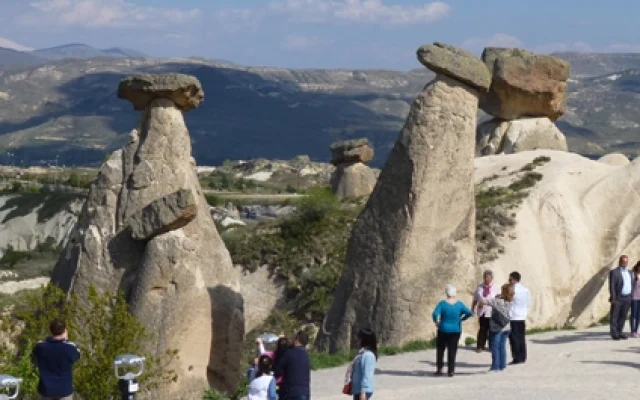 Red Tour
Red Tour Cappadocia
Discover Göreme Open-Air Museum, Avanos pottery workshops, and breatht…

Classic Car Tour Cappadocia
Step into nostalgia with a vintage classic car ride through Cappadocia…
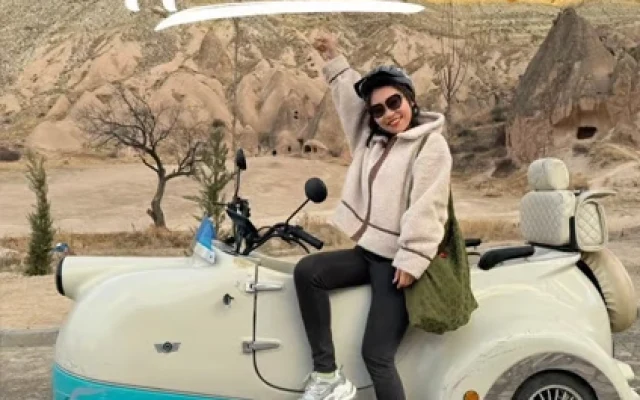
Nostalgic Electric Car Tour Cappadocia
Ride eco-friendly nostalgic electric cars through Cappadocia’s valleys…
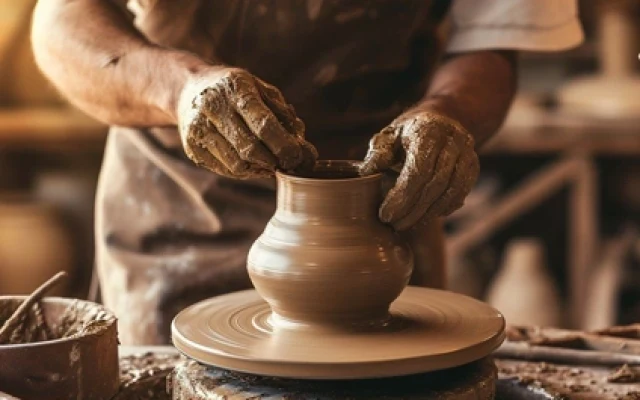
Pottery Workshop Cappadocia
Learn the ancient art of pottery from Avanos masters, try shaping clay…
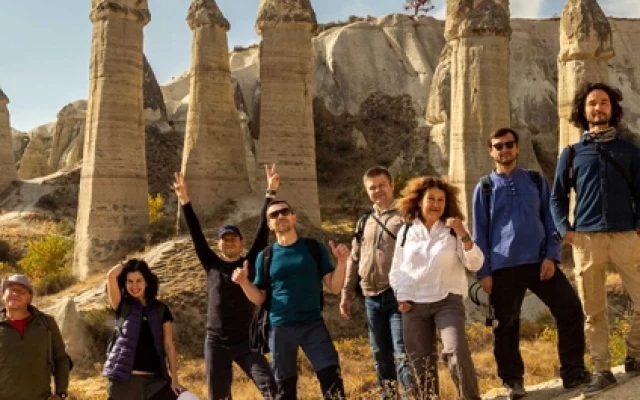
Vip Mix Tour Cappadocia
Experience the ultimate Cappadocia highlights in comfort-historic vall…
 Adventure
Jeep Safari Tour Cappadocia
Take an off-road jeep adventure across Cappadocia’s rugged landscapes,…
Carpet Weaving Experience Cappadocia
Discover the art of Turkish carpet weaving, learn traditional techniqu…
Repeated volcanic events deposited ash, pumice and other material across central Anatolia. These deposits later consolidated into several rock units, including ignimbrites with different thicknesses, textures and levels of resistance.
The volcanic layers did not erode at the same speed. Softer and less strongly welded material was removed more easily, while harder or more cohesive sections remained in place for longer.
Rainwater and concentrated surface runoff cut channels into the plateau and deepened the surrounding valleys. Natural fractures helped determine where larger rock masses separated into ridges, cones and individual columns.
Temperature changes, frost and gravity widened cracks and removed loose material. Wind contributed to surface weathering and carried away particles that had already broken free, but water and runoff played the central role in cutting the landscape.
The result is known as differential erosion. Rock with lower resistance disappears more quickly, while better-protected sections survive as isolated formations.
The complete guide to the formation of Cappadocia's fairy chimneys explains the volcanic layers, fractures, slopes and erosion processes in greater detail.
What Are the Protective Caps Made From?
A simplified explanation often describes every fairy chimney as a soft tuff column topped by basalt. Cappadocia's geology is more varied, and that description does not apply to every formation.
The region contains several volcanic and sedimentary units. Depending on the location, a cap may consist of a more resistant ignimbrite layer, cohesive volcanic material or a rock block that protected the surface beneath it while nearby material eroded.
The important factor is not one specific rock name. It is the contrast in resistance between the upper section and the material below it.
While the cap remains stable, it reduces the direct effect of rainfall and runoff on part of the column. The exposed areas around the formation continue to erode more quickly, gradually making the protected body stand out.
The cap does not stop erosion permanently. Water enters fractures, winter freezing expands cracks and gravity continues to act on the unsupported edges. If the cap breaks, shifts or falls, the newly exposed column normally wears away faster.
At the viewpoint, compare the wider upper sections with the narrower bodies below. Changes in color, texture and fracture pattern help show that the chimney is not one uniform piece of rock.
Why Do the Three Formations Look Different?
Although the Three Beauties stand close together, each has followed a slightly different erosion history. Small variations in rock structure, cap size, slope and water flow have produced separate outlines.
- The original thickness of the volcanic deposits
- The hardness and degree of welding within the rock
- Natural fractures and vertical joint patterns
- The size, weight and position of the protective cap
- The direction of rainfall and surface runoff
- The angle of the surrounding slope
- Freeze and thaw activity during colder periods
- Gravity and the loss of support around exposed sections
The two larger formations have broader bodies and more prominent caps. The smaller central chimney appears more delicate, which strengthens the impression of two adults standing beside a child.
Viewing the group from slightly different positions changes the relationship between the three forms. From one angle the smaller chimney appears centered, while from another it may overlap with one of the larger columns.
Are the Three Beauties Still Changing?
The Three Beauties may look permanent from the observation area, but they remain part of an active erosion system.
Rainwater enters small openings, frost widens fractures and gravity removes material that has lost support. Wind continues to weather exposed surfaces and move loose dust.
These changes are slow when measured against a human lifetime, but they do not stop. A cap may eventually become unstable, part of a column may collapse or the overall silhouette may narrow.
Natural erosion can also be accelerated by human contact. Climbing, scratching the rock, crossing barriers and walking over fragile slopes place additional pressure on surfaces that are already fractured.
The shapes visible now represent one stage in a process that began long before the formations received their modern name. They should be viewed as changing landforms, not permanent stone monuments.
Why Are the Three Beauties a Symbol of Ürgüp?
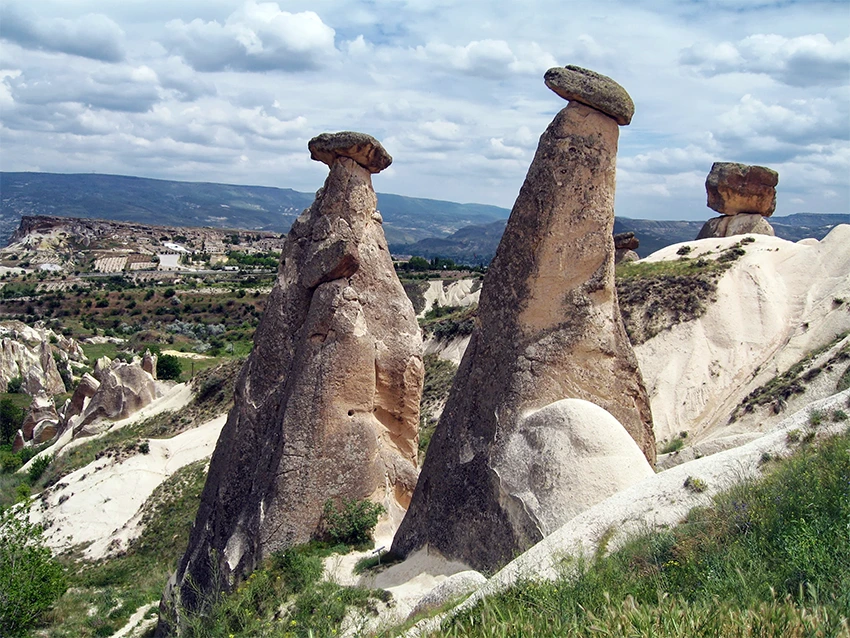
The Three Beauties are closely associated with Ürgüp because they bring several familiar elements of the region into one easily recognized view:
- Three clearly separated capped fairy chimneys
- A broad volcanic landscape around the formations
- A local legend that is easy to remember
- A silhouette that remains recognizable from a distance
- A symbolic connection with family and unity
The image appears frequently in local souvenirs, tourism material and photographs connected with Ürgüp. Its simple composition is easier to identify than a wide valley containing dozens of overlapping formations.
For travelers approaching the Ürgüp side of Cappadocia, the viewpoint may also be one of the first close examples of capped fairy chimneys seen along the route.
The landmark is useful as an introduction to the region because the geology is visible without a long hike. The protective caps, narrow bodies and surrounding eroded slope can all be studied from the observation area.
Are the Three Beauties Part of the UNESCO World Heritage Site?
The Three Beauties belong to the broader natural and cultural landscape of Cappadocia, but they are not listed as a separate component of the UNESCO World Heritage property.
The official property is called Göreme National Park and the Rock Sites of Cappadocia. It includes Göreme National Park, specifically identified rock sites, Soğanlı and the underground cities of Kaymaklı and Derinkuyu.
This distinction is useful because the phrase UNESCO Cappadocia is sometimes applied too broadly in tourism descriptions. A landmark can be important to the regional landscape without being an individually listed World Heritage component.
The Three Beauties remain significant because of their geological clarity, their relationship with Ürgüp and the local family legend attached to them.
Where Are the Three Beauties in Cappadocia?
The formations stand outside Ürgüp and are viewed from an established roadside observation area. Most visitors reach the site by car, taxi, private tour or an organized regional route.
The stop is commonly combined with Ürgüp, Devrent Valley, Paşabağ, Mustafapaşa and other attractions on the eastern side of central Cappadocia.
Walking from parts of Ürgüp may appear possible on a map, but the route should not be treated like a valley trail. Road traffic, limited pedestrian space, summer heat and winter conditions can make a vehicle the safer and more comfortable option.
Travelers relying on local minibuses should confirm the closest practical stop and the return arrangement before leaving Ürgüp. Local routes are designed primarily to connect settlements, not to provide frequent service directly to every viewpoint.
Drivers should slow down before approaching the observation area and follow current parking signs. Roadside arrangements and access points may be adjusted during busy periods.
How Much Time Do You Need at the Three Beauties?
The Three Beauties are normally visited as a viewpoint stop rather than a hiking destination. Around 20 to 30 minutes is usually enough to see the formations, compare the three profiles and take photographs from the established area.
A shorter stop may be sufficient on a guided regional tour. Travelers interested in photography or geology may prefer to remain longer and wait for fewer people or a change in light.
The site does not require the same time commitment as Paşabağ or Zelve, where visitors walk among larger groups of formations. Its value comes from the clarity of one compact composition.
Related Tours
Popular experiences for this destination
AdventureTrekking Tours Cappadocia
Hike Cappadocia’s spectacular valleys, fairy chimneys, and cave dwelli…
BalloonBalloon Watching Tour Cappadocia
Watch the magical sight of hundreds of hot air balloons rising at sunr…
AdventureATV Tour Cappadocia
Ride powerful ATVs through Cappadocia’s unique valleys, fairy chimneys…
AdventureHorseback Riding Tour Cappadocia
Experience Cappadocia on horseback, riding through valleys, hidden tra…
Professional Photo Shoot Cappadocia
Capture your Cappadocia moments with a guided professional photo shoot…
Red TourRed Tour Cappadocia
Discover Göreme Open-Air Museum, Avanos pottery workshops, and breatht…
Classic Car Tour Cappadocia
Step into nostalgia with a vintage classic car ride through Cappadocia…
Nostalgic Electric Car Tour Cappadocia
Ride eco-friendly nostalgic electric cars through Cappadocia’s valleys…
Pottery Workshop Cappadocia
Learn the ancient art of pottery from Avanos masters, try shaping clay…
Vip Mix Tour Cappadocia
Experience the ultimate Cappadocia highlights in comfort-historic vall…
AdventureJeep Safari Tour Cappadocia
Take an off-road jeep adventure across Cappadocia’s rugged landscapes,…
Carpet Weaving Experience Cappadocia
Discover the art of Turkish carpet weaving, learn traditional techniqu…
The stop combines efficiently with Ürgüp town, Devrent Valley, Paşabağ, Pancarlık Valley or Mustafapaşa.
Best Time to Visit the Three Beauties Cappadocia Viewpoint
Early Morning
Morning often brings softer light and fewer visitors. Low-angle sunlight can reveal texture in the caps and vertical erosion lines without producing the stronger contrast common around midday.
Early morning is also more comfortable during summer because the viewpoint is exposed and offers limited shade.
The sun's exact position changes with the season, so the same angle will not illuminate every face of the formations throughout the year.
Late Afternoon
Late afternoon light may give the pale rock warmer cream, gold and pink tones. Side shadows help separate the columns and make their individual outlines easier to read.
This period is useful for landscape photography, although the observation area may become busier as regional tours complete their routes.
Allow enough time to park safely and find a position without blocking the main viewing space. Moving a few steps often changes the overlap between the three chimneys more effectively than approaching the edge.
Midday
Midday provides clear visibility but usually produces flatter light. Pale volcanic rock and a bright sky can create strong highlights and reduce visible surface detail in photographs.
During summer, the exposed area can also become uncomfortable because there is little protection from direct sun.
Winter
Snow creates a clear contrast between the pale columns, darker caps and white ground. Winter light may also reveal the structure of the surrounding slope more clearly.
The viewing area can become icy, muddy or slippery. Wear shoes with reliable grip and avoid moving beyond recognized walking surfaces simply to find a different camera angle.
Photography Tips for the Three Beauties
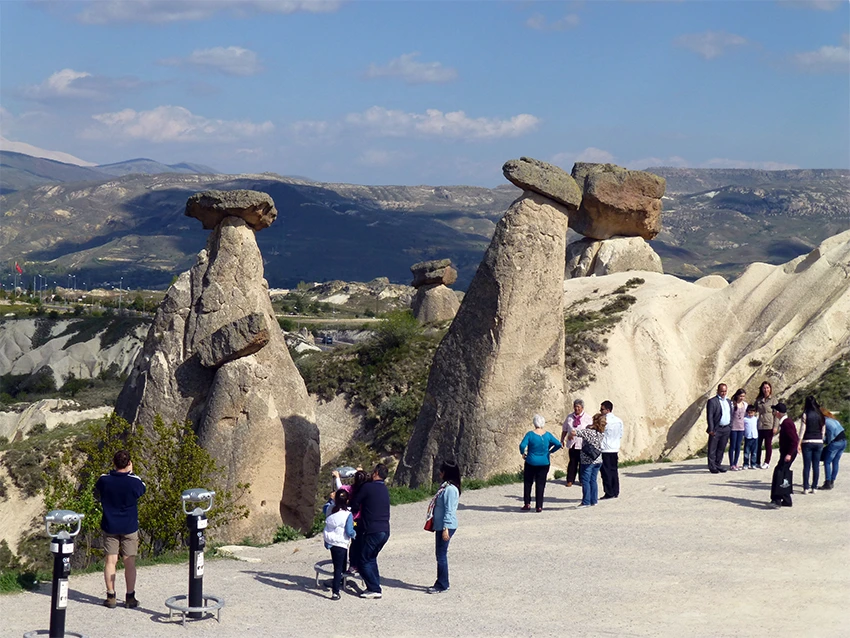
- Keep all three formations visible: Step back far enough to preserve the family-like composition.
- Include part of the landscape: A ridge, open sky and distant terrain give the formations geographical context.
- Change position before using zoom: A few steps to either side can reduce overlap and clarify the smaller central chimney.
- Use side light: Morning and late afternoon light reveal erosion lines, cap edges and changes in texture.
- Wait for a clear foreground: The viewpoint can become busy, but visitor movement often changes quickly.
- Protect the highlights: Pale rock and bright sky can become overexposed around midday.
- Use a wider frame: Tight portraits show the caps, while a wider photograph explains how the group sits within the Ürgüp landscape.
- Remain inside the safe viewing area: No photograph justifies crossing barriers or walking onto an unstable slope.
Decorative frames, signs and visitor installations around the observation area may change. The strongest composition usually comes from the formations themselves and the open landscape behind them.
Portrait photographers should check how the person overlaps with the smaller central chimney. Moving the camera slightly to one side can preserve all three formations without placing a figure directly in front of the child-like column.
Can You Approach or Climb the Formations?
The Three Beauties should be viewed from the recognized observation area. Climbing the formations or walking across fragile slopes can damage the rock and create a serious fall risk.
Fairy chimneys may appear solid from a distance, but their outer surfaces can be soft, cracked and unstable. A small edge may break without warning, particularly after rain, frost or repeated pressure.
Do not cross current barriers, enter openings, remove fallen stone or scratch names into the surface. Loose rock beside the path is part of the protected landscape, not a souvenir.
Families should keep children close near exposed edges. Strong wind can also affect balance in open sections of the viewpoint.
What to See Near the Three Beauties
Ürgüp
Ürgüp is known for historic stone houses, cave spaces, restaurants, wine culture and viewpoints around Temenni Hill. The town is a practical stop before or after the Three Beauties.
Travelers with limited time can combine the viewpoint with a walk through central Ürgüp and a meal in town rather than driving immediately to another distant valley.
Devrent Imagination Valley
Devrent Valley contains irregular rock formations that resemble animals, faces and imagined figures. It provides a useful contrast to the clearly capped and balanced forms of the Three Beauties.
Paşabağ Monks Valley
Paşabağ contains some of Cappadocia's most prominent multi-headed fairy chimneys. Its wider walking area allows visitors to compare several stages and shapes of erosion at close range.
Pancarlık Valley
Pancarlık Valley combines colored volcanic slopes, rural paths and rock-cut churches south of the busiest central attractions.
Mustafapaşa
Mustafapaşa, historically known as Sinasos, is recognized for stone mansions, churches and the architectural traces of Greek Orthodox and Muslim communities.
These places can be arranged in a private itinerary or included in a Cappadocia Blue Tour. Tour programs vary between operators, so confirm the exact route, entrance fees, lunch, guide language and hotel transfer before booking.
A private Cappadocia Mix Tour is more suitable when travelers want extra time for photography, a slower walking pace or a route designed around Ürgüp and Mustafapaşa.
Practical Tips for Visiting
- Visit in the morning or late afternoon for softer light and clearer rock texture.
- Allow around 20 to 30 minutes for a normal viewpoint stop.
- Bring sun protection because the observation area is exposed.
- Carry an extra layer during spring, autumn and winter.
- Wear shoes with reliable grip on dusty, muddy or icy ground.
- Keep children close and away from exposed edges.
- Do not climb the formations or cross current safety barriers.
- Check parking and access conditions when traveling during busy periods.
- Avoid unstable slopes during heavy rain, snow or strong wind.
- Confirm return transport in advance when not traveling with a private vehicle or tour.
Frequently Asked Questions About the Three Beauties
What are the Three Beauties in Cappadocia?
They are three capped fairy chimneys near Ürgüp. Their arrangement is commonly interpreted as a mother, father and child.
What is the legend of the Three Beauties?
A popular local story describes a princess who fell in love with a shepherd. When the couple and their child were threatened, the family was transformed into stone and became the three formations.
Is the legend based on a historical event?
No documented historical event confirms the story. It belongs to local oral tradition and reflects the family-like appearance of the rocks.
How were the Three Beauties formed?
They developed through differential erosion. Softer volcanic material eroded more quickly, while resistant upper sections protected parts of the columns below.
Are the caps made of basalt?
Not necessarily. Cappadocia contains several volcanic units, and protective caps can consist of different resistant materials or rock blocks depending on the local geology.
Are the Three Beauties a separate UNESCO site?
No. They are not independently listed as a component of the Göreme National Park and the Rock Sites of Cappadocia World Heritage property.
Can visitors climb the Three Beauties?
No. Climbing can damage the formations and creates a serious safety risk. Visitors should remain within the recognized observation area.
How long should you spend at the viewpoint?
Most visits require around 20 to 30 minutes. Photographers may prefer a longer stop to wait for softer light or a clearer foreground.
What is the best time to photograph the Three Beauties?
Early morning and late afternoon generally provide softer light, clearer surface texture and more visible separation between the three formations than midday.
Planning a Visit to the Three Beauties
The Three Beauties bring geology and local storytelling together in a compact viewpoint near Ürgüp. Their caps and narrow bodies show how differences in volcanic rock control erosion, while their arrangement explains why generations of observers imagined a family standing in the landscape.
The stop works best as part of a wider Ürgüp route. A short visit can be combined with the town center, Devrent Valley, Paşabağ, Pancarlık Valley or Mustafapaşa without using most of the day.
Take time to compare the cap material, fractures and erosion lines before leaving. Those details reveal why three nearby formations have developed different profiles and why their appearance will continue to change.