Avanos Pottery Workshops
Avanos Pottery Workshops in Cappadocia
An Avanos pottery workshop offers a practical introduction to one of Cappadocia's most recognizable crafts. Visitors can watch an experienced potter center clay on a wheel, learn how vessels are shaped and try making a small piece with direct guidance.
The workshops are located in and around Avanos, a riverside town known for pottery studios, ceramic showrooms, family workshops and craft businesses developed around production as well as sales.

Most first-time visitors should distinguish between a brief demonstration and a dedicated hands-on lesson. Both can be worthwhile, but they provide different amounts of instruction, wheel time and contact with the making process.
Workshop duration, age rules, firing options, transport and delivery conditions vary between studios. Confirm the exact format before reserving.
Why Avanos Pottery Is Important
Pottery is part of the economic, social and cultural identity of Avanos rather than an activity created only for modern tourism.
For generations, workshops have produced cooking vessels, storage containers, jugs and other practical objects alongside decorative ceramics.
Tourism changed the market by increasing demand for demonstrations, painted plates, gift items and short visitor experiences.
Traditional methods, workshop businesses, contemporary designs and retail showrooms now operate side by side.
This mixture is important. Avanos pottery should not be presented as a completely unchanged ancient practice, but it also should not be dismissed as a staged souvenir activity.
How to Plan a First Workshop
Decide whether the priority is watching, making or buying before choosing a studio.
A short tour stop may provide a skilled demonstration and showroom visit but only limited visitor participation.
A dedicated workshop should provide enough time to prepare the clay, understand hand position and attempt a small form at the wheel.
Confirm whether each guest receives individual wheel time or whether one wheel is shared by several people.
Ask what happens to the finished piece before starting. Drying and firing normally require more time than a visitor has during a short stay.
Wear practical clothing, tie back long hair and remove rings before handling clay.
Avanos Pottery Experiences at a Glance
| Experience | Typical Format | Best For | What to Confirm |
|---|---|---|---|
| Pottery demonstration | Watch a potter work and visit the showroom | Travelers with limited time | Whether guests can briefly try the wheel |
| Hands-on workshop | Instruction, wheel practice and a small handmade piece | Families, couples and craft-focused travelers | Individual wheel time, duration and firing options |
| Private pottery experience | Flexible timing and more personal guidance | Private groups and special occasions | Transport, language and group size |
| Museum and workshop visit | Ceramic history followed by practical making | Visitors interested in both archaeology and craft | Separate admission and total itinerary time |
Why Is Avanos Famous for Pottery?
Avanos has a long regional relationship with clay, ceramic production and river-based settlement.
Archaeological research at Topraktepe, close to modern Avanos, has identified Middle Chalcolithic pottery dating approximately to 5200 to 4500 BC.
This evidence shows that ceramic production in the wider Avanos area is far older than many simplified tourism summaries suggest.
However, prehistoric pottery does not establish an uninterrupted line in which the same families, tools and vessel forms continued unchanged for seven thousand years.
Modern Avanos pottery developed through many archaeological periods, economic changes, family traditions and new technologies.
Topraktepe and the Early Ceramic Record
Topraktepe lies close to Avanos and has produced pottery and stone material associated with the Middle Chalcolithic period.
The discovery moved the known ceramic history of the Avanos area earlier than older accounts focused mainly on Early Bronze Age sites.
The archaeological pottery is valuable evidence for prehistoric settlement and production.
It should not be used as a marketing shortcut claiming that one modern workshop has operated continuously since the Chalcolithic period.
Archaeological research provides a regional timeline, while family workshop history requires separate documentation.
The Kızılırmak River and Red Clay
Avanos is closely associated with the Kızılırmak River, whose Turkish name means Red River.
Red-toned clay and related local materials have played an important role in the town's pottery identity.
The river corridor supported settlement, agriculture, transport and access to workable earth.
It is still inaccurate to state that every ceramic sold in Avanos is made only from clay collected directly from the riverbank.
Modern studios can use different clay deposits, prepared bodies, mineral mixtures and commercially processed materials according to the product.
Ask the workshop which clay is being used when the material source is important to the experience.
Is All Avanos Pottery Red?
No. Red earthenware is strongly associated with Avanos, but workshops produce ceramics in several clay colors, surface finishes and firing traditions.
Some pieces retain warm red or brown surfaces.
Others receive slips, painted decoration, transparent glaze, colored glaze or a combination of techniques.
Contemporary workshops may also use clay bodies selected for durability, fine detail or specific kiln temperatures.
Color alone does not prove that an object was made in Avanos or shaped by hand.
Avanos Pottery as a Living Craft
Pottery remains a profession, family business and cultural image within Avanos.
Knowledge has often been passed through master-apprentice relationships and family workshops.
Some early workshops developed in rock-cut rooms where production, storage and display could take place within the same property.
Today, small studios using traditional methods operate alongside larger facilities using mechanical equipment, electric wheels and organized retail spaces.
This variety reflects a living craft adapting to new markets rather than one fixed historical model.
How Tourism Changed Pottery Production
Until relatively recent decades, pottery had a stronger role in daily domestic use.
Changes in household materials reduced demand for some traditional clay vessels.
Tourism created new opportunities through demonstrations, collectible pieces, decorative plates, international shipping and direct showroom sales.
This transition helped workshops survive, but it also changed which objects were produced and how visitors encountered the craft.
A showroom demonstration can therefore represent both real skill and a tourism-oriented business model.
Family Workshops and Larger Studios
Avanos contains small family ateliers, specialized craft studios and larger production and retail businesses.
A small workshop may provide direct contact with the potter and a quieter working environment.
A larger studio may offer several wheels, a broader showroom, multilingual explanations and organized shipping.
Neither format is automatically more authentic.
The quality of the experience depends on the instructor, time at the wheel, transparency about production and how clearly handmade and factory-assisted items are identified.
Related Tours
Popular experiences for this destination
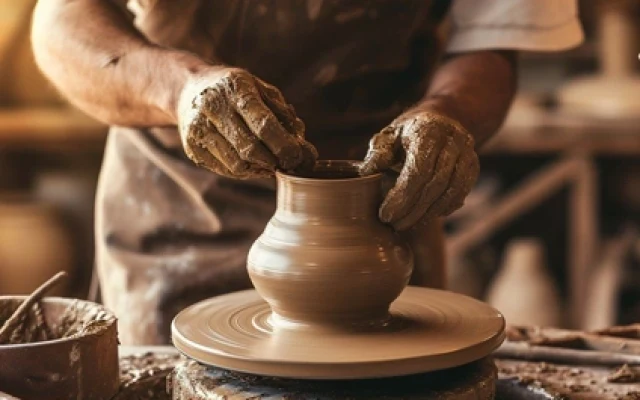
Pottery Workshop Cappadocia
Learn the ancient art of pottery from Avanos masters, try shaping clay…
 Red Tour
Red Tour Cappadocia
Discover Göreme Open-Air Museum, Avanos pottery workshops, and breatht…
 Adventure
ATV Tour Cappadocia
Ride powerful ATVs through Cappadocia’s unique valleys, fairy chimneys…
 Adventure
Horseback Riding Tour Cappadocia
Experience Cappadocia on horseback, riding through valleys, hidden tra…
 Adventure
Trekking Tours Cappadocia
Hike Cappadocia’s spectacular valleys, fairy chimneys, and cave dwelli…

Carpet Weaving Experience Cappadocia
Discover the art of Turkish carpet weaving, learn traditional techniqu…
 Balloon
Cappadocia Hot Air Balloon Tour
See Cappadocia from the air at sunrise on a professionally operated ho…
Cappadocia Turkish Bath
Relax with a traditional hammam ritual including steam, scrubbing, and…
Wine Tasting Tour Cappadocia
Taste Cappadocia’s finest local wines in ancient vineyards and wine ho…
Vip Mix Tour Cappadocia
Experience the ultimate Cappadocia highlights in comfort-historic vall…

Turkish Night Show Cappadocia
Enjoy a traditional Turkish dinner with live music, folk dances, and w…

Professional Photo Shoot Cappadocia
Capture your Cappadocia moments with a guided professional photo shoot…
Traditional Foot-Powered Pottery Wheels
The traditional Avanos wheel is often operated by foot while the potter shapes the clay by hand.
Foot control allows the potter to adjust speed while keeping both hands close to the clay.
Experienced masters can center and raise a vessel quickly because the movement has been practiced over many years.
The demonstration may look effortless, but centering clay is one of the most difficult skills for a beginner.
Visitors should expect assistance rather than an independent finished vessel during the first attempt.
Electric Wheels and Modern Equipment
Many studios also use electric wheels, mechanical preparation equipment and modern kilns.
An electric wheel provides steady speed and can be easier to manage during a short introductory lesson.
Modern equipment does not automatically make the piece less handmade.
The important distinction is how much shaping, decoration and finishing are completed by hand and how the studio describes the process.
A workshop may use traditional and modern tools for different stages of production.
What Happens During an Avanos Pottery Workshop?
A dedicated workshop is more personal than a short showroom demonstration.
The exact program varies, but a hands-on session can include:
- An introduction to Avanos pottery and the selected clay body
- A demonstration by a master potter or instructor
- Preparation and centering of the clay
- Trying a traditional or electric wheel
- Guidance while shaping a bowl, cup or small vessel
- An explanation of drying, trimming, decorating, glazing and firing
- Time to examine completed handmade ceramics
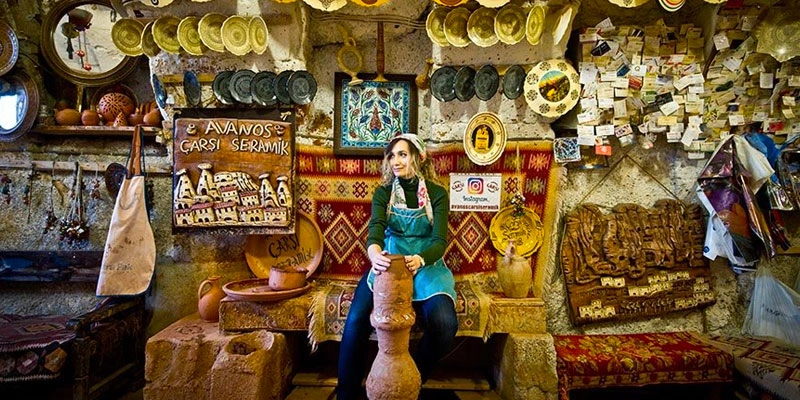
Beginners do not need previous pottery experience.
The instructor may control the wheel speed, recenter the clay and guide the visitor's hands to prevent the form from collapsing.
Step 1: Preparing the Clay
Clay must be prepared before it reaches the wheel.
Air pockets, uneven moisture and hard particles can interfere with shaping and firing.
Potters knead or wedge the clay to create a more consistent working body.
During a short visitor workshop, the studio may complete this stage in advance.
Ask to see the preparation process when understanding the complete craft is a priority.
Step 2: Centering the Clay
The clay is pressed firmly onto the wheel and brought into a balanced central position.
When the clay is not centered, the walls of the vessel become uneven and difficult to control.
Beginners often require the most help at this stage.
The instructor may place hands over the visitor's hands or prepare the centered clay before the visitor begins opening the form.
This assistance is normal and should not be presented as the visitor completing every stage alone.
Step 3: Opening and Raising the Form
The potter opens the center of the clay and establishes the base thickness.
The walls are then compressed and raised gradually.
Small changes in pressure can turn a bowl into a narrow cup or cause the entire form to collapse.
Water reduces friction but too much water weakens the clay surface.
A first workshop usually focuses on one simple and stable form.
Step 4: Shaping the Rim and Surface
The rim is compressed and refined after the basic shape has been created.
The potter can adjust the curve, width and height with fingers or simple tools.
Surface lines made by the wheel may be preserved or smoothed according to the intended design.
Handles, spouts and additional parts are usually attached later, after the clay becomes firmer.
A short visitor lesson may end before these stages.
Step 5: Drying
Fresh pottery contains a large amount of moisture and cannot go directly into a hot kiln.
It must dry slowly and evenly.
Rapid drying can cause cracks, warping or separation of attached parts.
Drying time depends on the thickness of the object, clay body, temperature and humidity.
This is one reason a visitor should not expect a completed fired piece on the same day.
Step 6: First Firing
Once fully dry, the piece can undergo an initial kiln firing.
This stage hardens the clay and prepares many ceramic bodies for decoration or glaze.
Firing schedules and temperatures depend on the clay and kiln.
A studio should not promise immediate firing unless the complete timing has been explained clearly.
Pieces can crack or change shape during firing, especially when wall thickness is uneven.
Step 7: Painting and Glazing
Decoration may be applied before or after the first firing according to the technique.
Some objects use slips or mineral colors, while others receive painted designs and glaze.
Glaze creates a glass-like surface after firing and can alter color significantly.
A glaze that looks pale or dull before firing may become bright and transparent in the kiln.
Not every Avanos vessel is glazed, and an unglazed surface can be an intentional finish.
Step 8: Final Firing and Finishing
Glazed or decorated ceramics may require another firing.
The completed object must cool before handling, inspection and packing.
Studios may sand the foot, check for cracks and prepare the piece for collection or shipping.
The full process can extend beyond a traveler's stay.
Collection and delivery arrangements should therefore be confirmed before the workshop begins.
Pottery Demonstration or Hands-On Workshop?
| Planning Question | Demonstration | Hands-On Workshop |
|---|---|---|
| Time at the wheel | Often none or only a brief attempt | Planned practice with an instructor |
| Main purpose | Observe technique and visit the showroom | Understand the process through participation |
| Typical group size | Can include a full tour group | Usually smaller or privately scheduled |
| Finished object | Not normally included | May include an unfired piece or later collection option |
| Best choice | Short cultural stop | Visitors who want actual wheel time |
Many Cappadocia Red Tour programs include a brief pottery demonstration in Avanos.
This is generally a cultural and retail stop rather than a complete pottery lesson.
Travelers who want structured wheel time should reserve a dedicated Avanos pottery workshop experience.
How Long Does an Avanos Pottery Workshop Take?
A brief demonstration can take approximately 20 to 30 minutes.
A hands-on beginner session often requires 45 to 90 minutes according to group size and the number of wheels.
A longer private class may take two hours or more when preparation, decoration and detailed instruction are included.
These are planning ranges rather than fixed promises.
Confirm the exact duration, arrival time and whether showroom browsing is included within the advertised workshop time.
How Much Wheel Time Will You Receive?
Total workshop duration does not always equal individual wheel time.
A one-hour group session can provide only a few minutes per person when one wheel is shared among many guests.
Ask:
- How many participants are in the session
- How many wheels are available
- Whether every participant makes a separate piece
- Whether the instructor prepares and centers the clay
- Whether extra attempts are possible after a piece collapses
These details matter more than a general promise that visitors can try pottery.
Can You Take Your Pottery Home?
This depends on the workshop and the type of piece created.
Freshly shaped clay normally needs to dry before it can be fired.
Glazed pottery can require additional preparation and another kiln cycle.
A studio may offer:
- An unfired practice piece to carry carefully
- Collection after drying and firing
- Delivery to a hotel when timing permits
- Domestic or international shipping
- A finished ceramic souvenir instead of the practice piece
A same-day finished ceramic should not be assumed.
Should You Take an Unfired Piece?
An unfired piece remains fragile and can break during transport.
It can also soften if exposed to water.
Thin rims and handles are especially vulnerable inside luggage.
Ask the studio how the piece will be wrapped and whether airline transport is practical.
Travelers who want a durable object may prefer later firing, shipping or a finished workshop piece.
Firing, Collection and Shipping Questions
| Question | Why It Matters |
|---|---|
| Will the piece be fired? | Unfired clay remains fragile and water-sensitive |
| Is glazing included? | Glazing can require decoration and a second firing |
| When will it be ready? | Drying and kiln schedules may exceed the visitor's stay |
| Can it be delivered to the hotel? | Delivery range and timing may be limited |
| Is international shipping available? | Cost, customs, packaging and delivery time should be clear |
| What happens if it cracks? | Handmade pieces can fail during drying or firing |
Is an Avanos Pottery Workshop Suitable for Children?
Pottery can be an engaging family activity because children can touch, shape and observe the clay changing under their hands.
Age requirements and the level of participation vary between studios.
Younger children may need an adult or instructor to control hand pressure and remain safely seated near the wheel.
Some workshops offer a simplified activity based on hand-building or painting rather than wheel throwing.
Confirm the format according to the child's age rather than assuming every child will use the same wheel as an adult.
Questions for Families
- What is the minimum recommended age?
- Does each child receive individual wheel time?
- Must an adult assist throughout the activity?
- Are aprons or protective covers provided?
- Are steps, kilns or wet floors accessible to children?
- Is a hand-building alternative available?
- Can a stroller enter the working area?
Parents should supervise children closely around moving wheels, tools and wet floors.
Accessibility and Physical Conditions
Accessibility varies significantly between workshops.
Some studios operate in modern ground-floor spaces with wide entrances.
Others use historic or rock-cut rooms reached by steps, narrow doors or uneven floors.
Wheel height and seating position can also affect visitors with limited mobility.
Ask whether the studio can provide a stable chair, adapted working height or hand-building activity when a standard wheel is unsuitable.
Do not assume that a showroom and workshop area have the same accessibility.
What Should You Wear?
Clay and water can splash during wheel throwing.
Comfortable clothing and closed shoes are practical choices.
- Avoid loose sleeves near the wheel.
- Tie back long hair.
- Remove rings, watches and bracelets before handling clay.
- Ask whether an apron is provided.
- Keep phones and cameras away from wet working areas.
- Avoid clothing that cannot tolerate small clay stains.
Most clay can be cleaned from washable clothing, but mineral color and workshop dust may require more care.
Related Tours
Popular experiences for this destination
Pottery Workshop Cappadocia
Learn the ancient art of pottery from Avanos masters, try shaping clay…
Red TourRed Tour Cappadocia
Discover Göreme Open-Air Museum, Avanos pottery workshops, and breatht…
AdventureATV Tour Cappadocia
Ride powerful ATVs through Cappadocia’s unique valleys, fairy chimneys…
AdventureHorseback Riding Tour Cappadocia
Experience Cappadocia on horseback, riding through valleys, hidden tra…
AdventureTrekking Tours Cappadocia
Hike Cappadocia’s spectacular valleys, fairy chimneys, and cave dwelli…
Carpet Weaving Experience Cappadocia
Discover the art of Turkish carpet weaving, learn traditional techniqu…
BalloonCappadocia Hot Air Balloon Tour
See Cappadocia from the air at sunrise on a professionally operated ho…
Cappadocia Turkish Bath
Relax with a traditional hammam ritual including steam, scrubbing, and…
Wine Tasting Tour Cappadocia
Taste Cappadocia’s finest local wines in ancient vineyards and wine ho…
Vip Mix Tour Cappadocia
Experience the ultimate Cappadocia highlights in comfort-historic vall…
Turkish Night Show Cappadocia
Enjoy a traditional Turkish dinner with live music, folk dances, and w…
Professional Photo Shoot Cappadocia
Capture your Cappadocia moments with a guided professional photo shoot…
What to Bring
Bring only items needed for the session.
- A phone or camera for permitted photographs
- A hair tie
- A small bottle of water
- Hotel and delivery details when firing is requested
- A secure payment method
- A reusable bag for a finished purchase
Large bags should remain away from wheels, shelves and fragile ceramics.
Photography During the Workshop
Most studios allow personal photographs, but permission should be requested before recording staff or other guests.
Keep the camera away from moving wheels and wet clay.
Do not interrupt the potter during centering or delicate shaping for repeated poses.
A short video of the demonstration can be useful, but the working process should remain the priority.
Commercial filming, tripods and professional lighting may require advance approval.
How to Recognize a Good Workshop Experience
A strong workshop explains both skill and process rather than moving directly from a brief demonstration to sales.
Look for:
- Clear information about session duration
- A stated group size and wheel arrangement
- Clean and organized working areas
- An instructor who explains clay preparation and firing
- Transparent information about what is handmade
- No pressure to buy expensive pieces
- Clear collection or shipping conditions
A showroom purchase can be part of the visit, but it should not replace the booked hands-on activity.
Handmade, Molded and Factory-Assisted Ceramics
Not every ceramic sold in Avanos is made entirely on a wheel by one potter.
Studios may use wheel throwing, hand-building, molds, casting, mechanical shaping or combinations of these methods.
Decoration may be hand-painted, transferred, stamped or printed.
These methods produce different objects and price levels.
Ask how a piece was formed and decorated when handmade production is important.
A responsible seller should be able to explain the process without relying only on broad claims such as traditional or authentic.
How to Buy Pottery in Avanos
Begin by deciding whether the piece is for daily use, display or collection.
Check the surface, rim, base and any handles.
Ask whether the item is food-safe and whether it can be used in a dishwasher, oven or microwave.
Do not assume that every decorative glaze is suitable for food contact.
Large objects require professional packaging and realistic shipping arrangements.
Compare pieces based on workmanship, technique and design rather than bargaining only by size.
Questions to Ask Before Buying
- Was the object wheel-thrown, hand-built, molded or cast?
- Was the decoration painted by hand?
- Which clay body and firing method were used?
- Is the glaze food-safe?
- Can the piece hold water?
- Is there a workshop mark or artist signature?
- How will the item be packed?
- What is the policy if shipping damage occurs?
Food-Safe and Decorative Ceramics
A decorative plate is not automatically suitable for serving food.
Glaze composition, firing temperature and surface condition affect safe use.
Cracked glaze or damaged surfaces can make cleaning more difficult.
Ask the workshop for specific use instructions.
When no clear information is available, use the piece for display rather than food or drink.
Shipping Pottery Home
International shipping can be practical for large or valuable pieces, but the terms should be documented.
Confirm:
- The complete shipping cost
- The courier or postal service
- Estimated delivery time
- Tracking information
- Customs responsibility
- Insurance or damage policy
- The exact item listed on the receipt
Keep photographs of the purchased object and packaging documents.
Delivery times and customs charges can vary by destination.
Güray Museum and Avanos Ceramic Heritage
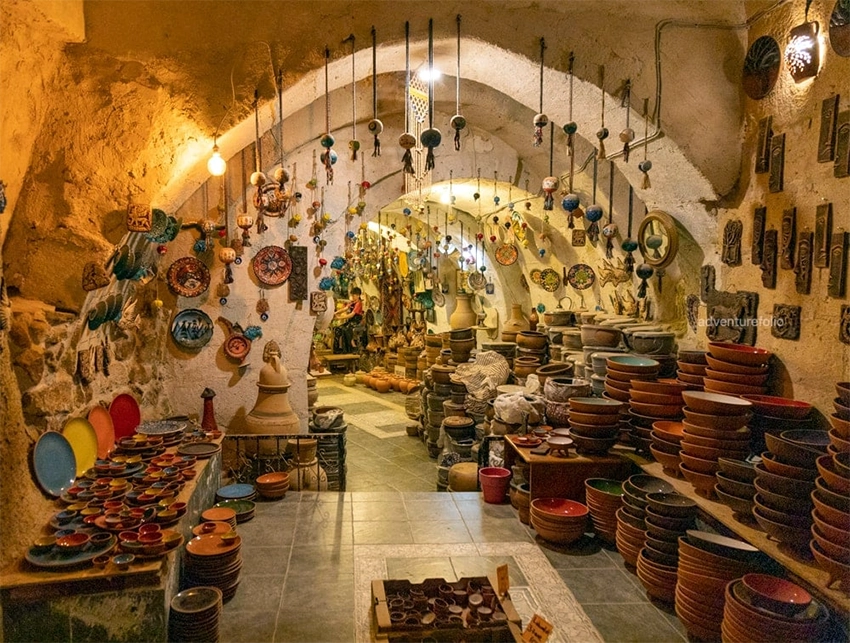
Güray Museum presents archaeological, historical and contemporary ceramics in an underground exhibition setting near Avanos.
It helps visitors place modern pottery workshops within a longer regional ceramic history.
The museum and workshop serve different purposes.
The museum emphasizes collections, chronology and artistic development, while a workshop emphasizes material, hand movement and production.
Combining the two can provide a fuller understanding than visiting only a showroom.
Museum Visit or Pottery Workshop?
| Experience | Main Focus | Typical Strength | Main Limitation |
|---|---|---|---|
| Güray Museum | Archaeological and artistic ceramic history | Chronology and collection context | No guarantee of personal wheel practice |
| Pottery demonstration | Master potter's skill | Efficient cultural stop | Limited participation |
| Hands-on workshop | Making and material experience | Direct practical understanding | Finished piece may not be ready immediately |
How to Add Pottery to a Cappadocia Itinerary
A pottery workshop works well around midday or in the afternoon, particularly when combined with Avanos town center and a riverside meal.
Morning sessions can suit travelers who prefer quieter studios or need to continue toward another town later.
Allow time for parking, introduction, the activity and showroom browsing.
Do not schedule the workshop immediately before an airport transfer unless the studio and transport timing are confirmed.
Use the Cappadocia trip planning guide to compare travel time and route direction.
Dedicated Pottery Experience
Reserve the Cappadocia pottery workshop when wheel time and personal instruction are priorities.
Confirm the duration, group size, language, number of wheels and what happens to the finished piece.
A dedicated session is usually more suitable than a tour demonstration for families, couples and travelers with a strong craft interest.
Pottery on the Red Tour
Many Cappadocia Red Tour itineraries include Avanos as a cultural stop.
The visit may include a potter's demonstration, a short opportunity for one guest to try the wheel and time in the showroom.
This should not be assumed to be a full class for every participant.
Ask the operator whether the stop is demonstration-only and how much time is allowed.
Pottery on a Private Route
A private Cappadocia Mix Tour can provide greater control over workshop timing.
The route can reduce less relevant stops and allow more time in Avanos.
Confirm whether workshop admission, materials and transport are included in the tour price.
A private vehicle does not automatically mean a private pottery instructor.
Craft-Focused Day in Cappadocia
Travelers interested in living craft can combine pottery with a carpet weaving experience.
The two activities use different materials, tools and workshop traditions.
Allow enough time to understand each craft rather than treating both as rapid showroom stops.
The Cappadocia handicrafts guide provides broader context for local workshops, bazaars and handmade products.
Combining Pottery With Avanos Town
Plan time for the river, old streets, workshops and lunch rather than arriving only for one indoor stop.
The town experience helps explain why ceramic production developed within a settled commercial community.
A pottery workshop can be followed by a riverside walk or meal.
Check parking and meeting points because studios may be located in different parts of Avanos rather than one central pottery district.
The Avanos travel guide explains the wider town and its main visitor areas.
Best Time of Day for a Workshop
Morning
Morning sessions can be quieter and leave the afternoon open for sightseeing.
Midday
A workshop can provide an indoor break between outdoor stops, especially during hot weather.
Afternoon
Afternoon works well after lunch in Avanos, but enough time should remain for firing explanations, showroom browsing and the return drive.
Evening
Evening sessions are less common and should be reserved in advance.
Do not assume that showrooms and working studios follow the same closing time.
Seasonal Planning
Spring
A workshop provides a reliable indoor activity when rain affects valley walks.
Summer
Midday pottery can offer relief from strong sun, although some working rooms may remain warm near kilns.
Autumn
Comfortable temperatures make it easy to combine the workshop with a town walk.
Winter
Pottery is a practical cold-weather activity, but snow and ice can affect transfers between towns.
Confirm heating and accessibility when the studio is inside a historic rock-cut space.
Common Avanos Pottery Workshop Mistakes
- Assuming every tour stop is a class: Many visits are demonstrations followed by showroom time.
- Expecting a fired piece immediately: Drying and kiln schedules take time.
- Calling the tradition unchanged for seven thousand years: Archaeology shows a long ceramic history, not one continuous method.
- Assuming all clay comes directly from the river: Material sources and mixtures vary between workshops.
- Ignoring group size: One wheel shared by many people can limit participation.
- Buying without asking about technique: Wheel-thrown, molded and factory-assisted objects should be distinguished.
- Assuming all glaze is food-safe: Confirm the intended use.
- Shipping without written terms: Keep receipts, tracking details and photographs.
- Wearing loose jewelry: Rings and bracelets interfere with clay handling.
Booking an Avanos Pottery Workshop
Reserve the Avanos pottery workshop when a planned hands-on session is preferred over a brief tour demonstration.
Provide the preferred date, hotel, number of adults, number and ages of children, language needs and whether transport is required.
Use the contact page to confirm the current workshop format and schedule.
Before confirmation, ask whether the price includes materials, apron use, individual wheel time, firing, delivery and hotel transfer.
Questions Travelers Ask About Avanos Pottery Workshops
Can you make your own pottery in Avanos?
Yes. Dedicated workshops allow beginners to try the wheel and shape a small piece with help from an instructor.
Do you need previous pottery experience?
No. Beginner sessions are designed for first-time visitors and normally include direct hand guidance.
How long does a workshop take?
A demonstration can take approximately 20 to 30 minutes, while a hands-on session often requires 45 to 90 minutes or longer.
Does every participant receive wheel time?
Not always. Confirm the number of wheels and participants before booking.
Can children join?
Many studios welcome children, but age limits, adult assistance and the type of activity vary.
Can you take the piece home?
Possibly, but an unfired piece remains fragile. Firing, collection, hotel delivery or shipping may be offered separately.
Can pottery be fired on the same day?
Usually not immediately because the piece must dry before firing. The studio should explain the actual schedule.
Does Red Tour include a pottery workshop?
Many Red Tour programs include a demonstration, but a full hands-on lesson for every guest is not guaranteed.
Is all Avanos pottery made from Kızılırmak clay?
No. The river and red clay are central to Avanos pottery identity, but workshops can use different deposits and prepared clay mixtures.
Is all pottery handmade?
No. Products may be wheel-thrown, hand-built, molded, cast or mechanically assisted. Ask how the specific piece was made.
Is decorative pottery safe for food?
Not automatically. Confirm the glaze, firing and intended use with the workshop.
Can workshops ship internationally?
Some can, but cost, customs, insurance and damage policies should be confirmed in writing.
Is Güray Museum the same as a workshop?
No. The museum focuses on ceramic history and collections, while a workshop focuses on making and technique.
Is the activity accessible?
Accessibility varies. Ask about steps, entrances, adapted seating and alternatives to a standard wheel.
What should you wear?
Wear comfortable washable clothing, closed shoes and sleeves that stay clear of the wheel.
A Practical Introduction to Avanos Ceramic Culture
An Avanos pottery workshop can reveal far more than the speed of an experienced potter's hands.
The experience connects archaeological pottery, Kızılırmak clay, family workshops, master-apprentice teaching and modern tourism.
A good session explains preparation, centering, shaping, drying, firing and decoration rather than presenting the wheel as the complete process.
Travelers should distinguish between a demonstration, a hands-on lesson and a showroom visit before booking.
They should also ask realistic questions about wheel time, children, firing, food safety and shipping.
For visitors who choose the format carefully, pottery provides one of the clearest ways to understand Avanos as a working craft town rather than only a sightseeing stop.
Use the Cappadocia stay and food guide when combining the workshop with lunch in Avanos, and review the Cappadocia safety and essentials guide for practical trip planning.