Dark Church
Dark Church in Göreme: Deisis, Anastasis and Byzantine Frescoes
Dark Church, known locally as Karanlık Kilise, is one of the most important rock-cut churches inside the Göreme Open-Air Museum. Its compact architecture and richly painted interior preserve some of the most detailed examples of Byzantine religious art in Cappadocia.
The church takes its modern name from the limited natural light entering the interior. A small opening admits daylight, leaving much of the sanctuary in relative darkness. Reduced exposure helped protect the colors of the frescoes over the centuries.
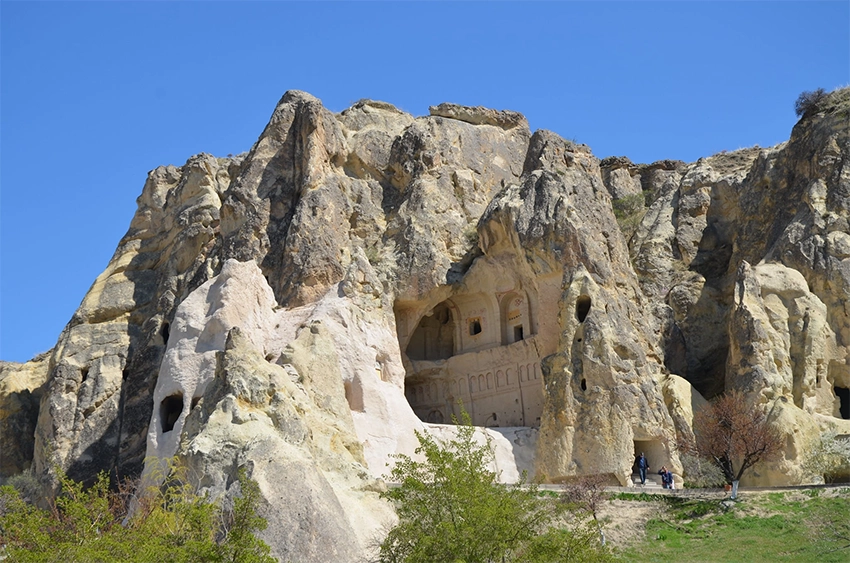
Most visitors should allow approximately 30 to 60 minutes for Dark Church itself. The visit may take longer when admission is controlled, groups are waiting or the paintings are studied carefully.
The strongest approach begins with the architecture. Understanding the central dome, four rock-cut columns, cross arms and three apses makes the placement of the Deisis, Anastasis and other scenes easier to follow.
Opening hours, ticket arrangements, photography rules and access conditions can change. Check current official information and follow the instructions displayed at the church.
Why Dark Church Is Important
Dark Church is significant for three connected reasons: its late Byzantine painting program, its well-preserved color and the close relationship between architecture and religious imagery.
The frescoes are not independent pictures placed wherever space was available. Major representations of Christ and sacred events occupy prominent architectural surfaces, while saints, donors and supporting figures appear in positions suited to their liturgical and visual roles.
The Deisis communicates judgement, prayer and intercession. The Anastasis presents Christ's victory over death and the restoration of humanity through Adam and Eve.
Other scenes form a wider narrative of Christ's life, Passion and Resurrection. The church should therefore be read as one integrated visual program rather than as a room containing two famous paintings.
Its limited light also provides an important conservation lesson. The darkness that can make the first moments difficult for visitors contributed to the survival of the painted interior.
Date and Historical Context
Dark Church is generally dated to the end of the 12th century or the beginning of the 13th century.
It belongs to a later phase of Byzantine religious painting in the Göreme Valley.
This date should not be treated as proof that every carved surface, repair and painted detail belongs to one uninterrupted construction campaign.
Rock-cut churches could be altered, repainted, repaired and reused. Architectural evidence and painting style must be considered together when interpreting different phases.
The church forms part of the wider Göreme National Park and the Rock Sites of Cappadocia, which entered the UNESCO World Heritage List in 1985.
The protected landscape includes churches, chapels, monastic spaces, settlements, valleys and underground structures shaped within Cappadocia's volcanic terrain.
Dark Church should therefore be understood within a larger religious, artistic and settlement environment rather than as an isolated monument.
How to Plan a First Visit
Visit Dark Church when you still have enough time and concentration to observe the paintings. Leaving it until the final minutes of the museum schedule can turn an important interior into a rushed stop.
Allow your eyes to adjust after entering. Bright outdoor light temporarily reduces the ability to see detail in the darker interior.
Move slowly and keep doorways clear. The church is compact, and one stationary group can obstruct both circulation and the view.
Wear shoes with secure grip. Stone steps, uneven floors and low-light transitions require attention.
Carry only a small bag. Large backpacks, tripods and loose straps are difficult to manage near painted walls and narrow passages.
Check whether Dark Church requires separate admission in addition to the main museum ticket. Current ticket and Museum Pass conditions should be confirmed at the official entrance.
Dark Church at a Glance
| Feature | Main Importance | What to Notice |
|---|---|---|
| Architecture | Cross-in-square arrangement carved into volcanic rock | Central dome, four columns, cross arms and three apses |
| Deisis | Christ with the Virgin Mary and John the Baptist | Intercession, donor figures, inscriptions and Gospel text |
| Anastasis | Christ's victory over death | Adam, Eve, prophets, broken gates, chains and defeated Satan |
| Conservation | Limited light and long restoration history | Color survival, surface deposits and visitor restrictions |
This table is a visitor framework rather than a complete catalogue of every scene.
Rock-Cut Architecture
The church has a cross-in-square arrangement carved directly into volcanic tuff.
The interior is organized around a central domed area supported by four rock-cut columns.
Cross arms and surrounding vaulted compartments create separate surfaces for biblical scenes, saints and liturgical compositions.
The eastern section contains one principal apse and two smaller side apses.
Unlike a conventional masonry building, the church was formed by removing rock. Columns, arches, vaults and apses were shaped from the same natural mass rather than built from individual blocks.
This technique allowed builders to reproduce familiar Byzantine architectural forms inside the rock.
Some carved elements organize the interior visually even when they do not function exactly like freestanding masonry supports.
How the Cross-in-Square Plan Works
Central Domed Bay
The central bay creates the visual and spatial focus of the church.
The dome rises above the intersection of the cross arms and provides an important surface for sacred imagery.
Standing near the center allows the visitor to understand how the surrounding painted spaces relate to one another.
Four Rock-Cut Columns
The columns divide the interior into connected compartments while preserving views toward the sanctuary.
They also create narrow passages and changing sightlines, which affect how the frescoes are encountered.
Visitors should not lean against the columns because painted or fragile surfaces may extend beyond the most obvious wall areas.
Main and Side Apses
The principal apse marks the main sanctuary focus.
Recommended Tours for This Page
Popular experiences for this destination
 Blue Tour
Blue Tour Cappadocia
Explore hidden valleys, ancient churches, and cultural gems on Cappado…
Vip Mix Tour Cappadocia
Experience the ultimate Cappadocia highlights in comfort-historic vall…
 Red Tour
Red Tour Cappadocia
Discover Göreme Open-Air Museum, Avanos pottery workshops, and breatht…
 Green Tour
Green Tour Cappadocia
Explore Derinkuyu underground city, the beautiful Ihlara Valley, and S…

Cappadocia Rent A Car
Explore Cappadocia freely at your own pace with flexible car rental op…
 Balloon
Cappadocia Hot Air Balloon Tour
See Cappadocia from the air at sunrise on a professionally operated ho…
 Adventure
ATV Tour Cappadocia
Ride powerful ATVs through Cappadocia’s unique valleys, fairy chimneys…
 Adventure
Horseback Riding Tour Cappadocia
Experience Cappadocia on horseback, riding through valleys, hidden tra…
Turkish Night Show Cappadocia
Enjoy a traditional Turkish dinner with live music, folk dances, and w…
Professional Photo Shoot Cappadocia
Capture your Cappadocia moments with a guided professional photo shoot…

Airport Transfer Service Cappadocia
Travel comfortably and safely between Cappadocia’s airports and your h…

Classic Car Tour Cappadocia
Step into nostalgia with a vintage classic car ride through Cappadocia…
The two side apses belong to the wider liturgical organization of the eastern section.
Images placed near the sanctuary carry a different religious relationship from scenes positioned in the surrounding vaults.
Vaulted Compartments
The vaulted spaces around the center provide separate areas for narrative events, saints and supporting figures.
Architectural boundaries help organize the painting program and prevent the interior from becoming one undivided image field.
The Painted Interior
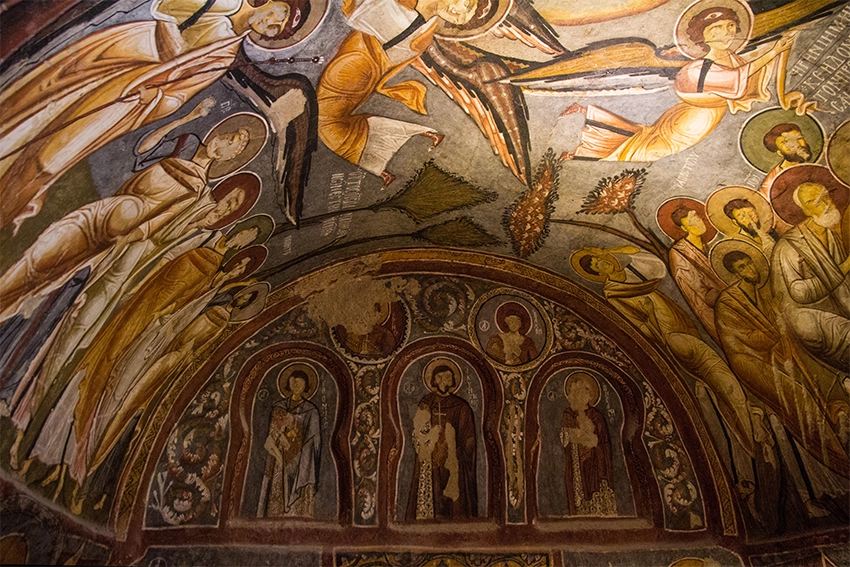
The walls, vaults, arches and domed surfaces are covered with scenes connected with Christ, the Virgin Mary, John the Baptist, apostles, prophets and saints.
The paintings follow a religious hierarchy.
Major representations of Christ and central sacred events occupy prominent upper or sanctuary-related positions.
Saints, donors and supporting figures appear in lower or secondary locations according to the structure of the program.
This hierarchy should not be interpreted only through size. Placement, gesture, inscription and relationship to the sanctuary are equally important.
The paintings also form a narrative sequence. Scenes of ministry, suffering, death and resurrection create a theological progression through the interior.
How to Read the Frescoes
Begin by identifying the architecture before searching for individual scenes.
Look for Christ through the cross-inscribed halo and the abbreviation IC XC.
Follow the direction of gestures and gazes. Figures often guide the viewer toward the central action.
Notice differences in scale. Sacred figures, donors and supporting participants do not always share the same visual importance.
Read inscriptions together with the image. A name or title can identify a figure, while a biblical phrase can explain the represented action.
Distinguish original painting from later damage, surface deposits and restoration. A blank section may have lost plaster or pigment.
The Deisis
In the Deisis composition, Christ is seated at the center on a wooden throne.
A large cylindrical red cushion rests on the throne and is decorated with small crosses, pearl-like details and gold-colored bands.
Christ wears a red chiton beneath a blue-gray himation.
His head is surrounded by a cruciform halo.
His right hand is raised in blessing, while his left hand holds an open Gospel book.
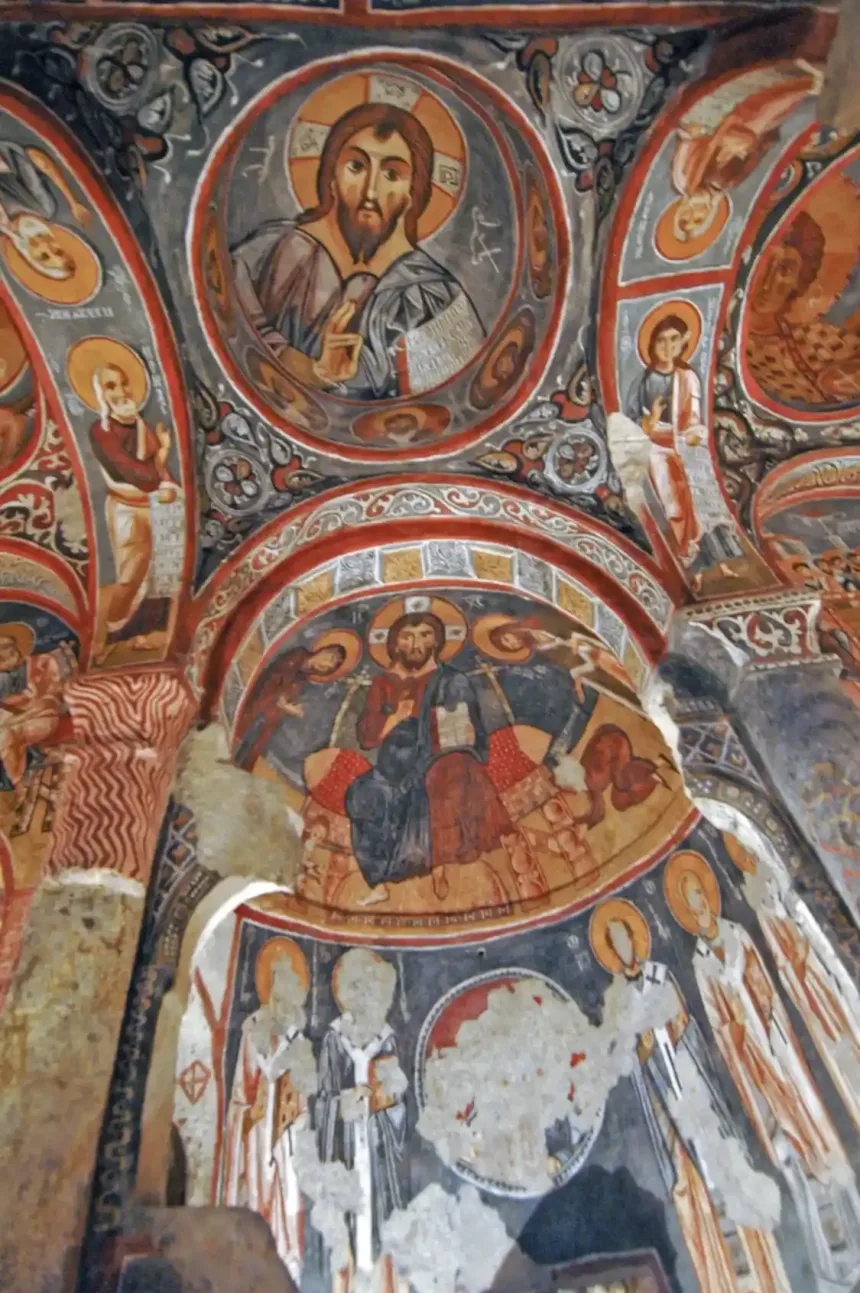
Christ as the Central Figure
Christ occupies the largest and most authoritative position.
The throne, halo, blessing gesture and open Gospel identify him as judge, teacher and source of divine authority.
The central placement also creates balance between the Virgin Mary and John the Baptist.
The Open Gospel Book
The open pages carry words associated with John 8:12:
I am the light of the world. He that followeth me shall not walk in darkness, but shall have the light of life.
The text creates a powerful relationship with the physical darkness of the church.
Visitors should avoid treating this relationship as the only reason for the modern name. The name refers directly to the limited natural light, while the Gospel text belongs to the theological program.
The Virgin Mary
The Virgin Mary stands to the left of Christ with her head inclined toward him.
Three stars appear on her head and shoulders.
Within Byzantine tradition, these stars are associated with her virginity before, during and after the birth of Christ.
Her turned posture and raised hands express prayer and intercession.
Saint John the Baptist
Saint John the Baptist stands on the right.
He wears a light tunic, a sheepskin mantle and a green outer garment.
His disordered hair reflects his ascetic life and preaching in the wilderness.
Like Mary, he turns toward Christ in supplication.
Meaning of Deisis
The word Deisis refers to supplication or entreaty.
Mary and John approach Christ on behalf of humanity.
The scene therefore combines judgement with the possibility of mercy through intercession.
Its meaning becomes even more specific through the small donor figures shown below.
Donor Figures in the Deisis
Two much smaller donor figures appear in proskynesis at the feet of Christ.
Their reduced scale distinguishes them from the sacred figures and expresses humility.
One donor is identified as Nikephoros the Presbyter, a priest.
The surviving inscriptions present the donors' prayers as appeals made by servants of God.
The donors connect the image with patronage, personal prayer and the hope of divine mercy.
Their presence also reminds visitors that church painting required organization, resources and human sponsorship.
A donor image should not be treated as a realistic portrait in the modern sense. Scale, posture and clothing communicate religious status and humility as much as physical identity.
Inscriptions in the Deisis
- IC XC: An abbreviation of Iesous Christos, meaning Jesus Christ.
- MP XY: An abbreviation identifying the Mother of Christ.
- Ιω: An abbreviated identification of Saint John the Baptist.
These inscriptions helped worshippers recognize the figures and understand the relationship between Christ, Mary, John and the donors.
Abbreviations were a normal part of Byzantine visual language.
Damage or viewing distance can make individual letters difficult to see. Identification should be based on the complete composition rather than one uncertain mark.
The Anastasis or Harrowing of Hell
The Anastasis, also called the Harrowing of Hell, represents Christ's victory over death and his liberation of the righteous dead.
Christ occupies the center of the composition.
In his left hand he holds a staff ending in a jeweled cross.
He reaches toward Adam and Eve, who rise from their tombs as representatives of humanity.
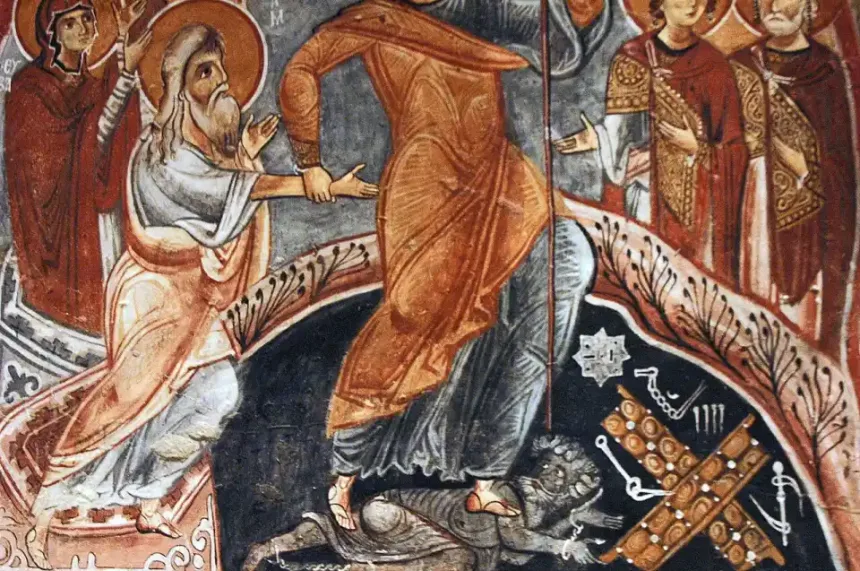
Adam and Eve
Eve is shown inside a tomb with both hands raised toward Christ.
Adam is identified beside her.
Their presence connects Christ's Resurrection with the restoration of the human race.
They do not appear as ordinary witnesses. They represent humanity held by death and released through Christ's victory.
David and Solomon
Old Testament kings and prophets David and Solomon appear to the right.
Their inclusion presents the event as the fulfillment of earlier prophecy and sacred history.
The figures connect the Christian understanding of Resurrection with the Old Testament past.
The Jeweled Cross
The staff ending in a jeweled cross is both a sign of the Crucifixion and a symbol of victory.
Its direction reinforces Christ's authority over the defeated power beneath him.
The Broken Gates of Hell
Beneath Christ's feet, the entrance to hell is represented as a dark triangular opening within a hill.
Broken gates, hinges, locks and handles are scattered around the opening.
These details symbolize the destruction of the barriers that held the dead captive.
Christ does not simply enter the underworld. He breaks its authority.
Satan lies beneath Christ with hands and feet chained.
The point of Christ's cross is directed toward him, emphasizing the defeat of evil and death.
Why the Objects Matter
The broken objects are not background decoration.
They translate an invisible theological idea into physical forms that a viewer can recognize.
Locks and chains represent confinement. Broken doors represent release.
The scattered pieces also create visual movement beneath the central figure of Christ.
Inscriptions in the Anastasis
- Η ΑΝΑΣΤΑΣΗΣ: The Anastasis or Harrowing of Hell.
- IC XC: Jesus Christ.
- ΑΔΑΜ: Adam.
- ΕΥΒΑ: Eve.
- ΣΑΛΟΜΟΝ: Solomon.
- ΔΑΔ: David.
- Η ΠΡΟΦΗΤΕ: The prophets.
The inscriptions identify the participants and make the composition easier to follow.
They demonstrate the close relationship between image, biblical tradition and written language in Byzantine churches.
The spelling visible in a medieval inscription may differ from modern standardized Greek. Visitors should not correct or repaint damaged letters.
Recommended Tours for This Page
Popular experiences for this destination
Blue TourBlue Tour Cappadocia
Explore hidden valleys, ancient churches, and cultural gems on Cappado…
Vip Mix Tour Cappadocia
Experience the ultimate Cappadocia highlights in comfort-historic vall…
Red TourRed Tour Cappadocia
Discover Göreme Open-Air Museum, Avanos pottery workshops, and breatht…
Green TourGreen Tour Cappadocia
Explore Derinkuyu underground city, the beautiful Ihlara Valley, and S…
Cappadocia Rent A Car
Explore Cappadocia freely at your own pace with flexible car rental op…
BalloonCappadocia Hot Air Balloon Tour
See Cappadocia from the air at sunrise on a professionally operated ho…
AdventureATV Tour Cappadocia
Ride powerful ATVs through Cappadocia’s unique valleys, fairy chimneys…
AdventureHorseback Riding Tour Cappadocia
Experience Cappadocia on horseback, riding through valleys, hidden tra…
Turkish Night Show Cappadocia
Enjoy a traditional Turkish dinner with live music, folk dances, and w…
Professional Photo Shoot Cappadocia
Capture your Cappadocia moments with a guided professional photo shoot…
Airport Transfer Service Cappadocia
Travel comfortably and safely between Cappadocia’s airports and your h…
Classic Car Tour Cappadocia
Step into nostalgia with a vintage classic car ride through Cappadocia…
Deisis and Anastasis Compared
| Feature | Deisis | Anastasis |
|---|---|---|
| Central Theme | Judgement, prayer and intercession | Victory over death and liberation |
| Central Figure | Christ seated on a throne | Christ standing above broken gates |
| Main Supporting Figures | Virgin Mary, John the Baptist and donors | Adam, Eve, David, Solomon and prophets |
| Key Objects | Gospel book, throne and donor inscriptions | Cross, tombs, chains, gates and locks |
The Deisis looks toward judgement and mercy.
The Anastasis looks toward release and the destruction of death's authority.
Together, they create a visual language of human need, divine power and salvation.
Color and Visual Meaning
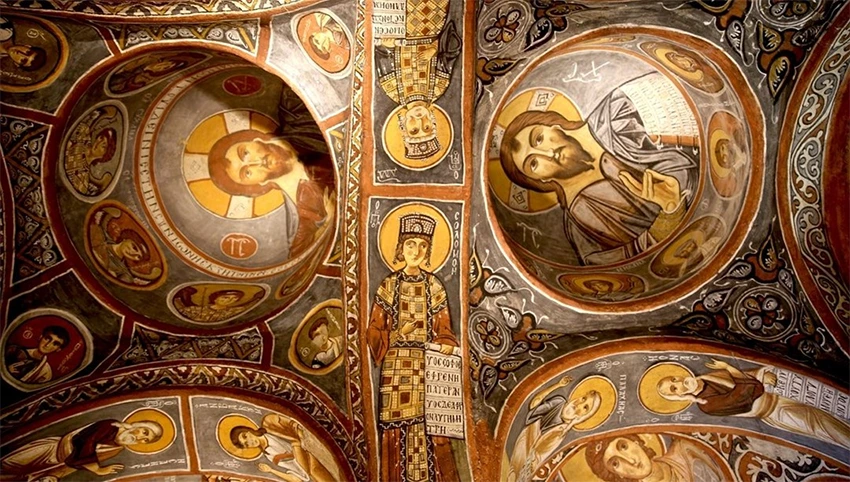
Color contributes to the identity and visual hierarchy of the figures.
Christ's red garment has been interpreted in relation to martyrdom and resurrection, while the blue-gray outer garment is associated with spirituality and heaven.
Mary's colors are arranged differently, emphasizing her human identity and heavenly role.
John the Baptist's green clothing can be associated with life and hope.
These interpretations are useful, but color should not be read alone.
Gesture, inscription, clothing, position and the complete biblical composition provide the stronger context.
Paint can also change through aging, surface deposits, cleaning and loss. The color seen today may not reproduce every original tone equally.
Scale, Position and Religious Hierarchy
Byzantine paintings often use scale and position to communicate importance.
Christ occupies the dominant position in both the Deisis and Anastasis.
Mary, John, Adam, Eve and the prophets appear according to their role within each theological event.
Donors are represented at a much smaller scale to express humility and distance from the sacred figures.
Upper surfaces can carry images associated with divine authority, while lower areas may contain saints, donors or narrative details.
This system should not be judged according to naturalistic perspective. It communicates religious relationships rather than ordinary physical distance.
Gestures and Direction of Gaze
Hand gestures, posture and gaze guide the viewer through the scene.
Christ's raised hand can express blessing or authority.
Mary and John incline toward Christ in prayer.
Donors prostrate themselves below the throne.
In the Anastasis, Christ's movement and extended arm connect him with Adam and Eve.
Figures looking toward the center reinforce the principal action.
Examine the complete body before assigning one meaning to a hand. The surrounding figures and biblical context matter.
Why the Frescoes Survived
The limited natural light reduced prolonged exposure to sunlight.
This helped preserve the intensity of many painted surfaces.
During a later period, the church was used as a pigeon house.
Deposits accumulated across parts of the painted interior and were eventually removed through prolonged conservation work.
Darkness and surface deposits provided some unintended protection, but they did not eliminate damage.
The frescoes have still been affected by structural loss, humidity, dust, surface change and human activity.
Preservation is the result of both historical conditions and modern conservation.
Conservation and UNESCO Context
Dark Church is protected within the UNESCO-listed Göreme National Park and the Rock Sites of Cappadocia.
The wider property is vulnerable to natural erosion, tourism pressure and damage to irreplaceable rock-cut cultural features.
Conservation may require separate admission, limited visitor numbers, photography restrictions or temporary closure.
These controls are part of protecting the paintings rather than an inconvenience added to the visit.
Visitors should not judge conservation only by whether every scene is visible or every space is open.
Monitoring humidity, surfaces, visitor movement and structural conditions can require restrictions that are not obvious from one visit.
Photography and Visitor Behavior
- Do not use flash.
- Follow current signs when photography is prohibited.
- Do not touch frescoes, columns or painted arches.
- Keep bags, coats and hair away from the walls.
- Do not block the entrance or sanctuary view.
- Keep voices low inside the church.
- Do not use a tripod when it obstructs movement.
- Never move a barrier for a clearer photograph.
A brighter image is not more important than the survival of the frescoes.
Allow the eyes to adjust and use careful observation instead of increasing light inside the church.
Visitor Information
| Planning Point | Practical Guidance |
|---|---|
| Location | Inside Göreme Open-Air Museum near central Göreme |
| Visit Duration | Approximately 30 to 60 minutes |
| Admission | Separate entrance conditions may apply |
| Opening Hours | Check current museum and church schedules |
| Photography | Follow current signs and never use flash |
| Walking Conditions | Stone steps, uneven surfaces and low-light areas |
Final admission may occur before the listed museum closing time.
Special programs, restoration work and official decisions can change access.
Current information at the ticket office is more reliable than an old travel article.
Accessibility and Physical Conditions
Dark Church includes steps, narrow areas and uneven rock surfaces.
Full wheelchair access should not be assumed.
Visitors with limited mobility should confirm the current approach and whether the interior route is suitable.
Low light can affect visitors with balance or visual concerns.
Children should remain close to an adult around steps, columns and painted surfaces.
Strollers are not practical inside the compact rock-cut interior.
Allow older visitors time for their eyes to adjust before moving farther inside.
Best Time to Visit
Early Morning
Early arrival often provides a quieter interior and more time to examine inscriptions and small figures.
Midday
Midday can be busy during popular travel periods.
Waiting groups may reduce the time available in the most useful viewing positions.
Late Afternoon
Late afternoon may be calmer, but final admission and closing times must be checked.
Do not leave Dark Church until the last possible moment when it is a priority.
Visiting With a Guide
A knowledgeable guide can explain the cross-in-square plan, identify the principal scenes and connect inscriptions with gestures and biblical events.
Detailed explanations should be given where the group does not block a narrow entrance or another visitor's view.
Ask whether Dark Church is included in the planned museum route and how much time is allowed.
A tour that lists Göreme Open-Air Museum may not include separate Dark Church admission automatically.
Travelers can compare the Cappadocia Red Tour or request a more flexible route through the private Cappadocia Mix Tour.
Combining Dark Church With Göreme Open-Air Museum
Dark Church should be treated as part of the wider painted-church experience.
The Göreme Open-Air Museum guide explains the general route, ticket planning and relationship between the principal churches.
Allow at least two hours for the museum, with additional time when Dark Church and Tokalı Church are priorities.
Compare a limited number of interiors carefully rather than trying to memorize every scene.
The strongest comparison focuses on architecture, preservation, color and narrative organization.
Continue Exploring Göreme's Painted Churches
Tokalı Church
Tokalı Church preserves an extensive narrative cycle and large New Church compositions with deep blue backgrounds.
Elmalı, Yılanlı and Çarıklı Churches
The Elmalı, Yılanlı and Çarıklı Churches provide different architectural plans, saintly figures and biblical scenes inside the museum.
El Nazar Church
El Nazar Church provides another important painted interior near Göreme, subject to current access conditions.
Christian History in Cappadocia
The guide to Christian history in Cappadocia explains the wider development of rock-cut architecture, monastic life and Byzantine painting.
Common Dark Church Planning Mistakes
- Entering and moving immediately: The eyes need time to adjust to the low light.
- Looking only for the Deisis: The church contains a wider narrative and liturgical program.
- Ignoring the architecture: The cross-in-square plan explains the placement of the frescoes.
- Reading color alone: Gesture, inscription and position provide stronger context.
- Assuming admission is always included: Separate ticket conditions may apply.
- Using flash: Current conservation rules must be followed.
- Blocking narrow areas: Explanations and photographs should not stop visitor movement.
- Touching columns or walls: Painted surfaces can extend beyond the most obvious scenes.
- Leaving the visit until closing: Final admission may be earlier than the museum closing time.
Questions Travelers Ask About Dark Church
Where is Dark Church?
Dark Church is located inside Göreme Open-Air Museum near central Göreme.
Why is it called Dark Church?
The name refers to the limited natural light entering through a small opening.
How old is Dark Church?
It is generally dated to the end of the 12th century or the beginning of the 13th century.
Why are the frescoes well preserved?
Limited sunlight and later surface deposits helped protect parts of the painted interior, although modern conservation has also been essential.
What is the Deisis?
The Deisis shows Christ between the Virgin Mary and John the Baptist, who approach him in prayer and intercession.
What is the Anastasis?
The Anastasis shows Christ breaking the power of death and raising Adam and Eve from their tombs.
Who is Nikephoros the Presbyter?
He is one of the donor figures identified in connection with the Deisis composition.
Is Dark Church included in the museum ticket?
Separate admission conditions may apply. Confirm the current arrangement at the official ticket office.
Can visitors take photographs?
Photography rules can change. Follow the current signs and never use flash.
How long should you spend inside?
Allow approximately 30 to 60 minutes when the frescoes and architecture are a priority.
Is the church wheelchair accessible?
Full access should not be assumed because the route includes stone steps, uneven surfaces and narrow areas.
Can children visit?
Yes, with close supervision around steps, columns and painted surfaces.
Is a guide useful?
Yes. A guide can explain the architecture, inscriptions, donor figures and theological relationship between the Deisis and Anastasis.
A Masterpiece of Byzantine Religious Painting
Dark Church is important not only because its colors remain vivid but because its paintings preserve a carefully organized religious language.
The architecture creates a hierarchy of domes, vaults, apses and supporting spaces.
The Deisis presents Christ as judge and source of light, approached through prayer and intercession.
The Anastasis shows him breaking the gates of death and restoring humanity through Adam and Eve.
Donor figures, Greek inscriptions, broken locks, gestures and color all contribute to the meaning of the interior.
For visitors who allow their eyes to adjust and examine the complete program rather than one famous scene, Dark Church offers one of the clearest introductions to later Byzantine painting in Cappadocia.
Use the Cappadocia trip planning guide and the Cappadocia safety and essentials guide when planning the wider museum visit.