Local Handicraft Bazaars
Cappadocia Handicrafts and Local Souvenirs
Cappadocia handicrafts include pottery, carpets, kilims, decorative stonework, cloth dolls and small food products connected with the region's towns and villages. Visitors can watch artisans, join practical workshops and purchase directly from studios in Avanos, Göreme, Ürgüp, Soğanlı and surrounding settlements.
This guide explains what to buy in Cappadocia, where different crafts are associated, how to compare handmade and mass-produced products and what to confirm before paying for shipping or a high-value item.
The strongest craft visit is not a checklist of showrooms. It gives enough time to understand the material, meet the maker when possible and decide freely whether a purchase is appropriate.
How to Use This Shopping Guide
Begin by deciding whether the priority is learning, making, buying or combining all three.
A demonstration can provide useful cultural context but may lead directly into a retail presentation.
A hands-on workshop should include planned participation rather than only watching one guest use a loom or pottery wheel.
A shopping appointment should provide written information about materials, origin, price and delivery.
Current schedules, workshop access and museum admission can change. Confirm practical details directly before traveling.
Cappadocia Crafts at a Glance
| Craft | Strongest Association | Good Small Purchase | Main Question |
|---|---|---|---|
| Pottery and ceramics | Avanos | Small bowl, cup or hand-painted tile | Was it wheel-thrown, molded or factory produced? |
| Carpets and kilims | Workshops across central Cappadocia | Small flat-woven textile or cushion cover | Where was it woven and what materials were used? |
| Decorative stonework | Regional workshops and showrooms | Small bowl, ornament or carved object | What is the stone and where was it sourced? |
| Fabric dolls | Soğanlı village | Locally sewn Soğanlı doll | Who made it and was it produced in the village? |
| Food souvenirs | Nevşehir and local markets | Pumpkin seeds, molasses or sealed local products | Is the packaging suitable for travel and customs? |
What Counts as a Local Souvenir?
A product can be local in several different ways.
- Made from material collected in the region
- Produced by an artisan or workshop based in Cappadocia
- Designed according to a regional tradition
- Sold by a local business but produced elsewhere
- Connected with local food, landscape or cultural identity
These categories should not be treated as identical.
A carpet sold in Göreme may have been woven in another part of Turkey. A stone object may be carved locally from material sourced elsewhere. A ceramic design may be painted in Avanos on a molded blank.
The best sellers explain these differences clearly.
Craft Experience, Demonstration or Shopping Stop?
| Format | Main Purpose | Typical Duration | What to Confirm |
|---|---|---|---|
| Short demonstration | Observe one technique | 20 to 40 minutes | How much time is reserved for sales |
| Hands-on workshop | Try the craft with instruction | 45 to 120 minutes | Individual participation and included materials |
| Museum visit | Understand history and collections | 45 to 90 minutes | Current exhibitions and admission |
| Private shopping route | Compare selected studios and products | Flexible | Transport, commissions and purchase expectations |
No visitor should feel obligated to purchase because tea, transport or a demonstration was offered.
Avanos Pottery and Ceramic Workshops
Avanos is Cappadocia's best-known pottery town.
Archaeological material from Topraktepe, close to the modern town, has been associated with the Middle Chalcolithic period, approximately 5200 to 4500 BC.
This evidence demonstrates a very long regional relationship with ceramics.
It does not prove that every modern workshop has continued unchanged for seven thousand years.
Present-day pottery reflects many archaeological periods, family businesses, tourism, new equipment and contemporary design.

How Modern Avanos Ceramics Are Made
Workshops may use wheel throwing, hand-building, molding, casting, painting, glazing and kiln firing.
A single studio can combine traditional and modern methods.
Some products are practical vessels intended for food or drink.
Others are decorative plates, wall pieces, figures or contemporary art ceramics.
The method should be described accurately rather than hidden behind the general word handmade.
Wheel-Thrown, Molded and Cast Pottery
Wheel-Thrown Pottery
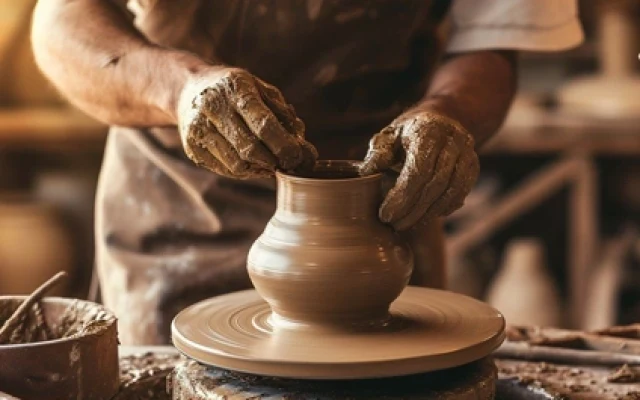
The potter centers clay on a rotating wheel and raises the form by hand.
Small variations in profile and surface can remain even when pieces belong to one series.
Molded Pottery
Clay is pressed into or around a prepared form.
Molding can produce repeated shapes efficiently and can still include hand-finishing or painting.
Cast Ceramics
Liquid clay can be poured into a mold and allowed to form a wall against the surface.
This method is useful for detailed or repeated objects.
It should not be sold as individually wheel-thrown work.
Pottery Demonstration or Hands-On Workshop?
| Experience | Best For | What to Expect | Main Limitation |
|---|---|---|---|
| Pottery demonstration | Visitors with limited time | Watch a potter use the wheel and learn about the clay | Little or no individual wheel time |
| Hands-on pottery workshop | Couples, families and craft-focused travelers | Shape clay with guidance from an instructor | The piece may not be fired before departure |
| Private pottery session | Small groups and special occasions | Flexible timing and closer instruction | Higher price and advance reservation |
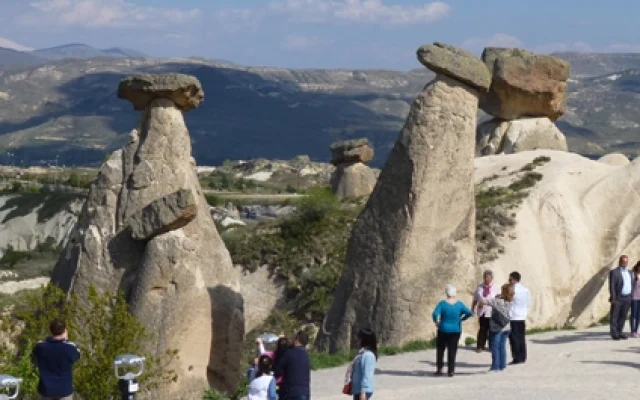
Many Cappadocia Red Tour programs include a short demonstration in Avanos.
A full workshop for every participant should not be assumed.
Related Tours
Popular experiences for this destination
 Red Tour
Red Tour Cappadocia
Discover Göreme Open-Air Museum, Avanos pottery workshops, and breatht…
Pottery Workshop Cappadocia
Learn the ancient art of pottery from Avanos masters, try shaping clay…
 Adventure
Trekking Tours Cappadocia
Hike Cappadocia’s spectacular valleys, fairy chimneys, and cave dwelli…
 Adventure
ATV Tour Cappadocia
Ride powerful ATVs through Cappadocia’s unique valleys, fairy chimneys…
 Adventure
Horseback Riding Tour Cappadocia
Experience Cappadocia on horseback, riding through valleys, hidden tra…
Cappadocia Turkish Bath
Relax with a traditional hammam ritual including steam, scrubbing, and…
 Balloon
Balloon Watching Tour Cappadocia
Watch the magical sight of hundreds of hot air balloons rising at sunr…
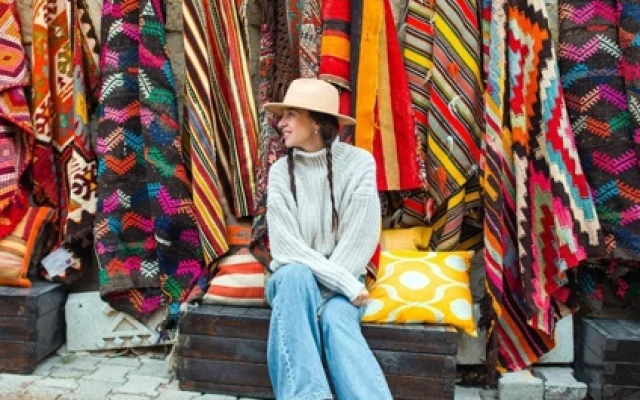
Carpet Weaving Experience Cappadocia
Discover the art of Turkish carpet weaving, learn traditional techniqu…
 Balloon
Cappadocia Hot Air Balloon Tour
See Cappadocia from the air at sunrise on a professionally operated ho…
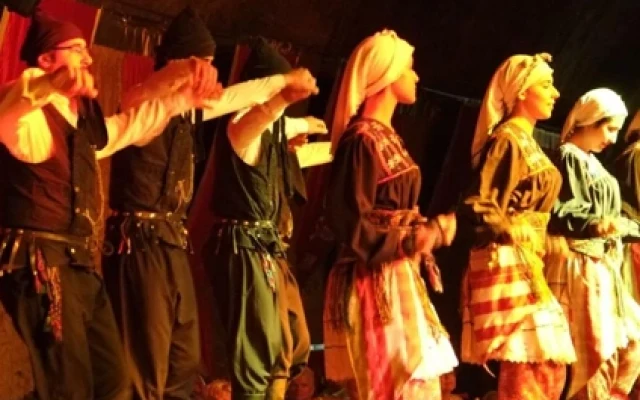
Turkish Night Show Cappadocia
Enjoy a traditional Turkish dinner with live music, folk dances, and w…

Professional Photo Shoot Cappadocia
Capture your Cappadocia moments with a guided professional photo shoot…

Airport Transfer Service Cappadocia
Travel comfortably and safely between Cappadocia’s airports and your h…
Review the Avanos pottery workshop guide or reserve a dedicated Cappadocia pottery workshop when wheel time is the priority.
Questions to Ask Before Buying Pottery
- Was the piece wheel-thrown, hand-built, molded or cast?
- Was it painted by hand?
- Which clay body and firing method were used?
- Is the glaze suitable for food contact?
- Can it hold water safely?
- Is it suitable for a dishwasher, microwave or oven?
- Does the piece have a workshop mark or artist signature?
- How should it be packed for travel?
Food-Safe and Decorative Ceramics
A decorative plate is not automatically suitable for serving food.
Glaze composition, firing temperature and surface condition affect intended use.
Ask the workshop for clear instructions.
When no reliable information is available, use the piece for display rather than food or drink.
Small cracks, damaged glaze and rough surfaces can make cleaning difficult.
Taking Ceramics Home
Small pieces are easier to protect in luggage, but handles, rims and projecting decoration remain vulnerable.
Ask the workshop to wrap each object separately.
Keep heavy items away from thin bowls and plates.
Place fragile ceramics inside the strongest section of the suitcase rather than directly against the outer shell.
Large or valuable pieces may require professional shipping and written damage terms.
Güray Museum and Ceramic History
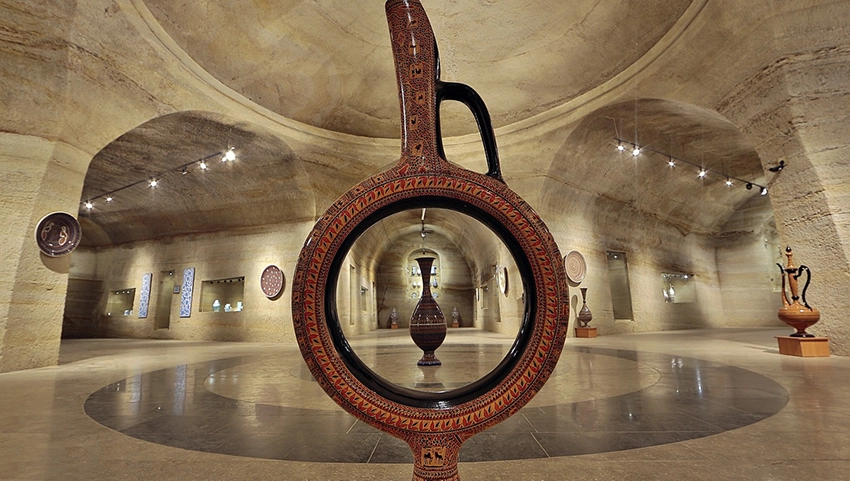
Güray Museum presents archaeological, historical and contemporary ceramic works in an underground exhibition setting near Avanos.
The museum provides a broader chronology than a normal showroom.
A museum visit and a pottery workshop serve different purposes.
The museum emphasizes objects, periods and artistic development, while a workshop emphasizes clay preparation, hand movement and production.
Opening hours, exhibitions and admission can change, so confirm current information directly.
Handmade Carpets and Kilims
Carpet and kilim workshops introduce visitors to loom weaving, knotting, flat weaving, yarn and regional design.
The most important distinction is not where the textile is sold.
Ask where it was woven, how it was constructed and which fibers were used.
A carpet displayed in Cappadocia may have been produced in another Turkish weaving region.
Shop location and production origin should be listed separately.
Carpet and Kilim Basics
- Carpet: Usually has a raised pile created through knots.
- Kilim: A flat-woven textile without raised pile.
- Warp: Vertical foundation threads.
- Weft: Horizontal threads securing or creating the structure.
- Pile: Raised yarn visible on the front of a knotted carpet.
Wool, cotton and silk may be used in different parts of the same textile.
The phrase silk carpet should be clarified because it may refer to pile, foundation or a blend.
Natural Dye and Motif Claims
Soft or uneven colors do not prove that natural dyes were used.
Natural and synthetic dyes can both produce subtle or strong shades.
Color variation known as abrash can result from different yarn or dye batches.
It does not prove age, authenticity or natural dye by itself.
Motif meanings also vary by region and workshop tradition.
A romantic sales explanation should not replace documented origin.
How to Check a Handmade Carpet
- Inspect the back and look for the weaving structure.
- Check whether the pattern is visible from the back.
- Examine whether the fringe continues from the foundation.
- Ask which knot or flat-weaving technique was used.
- Request pile, warp and weft materials separately.
- Ask about repairs, age and actual weaving region.
- Keep dimensions and product photographs with the invoice.
No single test proves authenticity.
Antique and investment claims require specialist evaluation beyond a normal showroom presentation.
Read the Cappadocia carpet and kilim guide before a major purchase, or join a carpet weaving experience for a production-focused visit.
Onyx and Decorative Stonework
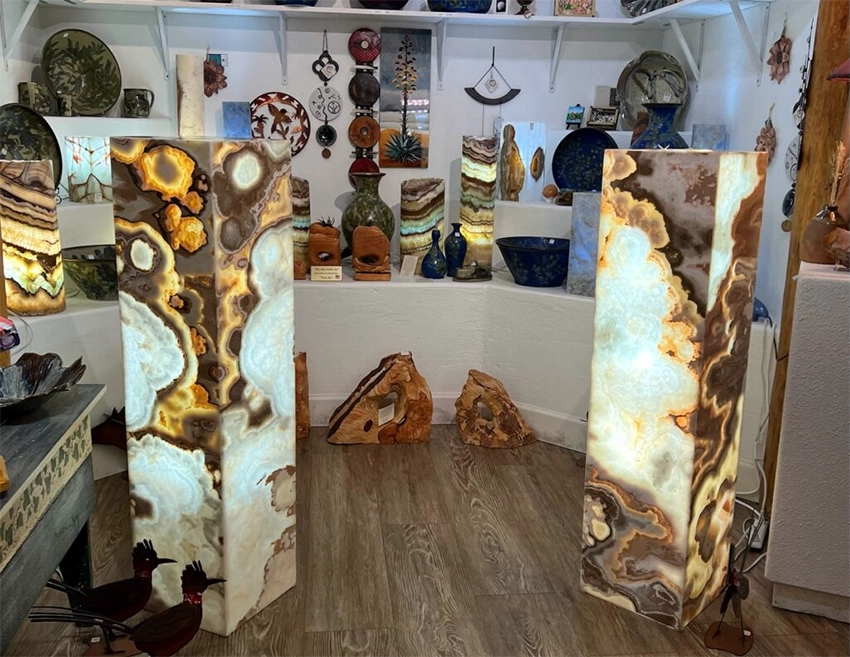
Stone workshops sell lamps, bowls, vases, chess sets, jewelry and small decorative objects.
Many pieces are marketed as onyx, but trade names and geological material do not always match precisely.
Translucent calcite, banded stone and other decorative materials can be sold under broad showroom labels.
The stone may also be imported and carved locally.
Ask for both the material and the source rather than assuming that every object was extracted in Cappadocia.
How Stone Objects Are Produced
Production can include cutting, turning, drilling, carving, sanding and polishing.
A workshop demonstration may show only one finishing stage.
Machine tools are common and do not prevent later hand-finishing.
The seller should explain whether the piece was shaped in the visible workshop or supplied by another producer.
The dedicated Cappadocia onyx stone guide covers material, carving and purchasing questions in greater detail.
Questions to Ask Before Buying Stonework
- What is the geological or trade name of the stone?
- Where was the raw material sourced?
- Was the object carved in this workshop?
- Was it hand-finished or fully machine produced?
- Has the stone been dyed, filled or repaired?
- How should the surface be cleaned?
- Can the item tolerate water or heat?
- Is secure travel packaging included?
Buying a Stone Lamp
A lamp requires more checks than a decorative bowl.
Confirm the voltage, plug type, bulb fitting and maximum safe wattage.
Ask whether the wiring has an identifiable safety standard.
Electrical parts may need replacement after arrival in another country.
Request separate packing for the stone body and shade when appropriate.
Do not rely only on a verbal promise that the lamp works everywhere.
Soğanlı Dolls and Village Crafts
Soğanlı dolls are colorful fabric figures associated with Soğanlı Valley.
They are made with fabric, simple internal structures and clothing inspired by local dress.
Colors, stitching and facial details vary because handmade dolls are not intended to be completely identical.
The craft became an important source of income for village women and helped make the name Soğanlı known beyond the valley.
Buying directly from a clearly identified village producer gives visitors a better opportunity to ask who made the doll.
How to Recognize a Locally Handmade Doll
A handmade Soğanlı doll may show:
- Visible hand stitching
- Small differences in facial details
- Layered fabric clothing
- Variation in head coverings and decoration
- A simple internal frame rather than a factory mold
- Information about the maker or family
Variation alone does not prove local production.
Speak directly with the seller and ask whether the doll was made in Soğanlı.
It is also unfair to assume that every doll near the village entrance is factory made.
Planning a Soğanlı Craft Stop
Soğanlı is far from the central Göreme and Avanos craft route.
The village makes more sense as part of a southern Cappadocia day than as a brief shopping detour.
Allow time for the churches, village landscape and local producers.
A rushed stop that includes only a souvenir table misses the relationship between craft, agriculture and village life.
Confirm who will be available when meeting a specific maker is important.
Nevşehir Pumpkin Seeds
Nevşehir pumpkin seeds are a practical edible souvenir when they are sealed and labeled for travel.
Check the production or packing date, salt level and storage instructions.
Open market products may be fresh but can be less convenient for international transport.
Food import rules vary by destination.
Travelers should check whether seeds and agricultural products can be carried into their home country.
Grape Molasses and Local Food Products
Grape molasses, preserves, dried foods and local snacks appear in markets and specialty shops.
Confirm ingredients, allergens, packaging and storage requirements.
Glass jars require careful wrapping and add luggage weight.
Liquid restrictions apply to cabin baggage.
Choose a sealed commercial package when customs or leakage is a concern.
Testi Kebab Inspired Ceramics
Small clay vessels and serving pieces are sometimes marketed through their connection with Testi Kebab.
A decorative pot should not be assumed to be safe for cooking.
Ask whether the vessel is food-safe, heat-resistant and intended for direct flame or oven use.
Some pieces are made only as souvenirs.
The association with the regional dish can be meaningful even when the object is decorative, provided its use is described honestly.
Best Small Souvenirs for Luggage
- A small hand-painted ceramic bowl
- A flat ceramic tile or ornament
- A compact Soğanlı doll
- A small kilim cushion cover
- A carved stone ornament without fragile projections
- Sealed pumpkin seeds or other permitted food products
- A workshop postcard, print or documented small craft item
Smaller does not automatically mean lower quality.
Related Tours
Popular experiences for this destination
Red TourRed Tour Cappadocia
Discover Göreme Open-Air Museum, Avanos pottery workshops, and breatht…
Pottery Workshop Cappadocia
Learn the ancient art of pottery from Avanos masters, try shaping clay…
AdventureTrekking Tours Cappadocia
Hike Cappadocia’s spectacular valleys, fairy chimneys, and cave dwelli…
AdventureATV Tour Cappadocia
Ride powerful ATVs through Cappadocia’s unique valleys, fairy chimneys…
AdventureHorseback Riding Tour Cappadocia
Experience Cappadocia on horseback, riding through valleys, hidden tra…
Cappadocia Turkish Bath
Relax with a traditional hammam ritual including steam, scrubbing, and…
BalloonBalloon Watching Tour Cappadocia
Watch the magical sight of hundreds of hot air balloons rising at sunr…
Carpet Weaving Experience Cappadocia
Discover the art of Turkish carpet weaving, learn traditional techniqu…
BalloonCappadocia Hot Air Balloon Tour
See Cappadocia from the air at sunrise on a professionally operated ho…
Turkish Night Show Cappadocia
Enjoy a traditional Turkish dinner with live music, folk dances, and w…
Professional Photo Shoot Cappadocia
Capture your Cappadocia moments with a guided professional photo shoot…
Airport Transfer Service Cappadocia
Travel comfortably and safely between Cappadocia’s airports and your h…
A well-documented piece made by a known workshop can carry more cultural value than a large generic object.
Best Souvenirs for the Home
For regular use, prioritize function and care requirements.
- Food-safe bowls and serving plates
- A durable wool carpet suitable for the intended room
- A kilim runner or wall textile
- A properly wired stone lamp
- A decorative vessel with stable glaze
- A framed textile or small handmade doll display
Measure the available space before buying a carpet or large wall piece.
How to Avoid Mass-Produced Souvenirs
- Ask where the item was produced.
- Ask whether the seller knows the maker.
- Check whether pottery was wheel-thrown, molded or cast.
- Inspect the back and foundation of carpets.
- Request the real stone type and source.
- Compare several examples for identical factory repetition.
- Look for a workshop mark, signature or written description.
- Do not rely only on phrases such as authentic or traditional.
Machine-assisted production is not automatically dishonest.
The problem begins when the method, material or origin is misrepresented.
Handmade Does Not Mean Completely Tool-Free
Artisans use wheels, kilns, looms, drills, saws, polishing tools and other equipment.
Handmade does not require every stage to be performed without machinery.
The useful question is which stages were completed by hand and which were standardized.
A wheel-thrown bowl fired in a modern kiln can still be handmade.
A stone object cut by machine and finished by hand should be described as such.
How to Compare Quality
Quality depends on the product and intended use.
Ceramics
Check stability, rim finish, glaze condition, foot and intended function.
Carpets
Check structure, materials, edges, repairs, condition and suitability for the room.
Stonework
Check cracks, filled areas, polish, balance and electrical components when relevant.
Fabric Crafts
Check stitching, fabric layers, attached decoration and information about the maker.
Natural variation can be part of hand production, but damage and poor finishing should not be romanticized as authenticity.
Pricing and Negotiation
Small fixed-price souvenirs may have limited room for negotiation.
Higher-value carpets, stone pieces and large ceramics can involve discussion about price, shipping or payment.
Compare similar products rather than bargaining only by size.
Ask for the final price in one currency.
Confirm whether packaging, delivery, card fees and taxes are included.
Do not buy because a price is described as available only for the next few minutes.
What to Put on the Invoice
| Product | Important Written Details |
|---|---|
| Pottery | Dimensions, production method, glaze use and workshop |
| Carpet or kilim | Size, materials, technique, origin, condition and restoration |
| Stone object | Stone type, source, dimensions and electrical information |
| Village craft | Maker, village or workshop when known |
| Shipped purchase | Total price, courier, tracking, insurance and damage policy |
International Shipping
Some workshops arrange international delivery for carpets, ceramics and stone objects.
Before paying, request:
- Photographs of the exact item
- Total purchase and shipping cost
- Courier company and tracking method
- Insurance coverage
- Estimated dispatch process
- Customs responsibility
- Return and damage procedure
Keep the invoice, card receipt, product description and shipping documents until the item has arrived and been inspected.
Customs and Cultural Property
Modern souvenirs and genuinely old cultural objects can be treated differently by export and import rules.
Be cautious when an item is described as antique, archaeological or historically excavated.
Do not purchase an object that may have been removed illegally from a protected site.
For antique textiles, old manuscripts, coins or archaeological material, obtain specialist advice and appropriate documentation.
Never agree to false customs declarations or concealed value.
Packaging Fragile Purchases
Ask for professional packing before leaving the shop.
Ceramics and stone should be protected against both impact and movement inside the box.
Handles and projections require additional support.
Carpets should be rolled or folded according to their structure and condition.
Photograph the item before packing and keep the shop contact details.
Payment Safety
- Confirm the final currency and total amount.
- Check card fees or exchange-rate differences.
- Read return and cancellation terms.
- Make sure the receipt names the correct business.
- Match the invoice to the selected item.
- Keep written messages about shipping.
- Avoid paying a large balance without documentation.
Workshop Etiquette
Ask before photographing artisans or working areas.
Do not interrupt a potter, weaver or stone carver during a delicate stage for repeated posed photographs.
Keep drinks, bags and children away from tools and fragile displays.
Respect a workshop that limits photography of designs or production methods.
A demonstration deserves attention even when no purchase is planned.
Supporting Artisans Responsibly
Ask who made the product and how the seller works with the producer.
A workshop can employ artisans, purchase from independent makers or sell products from several regions.
Transparency is more useful than a vague promise that every sale supports one local family.
Booking a paid workshop can support skilled teaching even when no expensive item is purchased.
Buying a smaller clearly documented piece may be more responsible than buying a large object under pressure.
Where to Shop in Cappadocia
Avanos
Best known for pottery, ceramic workshops and the Güray Museum.
Göreme
Convenient for mixed souvenir shops, carpet showrooms, jewelry and visitor-focused retail.
Ürgüp
Offers established shops, galleries, food products and higher-end craft retail.
Uçhisar
Includes boutique shops and galleries connected with hotels and viewpoint areas.
Soğanlı
The strongest place to ask directly about locally made fabric dolls.
Availability and opening times vary between individual businesses.
Plan a Craft-Focused Day in Avanos
A practical Avanos craft day can include:
- A morning pottery workshop
- Time in Avanos town center
- A riverside lunch
- Güray Museum or a second ceramic studio
- A carpet weaving visit when the presentation is confirmed
Do not schedule several long showroom visits unless shopping is the main purpose of the day.
Use the Cappadocia stay and food guide when planning lunch and town time.
Craft Stops on the Red Tour
Red Tour routes commonly include Avanos, but the exact workshop and visit format vary.
Ask whether the stop includes:
- A pottery demonstration
- Individual wheel time
- A showroom visit
- A fixed shopping period
- Güray Museum admission
The presence of Avanos on the itinerary does not guarantee a full pottery class.
Private Cappadocia Craft Route
A private Cappadocia Mix Tour can be adjusted around pottery, carpets, stonework and selected cultural stops.
Private transport provides route flexibility but does not automatically make every workshop private.
Confirm which studios will be visited and whether the driver or guide receives commissions from purchases when transparency is important.
A balanced route should include cultural and landscape stops rather than only retail venues.
Craft Route With Soğanlı
Soğanlı belongs to a different geographic route from Avanos.
Combine the dolls with Soğanlı Valley, village life and southern Cappadocia rather than adding the area to an already full central craft day.
The journey requires realistic transport time.
Use the getting to and around Cappadocia guide when comparing a rental car, private driver and organized route.
Visiting With Children
Pottery and weaving can be engaging for children when participation is planned.
Confirm minimum ages, adult assistance and the number of children sharing each station.
Keep children away from kilns, cutting tools, electrical equipment and fragile displays.
A short hands-on activity is usually more effective than a long sales presentation.
Soğanlı dolls can provide a useful connection between craft, clothing and village life.
Accessibility
Accessibility varies between modern showrooms, historic buildings and rock-cut workshops.
Ask about steps, doorway width, toilets, seating and the distance from the vehicle.
A showroom may be accessible while the working area is not.
Pottery wheels and low looms may require adapted seating.
Stone workshops can contain dust, noise and uneven floors.
Confirm conditions directly when mobility or sensory access is important.
Common Handicraft Shopping Mistakes
- Assuming everything sold locally was made locally: Ask for the actual origin.
- Confusing a demonstration with a workshop: Confirm individual participation.
- Calling all pottery wheel-thrown: Molding and casting are also common.
- Assuming every glaze is food-safe: Ask about intended use.
- Believing every carpet motif has one meaning: Interpretations vary by region.
- Calling every translucent stone onyx: Ask for the material name.
- Buying electrical lamps without checking voltage: Wiring and plugs matter.
- Assuming variation proves handmade production: Check construction and documentation.
- Shipping without written conditions: Keep insurance and damage terms.
- Feeling obligated after free tea or a demonstration: Purchasing remains optional.
Booking a Cappadocia Craft Experience
Reserve a dedicated pottery or weaving activity when hands-on participation is more important than shopping.
Provide the preferred date, hotel, group size, ages of children, language and chosen crafts.
Use the contact page to confirm workshop duration, transport and current availability.
Ask whether the price includes materials, individual instruction, museum admission and hotel transfer.
Questions Travelers Ask About Cappadocia Souvenirs
What handicrafts is Cappadocia famous for?
Cappadocia is known for Avanos pottery, carpets and kilims, decorative stonework, Soğanlı dolls and regional food products.
Where should you buy pottery?
Avanos offers the strongest concentration of pottery workshops, showrooms and ceramic heritage.
Can visitors make pottery in Avanos?
Yes. Dedicated workshops allow beginners to try a wheel with guidance.
Does Red Tour include a pottery workshop?
Many programs include a demonstration, but a full hands-on class for every guest is not guaranteed.
How can you tell if pottery is handmade?
Ask how it was formed, decorated and fired, and look for a workshop mark or written production description.
Are all carpets sold in Cappadocia woven locally?
No. Ask for the actual weaving region and production method.
Are all stone lamps made from local onyx?
No. Material sources vary, and the trade name onyx can be used broadly.
Where should you buy Soğanlı dolls?
Buying in Soğanlı provides the strongest opportunity to ask directly about the maker and village production.
Can souvenirs be shipped internationally?
Some workshops arrange shipping. Confirm tracking, insurance, customs responsibility and damage procedures in writing.
Is bargaining expected?
It may occur for high-value items, but small souvenirs can have fixed prices. Confirm the final total before paying.
What is the easiest souvenir to carry?
Small pottery, a compact fabric doll, a flat textile item or sealed food product is generally easier than a large carpet or stone lamp.
Can food souvenirs be taken abroad?
Rules depend on the destination. Check current customs restrictions for seeds, liquids and agricultural products.
Can visitors shop without joining a tour?
Yes. Avanos, Göreme and Ürgüp have independent workshops and shops accessible without a tour.
Is a private craft route useful?
Yes when the studios are selected in advance and the route leaves enough time for making, questions and non-commercial stops.
Are workshops suitable for children?
Many are, but age, supervision and participation conditions should be confirmed.
A More Thoughtful Way to Buy in Cappadocia
Cappadocia's craft culture cannot be reduced to one pottery wheel, carpet presentation or souvenir street.
Avanos ceramics connect archaeological history with living workshops and contemporary production.
Carpets and kilims connect material, regional design and skilled labor across Anatolia.
Stonework shows how raw material, machinery and hand-finishing can combine.
Soğanlı dolls demonstrate how a village craft can support local producers and represent living rural culture.
The most responsible purchase begins with clear questions about maker, material, technique, origin and use.
Travelers who take time to compare, request written details and avoid pressure are more likely to return home with an object that has a meaningful and honest connection to the region.
Use the Cappadocia trip planning guide and the Cappadocia safety and essentials guide when adding workshops, village routes and shopping time to the wider itinerary.