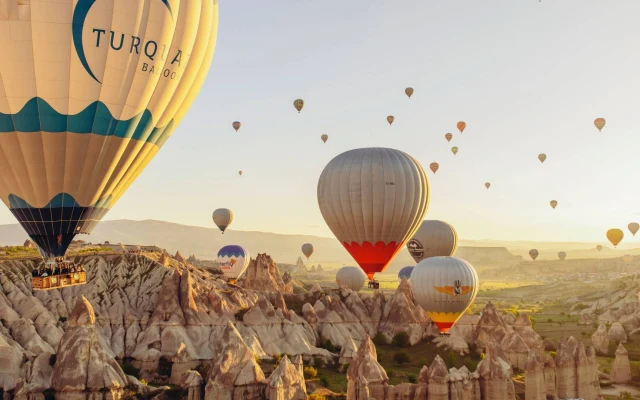
Mustafapasa (Sinasos)
Mustafapaşa Cappadocia Travel Guide
Mustafapaşa, historically known as Sinasos, is one of the most architecturally distinctive settlements in Cappadocia. The village is known for late Ottoman stone mansions, Greek Orthodox churches, mosques, a 19th-century madrasa and walking routes leading into Monastery Valley, Hidden Valley and Gomeda Valley.
Allow at least half a day for the historic center. A full day is more suitable when the plan also includes churches, private museums, Monastery Valley or one of the longer rural walking routes.
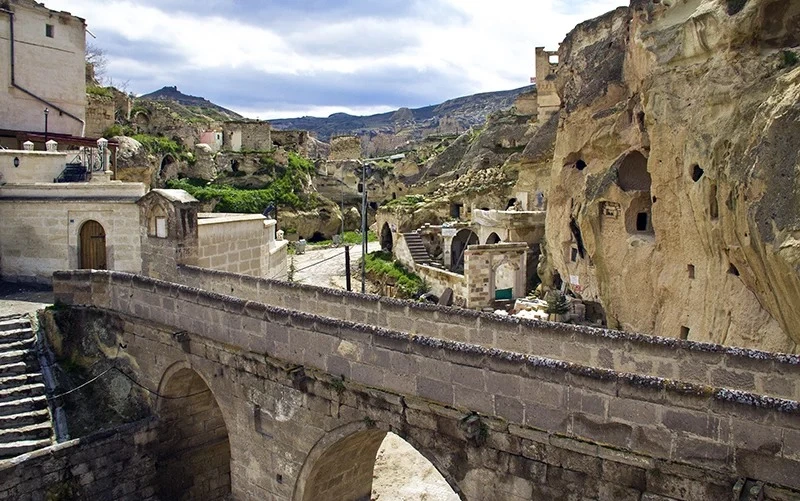
Mustafapaşa offers a different experience from Cappadocia's busier tourism centers. Instead of being defined mainly by fairy chimneys or cave hotels, its identity comes from a historic settlement pattern shaped by stone houses, rock-cut service rooms, churches, mosques, courtyards and agricultural valleys.
The village is especially rewarding for travelers interested in architecture, population history, religious heritage and quieter walking routes. Its main streets can be explored on foot, while several surrounding monuments and valleys require additional time and route planning.
Mustafapaşa often feels more like an open-air architectural archive than a conventional sightseeing stop. Historic facades, active university buildings, private homes, religious monuments and restored businesses remain interwoven rather than separated inside one ticketed museum complex.
The village is easiest to understand in layers. The central streets introduce the mansions, church, mosque and madrasa, while the outer routes lead toward rock-cut religious sites and agricultural valleys.
A short vehicle stop normally reveals only the main square and several facades. Visitors interested in architecture should allow time to walk behind the main streets, compare different house types and notice how constructed stone rooms connect with spaces carved into the slope.
Access is not uniform. Some monuments operate with regular visitor arrangements, while others are private, used by the university, active as places of worship or temporarily closed for conservation. Plan the route around what is open on the day rather than expecting one complete admission system.
Why Visit Mustafapaşa?
- Historic Sinasos architecture: The old neighborhoods contain elaborately carved stone facades, courtyards, balconies and painted interiors.
- Layered religious heritage: Greek Orthodox churches, rock-cut chapels, mosques and an Ottoman madrasa survive within the same settlement.
- Quieter atmosphere: Mustafapaşa usually feels calmer than Göreme and central Ürgüp.
- Walking access to valleys: Monastery Valley, Hidden Valley, Gomeda and Üzengi provide less crowded alternatives to Cappadocia's busiest trails.
- Historic accommodation: Several traditional mansions have been restored as boutique hotels and guesthouses.
- Strong regional location: The village can be combined with Ürgüp, Pancarlık Valley, the Three Beauties and southern Cappadocia routes.
The village works particularly well for travelers who prefer detailed architecture and local history to a rapid sequence of famous viewpoints. It is possible to spend several hours here without entering a major ticketed attraction.
How to Plan a First Visit to Mustafapaşa
Begin in the historic center and complete the main architectural walk before driving to the outer churches or beginning a valley route. This prevents repeated parking changes and makes the historical sequence easier to follow.
For a half-day visit, prioritize the central streets, the Church of Saints Constantine and Helena, Mehmet Şakir Paşa Madrasa and selected mansion facades. Add one private museum or a short Monastery Valley extension only when access and timing are clear.
For a full day, choose one longer secondary activity. Gomeda suits travelers prepared for uneven terrain, while the Art and History Museum or Old Greek House suits visitors who prefer an indoor cultural stop.
Do not attempt to combine every church, monastery and valley in one afternoon. The sites are spread across different access roads and paths, and several require more time than map distance suggests.
Parking is generally easier outside the narrowest historic streets. Leave the vehicle in a recognized area and explore the core on foot rather than driving from facade to facade.
Why Is Mustafapaşa Also Called Sinasos?
Sinasos was the historical Greek name of the settlement. During the late Ottoman period, the town had a prosperous Greek Orthodox community living alongside Muslim residents.
Many families from Sinasos maintained commercial connections with Constantinople, now Istanbul. Some became successful traders, particularly in seafood and caviar. Money sent back to Sinasos supported the construction of large houses, schools, fountains and churches.
This commercial wealth helps explain why the village contains architecture that feels unusually monumental for a settlement of its size. Large entrance portals, carefully cut stone facades and decorated interiors communicated social position as well as practical function.
The modern name Mustafapaşa was adopted after the population exchange period. Sinasos remains widely used when discussing the settlement's Greek Orthodox history, displaced community and architectural heritage.
Historical sources record several spellings and proposed explanations for the name Sinasos. These interpretations are not fully settled, so the name should not be reduced to one certain linguistic origin.
Today, both names carry meaning. Mustafapaşa identifies the living settlement, while Sinasos is commonly used in architectural studies, family histories and discussions of the former Greek Orthodox community.
Mustafapaşa and the Best Tourism Villages Recognition
Mustafapaşa was included in the first Best Tourism Villages list announced by the United Nations World Tourism Organization in 2021.
The recognition was connected with the village's cultural heritage, traditional urban character and potential for sustainable rural tourism. It should not be confused with UNESCO World Heritage status. Mustafapaşa is not listed as an independent UNESCO World Heritage property.
The recognition also does not mean that every historic structure is permanently open or completely restored. Many buildings remain private houses, university spaces, active religious buildings or protected structures with restricted access.
This distinction matters when planning a visit. Mustafapaşa is not an attraction where every important building can be entered with one ticket. Much of its value comes from walking respectfully through a living settlement.
The recognition should be treated as a framework for heritage and rural tourism, not as a guarantee of visitor infrastructure at every monument. Signs, opening arrangements, restoration work and accessibility can remain uneven.
The strongest visit therefore combines observation with restraint. Many of the most important architectural details can be understood from public streets without entering private property.
History of Sinasos and the Population Exchange
The most visible historical character of Mustafapaşa developed during the late Ottoman period. By the 19th and early 20th centuries, Sinasos contained wealthy merchant houses, neighborhood churches, schools and community buildings.
Greek Orthodox and Muslim residents lived within the same wider settlement, although they maintained distinct religious and community institutions. Some inhabitants spoke Greek, while Turkish was also used within the local Cappadocian Greek community.
Under the population exchange agreement associated with the 1923 Treaty of Lausanne, the Greek Orthodox population of Sinasos was required to leave Türkiye. Most departures took place in 1924.
Many displaced Sinasos families settled in Greece, including Nea Sinasos on the island of Euboea. Muslim families arriving from Greece were settled in Mustafapaşa and other parts of Cappadocia.
The exchange changed the social structure of the town. Churches lost their regular congregations, houses changed owners and some large buildings remained underused for long periods.
Mustafapaşa should therefore not be presented simply as an abandoned Greek village. Its history also includes the Muslim communities who lived there before the exchange, the incoming families who rebuilt their lives there and the present-day residents who continue to use and protect the settlement.
Looking only at the monumental Greek Orthodox buildings creates an incomplete picture. The mosques, madrasa, fountains, residential houses and present-day university life are equally important parts of Mustafapaşa's identity.
The population exchange was not a simple movement of empty buildings between two groups. Families lost homes, social networks and familiar landscapes, while incoming residents had to adapt to houses, agriculture and institutions created under different local conditions.
When discussing this history, avoid treating the village as frozen in 1924. Later residents repaired buildings, changed room functions, established new businesses and created the settlement visible today.
Some inscriptions and religious symbols survive on private homes. They belong to the architectural record and should be photographed only from public space unless permission is given.
Traditional Stone Mansions of Mustafapaşa

The stone houses are among the strongest reasons to visit Mustafapaşa. Most of the monumental mansions associated with old Sinasos date from the 19th and early 20th centuries.
The buildings often combine:
- Cut-stone exterior walls
- Rock-cut rooms extending behind the built structure
- Enclosed courtyards
- Arched doorways and windows
- Decorative stone carvings
- Painted ceilings or wall decoration
- Storage rooms, cellars and wine-production spaces
- Terraces adapted to the natural slope
The soft local stone could be shaped into detailed window frames, floral patterns, animals and geometric decoration. After exposure to air, the outer surface became more resistant.
Some houses contain secular wall paintings showing landscapes, flowers, curtains, architectural scenes and figures. These paintings differ from the religious frescoes found in Cappadocia's rock-cut churches.
Architecture tip: Do not look only at the complete mansion. Examine the entrance portals and the stonework above doors and windows. Greek inscriptions, construction dates, craftsmen's marks, flowers, animals and geometric motifs can reveal details that disappear when the village is viewed only through wide photographs.
The most elaborate portals often belonged to prominent houses, but the amount of decoration should not be used as a simple measurement of one family's exact wealth or profession. Buildings changed hands, were repaired and sometimes received additions in later periods.
Many historic houses remain private property. Visitors should not enter courtyards, open doors or abandoned-looking structures without permission.
The houses often follow the slope rather than one standard plan. A street-level entrance may lead to an upper living floor, while storage rooms, stables or wine spaces continue into rock behind the visible facade.
Restoration can make the original sequence difficult to read. New stonework may match the historic material closely, and an apparently old room may have been substantially reconstructed for hotel or restaurant use.
Look for construction joints, changes in stone color and differences in carving depth. These details can indicate repair or later additions, although they should not be used to assign an exact date without documentation.
Historic interiors are vulnerable to moisture, vibration and careless contact. Do not touch painted surfaces, lean against decorated walls or use flash when the operator prohibits it.
Best Things to Do in Mustafapaşa
1. Explore the Historic Village Center
Begin in the central part of Mustafapaşa and explore the surrounding streets slowly. The village is best understood through the relationship between its houses, churches, mosques, fountains and public buildings.
Look for:
- Carved stone door surrounds
- Greek inscriptions
- Dates and craftsmen's marks
- Decorative balconies
- Painted interior surfaces visible from authorized areas
- Rock-cut rooms behind stone-built facades
- Traditional fountains and communal ovens
The village rewards close observation. Two facades that initially look similar may contain completely different carvings, inscriptions and window designs.
The center contains slopes, stone paving and occasional vehicle traffic. Comfortable shoes are more useful than formal footwear, even when the visit does not include hiking.
A central walking circuit normally takes 60 to 90 minutes before interior visits. It becomes longer when photographing inscriptions, entering approved monuments or stopping at a cafe.
Walk both sides of the main streets. Facade carvings are often positioned above eye level, and some of the most informative views appear only when looking back from the opposite slope.
Keep entrances clear. Residents, university staff and businesses continue to use the same streets that visitors photograph.
2. Visit the Church of Saints Constantine and Helena

The Church of Saints Constantine and Helena is the most prominent religious monument in central Mustafapaşa. It stands close to the main civic area and is built largely from carefully cut local stone.
Related Tours
Popular experiences for this destination
 Blue Tour
Blue Tour Cappadocia
Explore hidden valleys, ancient churches, and cultural gems on Cappado…
 Adventure
Trekking Tours Cappadocia
Hike Cappadocia’s spectacular valleys, fairy chimneys, and cave dwelli…
Vip Mix Tour Cappadocia
Experience the ultimate Cappadocia highlights in comfort-historic vall…
 Red Tour
Red Tour Cappadocia
Discover Göreme Open-Air Museum, Avanos pottery workshops, and breatht…
 Green Tour
Green Tour Cappadocia
Explore Derinkuyu underground city, the beautiful Ihlara Valley, and S…

Classic Car Tour Cappadocia
Step into nostalgia with a vintage classic car ride through Cappadocia…
 Adventure
Jeep Safari Tour Cappadocia
Take an off-road jeep adventure across Cappadocia’s rugged landscapes,…

Cappadocia Rent A Car
Explore Cappadocia freely at your own pace with flexible car rental op…
Nostalgic Electric Car Tour Cappadocia
Ride eco-friendly nostalgic electric cars through Cappadocia’s valleys…
 Adventure
ATV Tour Cappadocia
Ride powerful ATVs through Cappadocia’s unique valleys, fairy chimneys…
 Adventure
Horseback Riding Tour Cappadocia
Experience Cappadocia on horseback, riding through valleys, hidden tra…
Professional Photo Shoot Cappadocia
Capture your Cappadocia moments with a guided professional photo shoot…
The present structure reflects more than one construction and repair phase. Inscriptions and local studies associate the church with an 18th-century phase and substantial work during the 19th century.
The entrance is surrounded by detailed stone carving. Vine scrolls, animal figures, winged beings and symbolic imagery demonstrate the skill of the stone carvers who worked on the facade.
Spend time examining the entrance before going inside. The carvings are easier to understand when viewed as part of a carefully planned public facade rather than as isolated decorative details.
The interior once contained extensive painted decoration. Only parts of this program survive, and later repairs have also changed the appearance of the building.
The church may occasionally be used for ceremonies, commemorations or cultural events. Access, opening times, photography rules and admission arrangements can change. Check the current information displayed at the site.
Allow time for the exterior even when the interior is closed. The entrance carving, masonry proportions and position within the civic center make the facade one of the village's most informative architectural documents.
Do not describe every surviving image as an original Byzantine fresco. The building's visible form and decoration reflect later community use, repair and alteration as well as older religious traditions.
3. See the Rock-Cut Church of Saint Basil
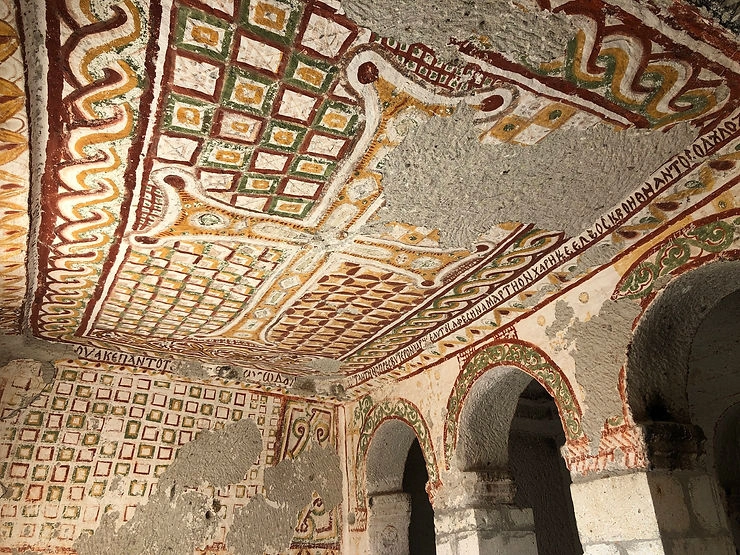
The Church of Saint Basil, also known locally through forms such as Ayios Vasilios, is one of the important rock-cut monuments associated with Mustafapaşa.
The structure was used and altered across different periods. Parts of the church appear to have been recut or redecorated during the late Ottoman era, showing that rock-cut religious architecture did not belong only to the early Byzantine centuries.
Surviving paintings include fragments of sacred figures and compositions associated with Christ, the Virgin Mary, John the Baptist and the apostles.
The church should not be confused with the smaller Saint Basil Chapel found on another route outside the center. Local names, map labels and translations may vary, so confirm the correct monument before setting out.
This naming confusion is common in Cappadocia. A map entry using Saint Basil may refer to a chapel, church or monument in a completely different valley.
Before traveling, compare the map position with a photograph or ask a guide to confirm the site. Similar translated names can send independent visitors to the wrong road or valley entrance.
Access to rock-cut churches can change after erosion, restoration or land-use decisions. A visible doorway does not confirm that entry is permitted or safe.
4. Visit Saint Basil Chapel
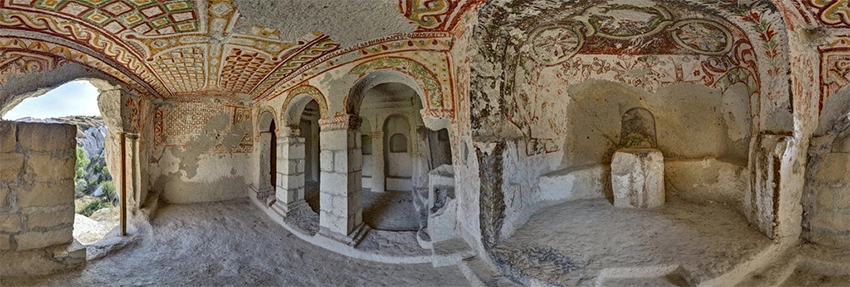
Saint Basil Chapel is a smaller rock-cut monument outside the main village center. It is generally associated with an earlier decorative tradition than the monumental late Ottoman churches of Sinasos.
The interior contains red ochre lines, crosses, columns, geometric forms and plant-inspired decoration. These relatively simple designs should not automatically be described as proof that the chapel was created during Iconoclasm. Geometric decoration continued to be used in different periods and contexts.
The chapel contains more than one internal section and includes burial-related spaces. Its exact development may reflect several phases of carving and use.
The route may cross rural paths and uneven ground. Confirm access conditions before walking there independently.
Carry an offline map and set a turnaround time. Small chapels outside the center may require more route finding than the monument itself requires for viewing.
5. Explore Saint Nicholas Monastery
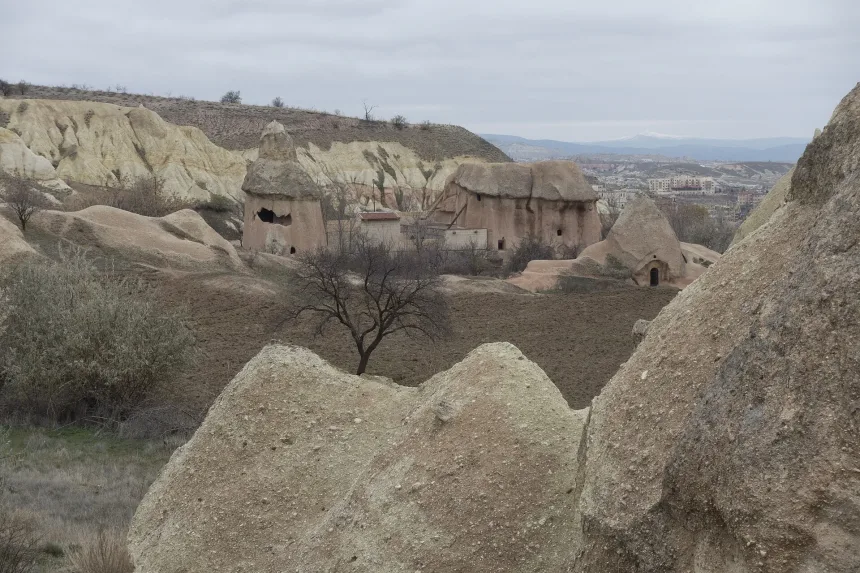
Saint Nicholas Monastery is one of the most substantial religious complexes around Mustafapaşa. It combines carved chambers with built architectural elements added or repaired during later periods.
The complex includes interconnected rooms and religious spaces created within the rock. Its present appearance does not represent one single construction date. Earlier rock-cut areas were adapted, enlarged and given new facades as the needs and resources of the community changed.
Local memory connects the site with religious respect extending beyond a single community. Such traditions are important, but they should be distinguished from documented architectural history.
Restoration work and modern additions may be visible inside the complex. Visitors should not assume that every icon or painted surface belongs to the original historical decoration.
Read modern devotional objects and restored surfaces separately from the surviving architecture. Both may be meaningful to current users, but they do not provide the same historical evidence.
Closed rooms and barriers should be respected. Rock-cut complexes can contain weakened ceilings, unsupported edges and passages that no longer connect safely.
6. Visit Mehmet Şakir Paşa Madrasa
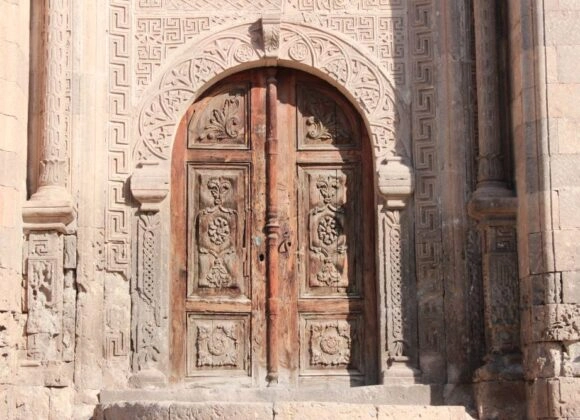
Mehmet Şakir Paşa Madrasa is one of the most important Islamic educational buildings in Mustafapaşa. It was constructed in 1890 and represents the Muslim architectural heritage of the late Ottoman settlement.
The building has a U-shaped plan organized around a courtyard. An arched portico provides access to rooms originally connected with education and accommodation.
The entrance contains a multi-line Ottoman inscription. The structure also served different functions during the Republican period, including educational and commercial uses.
Today, the building is associated with the Mustafapaşa campus of Cappadocia University. This gives the historic structure a continuing educational role rather than leaving it as an empty monument.
Visitor note: The presence of students and university activity is part of the building's modern identity. It should not be treated as an unrestricted open-air museum. Academic use, events and security arrangements may affect access to the courtyard and interior rooms.
Read the wider guide to Cappadocia's madrasahs and caravanserais for more information about Islamic education and travel architecture in the region.
The madrasa is important because it prevents the village story from being told only through Greek Orthodox monuments. Its educational history and present university use show continuity within Mustafapaşa's Muslim and civic heritage.
7. See the Great Mosque and Islamic Heritage
The historic mosque near the center reflects Mustafapaşa's long-standing Muslim community. It should be included in the village narrative alongside the better-known Greek Orthodox monuments.
Later repairs can make the original construction phases difficult to recognize. Visitors should avoid assigning every visible feature to one date or architectural period.
The mosque is an active place of worship. Remove shoes before entering carpeted areas, dress respectfully and avoid visiting during congregational prayer unless invited.
Ask before photographing the interior when worshippers are present. A quiet exterior visit may be more appropriate when prayer or community activity is underway.
8. Photograph Maraşoğlu Bridge
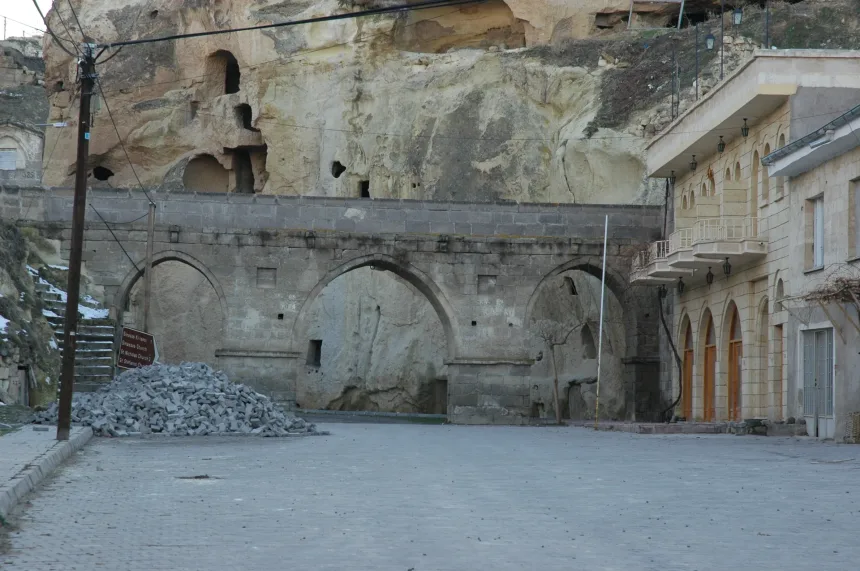
Maraşoğlu Bridge is a small stone landmark integrated into the village streetscape. It is commonly associated with the 19th-century development of Sinasos.
The bridge is valuable not because of its size, but because it shows how circulation routes, houses and natural changes in ground level were connected within the settlement.
Its arch and the surrounding stone facades create one of the village's most characteristic architectural compositions.
A wide photograph records the complete street, while a closer view reveals how the bridge meets the neighboring walls and buildings.
Because the bridge is part of an active street, take photographs without blocking residents or vehicles. Late-afternoon side light usually reveals the arch and masonry joints more clearly than flat midday light.
9. See Asmalı Konak and the Old Greek House
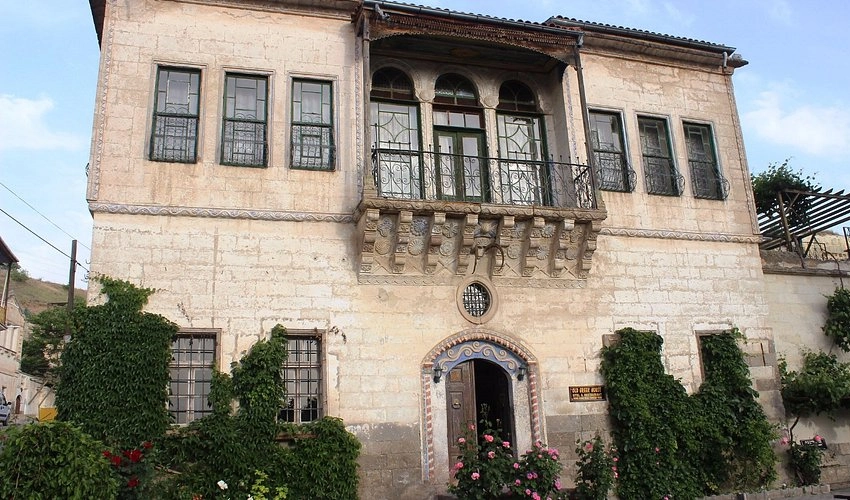
One of Mustafapaşa's historic mansions became widely known in Türkiye through the television series Asmalı Konak, first broadcast in the early 2000s.
The property is also known as the Old Greek House and has long been associated with hospitality and dining. The television connection should not overshadow its architectural value as part of the late Ottoman Sinasos townscape.
Clearing the confusion: Asmalı Konak is associated with more than one Cappadocia location, which is why visitors sometimes confuse Mustafapaşa with Ürgüp. The Old Greek House is one of the best-known properties connected with the series, but travelers should not assume that every building marketed with the Asmalı Konak name is the same filming location.
The building is privately operated. Access to guest rooms, courtyards or decorated interiors may depend on current business arrangements. Ask permission before entering areas beyond public restaurant or reception spaces.
Dining here can add a popular-culture layer to the visit, but the building is most rewarding when its stonework, interior layout and place within the Sinasos mansion tradition are also noticed.
Visitors interested mainly in the television series should confirm the current public areas before arriving. Restaurant service does not automatically include access to guest rooms or every filming space.
The building should also be compared with other mansions in the village. Its importance does not come only from television history, and neighboring facades may preserve equally valuable architectural details.
10. Visit the Cappadocia Art and History Museum
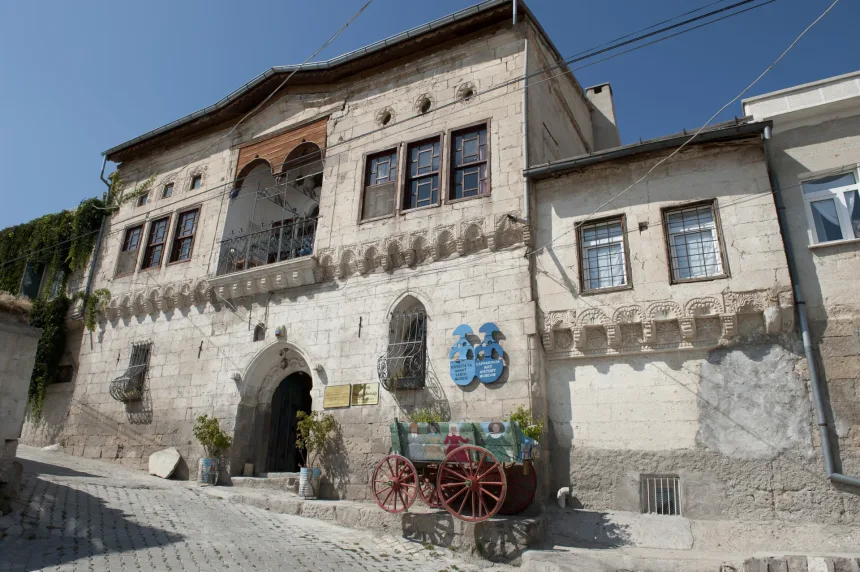
The Cappadocia Art and History Museum presents regional stories through handmade figures, costumes and staged scenes.
The collection is not a conventional archaeological museum. Its strength lies in visual storytelling related to daily life, traditions, historical characters and local occupations.
The museum is suitable for families and visitors who prefer an interpretive cultural experience to a collection focused only on excavated objects.
Opening days, admission and exhibition arrangements can change because it is a privately operated attraction.
Allow around 45 to 60 minutes when the museum is included. The staged displays are most useful when read as interpretation and storytelling rather than as direct archaeological evidence.
Monastery Valley
Monastery Valley extends from the settlement into an area containing rock-cut churches, chapels, dwellings and agricultural spaces.
The name does not refer to one single enclosed monastery. It describes a wider cultural landscape containing religious structures developed at different times.
Some monuments have formal entrances, while others stand along rural tracks or inside protected archaeological areas. Do not enter closed structures or assume that every opening in the rock is safe.
The valley is especially useful for understanding the transition from early rock-cut religious spaces to large late Ottoman community churches.
It can be explored as a short extension of the village visit, but the route should not be treated like a completely paved museum path.
A short Monastery Valley section can fit into a half-day plan, but reaching every religious structure takes longer. Path conditions and individual site access may differ within the same valley.
Use the visible landscape to compare the monumental stone churches of the village with older rock-cut spaces. This contrast is more informative than counting churches without considering their setting.
Hidden Valley
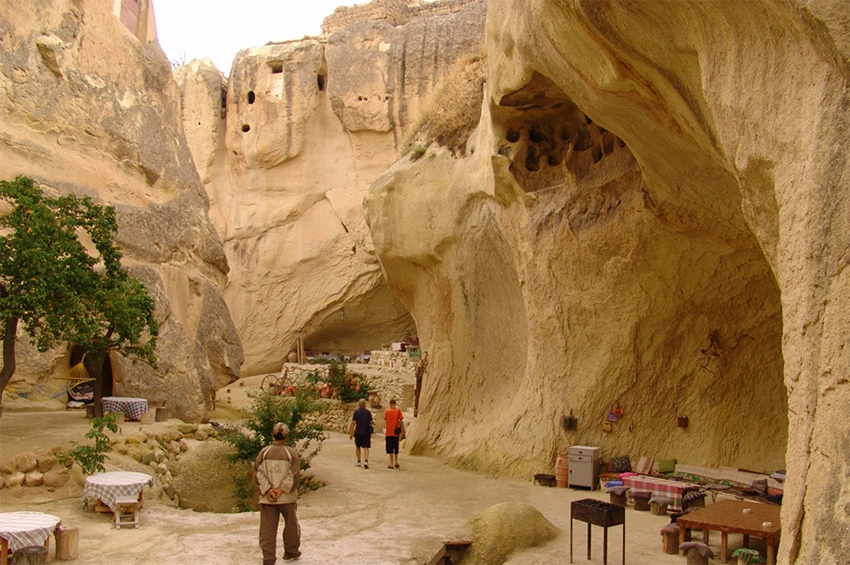
Hidden Valley, sometimes associated locally with the name Baltanın Yeri, is a short natural route near Mustafapaşa.
The area contains eroded cliffs, rock-cut rooms, pigeon houses and sections of cultivated land. Some local routes also pass remains connected with historic religious structures.
Hidden Valley is best approached as a short landscape walk rather than a fully marked archaeological park. Route markings, access points and commercial facilities may change.
Wear shoes with reliable grip and avoid entering side cavities. Rock-cut rooms can contain unstable ceilings, loose blocks and unprotected drops.
Hidden Valley is useful for a shorter nature break when there is not enough time for Gomeda. It should not be presented as a fully serviced trail with guaranteed signs, restrooms or staffed entry points.
Gomeda Valley
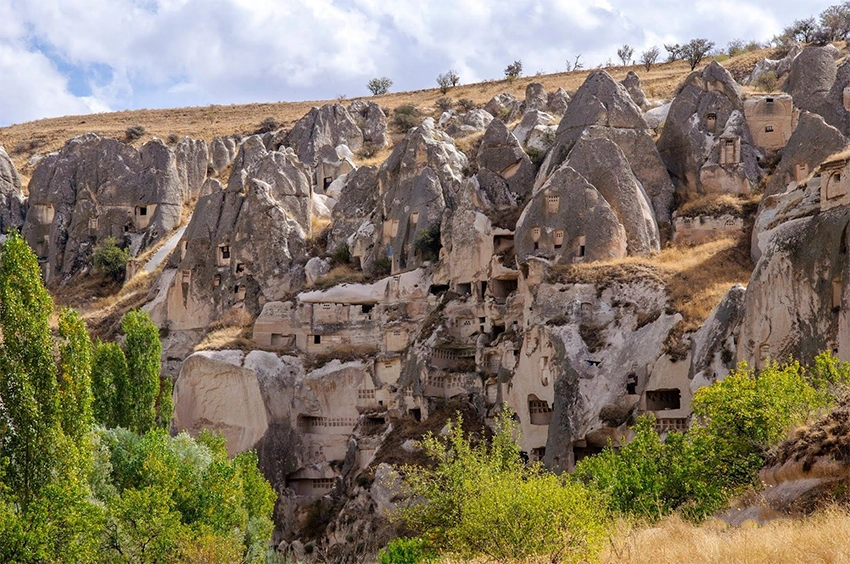
Gomeda Valley begins near Mustafapaşa and continues toward the Üzengi area. It is sometimes called Little Ihlara because sections of the route follow a narrow valley floor with vegetation, water channels and rock-cut spaces.
The comparison with Ihlara should not be taken literally. Gomeda is smaller, less developed for mass visitation and has a different settlement and church landscape.
The full route contains:
- Rock-cut rooms and storage spaces
- Pigeon houses
- Church remains
- Tunnels and narrow passages
- Seasonal water and muddy sections
- Connections toward Üzengi Valley
Gomeda also has a noticeably different atmosphere from Cappadocia's open and brightly exposed valleys. Some sections are narrow, shaded and enclosed by vegetation or rock walls.
Atmosphere tip: The combination of silence, cave openings, tunnels and large pigeon-house facades can make Gomeda feel mysterious, particularly late in the afternoon. This atmosphere is part of its appeal, but it should not be confused with evidence of supernatural activity or a guarantee that the route is dangerous.
Begin early enough to complete the planned section before darkness. Shadows arrive sooner on the valley floor than on the surrounding plateau.
The complete walking distance depends on the chosen entrance, exit and side routes. Do not rely on one fixed kilometer figure without checking the current route.
Decide whether the walk will be out-and-back or point-to-point before entering. A point-to-point route needs a confirmed driver, taxi or vehicle at the exit.
Related Tours
Popular experiences for this destination
Blue TourBlue Tour Cappadocia
Explore hidden valleys, ancient churches, and cultural gems on Cappado…
AdventureTrekking Tours Cappadocia
Hike Cappadocia’s spectacular valleys, fairy chimneys, and cave dwelli…
Vip Mix Tour Cappadocia
Experience the ultimate Cappadocia highlights in comfort-historic vall…
Red TourRed Tour Cappadocia
Discover Göreme Open-Air Museum, Avanos pottery workshops, and breatht…
Green TourGreen Tour Cappadocia
Explore Derinkuyu underground city, the beautiful Ihlara Valley, and S…
Classic Car Tour Cappadocia
Step into nostalgia with a vintage classic car ride through Cappadocia…
AdventureJeep Safari Tour Cappadocia
Take an off-road jeep adventure across Cappadocia’s rugged landscapes,…
Cappadocia Rent A Car
Explore Cappadocia freely at your own pace with flexible car rental op…
Nostalgic Electric Car Tour Cappadocia
Ride eco-friendly nostalgic electric cars through Cappadocia’s valleys…
AdventureATV Tour Cappadocia
Ride powerful ATVs through Cappadocia’s unique valleys, fairy chimneys…
AdventureHorseback Riding Tour Cappadocia
Experience Cappadocia on horseback, riding through valleys, hidden tra…
Professional Photo Shoot Cappadocia
Capture your Cappadocia moments with a guided professional photo shoot…
After rain, tunnels and shaded ground can remain muddy longer than the open plateau. Do not enter a narrow passage when water level, footing or the exit cannot be assessed.
Mobile reception may weaken in enclosed sections. Save the route and hotel contact information offline before starting.
Alakara Church
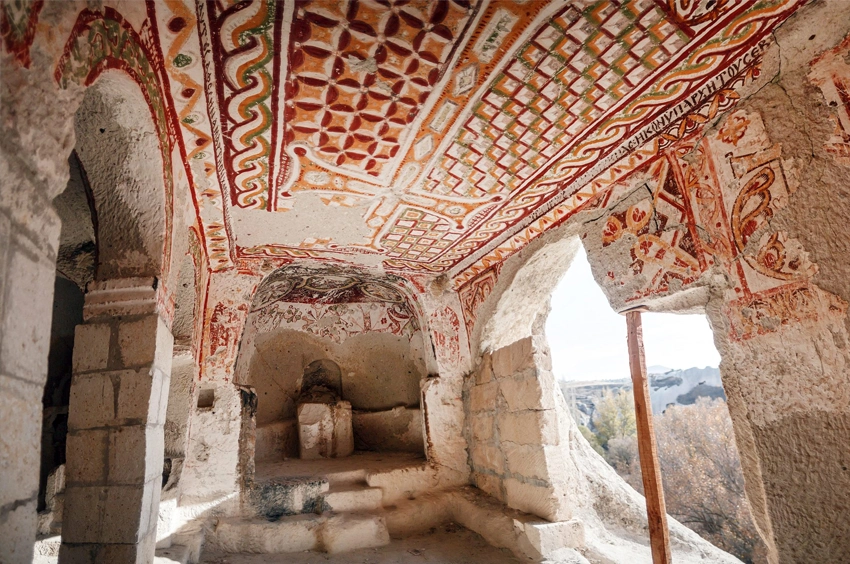
Alakara Church is one of the rock-cut religious monuments associated with the Gomeda route. Surviving decoration is fragmentary and should not be touched.
The path to the church may be less obvious than routes inside ticketed open-air museums. Use offline navigation or explore the valley with a local guide.
A guided Cappadocia trekking tour is useful for visitors who want to combine Gomeda and Üzengi while learning about the churches, pigeon houses and agricultural landscape.
A guide is especially useful when the goal is historical interpretation rather than simply completing the trail. Church names, side paths and agricultural features are not always explained by signs.
How Difficult Are the Valley Walks?
The center of Mustafapaşa requires ordinary urban walking, but the surrounding valleys include more demanding surfaces.
Possible conditions include:
- Loose volcanic soil
- Mud after rain or snow
- Narrow rock passages
- Low tunnel ceilings
- Seasonal water crossings
- Unmarked path divisions
- Long sections without shops or drinking water
Gomeda and Üzengi require more preparation than the central village walk. Download an offline map, carry water and avoid entering narrow valley sections during storms or heavy rainfall.
A path that requires climbing into a closed cavity, crossing an unstable edge or forcing a way through a blocked passage is not the correct public route.
Turn back when weather changes quickly. Flash flooding, slippery soil and falling material are more serious risks in narrow valleys than the walking distance alone suggests.
Travelers with knee or balance concerns can focus on the village and a short valley entrance instead of attempting the full route. The architectural experience does not depend on completing a long hike.
Where to Stay in Mustafapaşa
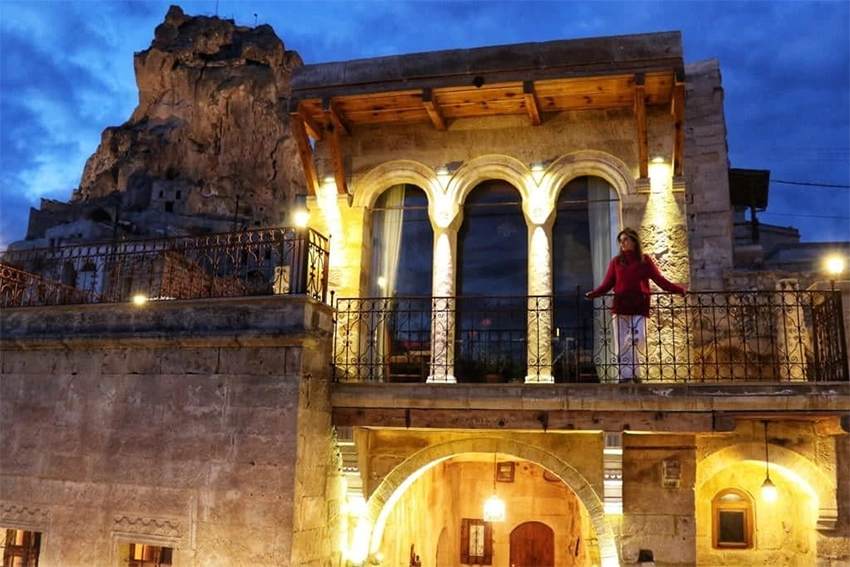
Mustafapaşa is a strong accommodation choice for travelers who prefer quiet evenings, historic architecture and easy road access to Ürgüp and the southern valleys.
Historic Mansion Hotel
Restored mansions may contain decorated facades, courtyards, high ceilings and original stone rooms. The most historic property is not automatically the most comfortable, so practical details should be checked carefully.
Ask which parts of the hotel are original, restored or newly constructed. A recent stone addition may provide better ventilation and accessibility than an older room.
Rock-Cut or Cave Room
Some properties combine built stone sections with rooms carved into the rock. Ask whether the room has an exterior window, natural ventilation and effective humidity control.
Travelers sensitive to moisture or enclosed spaces may prefer a stone-built room rather than a completely carved room.
Central Village Accommodation
A central hotel provides walking access to churches, restaurants and the main village streets. Parking and vehicle access can be limited near historic buildings.
Outer Village Accommodation
Properties outside the center may offer gardens, valley views and easier parking. Guests may need a vehicle or taxi for dinner and evening activities.
Questions to Ask Before Booking
- Is the room inside an original historic structure or a modern addition?
- Does the room have an exterior window?
- How many stairs are required?
- Can a vehicle reach the hotel entrance?
- Is private parking available?
- Does the room have heating and cooling suitable for the season?
- Is the courtyard shared with a restaurant or event area?
- How late are taxis or transfers available?
Compare the village with other accommodation bases in the guide to where to stay and what to eat in Cappadocia.
Request the exact room category rather than relying on general hotel photographs. One property may contain deeply carved rooms, stone-built rooms and recent additions with very different light, humidity and access.
Ask how luggage reaches the room. Historic mansions can include several courtyards, stairs and level changes even when a vehicle reaches the main entrance.
Mustafapaşa is quiet at night, but event courtyards and hotel restaurants can create localized noise. Confirm whether the room faces a public street, shared courtyard or event area.
Mustafapaşa or Ürgüp: Where Should You Stay?
Choose Mustafapaşa If You Prefer
- A quiet village atmosphere
- Historic stone mansions
- Architecture and cultural heritage
- Direct access to Gomeda and nearby walking routes
- Fewer crowds during the evening
- A slower travel experience
Choose Ürgüp If You Prefer
- A wider choice of restaurants
- More shops, banks and local services
- More regular transport connections
- Wine houses and evening venues
- A larger selection of hotels
- A central base without relying as heavily on taxis
Read the complete Ürgüp travel guide before choosing between the two settlements.
Mustafapaşa works best for travelers who appreciate quiet streets after day visitors leave. Ürgüp is more practical for travelers who want to walk to several restaurants and services during the evening.
A split stay is rarely necessary for a short Cappadocia trip because the settlements are close by road. Choose Mustafapaşa for atmosphere and architecture, or choose Ürgüp for broader services and visit the village as a half-day route.
When staying without a car, confirm restaurant hours and return transportation in advance. Evening options can be limited outside the busiest season.
What to Eat in Mustafapaşa
Restaurants and mansion hotels may serve regional Cappadocian dishes, Turkish home cooking and modern interpretations of local food.
Testi Kebab
Testi kebab is cooked inside a sealed clay vessel. Some restaurants require advance ordering because the dish needs time to cook properly.
Tandır Dishes
Tandır kebab is associated with slow cooking and tender meat. Recipes and serving styles differ between restaurants.
Traditional Breakfast
An Anatolian breakfast may include local cheese, eggs, bread, olives, preserves, honey, tahini, grape molasses and seasonal vegetables.
Old Greek House and Local Home Cooking
The Old Greek House is associated not only with Asmalı Konak but also with hospitality and dining. It can be considered as part of a wider Mustafapaşa food experience when its restaurant is operating and accepting visitors.
Current menus, reservation requirements and access to historic interiors may change. Confirm arrangements directly rather than assuming that every part of the mansion is open during meal service.
Reserve ahead when the building itself is an important part of the experience. A restaurant table does not guarantee a specific courtyard, room or historical interior.
Wine and Grape Products
Vineyards, grape molasses, wine cellars and rock-cut storage rooms form part of the wider agricultural heritage of Mustafapaşa and Ürgüp.
The guide to Cappadocia wine tasting and underground cellars explains regional production and the role of carved storage spaces.
Mustafapaşa has fewer evening venues than Ürgüp. Plan dinner before beginning a late valley walk, and confirm whether the chosen restaurant remains open after the main day-visitor period.
Can You See Hot-Air Balloons From Mustafapaşa?
Hot-air balloons may occasionally be visible in the distance, but Mustafapaşa is not one of Cappadocia's most reliable locations for close balloon views.
Flight routes change according to wind direction and aviation approval. Most balloon activity is concentrated closer to Göreme, Çavuşin and the central flight areas.
Do not choose a Mustafapaşa hotel only because an advertisement includes balloon photographs. Ask whether the image was taken from the property and how often balloons actually pass within view.
Use the Cappadocia hot-air balloon guide when planning a flight or sunrise viewing experience.
Travelers who prioritize close balloon photography should choose a viewpoint near the main flight areas rather than depending on a Mustafapaşa terrace. The village is a stronger choice for architecture, quiet streets and southern routes.
How to Get to Mustafapaşa
From Ürgüp
Mustafapaşa is a short road journey south of Ürgüp. Travelers commonly arrive by car, taxi, local minibus or organized tour.
Local transport schedules can change according to season and day of the week. Confirm the final return service before traveling without a car.
From Göreme
Travelers coming from Göreme usually pass through or near Ürgüp. A taxi, rental car, private driver or tour is normally more practical than depending on multiple local connections.
From Nevşehir Kapadokya Airport
Shared airport shuttles do not always serve every Mustafapaşa property in the same way. Confirm whether the transfer reaches the hotel entrance or requires a meeting point in Ürgüp.
From Kayseri Airport
Kayseri Airport requires a longer road transfer. Allow additional time in winter and during periods of heavy traffic.
When booking an airport transfer to Cappadocia, provide passenger names, flight number, arrival date and the full Mustafapaşa hotel information.
By Rental Car
A rental car provides flexibility for combining Mustafapaşa with Gomeda, Pancarlık, Soğanlı and other southern attractions.
Historic streets can be narrow, and parking beside major monuments may be limited. Use recognized parking areas rather than blocking entrances or village lanes.
Compare the available options in the guide to getting to and around Cappadocia.
Shared airport transfers may organize several hotel stops. Travel time can therefore be longer than the direct road time, especially when Mustafapaşa is served after Ürgüp.
Provide the complete hotel name and flight number when reserving. Similar property names and narrow village entrances can cause delays.
For an early departure, confirm whether the vehicle will reach the hotel door or use a nearby meeting point. Large minibuses cannot enter every historic lane.
Is Mustafapaşa Walkable?
The historic center is compact enough to explore on foot. However, it is not completely flat.
Visitors may encounter:
- Sloping streets
- Uneven stone paving
- Steps around historic properties
- Narrow pavements or streets shared with vehicles
- Limited wheelchair access inside old monuments
The main village experience may still be suitable for travelers who cannot hike, provided they choose their route carefully. Gomeda, Hidden Valley and Monastery Valley require greater mobility.
Visitors with limited mobility can still enjoy many exterior facades and the central village atmosphere without completing the surrounding valley routes.
A practical accessible plan focuses on the main civic area and exterior architecture. Interior thresholds, historic steps and uneven paving may still prevent completely step-free access.
Ask monument staff about the easiest entrance rather than assuming the most visible doorway is the accessible route.
Best Time to Visit Mustafapaşa
Spring
April and May generally provide comfortable walking conditions and greener valley floors. Rain may make rural paths muddy or slippery.
Summer
Summer days can be hot and exposed. Explore the village in the morning, rest during the hottest hours and walk in the valleys later in the afternoon.
Do not begin a complete Gomeda route late simply because the temperature becomes more comfortable. The valley floor loses daylight earlier than the open village streets.
Autumn
September and October are well suited to architecture walks, valley routes and outdoor dining. Evenings become cooler as the season progresses.
Winter
Snow gives the stone mansions and church facades a dramatic appearance. Roads, stairs and valley paths may become icy.
Some private museums, restaurants and monuments may operate with reduced hours during quieter periods.
Short winter daylight makes route selection more important. Visit outer churches and valleys earlier, then return to the central streets before surfaces freeze again in the evening.
Best Time of Day for Photography
Early Morning
Early morning usually provides quieter streets and softer light on east-facing facades. It is ideal for photographing houses without parked vehicles or large groups.
Late Afternoon
Late afternoon light brings warmer tones to the cream-colored stone and makes carved architectural details easier to see.
The light can be particularly effective around mansion portals, Maraşoğlu Bridge and the Church of Saints Constantine and Helena.
Midday
Midday is suitable for interior visits but can produce strong contrast on facades and deep shadows inside narrow streets.
Always ask before photographing private courtyards, residents, worshippers or university spaces.
A moderate focal length works well for facade details because many streets are too narrow for a perfectly centered wide view. Avoid stepping backward into traffic while composing photographs.
Tripods can obstruct narrow lanes and monument entrances. Use them only where there is enough space for residents and other visitors to pass.
How Much Time Do You Need in Mustafapaşa?
Two to Three Hours
This is enough for the central streets, Constantine and Helena Church, Mehmet Şakir Paşa Madrasa and a brief café stop.
Half Day
A half day allows time for the historic center, major monuments, Asmalı Konak and a short section of Monastery Valley.
One Full Day
One day allows a relaxed village visit plus Hidden Valley, Gomeda or the Cappadocia Art and History Museum.
One or Two Nights
An overnight stay is suitable for travelers who want quiet evenings, mansion accommodation and early access to the surrounding valleys.
Staying overnight also makes it easier to photograph the streets before day visitors and organized groups arrive.
One night is sufficient for a quieter evening and early-morning architecture walk. Two nights make more sense when Gomeda, multiple churches and a slow village visit are central priorities.
Suggested One-Day Mustafapaşa Itinerary
- Morning: Begin in the historic center before the streets become busy.
- Late morning: Visit the Church of Saints Constantine and Helena and examine the surrounding stone facades.
- Midday: See Mehmet Şakir Paşa Madrasa and the nearby mosque, then stop for lunch.
- Early afternoon: Visit the Cappadocia Art and History Museum or the Old Greek House.
- Mid-afternoon: Explore Saint Nicholas Monastery and a short section of Monastery Valley.
- Late afternoon: Walk in Hidden Valley or begin a carefully planned section of Gomeda Valley.
- Evening: Return to the village for dinner or continue to Ürgüp.
Do not attempt the complete Gomeda and Üzengi route late in the day unless transport from the exit point has already been arranged.
The suggested schedule contains alternatives, not mandatory stops. Choose either the Art and History Museum or Old Greek House, then choose either Hidden Valley or a planned Gomeda section.
Interior access can change, so keep one flexible hour in the program. A closed church can be replaced with a longer mansion walk or museum visit without abandoning the whole day.
Mustafapaşa, Gomeda, southern churches and village landscapes are central elements of the Cappadocia Blue Tour. Confirm whether the selected program includes a village walk, a short Gomeda viewpoint or a complete hiking section.
Places to Visit Near Mustafapaşa
Ürgüp
Ürgüp offers restaurants, stone mansions, wine houses, shops and Temenni Hill. It is the easiest nearby town to combine with Mustafapaşa.
The Three Beauties
The Three Beauties are three capped fairy chimneys close to Ürgüp. They can be added as a short photography stop.
Pancarlık Valley
Pancarlık Valley contains colored rock formations and rock-cut churches, including Üzümlü Church.
Gomeda Valley
Gomeda Valley is the most natural hiking extension of a Mustafapaşa visit.
Soğanlı Valley
Soğanlı Valley lies farther south and contains rock-cut churches, traditional village landscapes and the local doll-making tradition.
Mustafapaşa, Gomeda, southern churches and nearby villages may be included in a Cappadocia Blue Tour. Routes vary, so confirm the exact monuments, walking distance, entrance fees and lunch arrangements before booking.
Common Mustafapaşa Planning Mistakes
- Treating the village as a quick photo stop: The architectural detail becomes clear only on foot.
- Assuming every historic building is open: Private ownership, worship, university use and conservation affect access.
- Confusing similarly named churches: Confirm the map position before traveling to Saint Basil or another outer monument.
- Starting Gomeda too late: The valley floor loses light earlier than the village.
- Entering abandoned structures: Open doors do not indicate safe or permitted access.
- Booking a mansion room from general photographs: Room type, ventilation, stairs and historic character vary within one property.
- Expecting guaranteed balloon views: Mustafapaşa is outside the most reliable close-viewing zone.
- Planning too many southern sites: Gomeda, Pancarlık and Soğanlı each need separate travel and walking time.
Responsible Visiting
- Do not enter private houses or courtyards without permission.
- Do not touch frescoes or painted walls.
- Do not carve names into historic stone.
- Do not enter closed or unsupported rock-cut rooms.
- Dress respectfully when entering active religious buildings.
- Ask before photographing residents, students or worshippers.
- Use marked paths in the valleys.
- Carry trash out of rural areas.
- Support locally operated accommodation, restaurants and guides.
Mustafapaşa remains a living village. Respectful behavior protects not only the monuments but also the privacy and everyday lives of its residents.
Practical Tips for Visiting Mustafapaşa
- Wear comfortable shoes for stone streets and valley paths.
- Carry water if continuing into Gomeda or Üzengi.
- Download an offline map before hiking.
- Confirm church and museum access on the day of the visit.
- Do not rely on old online opening hours or admission prices.
- Arrange return transport before beginning a long valley route.
- Carry some cash for small businesses and local transport.
- Expect limited accessibility inside historic buildings.
- Avoid valley routes during heavy rain, snow or thunderstorms.
- Look closely at mansion entrances, inscriptions and carved dates.
- Do not assume that every Asmalı Konak sign identifies the same filming property.
- Allow additional time around university buildings and active religious spaces.
- Review the Cappadocia safety and essentials guide before independent hiking.
Questions Travelers Ask About Mustafapaşa
Is Mustafapaşa worth visiting?
Yes. Mustafapaşa is especially worthwhile for historic architecture, Greek Orthodox heritage, stone mansions, quiet streets and access to Gomeda and Monastery Valley.
How long should you spend in Mustafapaşa?
Allow at least half a day for the center. A full day is better if you also want to visit museums, monasteries or a nearby valley.
What was the former name of Mustafapaşa?
The settlement was historically known as Sinasos, the name used by its former Greek Orthodox community.
Why are the mansions in Sinasos so elaborate?
Many local families maintained successful commercial connections with Istanbul, including trade in seafood and caviar. Wealth sent back to Sinasos contributed to the construction of mansions, churches, schools and fountains.
When did the population exchange take place?
The exchange was agreed through the 1923 Lausanne process, and most Greek Orthodox residents of Sinasos left in 1924.
Is Mustafapaşa a UNESCO World Heritage Site?
No. Mustafapaşa is not independently listed as a UNESCO World Heritage Site. It was recognized as one of the Best Tourism Villages by the United Nations World Tourism Organization in 2021.
Is the Asmalı Konak mansion in Mustafapaşa?
The Old Greek House in Mustafapaşa is one of the best-known properties associated with the television series. Other Cappadocia locations are also connected with the production, so visitors should confirm the exact building they intend to see.
Is Mehmet Şakir Paşa Madrasa open to visitors?
The building is associated with the Mustafapaşa campus of Cappadocia University. Access may depend on academic use, events and current security arrangements.
Can you visit Mustafapaşa without a car?
Yes, but local transport may be limited. A taxi, tour or rental car provides more flexibility, especially for Gomeda, Pancarlık and the return journey.
Is Gomeda Valley difficult to hike?
Difficulty depends on the chosen section and weather. The route can include mud, tunnels, water, uneven ground and unclear path divisions.
Why does Gomeda Valley feel mysterious?
Its narrow passages, shaded sections, cave openings, tunnels and large pigeon-house facades create a more enclosed atmosphere than Cappadocia's open valleys. The effect is visual and environmental rather than evidence of supernatural activity.
Can you stay overnight in Mustafapaşa?
Yes. Restored stone mansions, boutique hotels and guesthouses make Mustafapaşa a peaceful alternative to Ürgüp and Göreme.
Is Mustafapaşa suitable for families?
Yes, especially for families interested in architecture and a quieter village atmosphere. Young children need close supervision near roads, valley edges and open rock-cut spaces.
Can Mustafapaşa be explored without hiking?
Yes. The central streets, mansion facades, church, mosque and madrasa provide a substantial visit without entering Gomeda or another valley.
Are the historic houses open to the public?
Some operate as hotels, restaurants or museums, but many remain private homes. An attractive doorway or courtyard is not automatically open for visitors.
How Mustafapaşa Fits Into a Cappadocia Itinerary
Mustafapaşa expands the meaning of a Cappadocia journey. It shows that the region is not defined only by fairy chimneys, underground cities and balloon flights.
The village preserves the memory of Sinasos through houses, churches, inscriptions and displaced community traditions. At the same time, mosques, the madrasa, university buildings, present-day residents and restored businesses demonstrate that Mustafapaşa remains a living settlement.
The commercial history of Sinasos, including the wealth created through Istanbul connections and trades such as seafood and caviar, helps explain why such ambitious architecture developed here.
The surrounding valleys add another layer. Monastery Valley, Hidden Valley and Gomeda connect religious remains and mansion architecture with the agricultural landscape that supported daily life.
The village is most useful as a cultural counterpoint to Cappadocia's major geological attractions. It explains how trade, religion, migration, agriculture and skilled stonework shaped a settlement beyond the familiar balloon and fairy-chimney image.
A careful visit separates documented history from local tradition, private property from public access and early rock-cut monuments from late Ottoman community architecture.
Its greatest value comes from this combination of architecture, memory, religion and landscape. Use the Cappadocia trip planning guide to combine Mustafapaşa with Ürgüp, Göreme, underground cities and the southern valleys.