Kaymakli Underground City
Kaymaklı Underground City Cappadocia Guide
Kaymaklı is one of the largest underground settlements open to visitors in Cappadocia. Its public route passes through stables, kitchens, storage rooms, wine-production areas, a church, ventilation shafts and narrow connecting tunnels.
Most visitors need approximately 45 to 75 minutes. The walking distance is not long, but low passages, steep connectors and slow movement through confined spaces make the experience physically different from an ordinary museum visit.
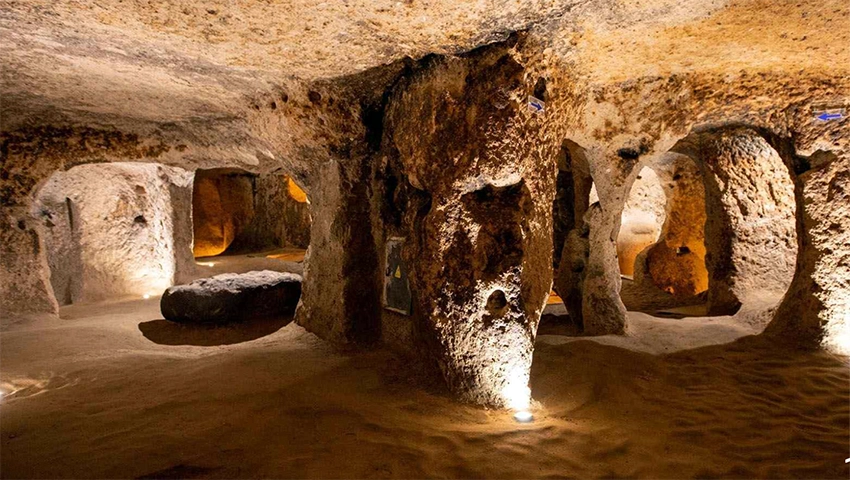
Kaymaklı lies beneath the modern town of the same name, south of Nevşehir. It differs from Derinkuyu Underground City through its more horizontally distributed layout and rooms organized around major ventilation shafts.
The city did not develop during one single construction period. Earlier cavities were expanded, connected and reused by different communities according to changing needs.
Its importance comes from the relationship between storage, food production, animals, water, worship, defense and temporary communal shelter. Kaymaklı should not be reduced to a collection of dark tunnels.
Planning a First Visit to Kaymaklı
Arrive early when possible. A quieter entrance makes it easier to understand the rooms and reduces the time spent waiting inside narrow passages.
Use the first low tunnel as an honest physical test. Visitors who experience severe anxiety, dizziness, breathing difficulty or an urgent need to escape should return while the entrance remains close.
Carry only a small secure bag. Large backpacks, loose straps and bulky camera equipment are difficult to control when the route requires bending or crouching.
Wear shoes with reliable grip and keep both hands available. The route includes polished stone, uneven floors and short steep sections.
Use toilets before entering. Public toilets should not be expected along the underground route, and stopping in a narrow tunnel blocks the visitor flow.
Families and groups should agree before entering that anyone may turn back without pressure. Reaching every open level is not required for a meaningful visit.
How Old Is Kaymaklı Underground City?
The exact origin of Kaymaklı remains uncertain. Underground architecture existed in Cappadocia before Christianity, but the complete settlement cannot be assigned safely to the Hittites, Phrygians or one specific century.
Early communities may have used simpler underground rooms for storage, shelter and protection. Later groups widened these spaces, created new connections and developed more organized systems.
Christian communities used and expanded underground settlements during periods of political instability, particularly in the Byzantine era. Worship spaces and defensive passages belong to important phases of that history.
Kaymaklı was not created entirely as a monastery, military bunker or permanent subterranean town. Its architecture reflects several functions and periods.
Rooms could change purpose over time. A storage chamber might later be connected to a kitchen, adapted for animals or incorporated into a defensive route.
Popular accounts often assign the complete underground city to one people because a simple origin story is easier to remember. The architecture supports a layered history instead.
The wider religious context is explained in the guide to Christianity in Cappadocia.
How Many Levels Are Open in Kaymaklı?
Four visitor levels are generally identified within the accessible route. Additional rooms, shafts and passages continue beyond the sections prepared for public visits.
The exact total number of levels is difficult to define because natural height differences, connecting rooms and architectural floors are not always counted consistently.
Kaymaklı should be understood as a connected underground network rather than a modern building with clearly separated stories.
Closed areas may be unexcavated, structurally sensitive or outside the managed route. They should not be treated as secret rooms available through another opening.
Current conservation work can also change which chambers are accessible. An entrance ticket does not guarantee that every room described in an older guide remains open.
Follow the arrows, barriers and instructions displayed during the visit. They reflect the current route rather than a permanent historic floor plan.
What You Can See Inside Kaymaklı
- Stables: Located near the upper entrance so animals did not need to pass through the narrowest tunnels.
- Living and working rooms: Simple carved spaces used for shelter, organization and daily activity.
- Kitchens: Chambers with working surfaces, storage niches and traces associated with food preparation.
- Storage rooms: Areas designed for grain, jars, tools and supplies needed during underground occupation.
- Wine and oil presses: Rock-cut basins associated with agricultural processing and storage.
- Church: A religious space with a nave, apses and nearby burial areas.
- Stone doors: Circular stones positioned to close important passages from inside.
- Ventilation shafts: Vertical openings that helped circulate air through connected levels.
- Water systems: Cisterns and shafts that supported underground occupation.
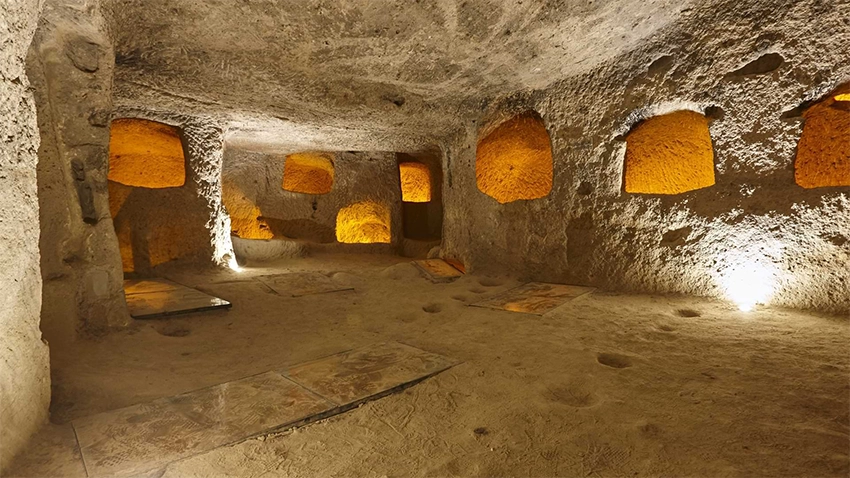
Room labels help with orientation, but they should not be treated as proof that every chamber had one permanent function.
Related Tours
Popular experiences for this destination
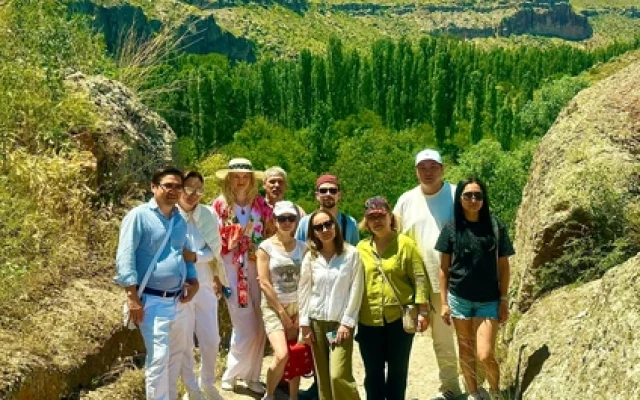 Green Tour
Green Tour Cappadocia
Explore Derinkuyu underground city, the beautiful Ihlara Valley, and S…
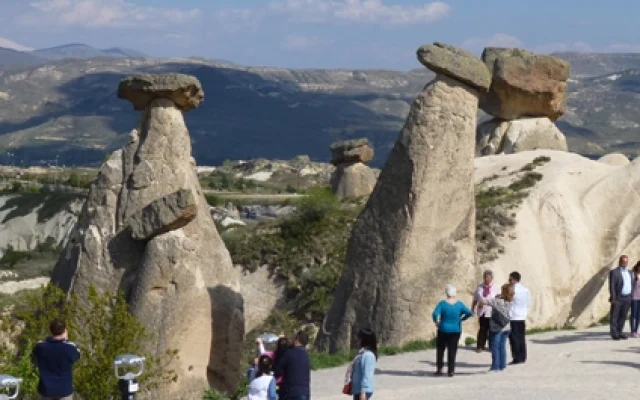 Red Tour
Red Tour Cappadocia
Discover Göreme Open-Air Museum, Avanos pottery workshops, and breatht…
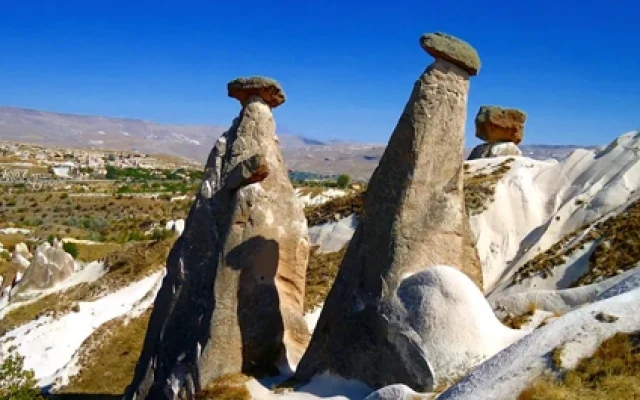 Blue Tour
Blue Tour Cappadocia
Explore hidden valleys, ancient churches, and cultural gems on Cappado…

Cappadocia Rent A Car
Explore Cappadocia freely at your own pace with flexible car rental op…
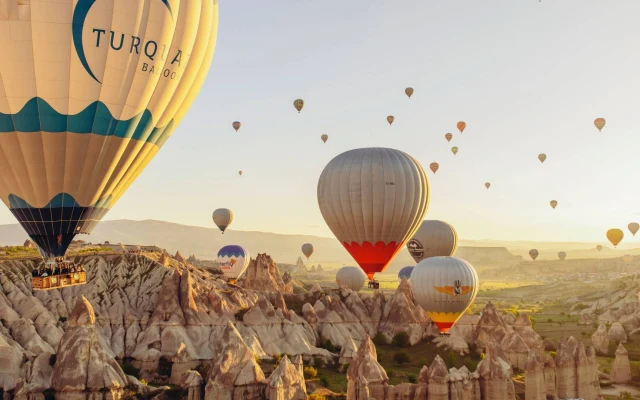 Balloon
Cappadocia Hot Air Balloon Tour
See Cappadocia from the air at sunrise on a professionally operated ho…
Turkish Night Show Cappadocia
Enjoy a traditional Turkish dinner with live music, folk dances, and w…
Professional Photo Shoot Cappadocia
Capture your Cappadocia moments with a guided professional photo shoot…

Airport Transfer Service Cappadocia
Travel comfortably and safely between Cappadocia’s airports and your h…

Classic Car Tour Cappadocia
Step into nostalgia with a vintage classic car ride through Cappadocia…

Cappadocia Turkish Bath
Relax with a traditional hammam ritual including steam, scrubbing, and…
 Adventure
Trekking Tours Cappadocia
Hike Cappadocia’s spectacular valleys, fairy chimneys, and cave dwelli…
Pottery Workshop Cappadocia
Learn the ancient art of pottery from Avanos masters, try shaping clay…
The site becomes easier to understand when visitors look at how a room connects with the nearest shaft, corridor, storage niche and defensive point.
Upper areas generally supported activities requiring easier surface access, including animals and supplies. Deeper sections offered greater protection but made movement and transport harder.
Rock-cut pits and basins may support several interpretations. Shape alone does not always prove whether a feature was used for wine, oil, grain, animals or later storage.
Stables Near the Entrance
The stable area is positioned close to the upper levels. This reduced the need to move animals through long, low tunnels.
Animals provided transport, food, labor and agricultural support, but they also created ventilation and sanitation problems. Keeping them near the surface was a practical solution.
Feeding areas, tethering points and associated storage should be interpreted as part of a working system rather than isolated objects.
The presence of stables does not prove that animals remained underground continuously. Their use probably depended on the reason and duration of occupation.
Kitchens, Food Storage and Smoke Control
Food storage was essential when groups remained below ground for extended periods. Grain, dried foods, wine, oil and tools could be organized in carved rooms and niches.
Kitchen areas required careful control of fire and smoke. Heavy smoke could reduce air quality, stain rooms and potentially reveal activity through surface openings.
Darkened surfaces can indicate burning or later use, but they should not automatically be assigned to one historical phase.
The underground environment helped maintain more stable conditions than the surface, which was useful for certain stored products.
Storage jars and perishable supplies still required management. The city was protected underground, but it was not separate from agriculture and supply routes above.
Wine and Agricultural Production
Rock-cut presses and basins show that Kaymaklı supported agricultural processing as well as shelter.
Grapes, wine, oil and stored food connected the underground city with fields and vineyards on the surface. The underground settlement depended on the wider rural economy.
Production areas may have been used differently across time. A basin interpreted as a wine press in one phase could later support another form of storage or processing.
Visitors should avoid touching or standing inside carved basins. Repeated contact damages surfaces and makes later interpretation harder.
Ventilation and Underground Planning
Rooms and passages were arranged around vertical ventilation shafts. These openings helped circulate air between the surface and deeper sections.
Ventilation did not depend on one shaft alone. Vertical openings and connecting passages worked together to move air through the underground network.
Some shafts may also have supported water collection, communication or construction activity. A vertical opening should not automatically be described as only a well or only a ventilation shaft.
The city was never completely independent from the surface. Air, water, food, controlled entrances and communication remained necessary.
Visitors may feel moving air near some shafts. Crowded tunnels can still feel warm or uncomfortable because personal space is limited even when the underground temperature is cool.
Do not drop coins, phones or other objects into shafts. Recovery may be impossible, and foreign material damages the managed site.
Narrow Passages and Defensive Planning
The narrow tunnels controlled movement and made it difficult for unfamiliar visitors or attackers to move quickly.
An approaching group could not advance in a wide formation. Residents familiar with the route could control access from protected positions.
The passages were not designed for modern comfort. Their low height reflects construction choices, defense and the need to connect rooms through limited rock space.
Some tunnels allow movement in only one direction during busy periods. Follow the current arrows and do not enter against the marked flow.
Two groups meeting inside a low corridor can create a difficult underground blockage with little space to pass.
Do not stop for posed photographs inside narrow connectors. Use larger chambers where stopping does not obstruct others.
Circular Stone Doors
Large circular stones could be moved across selected passages from inside the underground city.
Each stone was associated with a specific doorway, side recess and defensive position. It did not roll freely throughout the settlement like a modern wheel.
Closing one corridor could isolate a section without abandoning the complete underground system.
A central opening may have served observation, communication, leverage or defensive purposes. It should not be described confidently as only a weapon opening.
Do not push or climb onto a stone door unless current staff explicitly permit interaction. The stone and its corridor remain part of the monument.
The Underground Church
Kaymaklı includes a religious space with a nave, apses and nearby burial areas.
The church shows that worship became part of the underground environment during an important Christian phase of use.
Its presence does not mean the complete city was created as a monastery. Stables, food production, storage and defense reveal a broader settlement system.
Religious spaces also supported community identity during shelter periods. Worship, survival and organization were connected when groups remained below ground.
The church does not date every nearby room to the same period. Earlier and later spaces could be connected to the religious area over time.
The Copper-Processing Stone
One of Kaymaklı's unusual features is a large stone block containing many carved holes.
It was previously described in some visitor accounts as a spice-grinding stone. Later interpretation has associated it with the preparation or processing of copper ore.
The exact function should be presented carefully because visual similarity alone does not prove every stage of its use.
The feature is valuable because it reminds visitors that underground settlements supported production and technical activity as well as shelter.
Look at its location and relationship with nearby working spaces rather than treating the stone as a disconnected curiosity.
How Long a Kaymaklı Visit Takes
| Visit Style | Approximate Time | Best For | Main Limitation |
|---|---|---|---|
| Quick Visit | 35 to 45 minutes | Visitors with a limited itinerary | Little time for interpretation during busy periods |
| Standard Visit | 45 to 75 minutes | Most first-time visitors | Queues can slow narrow sections |
| Guided Visit | 60 to 90 minutes | History, architecture and room functions | Explanations require space in larger chambers |
Movement may become slower during busy periods because visitors must pass through narrow tunnels in sequence.
A slow group ahead can delay everyone behind it. Waiting while bent inside a low passage is more tiring than spending the same time in a larger room.
Allow time to recover after returning to the surface, especially when the itinerary continues to Ihlara Valley or Selime.
The parking walk, ticket queue and guide organization are not included in the underground time estimate.
Claustrophobia and Anxiety Underground
Kaymaklı contains low ceilings, narrow passages and steep connecting tunnels. Its layout may feel more horizontal than Derinkuyu, but this does not make it suitable for everyone with claustrophobia.
The combination of low ceilings, one-way movement, crowds and limited ability to turn around creates the main difficulty.
Use the first descent as a test. Visitors who feel panic, rapid breathing or an urgent need to escape should return before continuing deeper.
Do not continue only because friends, relatives or a tour group are moving forward. Returning to the surface is a reasonable safety decision.
A guide or companion cannot remove the physical limits of the tunnels. Severe claustrophobia may make an above-ground activity the better choice.
Visitors with a history of fainting, serious respiratory difficulty or uncontrolled panic symptoms should seek appropriate medical advice before entering a confined underground route.
Do not use alcohol or sedating medication to force the visit. Prescribed medication should be used only according to a clinician's instructions.
Physical Difficulty and Mobility
Kaymaklı is not a technical hike, but low tunnels and uneven steps can place pressure on the knees, hips and lower back.
Tall visitors may need to remain bent for several minutes. The difficulty comes from a sequence of low connectors rather than one doorway.
Going down may feel easier than returning through the same type of steep passage. Consider the climb back to the surface before continuing deeper.
Kaymaklı is not suitable for wheelchairs or strollers inside the public route.
Visitors with balance problems should consider whether they can use uneven steps while crouched. Handrails may not be available in every section.
Related Tours
Popular experiences for this destination
Green TourGreen Tour Cappadocia
Explore Derinkuyu underground city, the beautiful Ihlara Valley, and S…
Red TourRed Tour Cappadocia
Discover Göreme Open-Air Museum, Avanos pottery workshops, and breatht…
Blue TourBlue Tour Cappadocia
Explore hidden valleys, ancient churches, and cultural gems on Cappado…
Cappadocia Rent A Car
Explore Cappadocia freely at your own pace with flexible car rental op…
BalloonCappadocia Hot Air Balloon Tour
See Cappadocia from the air at sunrise on a professionally operated ho…
Turkish Night Show Cappadocia
Enjoy a traditional Turkish dinner with live music, folk dances, and w…
Professional Photo Shoot Cappadocia
Capture your Cappadocia moments with a guided professional photo shoot…
Airport Transfer Service Cappadocia
Travel comfortably and safely between Cappadocia’s airports and your h…
Classic Car Tour Cappadocia
Step into nostalgia with a vintage classic car ride through Cappadocia…
Cappadocia Turkish Bath
Relax with a traditional hammam ritual including steam, scrubbing, and…
AdventureTrekking Tours Cappadocia
Hike Cappadocia’s spectacular valleys, fairy chimneys, and cave dwelli…
Pottery Workshop Cappadocia
Learn the ancient art of pottery from Avanos masters, try shaping clay…
Keep a steady pace and leave space between people. Sudden stops on steep connectors can cause the person behind to lose balance.
Do not overtake visitors inside a tunnel. Wait until the group reaches a larger room.
Visiting Kaymaklı With Children
Many older children find the underground rooms and tunnels interesting, but close adult supervision is essential.
- Children should remain beside an adult throughout the route.
- Running inside passages is unsafe.
- Children should not touch stone doors or enter closed side rooms.
- Young children may become tired during the return climb.
- Strollers cannot be used underground.
- Large baby carriers can be difficult in low tunnels.
- A frightened child should be taken back toward the entrance rather than encouraged to continue.
The hardest part for many families is the movement between rooms. A child who enjoys the upper chambers may react differently when the route becomes darker or more enclosed.
One adult should remain directly ahead of or behind the child in steep passages.
Families should avoid the busiest midday period when queues can leave children waiting inside confined sections.
Kaymaklı and Derinkuyu Compared
| Feature | Kaymaklı | Derinkuyu |
|---|---|---|
| General Layout | More horizontal rooms around major shafts | Stronger sense of vertical descent |
| Visitor Experience | Storage, production and connected working spaces | Depth, long descents and dramatic tunnels |
| Physical Feeling | Compact but still low and narrow | Often feels deeper and more demanding |
| Best Choice For | Visitors who prefer a more horizontal route | Visitors seeking the strongest depth experience |
Kaymaklı is not automatically easy for claustrophobic visitors. Several tunnels remain low, narrow and steep despite the more horizontal organization.
Derinkuyu often creates a stronger emotional sense of depth. Kaymaklı makes the relationship between rooms, shafts, storage and production easier for some visitors to follow.
Choose according to physical comfort and the wider itinerary rather than assuming the larger or deeper site is always better.
Visiting both on the same day is unnecessary for most first-time travelers. Physical repetition can reduce attention, especially when the route also includes Ihlara Valley.
Getting to Kaymaklı From Göreme
By Rental Car
A rental car is practical when combining Kaymaklı with Ihlara Valley, Selime or another southern Cappadocia stop.
Save the parking position and next destination before entering. Phones may lose signal underground and use additional battery while searching for a network.
Allow time for traffic, parking and the walk to the entrance rather than using only the highway estimate.
Do not leave passports, bags or valuables visible inside the vehicle.
By Taxi or Private Driver
A taxi or private driver provides the simplest independent access from Göreme, Ürgüp or Uçhisar.
Agree on waiting time and the complete route before entering. A one-way trip without a confirmed return can become expensive or difficult to organize later.
Share the exact entrance and pickup point with the driver. Kaymaklı town contains other streets and local destinations beyond the visitor entrance.
A waiting driver is especially useful when the group continues toward Ihlara Valley or returns to central Cappadocia after the visit.
By Public Transport
Local transport may operate between Nevşehir and Kaymaklı town. Timetables, transfer points and return services should be confirmed locally before departure.
Check the final return departure before entering the underground city. Queues can extend the visit beyond the expected time.
Public transport can work for an independent Kaymaklı visit, but it is less practical for a same-day route including Ihlara and Selime.
Review the guide to getting to and around Cappadocia before comparing public transport, a rental car and a private driver.
Kaymaklı on the Green Tour
Kaymaklı is commonly included in the Cappadocia Green Tour.
Most tours visit either Kaymaklı or Derinkuyu, not both. The itinerary may continue to Ihlara Valley, Belisırma and Selime Cathedral.
Ask which underground city the program uses, how long the visit lasts and whether the guide enters with the group.
Also confirm entrance fees, lunch, the Ihlara walking distance and the order of the route. Green Tour names do not guarantee identical inclusions.
People who do not want to enter should tell the guide before arrival. Waiting above ground may be possible, but the group schedule should be understood in advance.
A private Cappadocia Mix Tour provides more control over the underground-city choice and the amount of walking included later in the day.
Opening Hours, Tickets and Museum Pass
Opening hours, entrance prices, final admission times and Museum Pass conditions can change.
Check current official information shortly before visiting rather than relying on old 2025 prices, social media screenshots or seasonal schedules.
Final admission may occur before the published closing time. Leave enough time to complete the controlled route without rushing.
Current maintenance or conservation work can close individual rooms while the site remains open.
Arriving early can reduce ticket queues and make movement through narrow sections more comfortable.
Keep the ticket until the visit is complete and follow staff instructions when the visitor direction changes.
What to Wear and Carry
- Wear shoes with reliable grip.
- Bring a light outer layer because underground areas feel cooler than the surface.
- Avoid carrying a large backpack through narrow passages.
- Keep both hands available on steep sections.
- Secure cameras and phones before descending stairs.
- Avoid loose clothing, scarves or straps that may catch against rock.
- Do not carry a tripod, selfie stick or open drink through the tunnels.
Expensive hiking equipment is not necessary, but footwear should remain stable on polished, uneven and sometimes damp stone.
A small cross-body bag or compact backpack is easier to manage than a large travel bag.
A helmet is not normally part of the public visit, so visitors must control their own head position in low passages.
Conservation and Visitor Behavior
Kaymaklı is carved into volcanic rock that can deform, fracture and weather over time.
Do not scratch names, touch fragile surfaces or lean against carved pillars. Small actions are repeated by thousands of visitors.
Follow closed-route signs even when a passage appears physically open. A restriction may respond to structural monitoring rather than an obvious collapse.
Keep voices controlled. Sound travels through shafts and makes guide explanations difficult for several groups at once.
Photography rules can change. Avoid flash when prohibited and never stop a queue for a posed tunnel photograph.
Do not place coins, food or objects inside niches, shafts or stone doors.
Review the Cappadocia safety and essentials guide before visiting underground cities independently.
Seasonal Planning
Spring
Surface weather is often suitable for combining Kaymaklı with Ihlara Valley. Holidays and group-tour arrivals can still create underground queues.
Summer
The underground temperature feels cooler than the surface, but crowded tunnels can remain uncomfortable. Early visits are better for both heat and congestion.
Autumn
Cooler surface conditions suit a southern route. Shorter daylight should be considered when continuing to Ihlara and Selime.
Winter
The underground environment remains relatively stable, but snow and ice can affect roads, entrance surfaces and the wider itinerary. Confirm access before a long drive.
Common Kaymaklı Planning Mistakes
- Assuming the horizontal layout is easy: Several tunnels remain low, narrow and steep.
- Ignoring early anxiety: Turning back is easiest near the entrance.
- Carrying a large backpack: Bulky bags obstruct crouched movement.
- Entering against the route arrows: Opposing groups cannot pass safely in confined tunnels.
- Stopping for photographs in connectors: This blocks the controlled visitor flow.
- Visiting Kaymaklı and Derinkuyu automatically: One underground city is enough for most short itineraries.
- Treating every room label as proven: Several functions remain interpretations.
- Scheduling Ihlara too late: Ticket lines and underground congestion can delay the route.
- Relying on old entrance prices: Ticket and Museum Pass rules can change.
Questions Travelers Ask About Kaymaklı
Is Kaymaklı Underground City worth visiting?
Yes. Kaymaklı provides a clear example of underground storage, production, worship, ventilation and defensive planning.
How long does Kaymaklı take?
Most visitors need approximately 45 to 75 minutes. A guided visit or heavy crowds may extend the visit to 90 minutes.
How many levels are open?
Four visitor levels are generally identified, while additional sections remain outside the public route.
Is Kaymaklı suitable for claustrophobic visitors?
It can be difficult because several passages are narrow, low and steep. Use the first descent as a test and turn back when serious discomfort begins.
Is Kaymaklı easier than Derinkuyu?
Its layout is more horizontal, but it still contains confined passages. Some visitors find it easier to understand, while others experience similar anxiety.
Can children visit Kaymaklı?
Yes, with close adult supervision. Children should not run, separate from the group or continue when they become frightened.
Is Kaymaklı accessible for wheelchair users?
No. The public route includes stairs, low tunnels and narrow turns that are unsuitable for wheelchairs and strollers.
Can you visit without a tour?
Yes. Kaymaklı can be reached independently by rental car, taxi, private driver or local transport through Nevşehir.
Is a guide necessary?
A guide is not mandatory for access, but interpretation helps visitors understand room functions, ventilation, defense and the relationship between levels.
Can you take photographs inside?
Photography may be allowed under current rules, but flash and stopping in narrow passages should be avoided.
Are there toilets underground?
No public toilets should be expected along the underground route. Use the facilities near the entrance before descending.
How Kaymaklı Fits Into a Cappadocia Itinerary
Kaymaklı demonstrates how communities transformed volcanic rock into a protected underground environment containing storage, production, religious and defensive spaces.
Its strongest feature is not one room or one depth figure. The value comes from seeing how chambers, shafts and narrow corridors worked as one connected system.
For most first-time visitors, Kaymaklı works best as the underground component of a Green Tour or an independent route continuing toward Ihlara Valley and Selime.
Choose Kaymaklı when the group prefers a more horizontally organized layout and wants to examine storage and production spaces. Choose Derinkuyu when dramatic depth and prolonged descent are the main priorities.
A realistic plan respects individual physical limits, current route controls and the time required to return comfortably to the surface.
Use the Cappadocia trip planning guide to combine Kaymaklı with Ihlara Valley or another southern attraction without visiting two similar underground cities on the same day.