Soganli Valley
Soğanlı Valley Cappadocia Guide
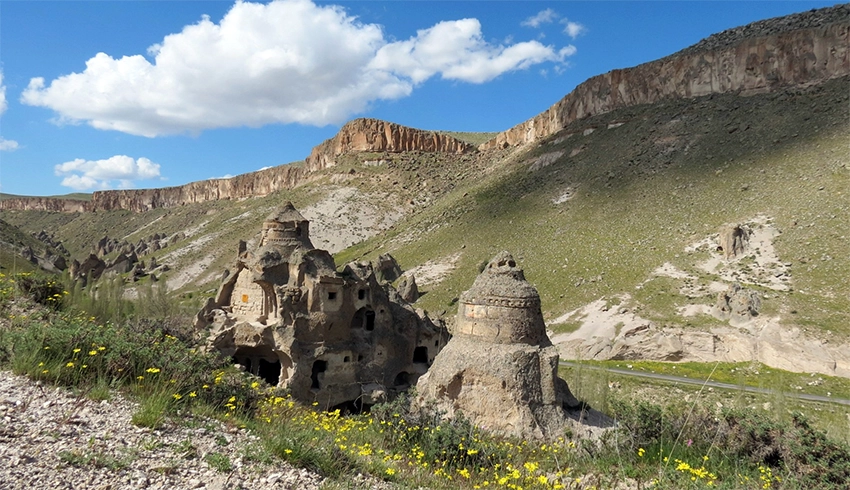
Soğanlı Valley lies at the southeastern edge of Cappadocia in the Yeşilhisar district of Kayseri. It combines Byzantine rock-cut churches, pigeon houses, cultivated land and a village where local families still live beside the archaeological landscape.
The valley feels very different from central Göreme. There are fewer large groups, less commercial development and no dense line of souvenir shops surrounding every monument. Soğanlı is not an abandoned film set. It is a living rural settlement with churches, fields, homes and walking paths sharing the same landscape.
The strongest visit does not try to inspect every named church. Soğanlı is better understood through one or two church interiors, the walking branches, village activity, pigeon houses and the changing relationship between cultivated ground and volcanic rock.
Most visitors should allow at least two to three hours. Half a day is more realistic when both branches, photography and a village craft stop are important.
Opening arrangements, entrance conditions and accessible paths can change. Keep the route flexible rather than planning the day around one guaranteed interior.
How to Plan a First Visit to Soğanlı Valley
Begin by deciding whether the priority is village atmosphere, walking, church painting or photography. A first visit does not need every branch and every upper monument.
Start with Kubbeli Church and the nearby walking area, then add one branch according to remaining time and weather. This creates a clearer visit than moving quickly between distant map markers.
Arrive with water, shoes with grip and offline navigation. Facilities are more limited than in central Göreme, and some higher approaches contain worn steps or loose natural ground.
Keep at least one hour of daylight as a return margin. The valley does not require a long technical hike, but church detours and photography can make the visit longer than expected.
When using a driver or tour, confirm the collection point before walking into a branch. Village roads and monument entrances may not all use the same parking area.
Why Soğanlı Valley Is Different
- Living village landscape: Agriculture and local life continue beside the historic churches.
- Two valley branches: Visitors can choose a short church route or spend half a day exploring both sides.
- Unusual church architecture: Kubbeli Church was shaped externally to imitate a freestanding masonry building.
- Byzantine painting: Karabaş, Tahtalı and other churches preserve different phases of medieval decoration.
- Pigeon-house cliffs: Large carved facades reveal the agricultural importance of pigeon manure.
- Soğanlı dolls: Handmade cloth dolls remain one of the village's best-known living crafts.
Soğanlı is one of the named component areas within the UNESCO World Heritage property called Göreme National Park and the Rock Sites of Cappadocia. It is not a separate UNESCO listing with its own independent designation.
The UNESCO context matters because Soğanlı combines rock-cut sanctuaries, traditional settlement and an erosion-shaped landscape. The village, churches and agricultural use should therefore be read together rather than separated into unrelated attractions.
Where Is Soğanlı Valley?
Soğanlı is located in Kayseri Province, within the district of Yeşilhisar and southeast of the main Göreme and Ürgüp tourism area.
The journey from Göreme or Ürgüp normally takes more than one hour. Travel time depends on the starting point, road conditions and the route selected through southern Cappadocia.
This distance changes how Soğanlı should be planned. It is not sensible to drive there for a rushed 30-minute stop. The valley works best as part of a full southern Cappadocia route that may also include Mustafapaşa, Şahinefendi, Sobesos and selected countryside monuments.
Public transport should not be treated as a practical sightseeing solution. A rental car, private driver or organized tour provides much better control over the day.
Navigation should target the current valley entrance or principal church area rather than only the village name. A driver may otherwise stop in the settlement before the walking branches begin.
The road is part of the planning. Hotel pickups, rural turns, parking and stops at Şahinefendi can add substantial time beyond the basic navigation estimate.
A taxi is less practical than a waiting driver because the return journey begins far from central tourism zones. Confirm the price, waiting time and pickup point before entering the valley.
A Living Village, Not Only an Open-Air Museum
Soğanlı became an important Christian settlement during the Byzantine period. Churches, chapels, tombs, homes and working spaces were carved into the volcanic rock.
The surviving structures were not all created at the same time. Churches were enlarged, repainted and reused as the community changed.
After their religious use declined, some carved rooms became agricultural stores, animal shelters or pigeon houses. This is why one structure may contain traces of frescoes beside later farming modifications.
The valley should therefore be read as a complete cultural landscape rather than a collection of isolated churches.
Homes, fields and livestock areas are not museum scenery. Respect private courtyards, agricultural equipment and local traffic when moving between monuments.
Village residents may use paths that also appear on visitor maps. Give workers and animals space, and do not enter a track simply because it leads toward a visible cave opening.
The surviving landscape reflects continuity as well as change. Religious spaces were reused, pigeon houses supported farming and modern craft production created new household income.
Read the guide to Christianity in Cappadocia for the wider history of Byzantine worship, rock-cut architecture and church painting.
Kubbeli Church and the Great Rock-Cut Illusion
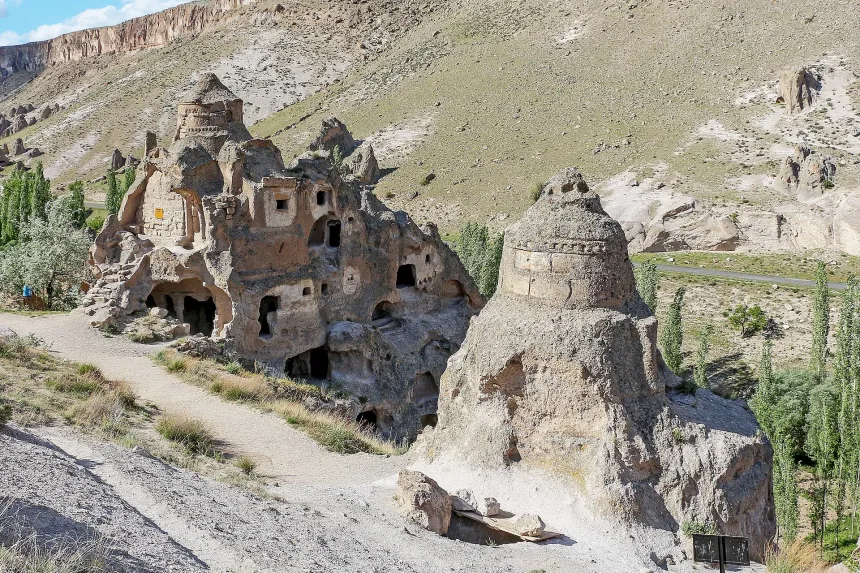
Kubbeli Church is the architectural symbol of Soğanlı Valley.
Related Tours
Popular experiences for this destination
 Blue Tour
Blue Tour Cappadocia
Explore hidden valleys, ancient churches, and cultural gems on Cappado…

Airport Transfer Service Cappadocia
Travel comfortably and safely between Cappadocia’s airports and your h…
Vip Mix Tour Cappadocia
Experience the ultimate Cappadocia highlights in comfort-historic vall…
 Adventure
Trekking Tours Cappadocia
Hike Cappadocia’s spectacular valleys, fairy chimneys, and cave dwelli…

Cappadocia Rent A Car
Explore Cappadocia freely at your own pace with flexible car rental op…
 Red Tour
Red Tour Cappadocia
Discover Göreme Open-Air Museum, Avanos pottery workshops, and breatht…
 Green Tour
Green Tour Cappadocia
Explore Derinkuyu underground city, the beautiful Ihlara Valley, and S…
Professional Photo Shoot Cappadocia
Capture your Cappadocia moments with a guided professional photo shoot…

Classic Car Tour Cappadocia
Step into nostalgia with a vintage classic car ride through Cappadocia…
Wine Tasting Tour Cappadocia
Taste Cappadocia’s finest local wines in ancient vineyards and wine ho…

Nostalgic Electric Car Tour Cappadocia
Ride eco-friendly nostalgic electric cars through Cappadocia’s valleys…
 Balloon
Cappadocia Hot Air Balloon Tour
See Cappadocia from the air at sunrise on a professionally operated ho…
Most Cappadocian churches were carved into a cliff or hidden behind a simple rock opening. Kubbeli Church was created inside an isolated volcanic cone, but the exterior was also carefully shaped.
Step back before entering and study the complete formation. The upper rock was carved to resemble a dome, while artificial masonry lines and architectural details were cut into the surface.
The result creates the illusion of a freestanding stone church. In reality, the apparent walls, dome and decorative exterior belong to one sculpted mass of volcanic rock.
This relationship between natural cone, carved interior and imitated masonry makes Kubbeli Church one of Soğanlı's most important monuments.
The church is best understood from both outside and inside. The exterior explains the architectural illusion, while the interior shows how the carved mass was organized as a religious space.
Do not climb around the cone to search for a higher viewpoint. The shaped exterior is part of the monument, and loose volcanic surfaces can be damaged easily.
Karabaş Church
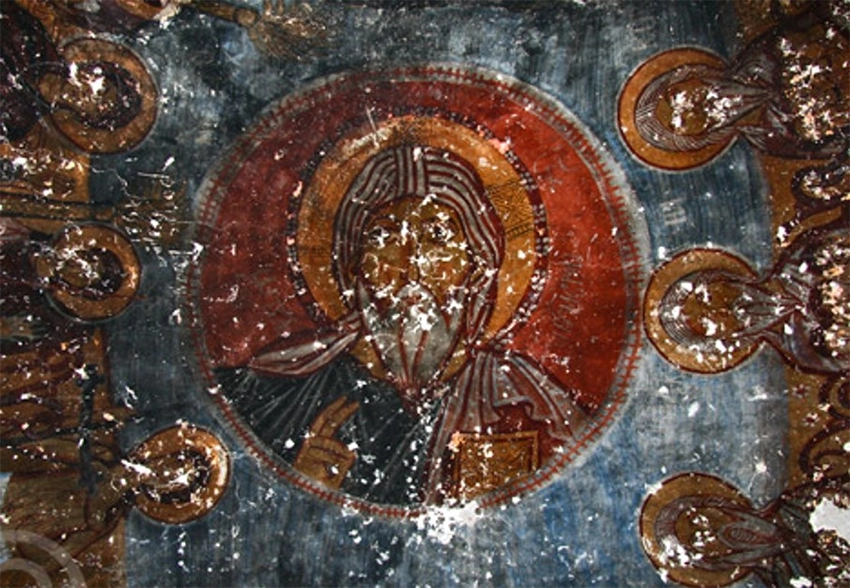
Karabaş Church is known for its inscriptions, painted interior and dark background surfaces.
The name is often translated as Black Head Church, but the visual identity is connected more closely with the dark appearance of the painted backgrounds than with every figure having a black head.
Inscriptions associate parts of the decoration with patrons and religious figures. The building also contains connected spaces suggesting that it belonged to a larger religious complex rather than functioning as a completely isolated chapel.
The surviving paintings reflect more than one phase. Visitors should avoid treating every scene as if it were created during the same campaign.
The inscriptions and connected rooms are more informative than the modern translated name alone. Allow enough time to look at the building as part of a larger complex.
Dark surfaces can make photography difficult. Do not use flash when prohibited or touch the wall to identify a damaged scene.
Yılanlı Church
Yılanlı Church is one of several Cappadocian churches carrying the Turkish name Snake Church. It should not be confused with the monument of the same name at Göreme Open-Air Museum or in Ihlara Valley.
The Soğanlı church contains damaged paintings and nearby burial spaces carved into the rock.
Its condition is part of the monument's history. Smoke, later use, surface loss and human intervention have changed the appearance of the original decoration.
The name Snake Church is used at several Cappadocian sites, so always confirm Soğanlı when searching for route information or images.
Tahtalı Church and Saint Barbara Church
Tahtalı Church is also associated with Saint Barbara. The Turkish name is connected with a wooden access element rather than the original religious dedication.
The church contains New Testament scenes and decorative work associated with medieval Cappadocian painting.
Inscriptions have been interpreted as placing the building in the early 11th century, although damaged surfaces should always be approached cautiously.
The route and entrance may include worn steps or uneven ground. Access should be assessed according to current site conditions.
The early 11th-century interpretation depends on a difficult inscription and should be presented cautiously. The surviving painting and route conditions remain more useful to visitors than one exact date.
Tokalı Church
Soğanlı has its own Tokalı Church, but it is not the same monument as the famous church beside Göreme Open-Air Museum.
The Soğanlı church stands high in the rock and is reached through a steeper approach than several of the valley-floor monuments.
Its carved plan and surviving traces of decoration remain important even though much of the original painted program has been lost.
Read the separate guide to Tokalı Church near Göreme Open-Air Museum to avoid confusing the two sites.
The Soğanlı approach is steeper and should be added only when time, footwear and current access allow. It is not essential for a balanced first visit.
Other Churches and Carved Spaces
Smaller chapels, cross-marked rooms, burial spaces and unnamed carved structures appear across both branches of the valley.
Not every opening was a church. Some were used for housing, animals, food storage, pigeon breeding or agricultural work.
Names and route descriptions may vary between maps. A label on an old digital map does not guarantee that a structure is currently open or safe to enter.
High openings may once have been reached by wooden ladders, terraces or rock sections that no longer survive. Their present inaccessibility is part of the erosion history.
Do not label every cavity as a monastery or house. Function can change over time, and one visible feature rarely proves the complete use of a room.
Choose the Right Soğanlı Route
| Route or Monument | Approximate Time | Difficulty | Why Choose It |
|---|---|---|---|
| Kubbeli Church and Nearby Area | 30 to 60 minutes | Easy | Best for seeing Soğanlı's unique externally sculpted church architecture |
| One Valley Branch | 2 to 3 hours | Easy to moderate | Several churches, pigeon houses and village scenery without rushing |
| Both Valley Branches | 3 to 4 hours | Moderate | The strongest combination of churches, walking, photography and rural landscape |
| Higher Church Approaches | Allow additional time | Moderate | More isolated monuments reached by worn steps and steeper natural paths |
These times are planning ranges rather than official route lengths. Parking position, church access, photography and the number of climbs can change the visit considerably.
For most first-time visitors, one branch plus Kubbeli Church is enough. Add the second branch only when daylight and energy remain.
How the Two Valley Branches Work
Landscape, Geology and Walking Conditions
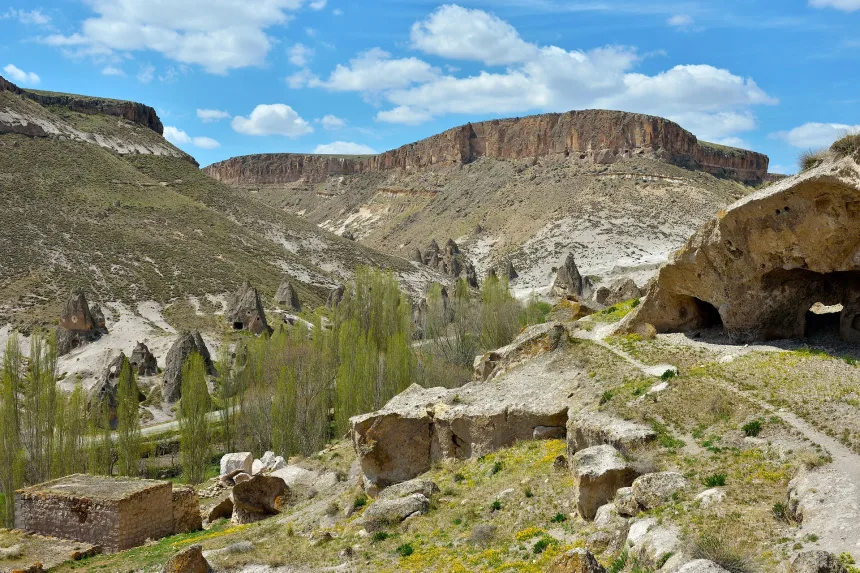
Soğanlı developed within volcanic deposits shaped by water, wind, freezing, thawing and gravity. Different layers eroded at different rates, producing cones, shallow gullies and steep church-bearing rock faces.
The same workable rock allowed people to carve rooms and churches, but it remains vulnerable. Fresh debris, fractures and unsupported openings should be treated seriously.
The valley floor can be dry and dusty in summer, muddy after rain and icy in shaded winter sections. Conditions near a church entrance may differ from the village road.
There is no need for technical climbing on a normal visitor route. A path requiring dangerous scrambling, entry through a damaged cavity or reliance on an old rope is not the correct choice.
Morning provides cooler walking and easier route decisions. Late afternoon offers warmer light, but the return should begin before darkness reaches the lower paths.
Soğanlı divides into two principal walking areas near the village.
There is no compulsory circuit. Visitors can focus on one branch, return to the village and then decide whether the second branch is worth adding.
This makes Soğanlı more flexible than a long one-way canyon. A visitor interested mainly in Kubbeli Church and village culture can keep the visit short. Someone interested in architecture and photography can spend half a day moving between both branches.
Distances increase quickly when every church approach is added. The paths include natural ground, worn stone steps and short climbs rather than one continuous paved route.
The branch routes are not identical loops with fixed official distances. Maps and local descriptions may group the churches differently, so follow current signs and visible public paths.
One branch may feel more architectural, while another offers broader village and pigeon-house views. Choose according to interest rather than assuming both must be completed.
Look back while walking away from the village. The return direction can appear different once several cones and side paths overlap.
After rain, avoid soft slopes and muddy shortcuts. Stay on existing ground rather than crossing fields to create a cleaner line.
Pigeon Houses and the Agricultural System
Large areas of the cliffs were converted into pigeon houses.
Pigeons were important because their manure could be collected and used as fertilizer in vineyards, orchards and fields. This system connected the rock architecture directly with agricultural production.
Some pigeon-house entrances were painted or arranged in repeated patterns to make them visible to birds.
Former churches and domestic spaces were also reused as pigeon houses in later periods. This reuse could damage older decoration, but it also kept the carved structures connected with village life.
Many pigeon-house entrances are high above the path because the chambers were designed for controlled bird access rather than modern visitors.
Painted or patterned facades may have helped birds recognize the nesting area. View them with a camera zoom instead of climbing toward the openings.
The pigeon houses make the agricultural system visible. Manure, vineyards, orchards, storage rooms and village labor belonged to one connected economy.
Related Tours
Popular experiences for this destination
Blue TourBlue Tour Cappadocia
Explore hidden valleys, ancient churches, and cultural gems on Cappado…
Airport Transfer Service Cappadocia
Travel comfortably and safely between Cappadocia’s airports and your h…
Vip Mix Tour Cappadocia
Experience the ultimate Cappadocia highlights in comfort-historic vall…
AdventureTrekking Tours Cappadocia
Hike Cappadocia’s spectacular valleys, fairy chimneys, and cave dwelli…
Cappadocia Rent A Car
Explore Cappadocia freely at your own pace with flexible car rental op…
Red TourRed Tour Cappadocia
Discover Göreme Open-Air Museum, Avanos pottery workshops, and breatht…
Green TourGreen Tour Cappadocia
Explore Derinkuyu underground city, the beautiful Ihlara Valley, and S…
Professional Photo Shoot Cappadocia
Capture your Cappadocia moments with a guided professional photo shoot…
Classic Car Tour Cappadocia
Step into nostalgia with a vintage classic car ride through Cappadocia…
Wine Tasting Tour Cappadocia
Taste Cappadocia’s finest local wines in ancient vineyards and wine ho…
Nostalgic Electric Car Tour Cappadocia
Ride eco-friendly nostalgic electric cars through Cappadocia’s valleys…
BalloonCappadocia Hot Air Balloon Tour
See Cappadocia from the air at sunrise on a professionally operated ho…
Soğanlı Dolls and the Women Who Make Them
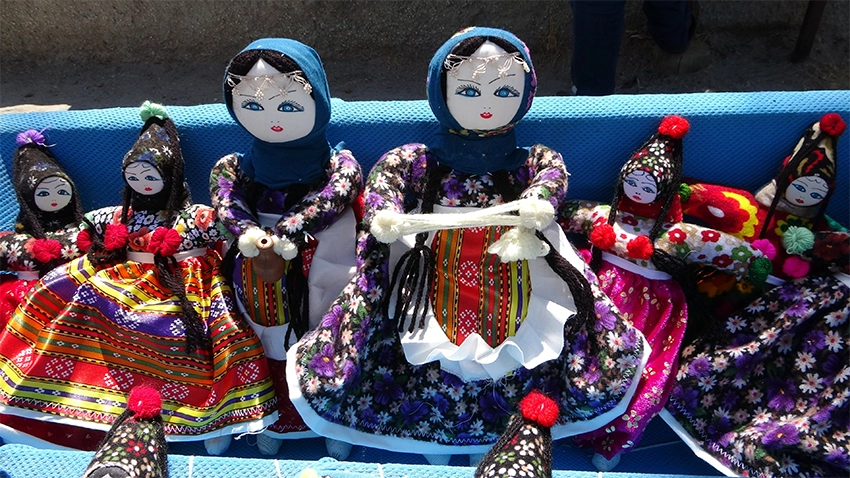
Soğanlı dolls are not simply colorful souvenirs. Their production became an important source of income for village women and helped make the name Soğanlı known beyond the valley.
The figures are made with fabric, simple internal frames and clothing inspired by local dress. Colors, stitching and facial details vary because the dolls are not intended to look completely identical.
How to Recognize a Locally Handmade Doll
Ask the seller who made the doll and whether it was produced in the village.
A handmade doll may show:
- Slight differences between the two sides of the face
- Visible hand stitching
- Layered pieces of fabric rather than one printed plastic surface
- Small variations in clothing, head coverings and decorative details
- A simple handmade structure rather than a perfectly identical factory mold
It is not fair to assume that every doll sold near the entrance is fake. The strongest way to support the tradition is to speak directly with the maker or a local family selling clearly identified village work.
Prices and styles vary because production is household-based rather than standardized. A small difference between dolls is not a defect when the work is handmade.
Ask permission before photographing the maker, stall or home workshop. Buying directly from village producers supports the craft more clearly than treating the dolls only as a photo subject.
Read the dedicated guide to traditional Soğanlı dolls for their materials, history and cultural importance.
Can You See Hot-Air Balloons in Soğanlı?
Balloon experiences have also been promoted in the wider Soğanlı area as an alternative to the central Göreme flight landscape.
This should not be confused with the main Göreme balloon zone. The launch field, route, number of balloons and whether flights operate on a particular morning can change.
A quieter sky may be possible, but no operator can guarantee the exact number of balloons visible around the valley.
Before booking, ask for:
- The exact flight zone
- Whether the launch is planned in the Soğanlı area
- Pickup time from Göreme or Ürgüp
- Transfer duration
- Flight length and basket capacity
- Cancellation and rescheduling conditions
All balloon operations depend on weather and official aviation approval. Read the Cappadocia hot-air balloon guide before comparing different flight regions.
Do not select Soğanlı only because an advertisement shows a large balloon-filled sky. Flight frequency, launch permission and wind direction can produce a very different morning.
Travelers staying in Göreme or Ürgüp should include the longer transfer when comparing price and pickup time with central-zone flights.
The Distance From Göreme and Ürgüp
Soğanlı is frequently described as a hidden valley, but its low visitor numbers are also connected with geography.
The drive from Göreme or Ürgüp normally takes more than one hour. A private vehicle may also need to remain in the area while visitors walk through the branches.
For this reason, Soğanlı makes more sense as the main destination of a southern Cappadocia day than as a minor addition after several central attractions.
The return drive also matters. After three or four hours of walking, adding another remote valley usually reduces the quality of the day rather than improving it.
Keep one flexible stop on the return route instead of committing to several distant attractions. Road conditions, lunch and church access can change the timing.
Stop at Sobesos in Şahinefendi
Şahinefendi lies on a practical southern route between Ürgüp, Mustafapaşa and Soğanlı.
The archaeological remains known as Sobesos include a late Roman and early Byzantine building complex, bath-related structures and geometric floor mosaics.
Sobesos is one of the rare excavated urban archaeological sites in the wider Cappadocia region. It adds an important layer to a day otherwise dominated by rock-cut Byzantine churches.
The site should not be oversold as the only Roman settlement ever connected with Cappadocia. Its real importance lies in the preserved mosaics and built architecture, which contrast strongly with the carved spaces of Soğanlı.
Access, protective structures and visiting arrangements can change. Confirm the current situation before building the entire route around the site.
Sobesos works best as a concise archaeological contrast to Soğanlı. Allow enough time to see the mosaics and built remains, but keep the main walking time for the valley.
A Strong Southern Cappadocia Route
- Morning: Leave Ürgüp and visit Mustafapaşa.
- Late morning: Continue through Şahinefendi and stop at Sobesos when access is available.
- Midday: Drive toward Soğanlı Valley.
- Afternoon: Explore Kubbeli Church and one or both valley branches.
- Village stop: Meet local doll makers and see the agricultural landscape.
- Return: Travel back toward Ürgüp before adding another distant attraction.
This route is more coherent than driving from Göreme to Soğanlı and returning immediately after one church.
The sequence is flexible. Visitors primarily interested in walking can limit Mustafapaşa to a short introduction, while architecture-focused travelers can choose one Soğanlı branch instead of both.
Lunch should be planned before the longest walking section or in the village according to current local options. Do not depend on finding a specific restaurant open without confirmation.
Avoid adding Derinkuyu, Ihlara or another long western route to the same day. Travel time would dominate the itinerary.
How to Get to Soğanlı Valley
From Göreme or Ürgüp
A rental car, private driver or guided tour is normally required. Allow more than one hour for the road journey and additional time for countryside stops.
From Kayseri
Soğanlı can be approached through Yeşilhisar and regional roads. It can form part of a route connecting southern Kayseri with the wider Cappadocia region.
By Rental Car
A rental car offers independence, but the driver must manage rural roads, navigation and the return journey after several hours of walking.
Download the route before leaving the main road and keep enough fuel for the return. Rural mobile reception and service options may be less consistent than around Göreme.
Park only in recognized areas and avoid blocking village traffic or agricultural access.
By Private Tour
A private tour is useful because Soğanlı, Sobesos and Mustafapaşa are spread across a wide southern route with limited public transport.
Some Cappadocia Blue Tour programs include Soğanlı or nearby southern attractions. Not every Blue Tour follows the same route.
Confirm whether the program includes:
- Soğanlı Valley entrance
- Kubbeli Church
- Enough time for walking
- Mustafapaşa
- Sobesos
- Lunch and museum admissions
A Private Cappadocia Mix Tour provides more flexibility for choosing churches, walking time and southern route stops.
Use the guide to getting to and around Cappadocia when comparing rental cars, taxis and private drivers.
When booking a tour, ask how much time is actually spent inside Soğanlı. A program can list the valley while allowing only a short church stop.
Best Time for Walking and Photography
Spring
Green fields and flowering plants soften the volcanic landscape. Rain can create mud on natural paths and worn steps.
Summer
Begin early and carry water. The open branches can become hot even when church interiors remain cool.
Autumn
Cooler air and dry ground often make walking comfortable. Harvest activity can also make the agricultural character more visible.
Winter
Snow creates strong contrast around the cones, but ice may remain on shaded church approaches after village roads clear.
Photography
Morning is useful for quiet village detail, while late afternoon strengthens texture on rock faces and pigeon-house cliffs. Do not wait inside an unfamiliar branch until complete darkness.
Use people, cultivated fields and village structures as scale references. Soğanlı's value comes from the relationship between nature and settlement, not only isolated rock formations.
Drone use depends on current aviation, heritage and local restrictions. An open rural landscape should not be treated as automatic permission.
Common Soğanlı Planning Mistakes
- Allowing only 30 minutes: The road journey is too long for a rushed church photograph.
- Trying to visit every church: One or two interiors plus a branch walk create a better first visit.
- Assuming fixed branch distances: Routes and accessible approaches can vary.
- Confusing Tokalı churches: Soğanlı and Göreme contain different monuments with the same Turkish name.
- Expecting public transport: A car, waiting driver or organized tour is normally required.
- Ignoring village life: Homes, fields and working paths are not empty museum scenery.
- Starting a full branch late: Church detours can delay the return.
- Expecting guaranteed balloons: Flight zones and daily operations can change.
Questions Travelers Ask About Soğanlı Valley
Is Soğanlı Valley worth the drive?
Yes, especially for travelers interested in quieter walking, Byzantine monuments, village culture and a full southern Cappadocia route.
How long should you spend in Soğanlı?
Allow two to three hours for one branch and the principal monuments. Half a day is better for both branches, photography and a village craft stop.
Is the walking difficult?
The principal routes are easy to moderate in dry weather. Worn steps, loose ground, mud and higher church approaches can increase difficulty.
Can children visit?
Yes, with close supervision around worn steps, cave openings and village roads. Families may prefer one branch instead of the complete walking program.
Are all churches open?
No. Access can change because of conservation, staffing and structural conditions. Plan the visit around the landscape rather than one guaranteed interior.
Are there facilities in the valley?
Village services may be available, but visitors should still carry water and avoid relying on one specific restaurant, restroom or shop without confirmation.
Can Soğanlı be visited with Mustafapaşa?
Yes. Mustafapaşa, Şahinefendi and Soğanlı form a logical southern route when the day is not overloaded.
Is Soğanlı a separate UNESCO World Heritage Site?
No. Soğanlı is a named component area within the larger Göreme National Park and the Rock Sites of Cappadocia property.
Explore Soğanlı on a Private Southern Cappadocia Tour
Soğanlı's main challenge is distance rather than the walking route itself.
A private southern Cappadocia tour can combine the valley with Mustafapaşa and Sobesos while allowing enough time to examine Kubbeli Church instead of treating it as a quick photograph stop.
The greatest advantage is route control. Visitors can spend more time in the branch that interests them, stop for local crafts and avoid the fixed pace of a large group itinerary.
Confirm whether entrance fees, lunch and the Sobesos stop are included. Route names alone do not define the same service across operators.
How Soğanlı Fits Into a Cappadocia Itinerary
Soğanlı preserves something increasingly difficult to find in central Cappadocia: Byzantine monuments that still belong to a recognisable village and agricultural landscape.
Kubbeli Church demonstrates the architectural imagination of rock carvers. Karabaş and the other painted churches reveal different phases of medieval religious life. Pigeon houses explain how the cliffs supported farming, while the dolls show how village women transformed local craft into continuing income.
The valley is not valuable only because it is quiet. Its importance comes from the relationship between people, rock architecture, worship, agriculture and living village culture.
Soğanlı is best used as the main focus of a southern day, not as a distant box to check after central Cappadocia sightseeing.
A balanced visit gives more time to walking, village life and landscape than to collecting church names. The monuments become easier to understand when they remain connected to pigeon houses, fields and local craft.
For most first-time visitors, one branch, Kubbeli Church and a village stop provide a complete experience. The second branch can be added when weather, daylight and energy remain favorable.
Use the Cappadocia trip planning guide to combine Soğanlı with Mustafapaşa, Ürgüp and southern Cappadocia without turning the day into a rushed drive between distant stops.