Ihlara Valley Hiking Routes
Ihlara Valley Cappadocia Hiking Guide
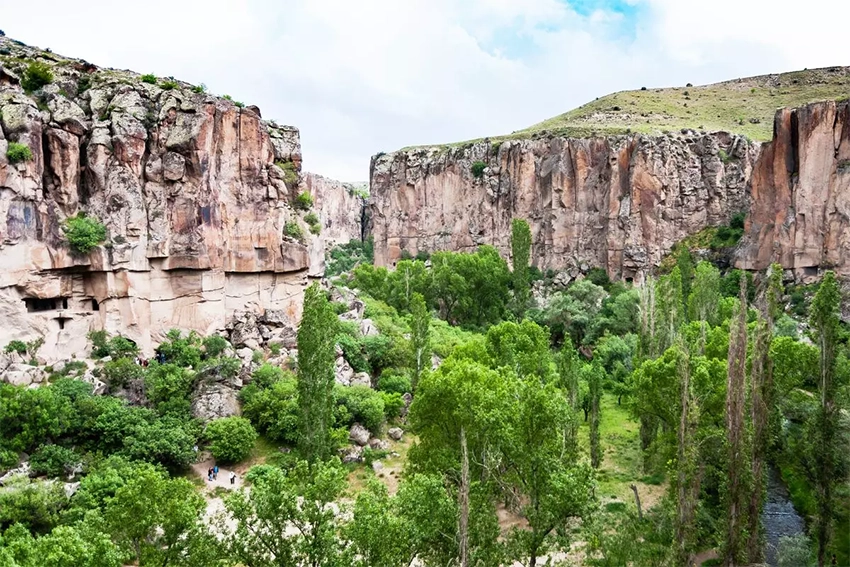
Ihlara Valley feels almost disconnected from the dry plateaus and open fairy chimney landscapes of central Cappadocia. Below the surrounding steppe, the Melendiz River flows through a deep canyon filled with trees, footbridges, orchards and rock-cut churches.
This is not only a hiking route. For centuries, people prayed, farmed, stored food, buried their dead and built communities along the river. Choosing the correct entrance and arranging transport from the exit are just as important as choosing which churches to visit.
Ihlara is easiest to plan as a one-way route. The main visitor staircase, Ihlara Village, Belisırma and Selime are different access points, not interchangeable names for one entrance.
A short visit can focus on the churches near the main staircase. A fuller canyon experience normally finishes at Belisırma, where road transport must already be arranged.
Do not choose a route only from the distance shown on a map. Stairs, church detours, wet surfaces, lunch stops and the long road journey from central Cappadocia all affect the day.
How to Plan a First Visit to Ihlara Valley
Choose the entrance and exit before leaving the hotel. For most first-time visitors, the main staircase to Belisırma route provides the clearest balance of scenery, churches and manageable walking time.
Arrange the exit vehicle before descending. Mobile coverage can weaken inside the canyon, and finding a taxi after reaching Belisırma is less reliable than confirming one in advance.
Begin early when combining Ihlara with an underground city or Selime. The road journey from Göreme or Ürgüp is substantial, and the canyon floor loses useful daylight earlier than the plateau.
Carry water, a small light, offline navigation and shoes with reliable grip. Riverside restaurants and seasonal services should not be treated as guaranteed supply points during the walk.
Keep the program flexible. Church access, bridges, trail sections and entrance arrangements can change because of conservation, weather or rockfall inspections.
Why Ihlara Feels Different From Central Cappadocia
The valleys around Göreme are generally open, dry and exposed. Ihlara is enclosed by high canyon walls that shelter the Melendiz River and create a cooler, greener environment.
Poplars, willows, fruit trees, reeds and cultivated gardens grow beside the water. The landscape is not untouched wilderness. It was shaped by farming, grazing, settlement and religious life as well as natural erosion.
The contrast becomes clear as soon as you descend from the dry plateau. Within a few minutes, road noise disappears behind the canyon walls and the sound of the river takes over.
The greener appearance does not mean the canyon is untouched nature. Irrigation, orchards, village paths, former homes and religious spaces show long-term human use of the river corridor.
The enclosed terrain also changes practical conditions. Humidity, shade, mud and temperature may differ noticeably from the parking area above.
Where Is Ihlara Valley?
Ihlara Valley is located in the Güzelyurt district of Aksaray Province, on the southwestern side of the wider Cappadocia region.
The canyon runs from the Ihlara area toward Belisırma, Yaprakhisar and Selime. The main hiking corridor between Ihlara and Selime is generally treated as approximately 14 to 15 kilometers, although wider geographical descriptions may use longer measurements.
Ihlara is much farther from Göreme than Rose Valley, Red Valley or Zemi Valley. It should be planned as part of a western Cappadocia day rather than as a quick walk outside town.
Nearby Güzelyurt offers historic stone houses, the Church Mosque, Monastery Valley and accommodation in restored Gelveri mansions.
The drive from central Cappadocia should be included in the itinerary rather than treated as transfer time with no effect on the day. Stops at an underground city, Güzelyurt or Selime each reduce the time available inside the canyon.
Road signs may use Ihlara, Belisırma, Selime or Güzelyurt depending on the approach. Share the exact entrance pin with a driver instead of requesting only Ihlara Valley.
How Deep Is Ihlara Valley?
The canyon reaches approximately 100 to 150 metres in its deeper sections. Its width and depth change along the route.
At the main visitor entrance, hikers descend more than 100 metres from the plateau to the river. Farther north, the canyon gradually becomes broader and less enclosed.
The height of the walls also changes how daylight behaves. The valley floor can become dark well before the upper plateau, especially during autumn and winter.
Depth figures are approximate because the canyon profile changes continuously. The main practical point is the vertical difference between the parking area and river rather than one fixed measurement for the complete valley.
Do not use visible sunlight on the upper rim as proof that enough hiking light remains below. Shaded paths, church steps and bridges become difficult to judge earlier.
How Was Ihlara Valley Formed?
Volcanic activity built the surrounding landscape, but the Melendiz River created the canyon. Flowing water followed fractures and weaker volcanic layers, gradually cutting a deep passage through rock deposited by the Hasan Dağ and Melendiz volcanic systems.
The same relatively workable rock was later carved into churches, shelters, burial spaces and storage rooms. It remains vulnerable to water, frost, fractures and falling blocks today.
The canyon walls contain volcanic and sedimentary materials with different resistance to erosion. The Melendiz River followed weaker zones and fractures, while runoff from the plateau enlarged side channels.
Repeated wetting, drying and winter freeze-thaw cycles weaken exposed rock near openings and cliff faces. Fresh debris below a wall may indicate active weathering.
Natural erosion is still continuing. Closed cavities, barriers and redirected paths should be respected even when an older guide shows them as accessible.
The Melendiz River
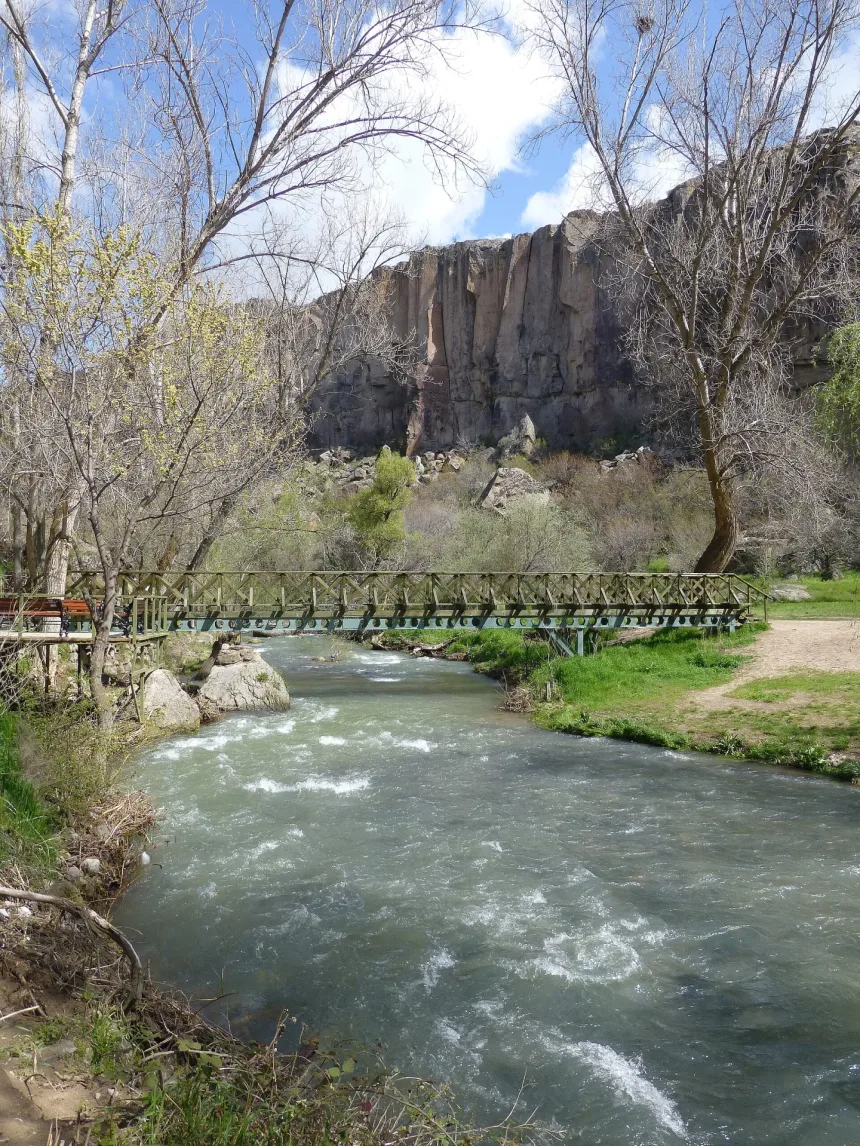
The Melendiz River is the reason human life could develop so intensively inside the canyon. It provided water for agriculture, animals, orchards and settlement in a region with dry summers and a continental climate.
The river bends repeatedly through the canyon, so the real walking distance is longer than the straight line shown between two points on a map.
Water levels and current strength change after rain and snowmelt. Use recognized bridges and do not attempt to cross at unmarked points.
The river should not be treated as a shallow stream that can always be crossed on foot. Depth, current and slippery banks can change within a short period.
After heavy rain, narrow riverside sections may become muddy or temporarily unsafe. Turn back when water reaches the maintained path or a bridge is closed.
Keep children close near the water. Wooden platforms, wet leaves and mossy edges can be slippery even during otherwise easy walking conditions.
A Canyon of Churches and Human Settlement
Ihlara formed part of the historical landscape known as Peristrema. Communities used the canyon for worship, burial, food production, agriculture and everyday life.
The churches were not all created during one period. Some have early architectural forms, while others contain middle Byzantine painting or later inscriptions showing that Christian patronage continued under Seljuk political rule.
The valley may contain approximately 100 churches, chapels and religious spaces when damaged and inaccessible structures are included. This does not mean that visitors can enter 100 complete churches.
Only a smaller group can be reached safely from the maintained routes. Access can change because of erosion, conservation and rockfall risk.
The often-repeated church total includes damaged, inaccessible and partly identified spaces. It should not be read as a list of complete monuments available during one visit.
Not every rock opening was religious. Homes, burial areas, animal shelters, food-storage rooms and agricultural spaces existed beside the churches.
The most accurate way to understand Ihlara is to connect religious art with the river economy that supported settlement. Water, orchards, fields and routes between villages made long-term life inside the canyon possible.
Why Ihlara's Church Art Looks Different From Göreme
The churches near Ihlara's southern section do not always follow the same visual style seen in Göreme Open-Air Museum.
Some paintings display stronger connections with eastern Mediterranean, Syrian and local Cappadocian traditions. Colors, figure placement and narrative choices may feel less formal than the highly organized middle Byzantine programs found elsewhere.
Churches around Belisırma more often contain structured middle and late Byzantine painting. Several are connected with donors, inscriptions and the changing political world of medieval Anatolia.
This difference makes Ihlara valuable for anyone who wants to understand that Cappadocian Christian art was not produced by one school using one fixed style.
Labels such as provincial and metropolitan style can help organize broad differences, but they should not be treated as rigid categories for every painting. Individual churches contain repairs, additions and work from more than one phase.
Early churches in the southern valley often use continuous narrative bands and subjects connected with apocryphal traditions. Later monuments around Belisırma more often display structured donor programs and middle Byzantine forms.
Photography alone may not reveal these differences because light is limited and pigments are damaged. Historical interpretation is especially useful when churches are a main reason for visiting.
Read the guide to Christianity in Cappadocia for the broader history of monasticism, Iconoclasm and rock-cut church painting.
Churches Near the Main Ihlara Entrance
The churches below are spread across different approaches. They should not be treated as one compact museum corridor that every visitor can complete quickly.
Check current signs and barriers at each monument. Do not enter a dark or unsupported space because a map identifies it as a church.
Related Tours
Popular experiences for this destination
 Adventure
Trekking Tours Cappadocia
Hike Cappadocia’s spectacular valleys, fairy chimneys, and cave dwelli…
 Green Tour
Green Tour Cappadocia
Explore Derinkuyu underground city, the beautiful Ihlara Valley, and S…
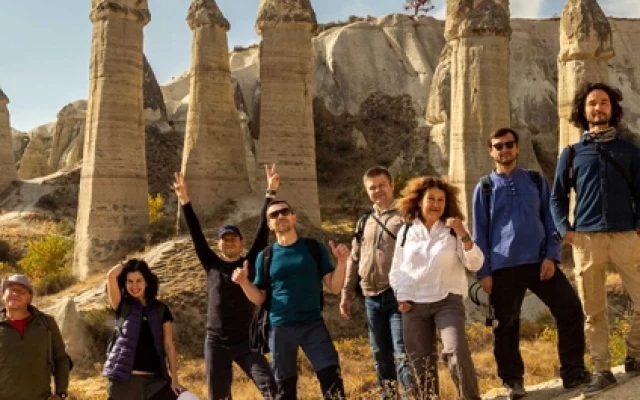
Vip Mix Tour Cappadocia
Experience the ultimate Cappadocia highlights in comfort-historic vall…
Professional Photo Shoot Cappadocia
Capture your Cappadocia moments with a guided professional photo shoot…
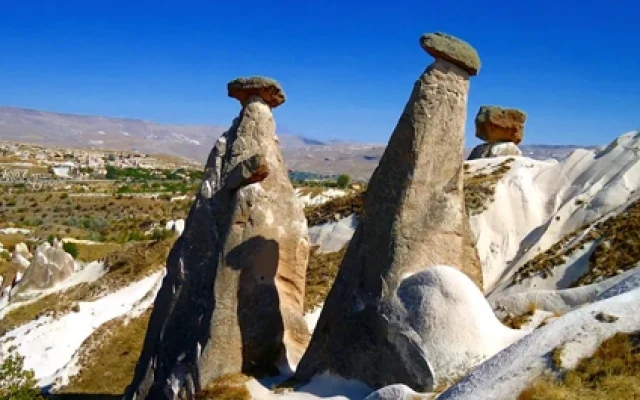 Blue Tour
Blue Tour Cappadocia
Explore hidden valleys, ancient churches, and cultural gems on Cappado…

Cappadocia Rent A Car
Explore Cappadocia freely at your own pace with flexible car rental op…
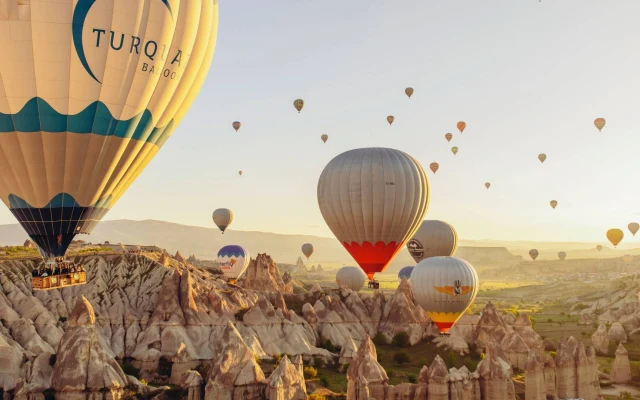 Balloon
Cappadocia Hot Air Balloon Tour
See Cappadocia from the air at sunrise on a professionally operated ho…
 Adventure
ATV Tour Cappadocia
Ride powerful ATVs through Cappadocia’s unique valleys, fairy chimneys…
 Red Tour
Red Tour Cappadocia
Discover Göreme Open-Air Museum, Avanos pottery workshops, and breatht…
 Adventure
Horseback Riding Tour Cappadocia
Experience Cappadocia on horseback, riding through valleys, hidden tra…

Airport Transfer Service Cappadocia
Travel comfortably and safely between Cappadocia’s airports and your h…

Classic Car Tour Cappadocia
Step into nostalgia with a vintage classic car ride through Cappadocia…
Use a small light only where permitted and avoid flash when photography rules prohibit it. Never touch painted surfaces or lean against walls while allowing others to pass.
Ağaçaltı Church
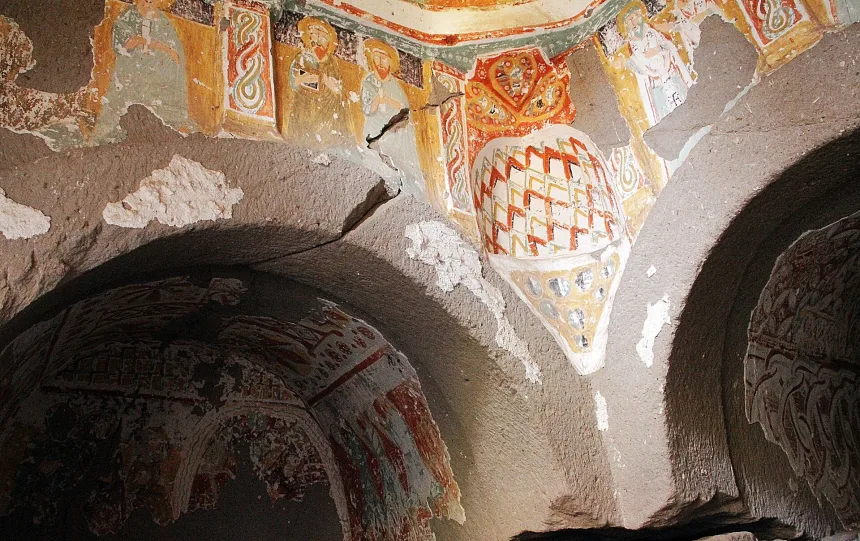
Ağaçaltı Church is one of the easiest monuments to reach from the main staircase. Its name means Church Under the Tree.
The central space and dome preserve important painted scenes, including an Ascension composition. The unusual colors and arrangement of figures make it a strong introduction to Ihlara's distinct artistic character.
The church can become crowded because it is close to the staircase. Wait for space rather than leaning against painted walls to let other visitors pass.
The modern Turkish name does not necessarily preserve the original dedication. Its significance comes from the architecture and surviving painted program rather than the literal translation of the name.
Allow visitors to leave before entering when the interior is crowded. The confined space makes accidental contact with painted surfaces more likely.
Pürenli Seki Church
Pürenli Seki consists of several connected rock-cut spaces reached by a separate approach.
Its paintings belong to more than one phase and include scenes connected with Christ, apostles, saints and military figures.
The climb is more demanding than the main riverside path and may involve uneven steps, low passages and exposed rock.
This detour can add more time than its map distance suggests. Visitors with limited time should choose between Pürenli Seki and other elevated churches rather than attempting every side climb.
The connected spaces and multiple painting phases should be read as a complex, not as one single chamber created at one date.
Kokar Church
Kokar Church contains scenes from the life of Christ and other biblical subjects.
Its Turkish name means Smelly Church, but it should not be explained through invented stories about decaying paint. The name is more likely connected with the later condition or use of the space.
Moisture, smoke, surface loss and human contact have damaged the paintings. Remain behind current barriers.
The church has a defined architectural plan and more than one connected space. Avoid reducing it to the unusual modern name.
Surface staining and later use can be difficult to distinguish from original decoration without specialist interpretation.
Yılanlı Church
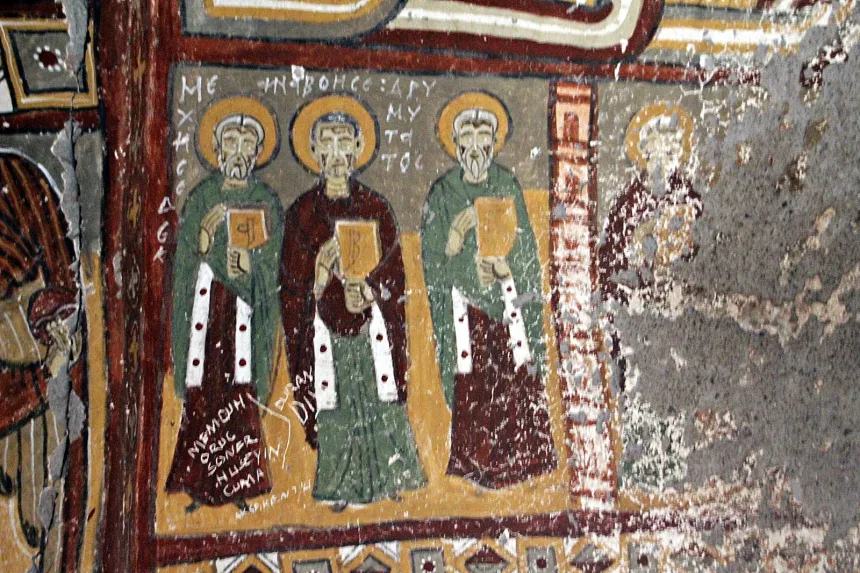
Yılanlı Church, meaning Snake Church, is known for dramatic images connected with punishment, death and the afterlife.
The modern name comes from figures shown being attacked or restrained by serpent-like creatures. These images belong to a larger moral program rather than one isolated scene.
This church should not be confused with the Yılanlı Church inside Göreme Open-Air Museum.
The moral scenes are part of a wider program concerning judgment and salvation. They should not be presented only as frightening images detached from the church's religious context.
Similar translated names appear across Cappadocia. Confirm the valley and entrance whenever searching for Snake Church online.
Sümbüllü Church
Sümbüllü Church has a carved facade and an elevated entrance. Its Turkish name means Hyacinth Church.
The interior contains images connected with saints, apostles and imperial figures.
The approach includes steps and uneven rock. Check the current condition before climbing toward the entrance.
The carved facade is important even when interior access is limited. View it from the recognized approach rather than climbing around a closed entrance.
Eğritaş Church
Eğritaş is one of the larger early churches associated with the southern valley.
It includes burial spaces and surviving painted scenes, but damage and later reuse have changed much of the original interior.
Its location means that it is not always included in the shortest main-entrance circuit.
Allow extra route time when Eğritaş is a priority. Burial spaces, inscriptions and later alterations require slower observation than a quick entrance photograph.
Do not enter side chambers or upper spaces beyond the maintained visitor area.
Churches Around Belisırma
The Belisırma group is practical for visitors who finish a one-way hike in the village or arrive by road. The monuments are not all located directly beside the restaurant platforms.
Choose two or three churches according to access and interest. Adding every possible detour can turn a short riverside walk into a much longer historical route.
Direkli Church
Direkli Church takes its name from the carved pillars dividing the interior.
The church belongs to the middle Byzantine artistic environment and contains portraits of saints on architectural surfaces.
Other Cappadocian churches carry the same Turkish name, so check the route carefully.
The carved pillars organize the interior and imitate structural forms used in built churches. They should be understood as part of the plan rather than as isolated decorative features.
Kırkdamaltı Saint George Church
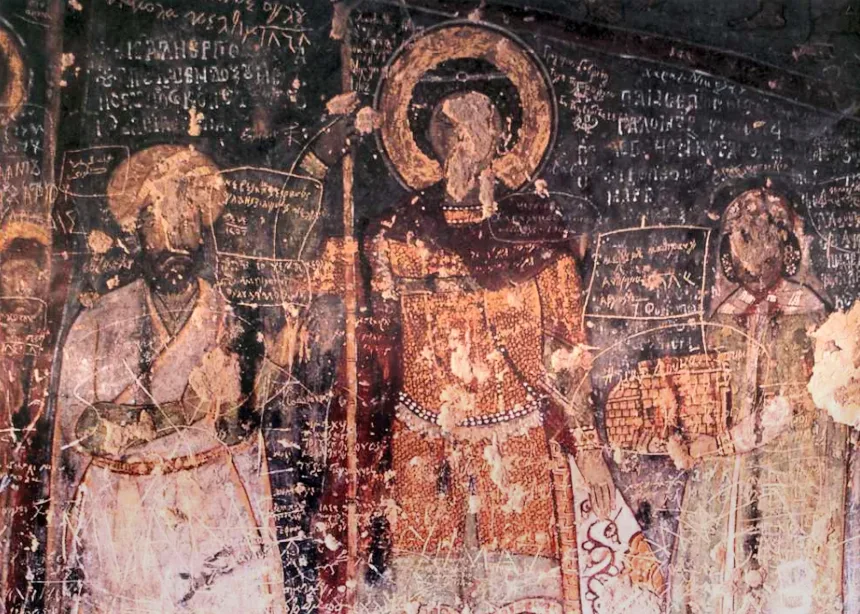
Kırkdamaltı Church, also known as Saint George Church, is one of the valley's most important later monuments.
An inscription dates its painted program to the late 13th century and mentions Seljuk Sultan Mesud II and Byzantine Emperor Andronikos II.
The decoration includes Saint George, donors and figures wearing clothing connected with medieval Anatolia.
The church is important because it proves that Christian artistic patronage continued in the valley under Seljuk rule.
The inscription and donor images make the church especially important for understanding medieval Anatolia as a shared political and cultural environment rather than a simple division between Byzantine and Seljuk periods.
Some donor clothing reflects the visual world of Muslim-ruled Anatolia. This does not mean that the figures themselves should automatically be identified as Muslim patrons.
Check current access before planning the church as a guaranteed interior stop. Its location and approach require additional walking from the central Belisırma area.
Ala Church
Ala Church contains scenes from the lives of Christ and the Virgin Mary.
The decoration survives unevenly, and some scenes are difficult to understand without enough light or historical interpretation.
Use a light carefully where permitted and allow your eyes to adjust. Bright phone lights directed at other visitors or painted walls can disrupt the interior and photography.
Karagedik Church
Karagedik differs from many Ihlara churches because constructed masonry was used together with the rock-cut architecture.
The structure is heavily damaged. Do not enter unstable sections or pass current barriers.
The combination of masonry and rock-cut construction makes Karagedik architecturally important, but structural damage limits how closely it can be examined.
The Belisırma churches guide explains the principal monuments around the village in greater detail.
Ihlara Valley Entrances
Entrance names are a major source of planning errors. The main staircase entrance, Ihlara Village entrance and Belisırma road access lead to different route experiences.
Confirm the exact gate with the driver and save a map pin. A vehicle waiting at the wrong entrance may be many road kilometers away even when both locations belong to Ihlara Valley.
Ihlara Village Entrance
The southern Ihlara Village entrance is useful for visitors planning a longer one-way walk through the canyon.
It is different from the main staircase entrance. Confirm the exact drop-off point with the driver before leaving the vehicle.
This starting point is most useful for a longer one-way canyon walk. It is not the best choice for visitors expecting immediate access to Ağaçaltı Church and the famous staircase.
Main Staircase Entrance
The most frequently used entrance descends approximately 380 steps from the parking area to the river.
Ağaçaltı Church stands close to the bottom. Other churches can be reached by walking in different directions from this central point.
The descent is easier than the return. Visitors with knee, heart or balance problems should think carefully before choosing a route that requires climbing all 380 steps back to the parking area.
The step count is commonly given as approximately 380 and may be described slightly differently by various sources. The practical issue is the sustained return climb, not the exact number.
Use the handrail where available and allow faster visitors to pass at wider points. Do not stop across the full width of the staircase for photographs.
People who descend only to see Ağaçaltı must still reserve enough energy and time for the climb back to the parking area.
Belisırma Entrance
Belisırma provides road access to the middle section of the canyon and is the most practical exit for shorter one-way hikes.
The village has bridges, restaurants and access to the northern group of churches.
Belisırma has more than one roadside and riverside meeting area. Agree on a named restaurant, bridge, parking area or shared pin before entering the canyon.
Large tour vehicles may collect passengers from a different point than private cars. Confirm the walking distance between the riverside and pickup point.
Selime Area
Selime lies near the northern end of the wider valley corridor. The maintained route and northern connections can change according to trail conditions.
Do not assume that every path shown on an old hiking map is still open.
The northern corridor is less standardized than the popular main-entrance to Belisırma section. Check current trail continuity before planning a complete trek to Selime.
The No-Stairs Route
The best way to experience the canyon without returning up the main staircase is to arrange a one-way hike.
Ask a driver to leave you at the southern Ihlara Village entrance or another confirmed starting point. Walk north through the canyon and finish in Belisırma, where a vehicle can meet you at road level.
This avoids climbing the 380 steps back to the main parking area. It also allows the walk to feel like a journey through the canyon rather than a return trip along the same trail.
The route is not completely effortless. Church approaches, uneven ground and longer distances still require reasonable fitness.
No-stairs means avoiding the return climb at the main entrance, not a completely level or accessible walk. The route still contains bridges, natural surfaces and church detours.
Visitors with reduced mobility should discuss exact walking surfaces with a driver or guide instead of relying on the route name alone.
Choose the Right Ihlara Route
| Route | Distance and Time | Best For | Main Experience |
|---|---|---|---|
| Main Entrance Church Circuit | Approximately 1.5 to 3 hours | Limited time | Ağaçaltı and selected nearby churches, with a 380-step return climb |
| Main Entrance to Belisırma | Approximately 3.5 to 5 kilometers, 1.5 to 3 hours | First-time visitors | Popular riverside route with transport required from Belisırma |
| Ihlara Village to Belisırma | Approximately 3 to 5 hours | Longer canyon experience | One-way route avoiding the main staircase return |
| Belisırma Churches Route | Approximately 2 to 4 hours | Art and history travelers | Direkli, Kırkdamaltı and the later Byzantine monuments |
| Full Ihlara to Selime Trek | Approximately 14 to 15 kilometers, 5 to 7 hours | Experienced hikers | Full canyon crossing with independent transport planning |
These figures are planning ranges rather than guaranteed measurements. The chosen trailhead, church detours, temporary closures and restaurant stops can change both distance and time.
For most travelers, completing one route well is more rewarding than combining several partial routes in the same day.
Main Entrance to Belisırma
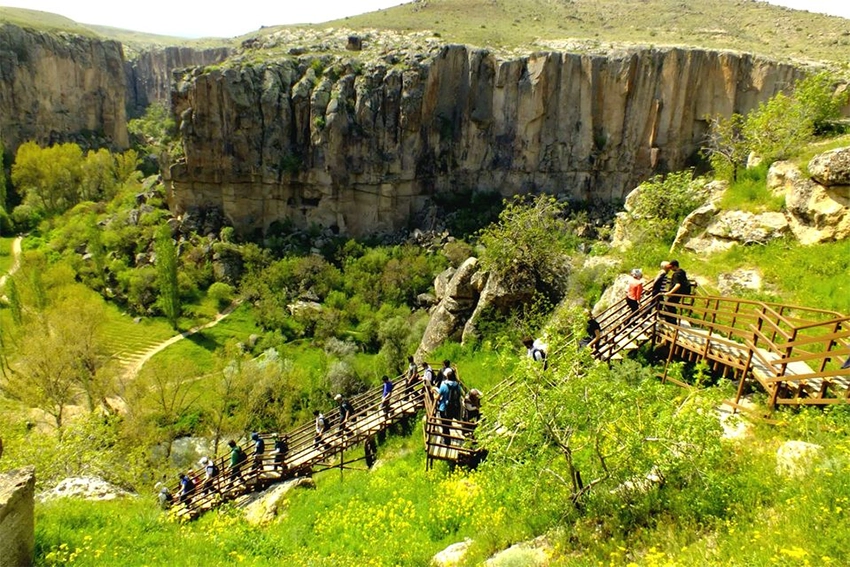
This is the most practical route for most first-time visitors.
The trail follows the river through one of the greener and more accessible parts of the canyon. Wooden walkways, bridges and maintained paths make navigation easier, although mud, wet leaves and uneven surfaces remain possible.
The walk commonly takes between 1.5 and 3 hours depending on pace and church visits.
Transport from Belisırma must be arranged before starting. Otherwise, your vehicle remains at the upper main entrance while you finish several kilometers away at road level.
This route is often described as easy because it follows the river, but wet leaves, roots, narrow bridges and church approaches still require attention.
Do not assume that every member of a group will walk at the same pace. Set a meeting point in Belisırma and keep enough time for slower walkers.
The One-Way Logistics Problem
Ihlara is easy to enter but harder to organize as a one-way journey. This is the detail that catches many independent visitors by surprise.
When walking from the main entrance or Ihlara Village to Belisırma, arrange one of these solutions before descending:
Related Tours
Popular experiences for this destination
AdventureTrekking Tours Cappadocia
Hike Cappadocia’s spectacular valleys, fairy chimneys, and cave dwelli…
Green TourGreen Tour Cappadocia
Explore Derinkuyu underground city, the beautiful Ihlara Valley, and S…
Vip Mix Tour Cappadocia
Experience the ultimate Cappadocia highlights in comfort-historic vall…
Professional Photo Shoot Cappadocia
Capture your Cappadocia moments with a guided professional photo shoot…
Blue TourBlue Tour Cappadocia
Explore hidden valleys, ancient churches, and cultural gems on Cappado…
Cappadocia Rent A Car
Explore Cappadocia freely at your own pace with flexible car rental op…
BalloonCappadocia Hot Air Balloon Tour
See Cappadocia from the air at sunrise on a professionally operated ho…
AdventureATV Tour Cappadocia
Ride powerful ATVs through Cappadocia’s unique valleys, fairy chimneys…
Red TourRed Tour Cappadocia
Discover Göreme Open-Air Museum, Avanos pottery workshops, and breatht…
AdventureHorseback Riding Tour Cappadocia
Experience Cappadocia on horseback, riding through valleys, hidden tra…
Airport Transfer Service Cappadocia
Travel comfortably and safely between Cappadocia’s airports and your h…
Classic Car Tour Cappadocia
Step into nostalgia with a vintage classic car ride through Cappadocia…
- Book a driver to collect you from Belisırma at a fixed time.
- Ask the hotel to arrange a one-way transfer.
- Use two vehicles and leave one at the exit.
- Agree with a local taxi on the route, meeting point and price in advance.
- Join an organized tour that handles the entrance and exit transport.
Save the driver's phone number and share a clear meeting point before entering the canyon. Mobile coverage can be inconsistent, and Belisırma has more than one roadside and riverside meeting area.
Do not wait until the end of the hike to begin searching for a vehicle.
Confirm the pickup price, approximate time and waiting policy in advance. Delays can occur when church visits or lunch take longer than expected.
Send a live location before coverage weakens and carry the vehicle details in a screenshot. A phone number alone may not solve confusion between several Belisırma collection points.
When using two vehicles, check whether both parking areas remain accessible until the planned finish time.
Belisırma Riverside Stop
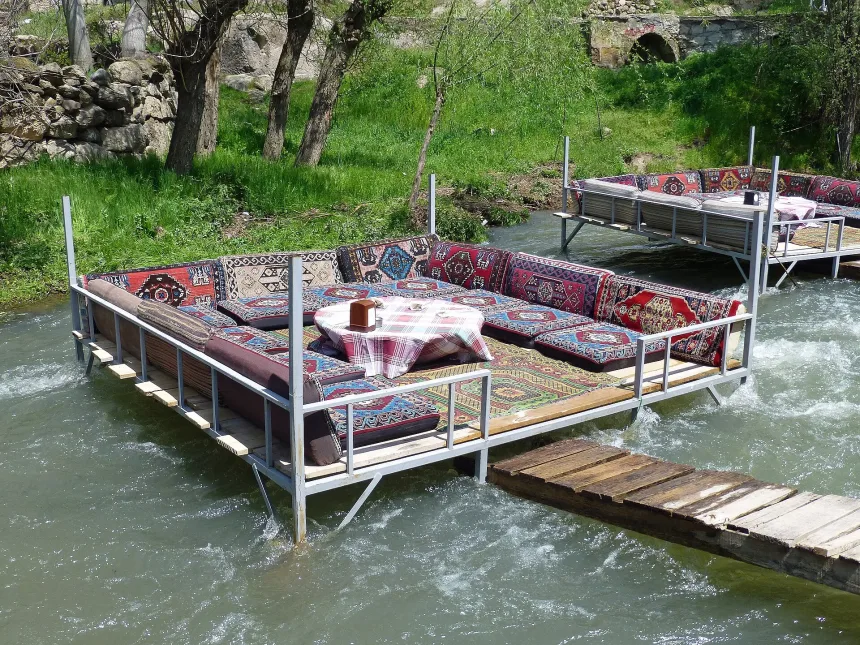
Belisırma is the most common finishing point for shorter hikes and organized tours.
Wooden platforms built beside or above the river create an attractive place to rest. The sound of the Melendiz River is part of the experience, but restaurant quality, menu style and pricing vary considerably.
Some venues mainly serve fixed menus to large tour groups. Check the menu and prices before ordering rather than assuming every riverside table offers the same food or value.
A tea, coffee or cold drink may be enough when the main aim is to rest beside the river. Travelers seeking a specific regional meal can compare the options in Belisırma, Güzelyurt and their final destination before deciding.
Do not rely on Belisırma restaurants as the only source of water during the walk.
Lunch service can be busy when several Green Tour groups arrive together. Allow extra time or choose a simple drink and snack when the itinerary continues to churches or Selime.
Wooden riverside platforms can be slippery. Keep bags and children away from open edges near the water.
Full Ihlara to Selime Route
The complete canyon route is for experienced walkers with enough daylight and arranged transport.
- Distance: Approximately 14 to 15 kilometers
- Time: Approximately 5 to 7 hours without long church stops
- Difficulty: Moderate mainly because of distance and route conditions
- Best seasons: Spring and autumn during stable weather
Not every northern section is maintained to the same standard as the popular main-entrance route. Check current access before committing to the full walk.
The complete route should not be added casually to a day that also includes a long underground city visit, several church stops and a detailed Selime visit.
The full route requires more than physical endurance. It also depends on trail continuity, transport at the northern end, daylight and the ability to navigate less-developed sections.
Carry food, water, a light and offline navigation. Do not depend on finding an open business between Belisırma and the northern exit.
Turn back or shorten the route when weather changes. A complete canyon crossing is not a safe goal during heavy rain, snow, ice or thunderstorm conditions.
Selime Cathedral and Monastery Complex
Selime Cathedral is a large rock-cut complex near the northern end of the Ihlara route.
It contains a major religious chamber, kitchens, storage rooms, passages and spaces carved on several levels. It is better understood as a large monastery and settlement complex than as one single cathedral room.
Selime is not a flat museum visit. Reaching the upper rooms requires climbing steep volcanic surfaces that have become smooth through natural weathering and repeated use.
Wear footwear with reliable grip and keep both hands free. Smooth-soled shoes and flip-flops make the climb far more difficult.
The descent can be more uncomfortable than the climb. Move slowly and avoid standing directly below visitors crossing loose or polished sections.
Allow separate time for Selime rather than treating it as a five-minute stop after a long canyon hike.
Selime is a separate ticketed or managed visit according to current arrangements and should not be assumed to form part of the Ihlara walking ticket.
The upper spaces can become crowded. Wait at wider areas instead of passing directly below people on steep, loose surfaces.
Visitors already tired from the full canyon should assess the climb honestly. Viewing the lower exterior is safer than forcing the upper route with poor balance or unsuitable shoes.
How Difficult Is Ihlara Valley?
The difficulty depends more on the chosen entrance and exit than on the canyon itself.
Main Entrance Circuit
The river path is manageable for many visitors, but returning up approximately 380 steps can be tiring.
Main Entrance to Belisırma
This section is generally suitable for regular walkers and avoids the staircase return when transport is waiting at the village.
Full Canyon Route
The complete route requires endurance, route planning and enough daylight. Some sections are less developed and farther from road exits.
Possible conditions include uneven ground, wooden bridges, wet leaves, mud, slippery roots, church steps and limited mobile coverage.
The hiking paths and church entrances are not suitable for wheelchairs or pushchairs. Some roadside viewpoints and parts of Belisırma may be easier to reach.
Difficulty changes with route direction. Descending the main staircase and finishing in Belisırma is different from returning up the same steps.
Visitors with limited mobility can experience the upper viewpoint, selected road-accessible areas and Belisırma without committing to the full canyon trail. Exact access should be confirmed locally.
Parents should consider a child carrier rather than a stroller, but narrow bridges and uneven ground still require close supervision.
Canyon Survival Note
- Choose the entrance and exit before entering the canyon.
- Arrange one-way transport before beginning the hike.
- Carry enough water because services are concentrated near entrances and Belisırma.
- Use shoes with reliable grip on wet leaves, wooden bridges and church steps.
- Save an offline map and the driver's meeting point.
- Finish long routes before the canyon loses daylight.
Best Time to Visit
Also save the entrance, exit, driver and hotel information offline. A phone used continuously for photography may not retain enough battery for navigation and pickup communication.
Carry a basic first-aid kit for blisters and minor cuts. Even maintained paths contain roots, wet boards and irregular stone.
Best Time to Visit
Spring
April and May bring green vegetation, flowing water and comfortable walking temperatures. Rain can create mud and slippery bridges.
Summer
The canyon floor is cooler than the exposed plateau, but summer heat remains real. Begin early, especially when planning a long route.
Autumn
September and October are among the strongest periods for hiking. Poplars, orchards and riverside vegetation add yellow and orange color.
Winter
Snow and ice can make stairs, bridges and church approaches unsafe. Temporary closures are possible.
Shaded canyon surfaces may remain frozen after the road and parking area have cleared. Do not use upper plateau conditions as a guide to the valley floor.
Best Time of Day
Morning provides cooler conditions, quieter churches and enough daylight for a one-way route.
Do not begin a long hike late in the afternoon. The canyon floor darkens earlier than the plateau because the high walls block the low sun.
Morning also provides more flexibility if an entrance, church or northern trail section is closed. The route can be shortened without finishing after dark.
How to Get to Ihlara From Göreme or Ürgüp
Ihlara is not located beside Göreme. Reaching it requires a substantial road journey into western Cappadocia.
A rental car, private driver or organized tour is normally more practical than public transport. Local connections may require changes through Nevşehir, Aksaray or Güzelyurt and may not match a hiking schedule.
Because of the driving distance, Ihlara is usually combined with an underground city, Belisırma and Selime. This is the basic logic behind the Green Tour route.
The combination is efficient by road, but it does not mean every stop can receive a detailed visit. A long underground city tour reduces hiking and church time later in the day.
Travel times shown by navigation apps do not include hotel pickups, parking, ticket lines or the descent into the canyon.
By Rental Car
A rental car provides flexibility but creates the one-way hiking problem. The vehicle remains at the starting entrance unless another driver or transfer has been arranged.
A circular return to the same car is practical only for shorter routes. For a one-way walk, arrange a taxi shuttle, second vehicle or driver before starting.
Keep fuel and offline road navigation in mind when continuing to Güzelyurt or Selime. Services are less concentrated than around Göreme.
By Guided Tour
The Cappadocia Green Tour commonly combines an underground city, a selected section of Ihlara Valley, lunch near Belisırma and Selime Cathedral.
Most tours do not walk the complete canyon. Confirm the walking distance, selected entrance, included churches and Selime visit before booking.
Green Tour programs may describe the Ihlara section simply as a valley walk. Ask whether the route begins at the main staircase, how long the group walks and where the vehicle meets the group.
Travelers with knee concerns should specifically ask whether the route includes the main staircase and whether a no-return-climb option is used.
A customised private Cappadocia Mix Tour offers more control over the hiking distance, church stops and transport.
A private route is most useful when the group wants more church time, a different entrance or a shorter walking section than a standard shared program.
Review the guide to getting to and around Cappadocia when comparing tours, taxis and rental cars.
Suggested Western Cappadocia Route
- Morning: Visit Derinkuyu Underground City or Kaymaklı Underground City.
- Late morning: Continue to the main Ihlara entrance.
- Midday: Walk beside the Melendiz River toward Belisırma.
- Lunch: Rest in Belisırma and meet the vehicle.
- Afternoon: Visit selected Belisırma churches or continue to Selime Cathedral.
- Optional extension: Visit Güzelyurt when enough daylight remains.
Do not try to complete the full canyon, several churches, an underground city, Selime and Güzelyurt in one ordinary day.
Choose the day's main priority. For hiking, shorten the underground city and Selime visits. For monuments, walk only the selected main-entrance section.
Güzelyurt works better as an overnight base or separate half-day extension when its historic streets and Monastery Valley are important.
Explore Ihlara on the Cappadocia Green Tour
Ihlara's greatest difficulty is not the riverside path. It is coordinating the long drive, different entrances, one-way hiking and transport from the exit.
The Cappadocia Green Tour removes most of this logistical pressure by combining transport, guiding, a selected Ihlara walk and nearby western Cappadocia attractions.
Before booking, confirm whether the program includes Derinkuyu or Kaymaklı, how far the group walks inside Ihlara, where lunch takes place and how much time is allowed at Selime.
Also confirm entrance fees, Museum Pass treatment, language and group size. These details affect the pace and final cost even when the route name is identical.
Places to Visit Near Ihlara Valley
Belisırma
Belisırma provides river access, restaurants and several important medieval churches. Read the Belisırma churches guide before choosing which monuments to visit.
Selime Cathedral
Selime Cathedral is a monumental rock-cut complex near the northern end of the canyon route.
Güzelyurt
Güzelyurt preserves historic Gelveri stone houses, the Church Mosque, Monastery Valley and Yüksek Church.
Derinkuyu Underground City
Derinkuyu Underground City can be combined with Ihlara when traveling from central Cappadocia.
Kaymaklı Underground City
Kaymaklı Underground City is another practical option on the western Cappadocia route.
Opening Hours and Tickets
Ihlara is a managed archaeological and natural visitor site. Opening hours, entrance fees, pass conditions and operating entrances can change.
Check current information before traveling, especially during winter, restoration work or severe weather.
Do not rely on old photographs of ticket boards or historical blog prices.
Confirm the operating entrance as well as the opening time. Severe weather or maintenance may close one route section while another area remains accessible.
Final admission can be earlier than the public closing time. Arrive with enough time to descend, walk and return before the exit procedure begins.
Responsible Visiting
Common Ihlara Planning Mistakes
- Using Ihlara Valley as one entrance name: The main staircase, Ihlara Village and Belisırma lead to different routes.
- Descending without exit transport: A one-way hike can leave the vehicle several road kilometers away.
- Underestimating the staircase: The climb back is harder than the descent.
- Planning too many western sites: A full canyon hike does not fit comfortably with an underground city, Selime and Güzelyurt.
- Relying on restaurant water: Carry supplies from the start.
- Following an old trail map: Bridges, northern sections and churches can close.
- Starting late: The canyon floor loses daylight before the plateau.
- Expecting every church to be open: Conservation and rock stability affect access.
- Wearing smooth shoes: Wet leaves, wood, stairs and polished volcanic rock require grip.
Responsible Visiting
- Remain on recognized paths and bridges.
- Do not enter closed churches or unstable cavities.
- Do not touch frescoes or carved surfaces.
- Do not cross rockfall barriers.
- Do not attempt unmarked river crossings.
- Avoid the canyon during severe rain or thunderstorms.
- Do not light fires.
- Carry trash out of the canyon.
- Keep children close near the river and exposed edges.
- Complete longer routes before darkness.
- Review the Cappadocia safety and essentials guide before hiking independently.
Questions Travelers Ask About Ihlara Valley
Is Ihlara Valley worth visiting?
Yes. Ihlara combines a deep river canyon, hiking, rock-cut churches and a greener environment than central Cappadocia's open valleys.
How long is Ihlara Valley?
The main Ihlara to Selime hiking corridor is commonly described as approximately 14 to 15 kilometers.
How many steps are at the main entrance?
The main visitor entrance has approximately 380 steps between the upper parking area and the valley floor.
Can you avoid climbing the 380 steps?
Yes. Arrange a one-way walk finishing at Belisırma instead of returning to the main entrance. Transport must be waiting at the exit.
How long does the main entrance to Belisırma walk take?
Allow approximately 1.5 to 3 hours depending on pace and church detours.
How do you return to your car after a one-way hike?
Arrange a taxi, driver, hotel transfer, second vehicle or guided tour before entering the canyon. Do not wait until reaching Belisırma to organize the return.
Can you hike the complete canyon?
Yes, when the route is open and conditions are suitable. The full one-way hike requires approximately five to seven hours, enough daylight and organized transport.
What are the best churches in Ihlara Valley?
Major highlights include Ağaçaltı, Pürenli Seki, Kokar, Yılanlı, Sümbüllü, Direkli and Kırkdamaltı Saint George Church.
Is Selime Cathedral difficult to visit?
Selime includes steep and polished volcanic surfaces rather than a flat museum route. Shoes with reliable grip are important.
Can children visit Ihlara?
Shorter sections may suit active children under close supervision. The staircase and complete canyon route can be tiring for younger children.
Can you visit Ihlara without a tour?
Yes. Independent travel is possible by rental car or private driver, but one-way hiking requires transport between the entrance and exit.
Can Ihlara and Selime be visited on the same day?
Yes. A practical day combines a selected Ihlara walk, Belisırma and Selime. Completing the entire canyon leaves much less time for detailed monument visits.
Which Ihlara entrance is best for a first visit?
The main staircase entrance is practical for nearby churches, while a one-way route to Belisırma provides a fuller canyon walk. The best choice depends on staircase ability and arranged transport.
Is mobile coverage reliable inside the canyon?
Coverage can be inconsistent. Save maps, driver details and the meeting point before descending.
Are there toilets along the hiking route?
Facilities are concentrated near entrances, parking areas and Belisırma. Use them before starting and do not assume there will be another facility beside each church.
Can you hike Ihlara after rain?
Some maintained sections may remain open, but mud, river level, wet bridges and rockfall risk can change conditions. Follow current site instructions and shorten the route when necessary.
Is Ihlara suitable for travelers with limited mobility?
The complete canyon and church approaches are not accessible, but selected upper viewpoints, roadside areas and parts of Belisırma may still be possible. Confirm exact access locally.
How Ihlara Fits Into a Cappadocia Itinerary
Ihlara shows that Cappadocia is not only a landscape of dry valleys and isolated fairy chimneys.
Inside the canyon, flowing water supported agriculture, settlement and religious life. Churches were carved beside orchards, burial areas, homes and working spaces rather than existing as isolated monuments.
The paintings also reveal a wider artistic world than Göreme alone. Eastern Mediterranean influences, middle Byzantine programs and late inscriptions appear within different sections of the same canyon.
Ihlara is most rewarding when planned as a complete western Cappadocia day rather than a rushed addition to central valley sightseeing.
The route works because geology, water, agriculture, settlement and religious art remain connected within the same landscape. Removing any one of these layers produces an incomplete understanding of the canyon.
A careful visit separates approximate route figures from current trail conditions, chooses churches according to available time and solves the entrance-to-exit transport problem before the first step.
Include Ihlara in a 3-day Cappadocia itinerary only when the road journey and western route receive enough time.
Use the Cappadocia trip planning guide to balance Ihlara, underground cities, Selime and central Cappadocia without turning the day into a race.