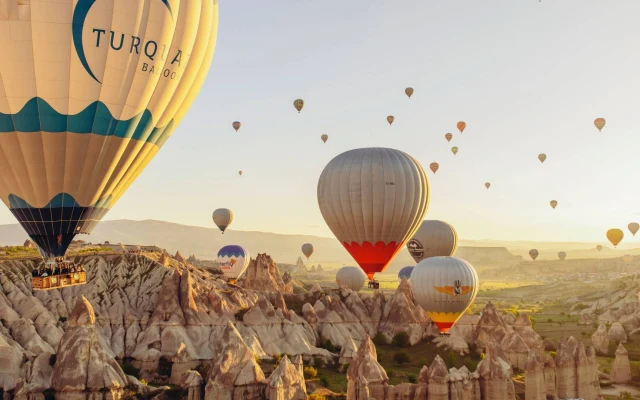
Guzelyurt (Gelveri)
Güzelyurt Cappadocia Travel Guide
Güzelyurt, historically known as Gelveri, is a heritage town on the Aksaray side of Cappadocia. It is known for the Church Mosque, Monastery Valley, historic stone houses, underground spaces, Yüksek Church and the nearby Red Church.
Allow at least half a day for the town center and one full day if you also plan to walk through Monastery Valley or combine the visit with Ihlara Valley.
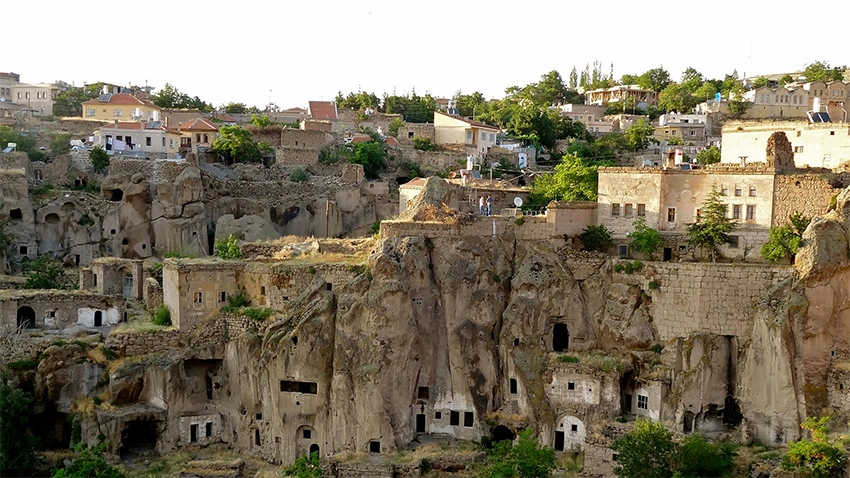
Güzelyurt sits in the southwestern part of historical Cappadocia, within Aksaray Province and close to the slopes of Mount Hasan. Its landscape combines volcanic rock, orchards, vineyards, stone-built neighborhoods, rock-cut religious spaces and deep valleys.
The town receives fewer visitors than Göreme, Ürgüp and Uçhisar. This makes it particularly suitable for travelers interested in architecture, Christian history, population exchange heritage and quieter walking routes.
Güzelyurt works best as a planned western Cappadocia route rather than an extra stop added to an already full central itinerary. Road time, limited public transport and the distance between the town, Yüksek Church, Kızıl Kilise and Ihlara Valley all affect the day.
The historic core can be explored on foot, but several important sites sit outside the center. A rental car, private driver or organized route becomes useful when the plan includes more than the Church Mosque and the first section of Monastery Valley.
Visitors should also expect less standardized tourism infrastructure than in Göreme. Opening arrangements, signs, restaurants and monument access may change, especially outside the busiest travel periods.
Why Visit Güzelyurt?
- Historic Gelveri: Old neighborhoods preserve stone mansions, courtyards, fountains, churches and rock-cut storage areas.
- Religious heritage: The town is closely connected with Saint Gregory of Nazianzus and the Christian history of southwestern Cappadocia.
- Monastery Valley: A walking route begins close to the town and passes churches, monastic rooms, pigeon houses and agricultural landscapes.
- Fewer crowds: Güzelyurt is usually quieter than Cappadocia's central tourism towns.
- Regional location: Ihlara Valley, Belisırma, Selime, Sivrihisar and Kızıl Kilise can be included in the same wider route.
- Traditional accommodation: Several historic stone houses have been restored as guesthouses and small hotels.
Where Is Güzelyurt?
How to Plan a First Visit to Güzelyurt
Begin in the historic center with the Church Mosque and nearby stone streets. Continue into the shorter section of Monastery Valley before deciding whether time and weather support an outer-site drive.
For a half-day visit, keep the route compact. The Church Mosque, old neighborhoods and a short valley walk already provide a clear introduction to the town's religious and architectural history.
For a full day, add either Yüksek Church and Kızıl Kilise or a selected section of Ihlara Valley. Trying to complete all of them usually creates a rushed schedule with more driving than meaningful site time.
Check access before leaving the center. A monument listed on a map may be closed, under restoration or accessible only from a different road than expected.
Carry offline navigation. Mobile reception can weaken on rural roads and inside valleys, while road signs may use Güzelyurt, Gelveri, Sivrihisar or the Turkish name of a monument.
Where Is Güzelyurt?
Güzelyurt is a district center in Aksaray Province. It lies south of the main Nevşehir tourism area and close to Ihlara Valley.
By road, it is approximately 35 to 40 kilometers from Aksaray and around 70 kilometers from Nevşehir, depending on the selected route.
The town stands at a high elevation near Mount Hasan. Winters can be cold and snowy, while summer evenings are often cooler than lower parts of central Anatolia.
The elevation also affects daily planning. Wind, temperature and road conditions can differ from central Cappadocia, particularly around Analipsis Hill and the open plateau near Kızıl Kilise.
Map distances can appear modest, but rural roads, parking and monument access add time. Allow margins rather than building the day around exact driving estimates.
Güzelyurt, Gelveri and Karballa
The settlement has been known by several names. Official local sources identify Karballa as an older name associated with the Roman and Byzantine periods. The name Gelveri remained in use through later centuries and is still widely recognized today.
The modern name Güzelyurt was adopted in 1965. In Turkish, Güzelyurt can be understood as beautiful homeland or beautiful settlement.
The exact linguistic origin of Gelveri is not securely established. It should not automatically be translated as beautiful water without a reliable historical or linguistic source.
Karballa, Gelveri and Güzelyurt belong to different historical and administrative contexts. They should not be presented as one perfectly documented sequence with a single agreed linguistic explanation.
Gelveri remains useful when discussing the former Greek Orthodox community, historic houses and migration memory. Güzelyurt identifies the present town and district center.
Prehistoric and Ancient Settlement
The Güzelyurt region was inhabited long before the visible churches and Ottoman stone houses were built.
Worked obsidian tools and ceramic fragments discovered around Analipsis Hill indicate prehistoric occupation, including activity during the Chalcolithic period. Remains around the hill and nearby Kulaklı Tepe also suggest later fortified occupation associated with the wider Bronze Age and Hittite landscape.
These finds belong to different periods. They should not be combined into one uninterrupted settlement story without archaeological evidence.
Surface finds and structural remains do not automatically prove that every period used the same settlement area in the same way. Analipsis Hill, Kulaklı Tepe and the later town center need to be understood as separate parts of a wider archaeological landscape.
The prehistoric material is important because it shows that the visible Christian and Ottoman monuments form only the latest layers of a much longer human presence.
The region later became part of the Persian, Hellenistic, Roman and Byzantine worlds. Its location between the Melendiz landscape, Mount Hasan and regional routes helped maintain settlement and agricultural activity.
Saint Gregory of Nazianzus and Güzelyurt
Güzelyurt is strongly associated with Saint Gregory of Nazianzus, also known as Gregory the Theologian, one of the major Cappadocian Fathers of the 4th century.
Gregory was not born in the present town center. He was born on his family's estate at Arianzos, near ancient Nazianzus and within the wider landscape now associated with the Güzelyurt district.
He later studied in Caesarea, Alexandria and Athens and became one of the most influential theologians of early Christianity. Together with Basil of Caesarea and Gregory of Nyssa, he contributed to the development of Christian Trinitarian thought.
Güzelyurt's churches, local religious memory and the former Church of Saint Gregory reflect this connection. Read the wider guide to Christianity in Cappadocia for the broader historical background.
Do not describe every nearby church as a building founded or used directly by Gregory. His association with the district is historically important, but later communities also shaped the religious landscape over many centuries.
The distinction between Arianzos, Nazianzus and modern Güzelyurt matters. They are connected historically and geographically, but they are not interchangeable place names.
Greek Orthodox and Muslim Heritage
During the Ottoman period, Gelveri had Muslim and Greek Orthodox communities. The Christian population was particularly influential in the town's commercial, religious and architectural development.
Many Gelveri families worked or traded in larger Ottoman cities and sent part of their income back to their hometown. This supported the construction and repair of churches, schools, fountains and monumental stone houses.
The Muslim community maintained its own mosques, neighborhoods and religious institutions. Güzelyurt should therefore be understood as a shared settlement shaped by more than one community.
The 1924 Population Exchange
The compulsory population exchange agreed through the 1923 Lausanne process changed the town permanently.
In 1924, the Greek Orthodox residents of Gelveri left Türkiye. Many settled near Kavala and established a new settlement known as Nea Kalvari.
Muslim families arriving from Greece, including communities connected with Kastoria and Kozani, were settled in Güzelyurt and other parts of the region.
Historic houses changed owners, churches lost their regular congregations and religious buildings acquired new functions. Some structures were maintained, while others were abandoned or adapted for agriculture, storage and public use.
The exchange should not be described only through abandoned buildings. Families leaving Gelveri lost homes, institutions and familiar landscapes, while incoming Muslim families had to rebuild daily life in a settlement created under different social and architectural conditions.
Present-day Güzelyurt is therefore not a frozen Greek Orthodox town. Its heritage also includes the Muslim community before the exchange, the families who arrived afterward and residents who continued repairing and reusing the buildings.
Greek and Ottoman inscriptions may survive on private property. Photograph them from public space unless the owner gives permission to enter.
Historic Stone Houses of Güzelyurt
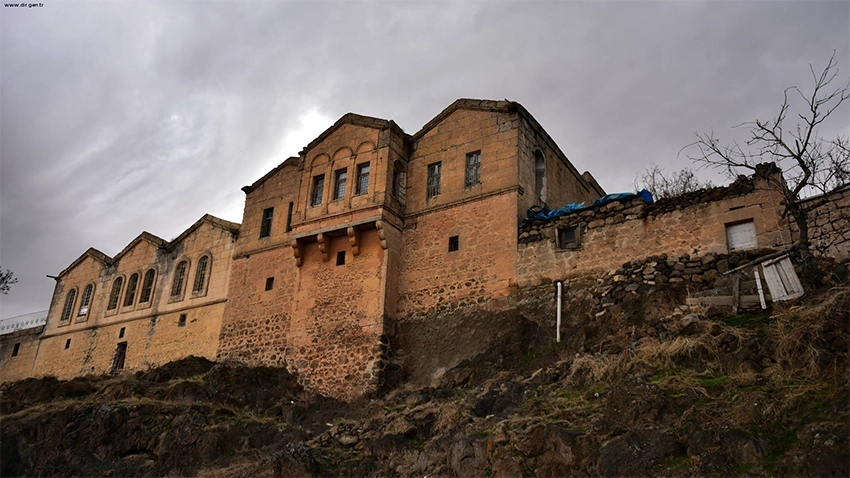
The old stone houses are among the most important parts of the Güzelyurt experience. Many surviving examples date from the 19th and early 20th centuries.
The houses commonly combine:
- Cut-stone facades
- Rock-cut rooms behind the visible building
- Arched doors and windows
- Enclosed courtyards
- Stone staircases and terraces
- Cellars and agricultural storage rooms
- Carved or painted decoration
- Rooms adapted to the natural slope
The rock-cut areas maintained relatively stable temperatures and could be used for storing grain, fruit, grapes and other agricultural products.
Some properties have been restored as hotels, restaurants or private homes. Others remain fragile or abandoned. Do not enter a courtyard, cellar or open building without permission.
The houses often follow the slope. A street-level facade may hide storage rooms, stables, grape-processing areas or carved chambers at a different level behind the main building.
Related Tours
Popular experiences for this destination
 Adventure
Trekking Tours Cappadocia
Hike Cappadocia’s spectacular valleys, fairy chimneys, and cave dwelli…
Vip Mix Tour Cappadocia
Experience the ultimate Cappadocia highlights in comfort-historic vall…
 Blue Tour
Blue Tour Cappadocia
Explore hidden valleys, ancient churches, and cultural gems on Cappado…
 Green Tour
Green Tour Cappadocia
Explore Derinkuyu underground city, the beautiful Ihlara Valley, and S…
 Red Tour
Red Tour Cappadocia
Discover Göreme Open-Air Museum, Avanos pottery workshops, and breatht…

Classic Car Tour Cappadocia
Step into nostalgia with a vintage classic car ride through Cappadocia…

Cappadocia Rent A Car
Explore Cappadocia freely at your own pace with flexible car rental op…

Nostalgic Electric Car Tour Cappadocia
Ride eco-friendly nostalgic electric cars through Cappadocia’s valleys…
 Adventure
ATV Tour Cappadocia
Ride powerful ATVs through Cappadocia’s unique valleys, fairy chimneys…
 Adventure
Horseback Riding Tour Cappadocia
Experience Cappadocia on horseback, riding through valleys, hidden tra…
Professional Photo Shoot Cappadocia
Capture your Cappadocia moments with a guided professional photo shoot…

Airport Transfer Service Cappadocia
Travel comfortably and safely between Cappadocia’s airports and your h…
Restoration can make original and new construction difficult to separate. Matching stone may be used for repairs, and historic-looking rooms may have been substantially rebuilt for accommodation.
Look for construction joints, blocked openings, differences in stone texture and changes in floor level. These features help explain how houses were adapted, although they should not be used to assign an exact date without documentation.
Many buildings remain occupied. Keep entrances clear, avoid photographing through windows and do not treat residential courtyards as public museum spaces.
Best Things to Do in Güzelyurt
1. Visit the Church Mosque
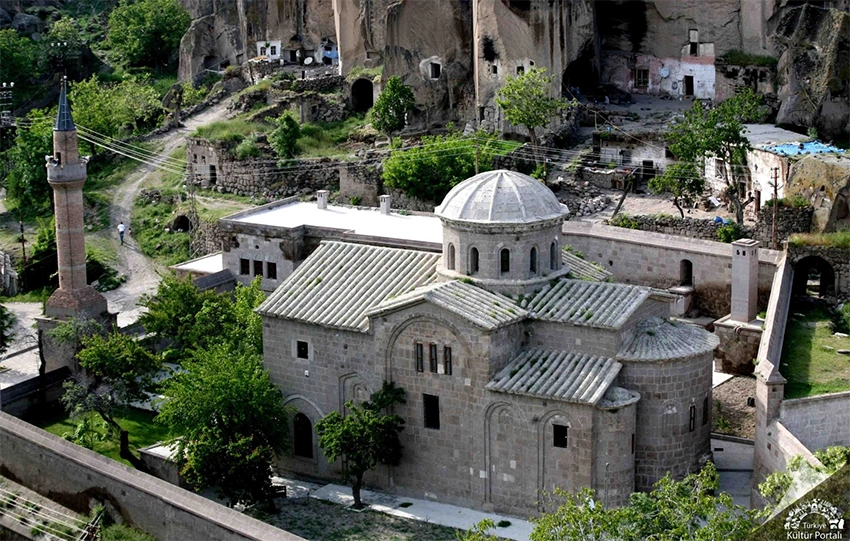
The Church Mosque, known locally as Kilise Camii or Büyük Kilise Camii, is Güzelyurt's most prominent monument.
The site is traditionally connected with a church dedicated to Saint Gregory of Nazianzus and an early foundation associated with the late 4th century. The visible structure, however, reflects repeated rebuilding and repair, including major work during the late Ottoman period.
The church became a mosque after the departure of the Greek Orthodox community during the population exchange.
The building's Christian and Islamic phases remain visible through its basilica-like interior arrangement, stone construction, galleries, prayer orientation and later minaret.
Look closely at the carved wooden minbar inside the mosque. Local accounts connect it with an earlier Christian pulpit that was adapted after the building became a mosque. A widely repeated story attributes the woodwork to a gift from Russian Tsar Nicholas II, but this detail should be checked against the current information displayed at the monument rather than treated as firmly documented history.
The reuse of the pulpit is important even without the royal attribution. Instead of removing every element connected with the church period, the building acquired a new religious function while preserving part of its earlier interior craftsmanship.
An ayazma, or sacred spring, is associated with the complex. Stone steps descend toward the water area, demonstrating the importance of springs and sacred water in local religious practice.
The building is an active mosque. Visitors should:
- Visit outside congregational prayer times.
- Remove shoes before entering the carpeted prayer area.
- Wear respectful clothing.
- Ask before photographing worshippers.
- Follow any restrictions around the ayazma and lower sections.
2. Walk Through Monastery Valley
Allow at least 30 to 45 minutes for the building when it is open to visitors. The exterior, main interior, minbar and lower sacred-water area each belong to different parts of the site's history.
Do not present the visible building as an unchanged 4th-century church. The religious foundation may be linked with early Christian tradition, but the standing structure reflects repeated rebuilding, repair and later conversion.
The royal-gift story connected with the woodwork is widely repeated but should remain clearly identified as an attribution unless the monument's current documentation confirms it.
Because the building is an active mosque, access can pause during prayer or community use. A quiet exterior visit is more appropriate than waiting inside during worship.
2. Walk Through Monastery Valley
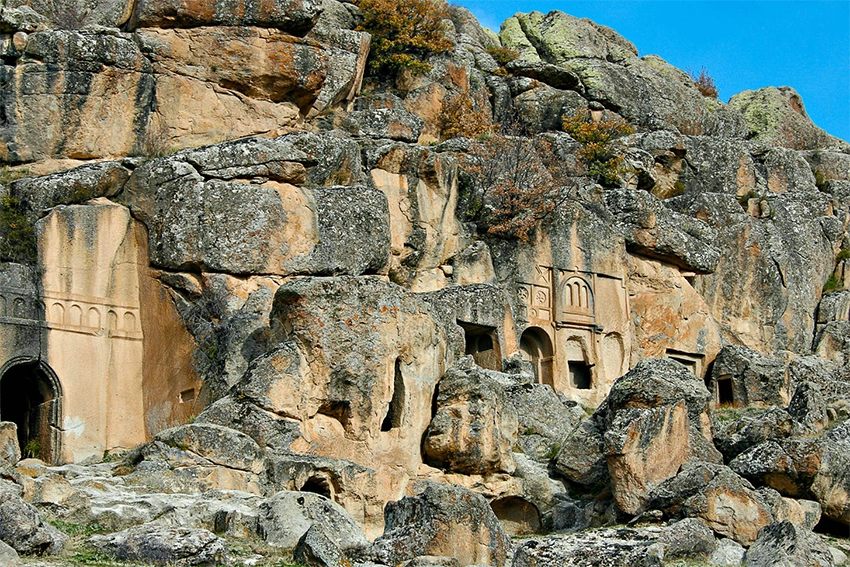
Monastery Valley, known in Turkish as Manastır Vadisi, begins close to the Church Mosque and continues through a landscape of volcanic cliffs, water channels, trees and rock-cut structures.
The historic valley is commonly described as approximately 4.5 kilometers long. Current hiking routes may extend farther by connecting Güzelyurt with Sivrihisar, Kızıl Kilise and surrounding rural areas.
The valley does not contain one single enclosed monastery. It is a wider religious and settlement landscape containing churches, chapels, monastic chambers, storage rooms and agricultural spaces created across different periods.
Compared with the main stair entrance and heavily visited sections of Ihlara Valley, the historic core of Monastery Valley usually feels gentler and quieter. The path still includes uneven ground, loose volcanic soil and occasional slopes, so it should not be described as completely flat or accessible in every section.
The calm atmosphere is one of the route's strongest qualities. Visitors may pass long sections with few other walkers, but solitude cannot be guaranteed during weekends, local events or organized group visits.
The valley is not managed like one enclosed museum. Individual monuments may have different access conditions, and some rock-cut spaces remain unmarked, unstable or privately used.
A short route can be completed as an out-and-back walk from town. Longer routes require a clear turnaround time or confirmed transport from the far end.
After rain, shaded surfaces and carved passages can remain muddy longer than open streets. Do not enter a tunnel or narrow section when the exit, footing or water level cannot be assessed.
Save the route offline and carry water. Small seasonal businesses or facilities should not be assumed to be open along the trail.
Sivişli Church
Sivişli Church is one of the better-known monuments near the beginning of the valley route. It combines built masonry with sections shaped into the rock.
Surviving painted decoration includes religious figures and compositions, although conservation conditions and access may change.
Kalburlu Church
Kalburlu Church is notable for its carved facade and architectural treatment. Its importance comes from the form of the rock-cut space and relief decoration rather than a complete surviving fresco program.
Kömürlü Church
Kömürlü Church is another rock-cut monument included in the recognized valley route. The building should be examined as part of the wider complex of religious, domestic and agricultural spaces.
Papaz Evi
The structure known as Papaz Evi, meaning Priest's House, helps explain that the valley contained more than churches. Clergy accommodation, storage spaces and daily working areas formed part of the religious settlement.
Other Rock-Cut Structures
Visitors may also encounter smaller chapels, pigeon houses, wine-production spaces, carved facades and rooms whose original function is not always securely known.
Do not identify every rock opening as a church or monastery cell. Many spaces were used for storage, animals, agriculture or later settlement.
Church names and map labels may vary between Turkish and translated sources. Confirm the monument by location and visible architecture rather than relying only on one English name.
Fresco fragments, carved reliefs and painted surfaces are vulnerable. Do not touch them, use water to improve color or enter a closed chamber for a photograph.
Monastery Valley Walking Routes
Short Route
The shorter route begins near the Church Mosque and passes several of the main monuments, including Sivişli Church, Papaz Evi, Kalburlu Church and Kömürlü Church.
This option is suitable for visitors who want to experience the valley without completing a long countryside walk.
Extended Route
Longer routes may continue through the surrounding plateau toward Sivrihisar, Kızıl Kilise, reservoirs and rural landscapes.
The extended municipal route is considerably longer than the historical core of Monastery Valley. It should not be attempted as a casual late-afternoon walk.
For longer routes:
- Download an offline map.
- Carry sufficient water and food.
- Check the weather before departure.
- Arrange transport from the finishing point.
- Avoid narrow sections during heavy rain.
- Do not enter unsupported rock-cut chambers.
3. Visit Yüksek Church and Analipsis Hill
Do not start an extended route late because the town center remains bright. Valleys and rural tracks lose usable light earlier, and the return road may have limited lighting.
Turn back when weather changes. Heavy rain, fog, snow and strong wind can transform a manageable route into a difficult one within a short period.
3. Visit Yüksek Church and Analipsis Hill
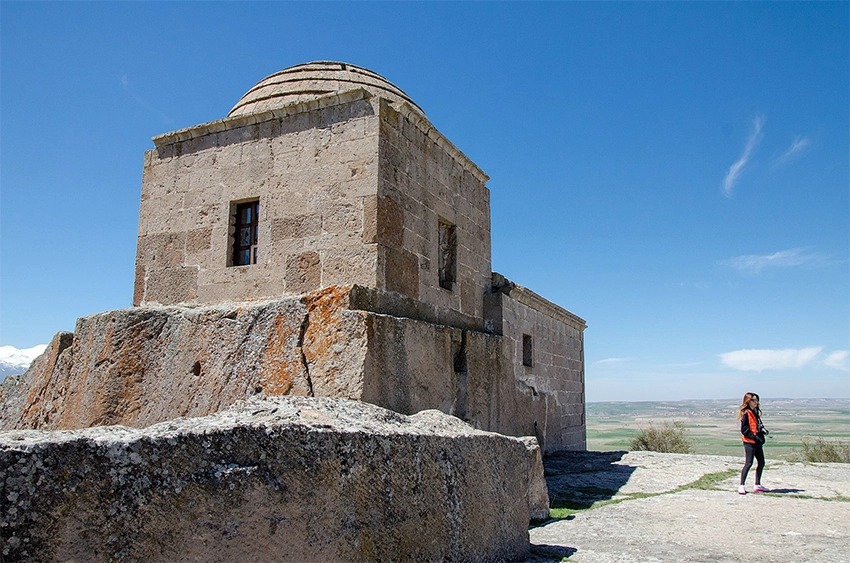
Yüksek Church, also known as Analipsis Church, stands on an elevated hill outside the central historic neighborhoods.
The site is important for both archaeology and landscape views. Worked obsidian, ceramic fragments and structural remains around Analipsis Hill indicate that the location was used long before the present church was built.
The visible church belongs to a much later historical phase than the prehistoric material around the hill. The church and surrounding walls should therefore not be assigned to one single period.
The hill offers broad views toward Güzelyurt, the nearby reservoir, agricultural land and Mount Hasan when visibility is clear.
Late afternoon is especially rewarding at Analipsis Hill. As the light softens, Mount Hasan, the reservoir and the open plateau can appear within the same wide composition. Reflections depend on the water level, wind and cloud cover, so the scene will not look identical on every visit.
Visitors planning to stay for sunset should arrive with enough daylight to inspect the ground and organize the return journey. The hill is much quieter than Göreme's main sunset platforms, but facilities and lighting are also more limited.
The area is exposed to wind, and the ground may become slippery after rain or snow. Stay away from unsupported walls and cliff edges.
Yüksek Church is not within a casual walk of every central hotel. Confirm road access, parking and current entry conditions before treating it as the final stop of the day.
The archaeological material and the later church should be read separately. Obsidian and prehistoric ceramics indicate earlier activity around the hill, but they do not date the visible church.
Sunset visitors should carry a light and leave before complete darkness when unfamiliar with the ground. The quiet setting also means there may be no staff or nearby business to assist after closing hours.
4. Explore the Central Underground Spaces
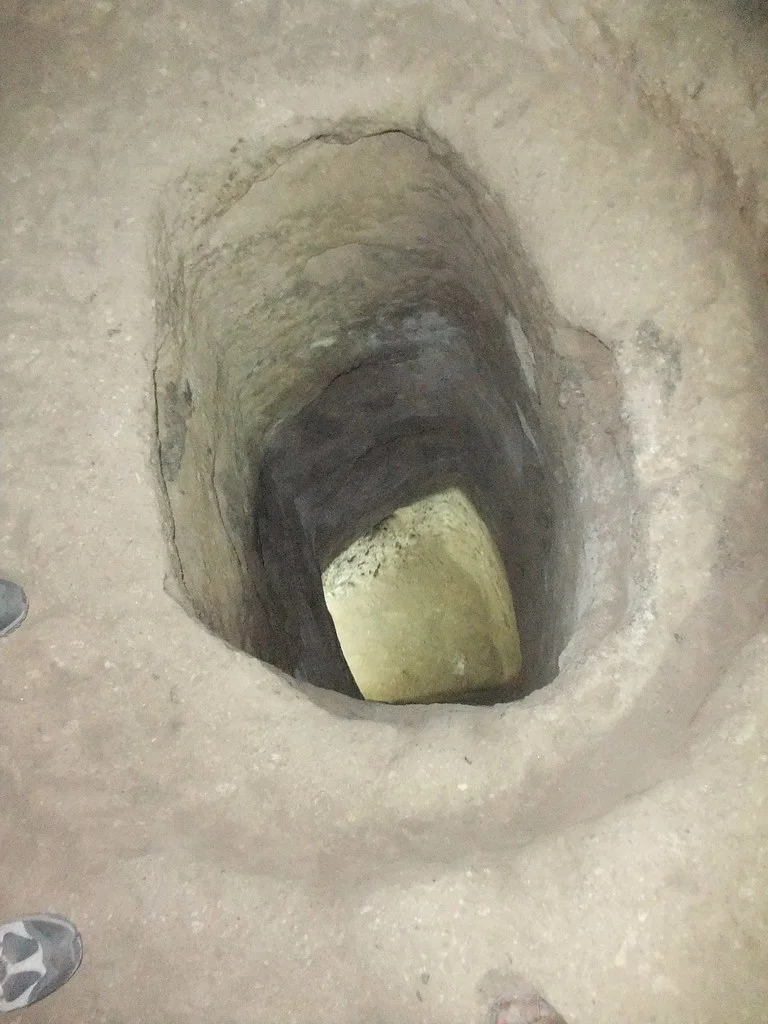
Güzelyurt contains several underground and rock-cut complexes. One entrance is associated with the central town area, while other underground spaces are located around Monastery Valley and the wider district.
These complexes should not automatically be compared in size with Derinkuyu Underground City or Kaymaklı Underground City.
The Güzelyurt spaces are smaller and have experienced different patterns of reuse. Rooms may have served as storage areas, cellars, shelters, animal spaces or connected service areas beneath houses.
Sections of the central complex may be adapted for exhibitions or local cultural events. Public access can change, so check the current situation in the town center.
Visitors with claustrophobia, balance problems or limited mobility should assess the entrance before descending.
These spaces may include low ceilings, uneven steps and limited lighting. Keep both hands free, avoid large bags and do not continue beyond the maintained public section.
Closed side rooms should not be entered even when another visitor does so. Stability, ventilation and route direction cannot be judged reliably from the doorway.
5. Visit the Red Church
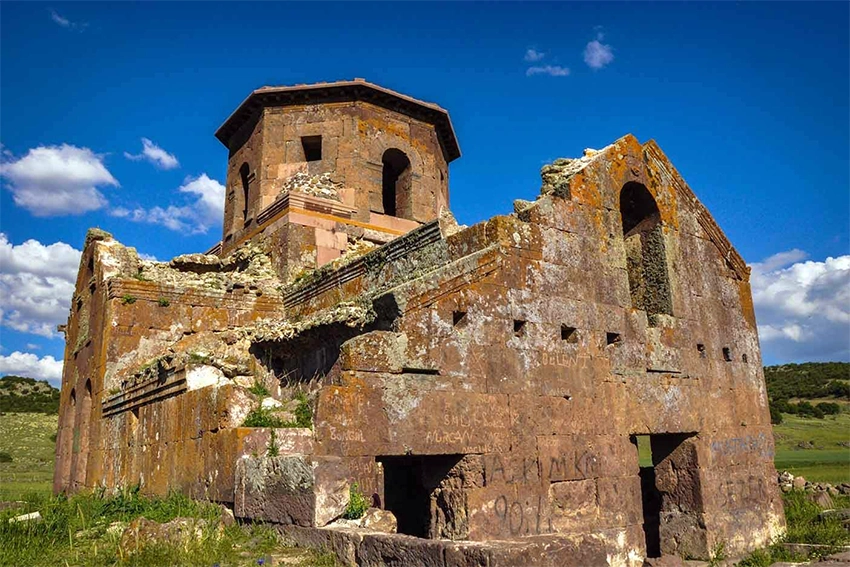
The Red Church, known in Turkish as Kızıl Kilise, stands near Sivrihisar village in the Güzelyurt district.
Unlike Cappadocia's many rock-cut churches, Kızıl Kilise is a freestanding masonry building constructed from reddish volcanic stone.
The church is generally dated to the 5th or 6th century. Its design includes a cross-shaped central arrangement and a dome supported above a windowed drum.
This architectural form allowed light to enter the center of the building and makes Kızıl Kilise an important example of early masonry church architecture in Cappadocia.
The contrast with Cappadocia's rock-cut churches is essential. Kızıl Kilise was assembled as a freestanding structure from carefully cut stone, so its walls, central crossing, drum and dome had to function as a complete architectural system rather than being carved from an existing rock mass.
The church has been associated with Saint Gregory of Nazianzus because of its location near the landscapes connected with Arianzos. However, its original dedication and exact function remain subjects of interpretation.
The site stands in an exposed rural landscape. There may be limited shade, water and visitor facilities. Access and restoration conditions should be confirmed locally.
Kızıl Kilise deserves more than a quick exterior photograph when architecture is the main interest. Walk around the permitted perimeter and compare the masonry, drum, openings and relationship with the open plateau.
Its freestanding construction provides an important contrast with rock-cut Cappadocian churches. The building had to carry its own structural loads rather than depend on the surrounding rock mass.
Do not climb on fallen masonry or cross barriers for a higher viewpoint. Restoration areas and unsupported elements can remain fragile even when the site appears open.
Carry water and sun protection in summer. In winter, wind and snow can make the rural approach significantly colder than the town center.
6. Walk Through the Lower and Upper Neighborhoods
Güzelyurt should not be experienced only through its major monuments. The streets between the Church Mosque, old houses and valley entrances reveal how the historic settlement developed.
Look for:
Related Tours
Popular experiences for this destination
AdventureTrekking Tours Cappadocia
Hike Cappadocia’s spectacular valleys, fairy chimneys, and cave dwelli…
Vip Mix Tour Cappadocia
Experience the ultimate Cappadocia highlights in comfort-historic vall…
Blue TourBlue Tour Cappadocia
Explore hidden valleys, ancient churches, and cultural gems on Cappado…
Green TourGreen Tour Cappadocia
Explore Derinkuyu underground city, the beautiful Ihlara Valley, and S…
Red TourRed Tour Cappadocia
Discover Göreme Open-Air Museum, Avanos pottery workshops, and breatht…
Classic Car Tour Cappadocia
Step into nostalgia with a vintage classic car ride through Cappadocia…
Cappadocia Rent A Car
Explore Cappadocia freely at your own pace with flexible car rental op…
Nostalgic Electric Car Tour Cappadocia
Ride eco-friendly nostalgic electric cars through Cappadocia’s valleys…
AdventureATV Tour Cappadocia
Ride powerful ATVs through Cappadocia’s unique valleys, fairy chimneys…
AdventureHorseback Riding Tour Cappadocia
Experience Cappadocia on horseback, riding through valleys, hidden tra…
Professional Photo Shoot Cappadocia
Capture your Cappadocia moments with a guided professional photo shoot…
Airport Transfer Service Cappadocia
Travel comfortably and safely between Cappadocia’s airports and your h…
- Carved stone doorways
- Greek and Ottoman inscriptions
- Historic fountains
- Courtyard entrances
- Rock-cut cellars
- Traditional balconies
- Former communal ovens
- Views across the lower neighborhood
Respect private property. An open gate or damaged wall does not mean that visitors may enter.
A town walk normally takes 60 to 90 minutes before interior visits. The lower and upper neighborhoods include slopes, stone paving and streets shared with local vehicles.
Look back while climbing. The relationship between the Church Mosque, stone houses, valley entrances and Mount Hasan becomes clearer from changes in elevation.
Facade details are often positioned above eye level. A moderate zoom is safer than stepping backward into the road to frame a complete building.
7. Spend Time Around Güzelyurt Pond
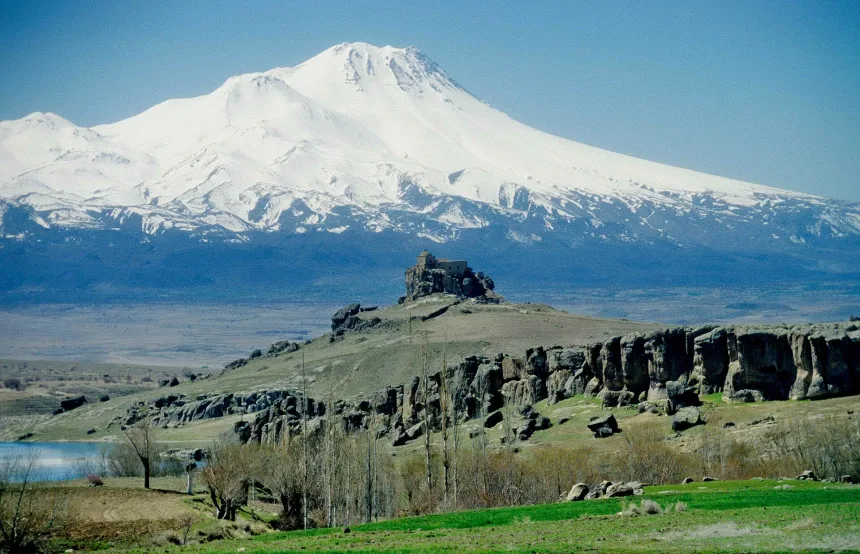
The reservoir and open landscape near Yüksek Church provide a quieter natural stop outside the town center.
The area is suitable for landscape photography and short scenic breaks. Conditions vary according to season, water level and weather.
Do not approach unstable banks, enter restricted agricultural land or leave trash around the water.
The reservoir is a landscape stop rather than a formal lakeside park in every season. Water level, mud, wind and agricultural activity can affect where visitors may safely stand.
Güzelyurt and Ihlara Valley
Güzelyurt is one of the most practical historic towns to combine with Ihlara Valley.
Ihlara offers a deep canyon, riverside walking and rock-cut churches. Güzelyurt provides a contrasting experience focused on stone houses, religious architecture, population history and a smaller monastic valley.
The two locations should not be treated as interchangeable:
- Choose Ihlara for: canyon hiking, the Melendiz River and a longer nature route.
- Choose Güzelyurt for: historic streets, stone mansions, the Church Mosque and a quieter settlement experience.
- Combine both for: a full-day route exploring the western side of Cappadocia.
Travelers who prefer not to organize the western route independently can consider the Cappadocia Green Tour. Many Green Tour programs focus on an underground city, Ihlara Valley, Belisırma and Selime, but Güzelyurt town is not included in every itinerary. Confirm the exact stops before booking if the Church Mosque, Monastery Valley or Yüksek Church is a priority.
How to Combine Güzelyurt With Ihlara Valley
A balanced day does not require completing the full Ihlara route. Visit Güzelyurt in the morning, then choose a defined canyon section based on daylight, fitness and the location of the return vehicle.
When church architecture is the main interest, spend longer in Güzelyurt and select one Ihlara entrance with nearby monuments. When hiking is the priority, keep the Güzelyurt visit to the Church Mosque and central streets.
Do not place Selime, a long Ihlara hike, Güzelyurt, Yüksek Church and Kızıl Kilise into one normal sightseeing day. Parking, stairs, walking and driving make this sequence unrealistic for most visitors.
Organized Green Tour routes vary. Ask whether Güzelyurt town is included, how much walking is planned in Ihlara and which underground city is used before booking.
Places to Visit Near Güzelyurt
Ihlara Valley
Ihlara Valley is the region's best-known canyon route and contains numerous rock-cut churches beside the Melendiz River.
Belisırma
Belisırma is a riverside settlement inside Ihlara Valley. The surrounding Belisırma churches represent several periods and styles of Cappadocian religious painting.
Ağaçaltı Church
Ağaçaltı Church is one of the best-known churches near the main Ihlara entrance and preserves important painted scenes.
Selime Cathedral
Selime Cathedral is a monumental rock-cut complex containing religious, residential and service spaces.
Sivrihisar Village
Sivrihisar is associated with the Red Church, traditional stone buildings and routes crossing the rural plateau.
Narlıgöl
Narlıgöl is a volcanic crater lake farther south. It requires separate transport and should not be added to a short Güzelyurt town visit without allowing sufficient driving time.
How Much Time Do You Need in Güzelyurt?
Two to Three Hours
This is enough for the Church Mosque, several historic streets and a short viewpoint stop. It does not provide meaningful time for Monastery Valley.
Half Day
A half day allows the historic center, Church Mosque, stone houses and the shorter section of Monastery Valley.
One Full Day
One day provides time for the town, Monastery Valley, Yüksek Church and either Kızıl Kilise or a short Ihlara visit.
One Night
Staying overnight is suitable for travelers who prefer a slower itinerary and want to photograph the town in the early morning and late afternoon.
One night also makes it easier to separate the town and Monastery Valley from the outer sites. This is useful in winter, when daylight is short, and in summer, when midday heat reduces comfortable walking time.
Suggested One-Day Güzelyurt Itinerary
- Morning: Begin at the Church Mosque and explore the surrounding historic neighborhood.
- Late morning: Enter Monastery Valley and visit the principal churches along the shorter route.
- Lunch: Return to the town center for a regional meal.
- Early afternoon: Explore the central underground spaces if they are open.
- Mid-afternoon: Drive to Yüksek Church and Analipsis Hill.
- Late afternoon: Continue to Kızıl Kilise near Sivrihisar.
- Evening: Return to Güzelyurt for sunset photographs and dinner.
If sunset from Analipsis Hill is the main photography goal, reverse the final part of the route: visit Kızıl Kilise earlier, then return to Yüksek Church before the light changes. Check road conditions and leave the hill before darkness if you are unfamiliar with the area.
Do not combine the complete Monastery Valley route, Ihlara Valley and every surrounding church in one day. The result would be rushed and leave insufficient time for transport.
The suggested schedule contains alternatives. Choose either Kızıl Kilise or a selected Ihlara section after Yüksek Church rather than treating both as mandatory.
Keep one flexible hour because monument access and road conditions may change. A closed underground section can be replaced with a longer neighborhood walk or an earlier drive to Analipsis Hill.
Where to Stay in Güzelyurt
Güzelyurt offers restored stone houses, small guesthouses and boutique accommodation. The selection is more limited than in Göreme or Ürgüp.
Historic Mansion
Restored Gelveri houses may offer courtyards, stone rooms and original architectural details. Older buildings can also include steep stairs and irregular floor levels.
Rock-Cut Room
Some properties combine stone-built rooms with spaces carved into the rock. Ask about ventilation, natural light and humidity before booking.
Central Accommodation
Staying near the center provides walking access to the Church Mosque, restaurants and Monastery Valley.
Outer Neighborhood Accommodation
Properties outside the historic center may provide easier parking and broader views but require a vehicle for evening dining.
Questions to Ask Before Booking
- Can a vehicle reach the hotel entrance?
- Is private parking available?
- Does the room have an exterior window?
- How many stairs are required?
- Is heating suitable for winter?
- Is dinner available at the property?
- Can the hotel arrange transport to Ihlara or Kızıl Kilise?
Compare regional accommodation choices in the guide to where to stay and what to eat in Cappadocia.
Request the exact room category rather than relying on general property photographs. One restored house may contain stone-built rooms, carved rooms and newer additions with very different light, humidity and access.
Ask how luggage reaches the room. Historic houses can include steep exterior stairs, courtyards and level changes even when a vehicle reaches the property.
Confirm dinner before booking an isolated property. Limited evening restaurant choice can make an on-site meal or arranged transfer important.
What to Eat in Güzelyurt
Dining choices are more limited than in the central Cappadocia towns, but local restaurants and guesthouses may serve Aksaray and Central Anatolian dishes.
Possible regional foods include:
- Slow-cooked meat and vegetable dishes
- Soups and legume dishes
- Homemade bread and pastries
- Grape molasses and fruit preserves
- Yogurt-based dishes
- Seasonal village breakfast products
A traditional Anatolian breakfast may include cheese, eggs, olives, bread, honey, tahini, grape molasses and preserves.
Restaurants may close earlier or operate seasonally. Confirm dinner availability before returning from a late hike.
Carry a simple backup snack on long western routes. Restaurant opening hours should not be treated as guaranteed after a late valley finish.
Guesthouse meals may require advance notice because ingredients and portions are prepared for a limited number of guests.
How to Get to Güzelyurt
From Aksaray
Güzelyurt is reached by road from Aksaray. Local transport may operate, but frequency and return times should be checked on the day of travel.
From Göreme and Ürgüp
Travelers from central Cappadocia usually travel through Nevşehir, Derinkuyu or regional connecting roads, depending on the planned itinerary.
A rental car, private driver or organized route is generally more practical than relying on several local connections.
From Nevşehir Kapadokya Airport
Direct shared shuttles to Güzelyurt are less common than services to Göreme and Ürgüp. A private transfer or pre-arranged combination may be required.
From Kayseri Airport
Kayseri Airport is farther away and requires a longer road transfer. Allow additional time during winter.
When arranging an airport transfer in Cappadocia, provide the flight number, passenger names, arrival date and complete Güzelyurt hotel information.
By Rental Car
A rental car is the most flexible choice for combining Güzelyurt, Ihlara, Belisırma, Selime, Sivrihisar and Kızıl Kilise.
Review the Cappadocia rental car service and the guide to getting to and around Cappadocia when planning the route.
Fuel, offline maps and daylight should be checked before leaving central Cappadocia. Rural routes may have fewer services than the main roads around Göreme and Ürgüp.
Shared airport transfers commonly focus on the central tourism towns. Confirm a Güzelyurt transfer in writing rather than assuming the hotel lies on a standard shuttle route.
For an early airport departure, ask whether the vehicle will reach the hotel entrance or use a meeting point on a wider road.
Is Güzelyurt Walkable?
The central historic area can be explored on foot, but the town contains slopes, uneven paving and stone steps.
Monastery Valley requires suitable walking shoes. Yüksek Church, Kızıl Kilise and several surrounding sites require road transport or long-distance hiking.
Wheelchair access is limited inside historic churches, underground spaces and rock-cut structures. Travelers with reduced mobility can still enjoy parts of the town center and exterior viewpoints.
A reduced-mobility plan should focus on the central civic area and accessible exterior views. Historic thresholds, steps and uneven surfaces may prevent a completely step-free route.
Ask local staff for the easiest entrance before approaching a monument. The most visible doorway may not be the safest option.
Best Time to Visit Güzelyurt
Spring
April and May provide greener landscapes and comfortable walking temperatures. Rain can make valley paths muddy.
Summer
Summer days are sunny and can become hot, although the high elevation may bring cooler mornings and evenings. Carry water and sun protection.
Autumn
September and October are well suited to hiking and photography. Orchards, vineyards and poplar trees add warm seasonal colors.
Winter
Snow transforms Güzelyurt's stone houses and valleys, but roads, steps and rural paths may become icy. Some attractions and restaurants may operate with reduced hours.
Shaded streets and valley surfaces can remain frozen after main roads clear. Schedule outer sites earlier in the day and avoid relying on sunset plans when snow or fog is expected.
Photography Guide
Historic Town Overview
Photograph the old neighborhood from an elevated position to show the relationship between the Church Mosque, stone houses and surrounding plateau.
Church Mosque
Morning or late-afternoon light reveals the contrast between the former church architecture and the minaret.
Monastery Valley
Side light helps reveal carved facades and the depth of openings in the volcanic rock. Avoid entering unstable rooms for a photograph.
Yüksek Church
Use a wide composition that includes the hill, reservoir, open plateau and Mount Hasan when visibility permits.
Late-afternoon light is usually more atmospheric than midday. A calm reservoir may reflect part of the sky or mountain silhouette, while wind can remove the reflection completely within minutes.
Red Church
Late-afternoon light strengthens the reddish color of the masonry. Include the surrounding steppe to communicate the building's isolated scale.
Stone Streets
Early morning is best for quiet streets and soft shadows. Ask permission before photographing residents or private courtyards.
Do not block narrow streets with tripods. Move to a wider area and remain aware of local traffic while composing architectural photographs.
Drone use may be restricted by aviation, heritage and local rules. Confirm current permission requirements before launching near religious sites, settlements or Mount Hasan's surrounding landscape.
Safety and Responsible Visiting
- Do not enter closed or unsupported rock-cut chambers.
- Do not touch frescoes or carved surfaces.
- Stay on recognized paths in Monastery Valley.
- Avoid narrow valleys during heavy rain or thunderstorms.
- Carry water on extended rural routes.
- Do not cross private agricultural land without permission.
- Dress respectfully inside the active Church Mosque.
- Keep children away from wells, cliffs and underground openings.
- Do not rely on old ticket prices, Museum Pass information or opening hours.
- Plan sunset visits to Yüksek Church with enough daylight for the return journey.
- Do not assume that Monastery Valley is completely flat or empty throughout the year.
- Read the Cappadocia safety and essentials guide before independent hiking.
Frequently Asked Questions About Güzelyurt
Common Güzelyurt Planning Mistakes
- Adding Güzelyurt to an already full Green Tour day: The town needs separate walking and monument time.
- Assuming every church is open: Restoration, worship and local management can change access.
- Starting the extended valley route late: Rural tracks lose usable light before the town streets.
- Comparing the underground spaces directly with Derinkuyu: Their scale, use and visitor route are different.
- Treating Kızıl Kilise as a roadside stop: It requires a separate rural drive and time to understand the architecture.
- Booking accommodation without checking dinner: Evening choices are limited outside the center and busy season.
- Relying on mobile navigation alone: Offline maps are important around rural sites and valleys.
- Expecting central Cappadocia tourism infrastructure: Services and opening arrangements are less standardized.
Questions Travelers Ask About Güzelyurt
Is Güzelyurt worth visiting?
Yes. Güzelyurt is especially worthwhile for historic stone houses, Christian heritage, Monastery Valley, quieter streets and access to western Cappadocia attractions.
How long should you spend in Güzelyurt?
Allow at least half a day for the town and the shorter valley route. One full day is better for Yüksek Church, Kızıl Kilise or Ihlara Valley.
Is Güzelyurt the birthplace of Saint Gregory of Nazianzus?
Not exactly. Gregory was born at Arianzos, an estate near ancient Nazianzus within the wider landscape associated with today's Güzelyurt district.
What was the former name of Güzelyurt?
The settlement was historically known as Karballa and later Gelveri. The name Güzelyurt was adopted in 1965.
Is the Church Mosque still an active mosque?
Yes. The former church is used as a mosque. Visitors should enter outside prayer times and follow the rules of an active place of worship.
How long is Monastery Valley?
The historic valley is commonly described as approximately 4.5 kilometers long. Extended hiking routes connecting surrounding villages and monuments can be much longer.
Is Monastery Valley easier than Ihlara Valley?
The historic core is generally quieter and avoids the famous main stair descent of Ihlara, but it still contains uneven ground, loose soil and occasional slopes. Difficulty depends on the chosen section and recent weather.
What is the best place for sunset in Güzelyurt?
Yüksek Church and Analipsis Hill provide a wide view over the reservoir, open plateau and Mount Hasan when conditions are clear. Arrive before sunset because the exposed ground and return route are harder to judge after dark.
Do you need a car in Güzelyurt?
A car is not essential for the historic center and the beginning of Monastery Valley. It is highly useful for Yüksek Church, Kızıl Kilise, Ihlara and Selime.
Can Güzelyurt and Ihlara Valley be visited in one day?
Yes. A well-planned day can combine the Güzelyurt center and a selected section of Ihlara Valley. Visiting every church and completing long hikes would require more time.
Is Güzelyurt suitable for families?
Yes, especially for families interested in history and quieter streets. Children need close supervision near underground openings, reservoirs, rural roads and unprotected rock-cut spaces.
Can Güzelyurt be visited without hiking?
Yes. The Church Mosque, stone neighborhoods and central viewpoints provide a meaningful visit without completing Monastery Valley.
Are the historic houses open to visitors?
Some operate as hotels, restaurants or guesthouses, but many remain private homes. An open doorway does not indicate public access.
Is one night in Güzelyurt useful?
Yes. An overnight stay reduces the pressure to combine the town, Monastery Valley and outer churches in one short period and provides quieter morning streets.
How Güzelyurt Fits Into a Cappadocia Itinerary
Güzelyurt reveals a part of Cappadocia that is often missed by itineraries focused only on Göreme, balloon flights and underground cities.
Its importance comes from the relationship between prehistoric landscapes, Saint Gregory's religious legacy, Greek Orthodox and Muslim heritage, population exchange history, stone architecture and rock-cut settlement.
The town provides a western Cappadocia counterpoint to the crowded central valleys. Its value comes from connecting architecture, migration memory, religious reuse and rural landscape rather than from one headline attraction.
A careful visit separates documented history from local attribution, public monuments from private houses and the historic core of Monastery Valley from much longer countryside routes.
Use the Cappadocia trip planning guide to combine Güzelyurt with Ihlara Valley, Selime, underground cities and the central Cappadocia towns without rushing the western route.