Gumusler Monastery
Gümüşler Monastery in Niğde: Architecture, Frescoes and Cappadocian Fathers
Gümüşler Monastery, also known as Eski Gümüşler Monastery, is a large rock-cut Byzantine complex in Gümüşler near the city of Niğde. Although it lies outside the main tourism area around Göreme, it belongs to the wider religious and architectural tradition of Cappadocia.
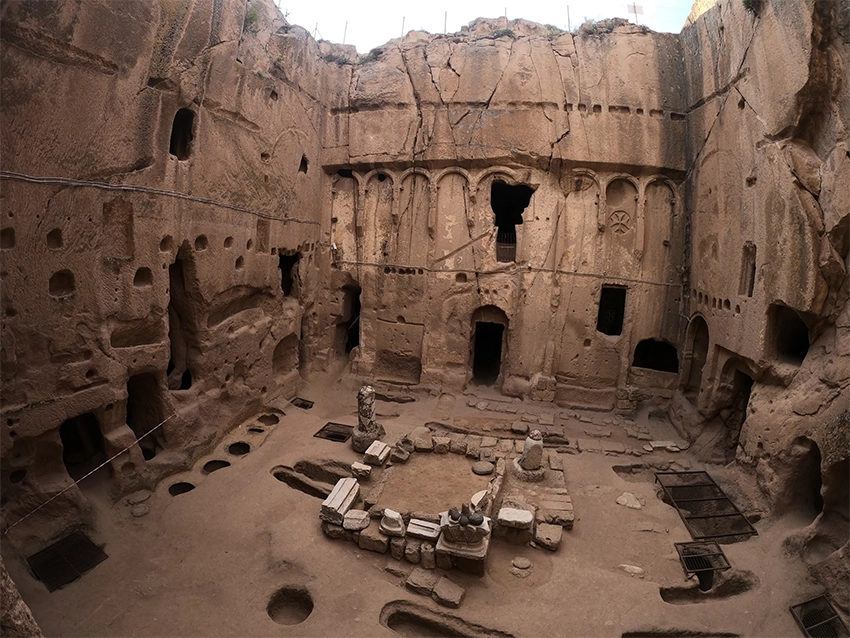
The complex is distinguished by an open courtyard, a centrally organized rock-cut church, painted sanctuary, surrounding rooms and an unusual group of animal scenes. It is commonly described as one of the largest and best-preserved open-courtyard monastery complexes in the wider Cappadocian region.
Most visitors should allow approximately 60 to 90 minutes for the main complex. Travelers who study the frescoes, courtyard rooms and architectural details carefully may need closer to two hours.
Opening hours, ticket prices, Museum Pass conditions and access to individual rooms can change. Check current official information shortly before traveling and follow the instructions displayed at the monument.
Why Gümüşler Monastery Is Important
Gümüşler combines architecture, painting, theology and monastic organization within one connected rock-cut complex.
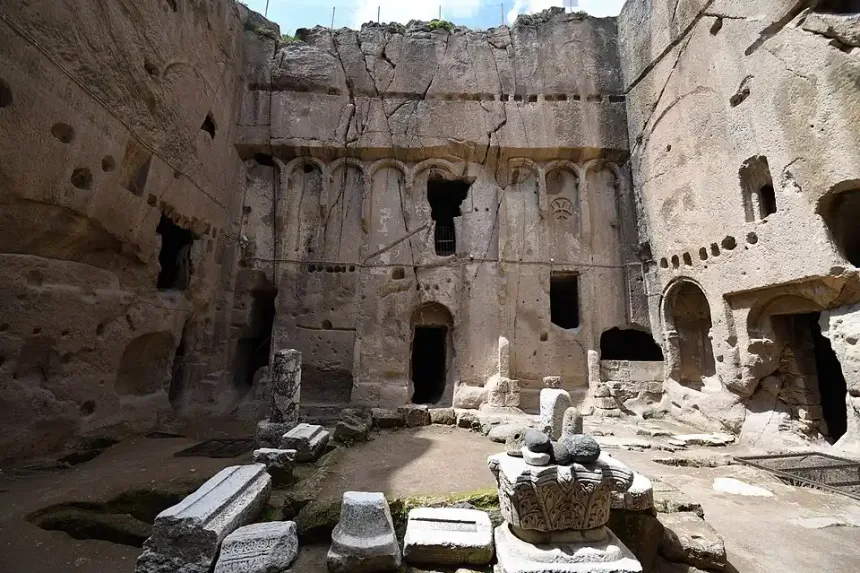
The open courtyard provides the spatial center. Rooms cut into the surrounding rock open toward this common area, while the main church occupies the northern side.
Inside the church, the apse painting program includes Christ, angels, Evangelist symbols, a Deisis composition and major Church Fathers associated with Cappadocia.
The monastery also preserves scenes from the childhood of Christ, a Virgin and Child image popularly called the Smiling Virgin, and unusual hunting and animal paintings above the narthex.
These features make the site valuable for visitors who want to understand how religious worship, communal life and sacred painting could be organized beyond the better-known churches of Göreme Open-Air Museum.
How to Plan a First Visit
Plan Gümüşler as a Niğde-area heritage stop rather than a quick extension from central Göreme.
The driving distance and road direction make it better suited to a dedicated Niğde day, an intercity route or a private itinerary that already continues south of central Cappadocia.
Begin with the courtyard before entering the church. Understanding how the rooms open toward the central space makes the monastic plan easier to interpret.
Allow your eyes time to adjust inside the painted church. Moving directly from the bright courtyard into the darker sanctuary can hide important details during the first moments.
Wear shoes with secure grip. The complex includes worn rock, steps, narrow passages and changes in floor level.
Carry only compact equipment. Large backpacks, tripods and loose straps are difficult to manage near frescoes and narrow carved surfaces.
Gümüşler Monastery at a Glance
| Feature | Main Importance | What to Notice |
|---|---|---|
| Open Courtyard | Central circulation and communal organization | How rooms, church access and working spaces face the courtyard |
| Main Church | Closed Greek-cross plan carved into rock | Central domed space, supports, narthex and eastern sanctuary |
| Apse Paintings | Multi-register theological program | Christ, angels, Deisis and Church Fathers |
| Smiling Virgin | Popular modern name for a Virgin and Child image | The figure's expression without inventing a separate icon type |
| Animal Paintings | Unusual hunting and animal composition | Documented imagery without assigning an unsupported fable |
This summary provides a visitor framework. Dating, room functions and painter attribution depend on architectural and art-historical interpretation.
Where Is Gümüşler Monastery?
Gümüşler Monastery is located in Gümüşler near Niğde in south-central Anatolia.
It is outside the compact Göreme, Ürgüp, Uçhisar and Avanos sightseeing area.
Travelers staying in central Cappadocia should account for the full return journey rather than looking only at the distance between Niğde and the monastery.
The strongest route often combines Gümüşler with selected Niğde monuments or uses the monastery during a transfer toward another destination.
Use the guide to getting to and around Cappadocia when comparing a rental car, private driver and intercity transport.
Is Gümüşler Part of Cappadocia?
Modern tourism maps often present Cappadocia as the area around Göreme, Ürgüp, Uçhisar and Avanos.
The historical, geological and cultural region is wider.
Gümüşler belongs to the broader Central Anatolian rock-cut tradition connected with Cappadocian Christianity, even though it is administratively located in Niğde Province.
This wider perspective helps explain why the monastery shares architectural and artistic features with churches farther north while preserving its own local organization and painting program.
Date and Historical Context
The exact foundation date and medieval name of the complex are not securely known.
Based on the style and iconography of the wall paintings, the church is generally associated with the 11th and 12th centuries.
This period belongs to the Middle Byzantine era, when Christian communities across the wider Cappadocian region continued to create churches, chapels and communal spaces within volcanic rock.
The date of the paintings should not be treated as proof that every room, passage and carved surface was completed at the same moment.
Rock-cut complexes could be expanded, repaired, repainted and adapted across several phases.
The guide to Christian history in Cappadocia provides the broader context for Byzantine worship, monasticism and rock-cut architecture.
Why the Medieval Name Is Uncertain
Eski Gümüşler Monastery is a modern identifying name.
The original medieval dedication, institutional title and complete written history are not securely preserved.
Modern place names can identify a monument without recording the name used by its Byzantine community.
Painted saints and theological figures help explain the church's religious environment, but they do not automatically reveal the formal name of the monastery.
A responsible guide should therefore distinguish the modern site name from an undocumented medieval dedication.
The Open-Courtyard Monastery Type
Rock-cut monasteries in Cappadocia are sometimes grouped according to whether their principal spaces are organized around a dining hall or an open courtyard.
Gümüşler belongs to the open-courtyard group.
The large central courtyard provides light, air, circulation and access to surrounding rooms.
This arrangement gives the complex a clear visual and practical center.
The courtyard also separates activities without isolating them completely. Worship, storage, movement and daily communal work could remain connected through one shared area.
How the Courtyard Organizes the Complex
Light and Air
The open center brings daylight and ventilation into spaces cut deeply into the surrounding rock.
Recommended Tours for This Page
Popular experiences for this destination
 Green Tour
Green Tour Cappadocia
Explore Derinkuyu underground city, the beautiful Ihlara Valley, and S…
 Blue Tour
Blue Tour Cappadocia
Explore hidden valleys, ancient churches, and cultural gems on Cappado…
Vip Mix Tour Cappadocia
Experience the ultimate Cappadocia highlights in comfort-historic vall…
 Red Tour
Red Tour Cappadocia
Discover Göreme Open-Air Museum, Avanos pottery workshops, and breatht…

Cappadocia Rent A Car
Explore Cappadocia freely at your own pace with flexible car rental op…
 Balloon
Cappadocia Hot Air Balloon Tour
See Cappadocia from the air at sunrise on a professionally operated ho…
 Adventure
ATV Tour Cappadocia
Ride powerful ATVs through Cappadocia’s unique valleys, fairy chimneys…
 Adventure
Horseback Riding Tour Cappadocia
Experience Cappadocia on horseback, riding through valleys, hidden tra…
Turkish Night Show Cappadocia
Enjoy a traditional Turkish dinner with live music, folk dances, and w…
Professional Photo Shoot Cappadocia
Capture your Cappadocia moments with a guided professional photo shoot…

Airport Transfer Service Cappadocia
Travel comfortably and safely between Cappadocia’s airports and your h…

Classic Car Tour Cappadocia
Step into nostalgia with a vintage classic car ride through Cappadocia…
Rooms close to the courtyard receive stronger natural light than chambers reached through longer passages.
Movement
The courtyard functions as the principal circulation area.
Visitors can understand how the church, rooms and connecting passages relate to one another by returning repeatedly to this central space.
Communal Use
A shared courtyard could support movement, preparation, conversation and practical work.
It should not be interpreted as one room with one single function.
Security and Control
The rock-cut enclosure creates a defined interior world.
Access points could be observed and movement between spaces could be organized through the courtyard.
This does not mean the monastery was designed primarily as a fortress.
Rooms Around the Courtyard
Several spaces open from the central courtyard or from connecting passages.
Possible functions include storage, food preparation, work, sleeping, administration and religious use.
Not every room can be identified with certainty from shape alone.
A bench, niche, basin or shelf may suggest a practical function, but later alteration can change the original arrangement.
Visitors should avoid labeling every small chamber as a monk's cell or every large room as a refectory without site-specific evidence.
The monastery's strength lies in the organization of several functions around a common center rather than in one securely named room.
The Main Church
The principal church is located on the northern side of the courtyard.
It is generally described as having a closed Greek-cross plan.
The interior is organized around a central domed space with rock-cut supports separating the arms of the cross.
The western section includes an entrance and narthex arrangement.
The eastern side contains the sanctuary and painted apse.
Because the church was carved rather than constructed, its supports, arches, vaults and walls remain part of the same rock mass.
How the Closed Greek-Cross Plan Works
Central Domed Bay
The central domed area creates the spatial and visual focus of the church.
Standing near this point helps visitors understand how the cross arms, supports and sanctuary are connected.
Rock-Cut Supports
The supports divide the church into connected compartments.
They create changing views toward the sanctuary and provide additional surfaces for painted decoration.
Visitors should not lean against them because painted or fragile surfaces may extend beyond the most obvious images.
Western Entrance and Narthex
The narthex provides a transitional zone between the courtyard and the main worship space.
It could also support preparation, commemoration and controlled movement into the church.
Eastern Sanctuary
The eastern sanctuary forms the liturgical focus.
The apse paintings reinforce this hierarchy through Christ, angels, intercessory figures and Church Fathers.
Rock-Cut Architecture and Masonry Models
The church imitates forms associated with constructed Byzantine architecture.
Domes, arches, supports and apses were created by removing rock rather than assembling stone blocks.
A carved support inside solid rock does not always carry weight in the same way as a freestanding masonry column.
It still organizes movement, sacred hierarchy and visual rhythm.
The builders had to control the thickness of the remaining rock while creating a balanced interior.
Architectural planning and painting were closely connected because each vault and wall created a specific field for sacred images.
The Fresco Program
The wall paintings are among the most important features of Gümüşler Monastery.
Differences in composition, figure treatment and style indicate that at least three painters or painting phases contributed to the decoration.
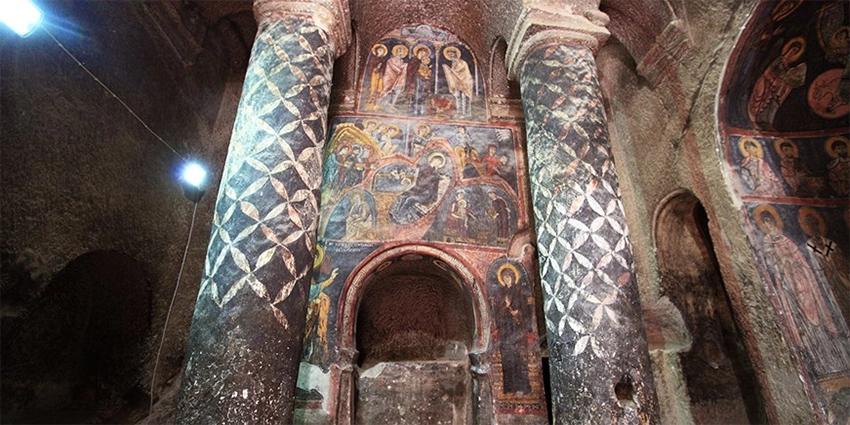
The main apse contains a multi-level program rather than one isolated image.
The upper zone includes Christ enthroned, angels and symbols associated with the Evangelists.
Another register contains a Deisis composition centered on Christ.
The lower section includes major Church Fathers connected with Cappadocia.
The placement of these subjects reflects liturgical and theological hierarchy.
How to Read the Apse From Top to Bottom
Upper Zone
The upper section presents divine authority through Christ, angels and Evangelist symbolism.
Its elevated position separates the heavenly register from the figures below.
Deisis Register
The Deisis presents Christ approached by intercessory figures.
The composition communicates judgement, prayer and mercy.
Church Fathers Register
The lower sanctuary zone includes bishops and theologians associated with doctrine and liturgy.
Their position near the altar connects theological authority with the celebration of worship.
Architectural Framing
Curved surfaces and horizontal divisions help separate the registers.
Damage or lost plaster can interrupt the original sequence, so blank areas should not automatically be treated as unpainted.
Christ Enthroned and the Evangelist Symbols
Christ enthroned occupies a position of authority in the upper painted program.
The throne, central placement and surrounding heavenly figures distinguish him from the saints and donors below.
Symbols associated with the four Evangelists connect Christ with the Gospel tradition.
These symbols can appear as winged beings associated with Matthew, Mark, Luke and John.
Visitors should examine their position and surviving inscriptions rather than identifying a damaged creature from shape alone.
The Deisis
The Deisis is a Byzantine composition centered on Christ with figures approaching him in prayer and intercession.
The Virgin Mary and John the Baptist commonly occupy the positions beside Christ.
The scene combines the authority of judgement with the appeal for mercy.
Its placement within the sanctuary gives it a direct relationship with worship and prayer.
The Deisis at Gümüşler should be examined as part of the multi-register apse program rather than as an independent panel.
The Cappadocian Fathers
The lower register of the apse includes representations of three major Christian theologians commonly known as the Cappadocian Fathers:
- Saint Basil the Great of Caesarea
- Saint Gregory of Nyssa
- Saint Gregory of Nazianzus
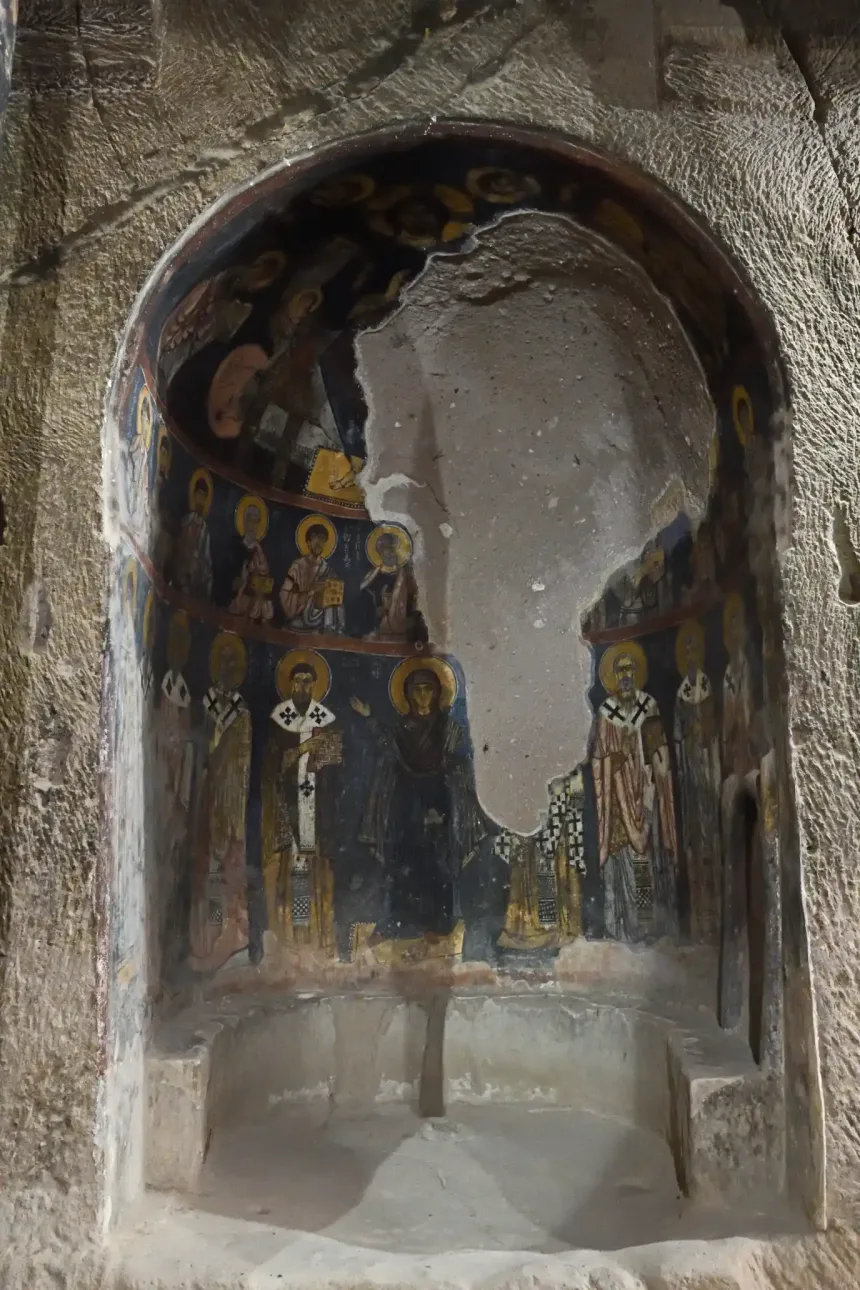
These 4th-century theologians played major roles in the development of Christian teaching about the Trinity.
Their placement in the sanctuary is significant because bishops and Church Fathers were commonly represented near the altar.
They connect Gümüşler not only with local architecture but also with Cappadocia's wider contribution to Christian theology and monastic thought.
The Three Cappadocian Fathers Compared
| Figure | Historical Role | Connection With Cappadocia | Main Visitor Context |
|---|---|---|---|
| Saint Basil the Great | Bishop, theologian and organizer of communal monastic life | Associated with Caesarea, modern Kayseri | Monastic rules, charity and liturgy |
| Gregory of Nazianzus | Theologian, preacher and Church leader | Born near Nazianzus in Cappadocia | Trinitarian theology and the title Gregory the Theologian |
| Gregory of Nyssa | Bishop and theological writer | Served as Bishop of Nyssa | Development of ideas shared with Basil and Gregory of Nazianzus |
The table summarizes their roles. It does not replace the historical differences between their lives, writings and church careers.
Saint Basil the Great
Saint Basil was born around 330 in Caesarea, now Kayseri.
He studied in major centers including Constantinople and Athens, where he developed a close friendship with Gregory of Nazianzus.
Basil later returned to Cappadocia and became Bishop of Caesarea in 370.
He was an influential writer, theologian and organizer of Christian communal life.
His teachings supported disciplined monastic practice combined with service to society.
He also became strongly associated with charitable care for the poor, sick, homeless and vulnerable.
The Divine Liturgy of Saint Basil remains part of Eastern Christian worship on particular days of the religious calendar.
Saint Gregory of Nazianzus
Gregory of Nazianzus was born around 329 near Nazianzus in Cappadocia.
He studied in Caesarea, Alexandria and Athens.
His friendship with Basil developed into an important intellectual and spiritual relationship.
The two shared a period of ascetic and monastic life, although their later responsibilities and personal relationship were complex.
Gregory served the Church in Constantinople during intense theological conflict.
His writings and speeches earned him the title Gregory the Theologian.
Saint Gregory of Nyssa
Gregory of Nyssa was the younger brother of Basil.
He served as Bishop of Nyssa and became an important theological writer.
His works developed themes connected with the Trinity, spiritual progress and the Christian understanding of human transformation.
His thought is related to that of Basil and Gregory of Nazianzus without being identical to either.
The presence of all three figures at Gümüşler creates a direct visual link between the monastery and the intellectual history of Cappadocia.
Why the Fathers Appear Near the Sanctuary
Church Fathers and bishops were often painted in sanctuary zones because of their relationship with doctrine and liturgy.
Their vestments, scrolls and position identify them as participants in the theological and ritual order of the church.
They do not appear simply as historical portraits.
The painting connects their teachings with the worship carried out in the sanctuary.
Visitors should examine how the figures face, gesture and relate to the central altar area.
Scenes in the Northern Arm
The northern arm contains scenes associated with the childhood of Christ and the beginning of his ministry.
Subjects include:
- The Annunciation
- The Nativity
- The Presentation of Christ in the Temple
- Saint John the Baptist
- Saint Stephen
The treatment of these scenes differs from the main apse program.
This difference has contributed to the conclusion that another painter or phase was involved.
The Annunciation
The Annunciation shows the Archangel Gabriel announcing to Mary that she will give birth to Christ.
Gesture, posture and the visual relationship between the two figures create the central action.
The scene begins the narrative movement toward the Nativity.
Damage to inscriptions or surrounding architecture can make secondary details difficult to identify.
The Nativity
The Nativity represents the birth of Christ.
Byzantine versions can combine Mary, the infant Christ, Joseph, angels, animals and attendants within one composition.
The arrangement follows theological importance rather than modern naturalistic perspective.
Several moments of the story can appear within the same painted field.
The Presentation in the Temple
The Presentation shows the infant Christ being brought to the Temple.
Recommended Tours for This Page
Popular experiences for this destination
Green TourGreen Tour Cappadocia
Explore Derinkuyu underground city, the beautiful Ihlara Valley, and S…
Blue TourBlue Tour Cappadocia
Explore hidden valleys, ancient churches, and cultural gems on Cappado…
Vip Mix Tour Cappadocia
Experience the ultimate Cappadocia highlights in comfort-historic vall…
Red TourRed Tour Cappadocia
Discover Göreme Open-Air Museum, Avanos pottery workshops, and breatht…
Cappadocia Rent A Car
Explore Cappadocia freely at your own pace with flexible car rental op…
BalloonCappadocia Hot Air Balloon Tour
See Cappadocia from the air at sunrise on a professionally operated ho…
AdventureATV Tour Cappadocia
Ride powerful ATVs through Cappadocia’s unique valleys, fairy chimneys…
AdventureHorseback Riding Tour Cappadocia
Experience Cappadocia on horseback, riding through valleys, hidden tra…
Turkish Night Show Cappadocia
Enjoy a traditional Turkish dinner with live music, folk dances, and w…
Professional Photo Shoot Cappadocia
Capture your Cappadocia moments with a guided professional photo shoot…
Airport Transfer Service Cappadocia
Travel comfortably and safely between Cappadocia’s airports and your h…
Classic Car Tour Cappadocia
Step into nostalgia with a vintage classic car ride through Cappadocia…
Mary, Joseph, the child and religious figures form the central group.
The scene connects Christ's childhood with Jewish religious tradition and prophetic recognition.
Architectural elements help establish the Temple setting.
Saint John the Baptist and Saint Stephen
Saint John the Baptist represents prophecy, preparation and ascetic life.
Saint Stephen is honored as the first Christian martyr.
Their presence expands the northern arm beyond a simple childhood narrative.
They connect Christ's life with later witness, preaching and martyrdom.
The Virgin and Child With the Archangels
On the southern side of the doorway leading from the inner narthex into the church, the Virgin Mary and the Christ Child appear between the Archangels Gabriel and Michael.
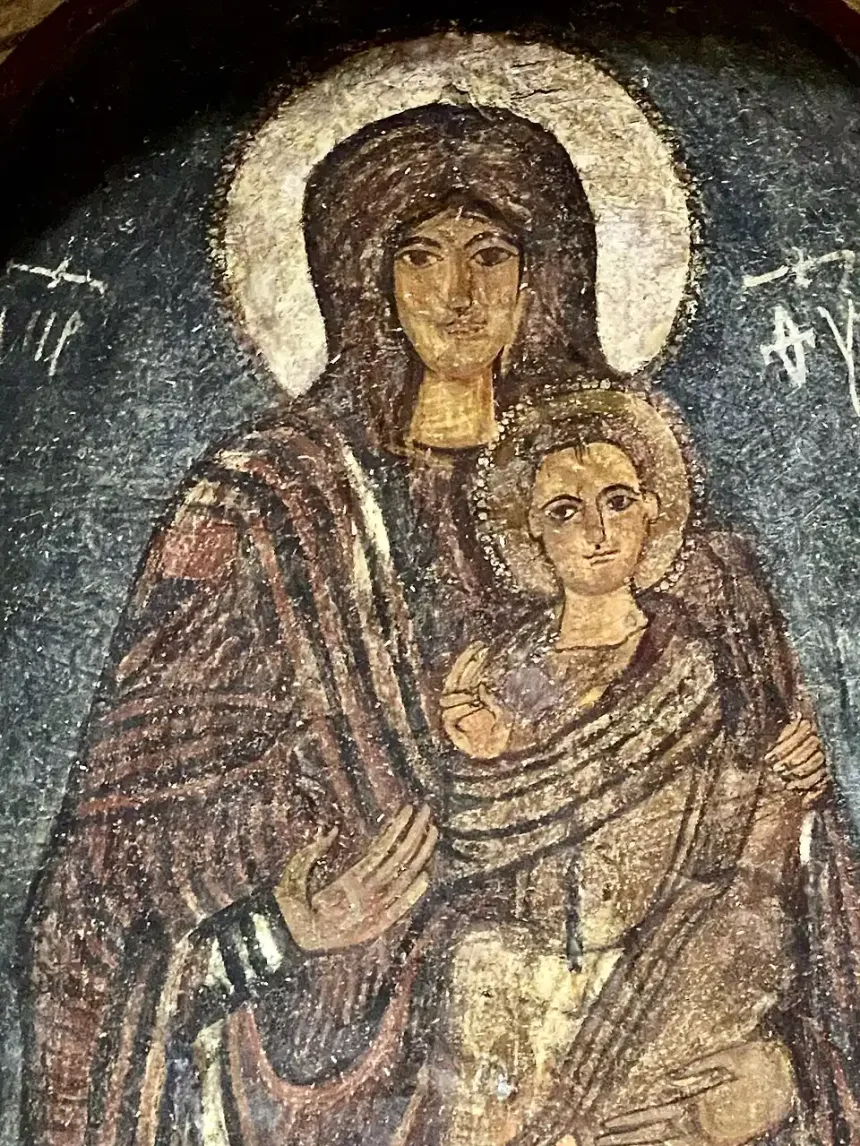
The arrangement places Mary and Christ at the center while the archangels create a symmetrical heavenly frame.
The image should be read through gesture, position, halos and inscriptions rather than facial expression alone.
The Smiling Virgin Name
The painting is popularly called the Smiling Virgin because Mary's expression appears gentler than in many formal Byzantine images.
This is a modern popular nickname rather than the name of a separate Byzantine iconographic subject.
The phrase can help visitors identify the image, but it should not be used to claim that it is the only smiling representation of Mary in Anatolia.
Facial expression can also be affected by paint loss, restoration, lighting and the viewer's angle.
The complete composition of Mary, Christ and the two archangels is historically more important than the nickname.
The Hunting and Animal Paintings
A room above the narthex contains an unusual composition of hunting scenes and different animals.
The group is notable because directly comparable imagery is uncommon among Cappadocia's rock-cut churches.
The paintings broaden the visual program beyond conventional saints and biblical narratives.
They may reflect moral storytelling, decorative tradition, symbolic animals or another cultural source.
The surviving evidence does not support assigning every figure to one named story with confidence.
Are the Animals From Aesop's Fables?
Some writers have compared the animal scenes with ancient fables.
The Fox and the Grapes is one proposed comparison.
This identification should remain cautious unless the surviving arrangement, inscriptions and sequence clearly support it.
A fox-like animal and grapes are not enough by themselves to prove one specific literary source.
The safest description presents the room as an unusual hunting and animal composition while acknowledging that the precise narrative meaning remains debated.
What the Complex Suggests About Monastic Life
The courtyard, church and surrounding rooms demonstrate organized communal use.
Worship was central, but a functioning monastery also required food, storage, rest, work and movement.
The architecture suggests a community with repeated daily routines rather than occasional use of one isolated chapel.
However, the exact number of residents, the identity of the monastic group and the use of every room are not securely known.
Visitors should distinguish between reasonable functional interpretation and a reconstructed daily schedule presented as fact.
Storage, Food and Daily Work
Rock-cut niches, rooms and surfaces could support storage and food-related activity.
Cool interior conditions may have helped preserve supplies.
Work areas needed access to the courtyard, water and circulation.
Later reuse can alter floors, openings and storage features.
A basin or niche should therefore be interpreted through its complete context rather than assigned one certain purpose from shape alone.
Burial and Commemoration
Monastic churches could support prayer for the dead and commemoration of patrons, clergy or community members.
Burial spaces near a church connected memory with sacred worship.
Not every recess is necessarily a tomb, and not every tomb identifies a monk.
Visitors should not step into graves, enter closed burial recesses or place objects inside them.
How the Frescoes Were Made
The volcanic rock required surface preparation before detailed painting.
Plaster and pigment layers created a suitable ground for figures, inscriptions and color.
Different painters or campaigns may be visible through changes in facial treatment, line, scale and composition.
The word fresco is commonly used for Cappadocian wall paintings, although the exact application method can vary between surfaces and phases.
Visitors should avoid assuming that every image was completed by one workshop on one day.
Why the Paintings Survive Unevenly
Moisture, temperature change, smoke, dust, touching and structural movement affect painted surfaces.
Plaster can detach from the rock and remove complete parts of a figure.
Natural light and airflow differ between the courtyard, church and upper rooms.
Later use may introduce soot, scratches or repairs.
A blank surface can represent lost painting rather than an area that was never decorated.
Conservation and Responsible Visiting
- Do not touch frescoes, plaster or carved surfaces.
- Do not use flash.
- Follow current signs when photography is prohibited.
- Keep bags, coats and hair away from painted walls.
- Do not enter closed rooms or unstable passages.
- Do not climb courtyard walls or rock-cut supports.
- Keep doorways and narrow stairs clear.
- Never move a barrier for a closer view.
Oils and moisture from repeated contact can damage fragile surfaces.
A brighter photograph is not more important than the survival of the painting.
Visitor Information
| Planning Point | Practical Guidance |
|---|---|
| Location | Gümüşler near Niğde |
| Typical Visit | Approximately 60 to 90 minutes |
| Detailed Visit | Up to two hours for architecture and fresco study |
| Opening Hours | Check the current official schedule and restoration notices |
| Tickets | Confirm current admission and Museum Pass conditions |
| Walking Conditions | Uneven rock, steps, narrow passages and dim interiors |
Final admission may occur before the listed closing time.
Public holidays, seasonal schedules, restoration and official events can affect access.
Getting to Gümüşler Monastery
By Rental Car
A rental car provides the greatest flexibility for combining the monastery with Niğde and other regional stops.
Save the exact entrance and parking location before leaving the main road.
By Private Driver
A private driver is practical for travelers starting in Göreme or Ürgüp who do not want to manage the return route.
Agree on waiting time and the complete itinerary before entering the monument.
By Local Transport
Official visitor information has listed municipal transport from central Niğde, but routes and departure times can change.
Confirm the current service locally rather than relying on an old schedule.
By Taxi
Arrange the return journey before entering when using a taxi.
A one-way drop-off without a confirmed pickup can create unnecessary waiting.
Route Planning From Central Cappadocia
Gümüşler should not be added casually to an already full Göreme sightseeing day.
The route works better as:
- A dedicated Niğde heritage day
- An intercity transfer stop
- A private architecture and fresco route
- A combined Niğde city and Gümüşler program
Use the Cappadocia trip planning guide to compare travel time with the number of sites included.
Accessibility and Physical Conditions
The site contains steps, narrow passages, uneven rock and dim interior sections.
Full wheelchair access should not be assumed.
Visitors with limited mobility should confirm the current accessible route and the closest vehicle approach.
Low light can affect visitors with visual or balance concerns.
Strollers are not practical throughout the complete rock-cut complex.
Older visitors should pause after entering darker areas before continuing.
Visiting With Children
Children can visit with close adult supervision.
- Keep children beside an adult on steps and narrow passages.
- Do not allow climbing on courtyard walls or church supports.
- Keep hands away from frescoes and inscriptions.
- Do not enter closed rooms.
- Use quiet voices inside the church.
- Explain that graves and sacred spaces are not play areas.
The animal paintings can be especially interesting for children, but uncertain fable identifications should not be presented as proven history.
Seasonal Planning
Spring
Mild temperatures suit a Niğde day route, although rain can make exterior stone and courtyard surfaces slippery.
Summer
The courtyard can feel warm in direct sun while the rock-cut interiors remain cooler.
Carry water and avoid leaving sensitive equipment in a hot vehicle.
Autumn
Cooler conditions often suit longer architectural visits and regional driving.
Winter
Snow and ice can affect roads, entrances and exterior steps.
Check regional road conditions before leaving central Cappadocia.
Photography Tips
Begin with the complete courtyard before photographing individual rooms.
Use side light where possible to reveal carved depth and surface texture.
Inside the church, allow the eyes and camera to adjust instead of using flash.
Photograph the complete apse program before concentrating on one face or inscription.
Keep tripods out of doorways and narrow passages.
Ask staff about current rules before photographing upper rooms or fragile painted sections.
Gümüşler and Göreme Compared
| Feature | Gümüşler Monastery | Göreme Open-Air Museum |
|---|---|---|
| Main Spatial Experience | Large open courtyard with connected monastery rooms | Several separate church and monastic complexes along a managed route |
| Painting Emphasis | Cappadocian Fathers, Deisis, childhood scenes and animal paintings | Concentrated biblical cycles across several churches |
| Visit Style | One integrated complex | Comparison between multiple churches |
| Route Logic | Dedicated Niğde journey | Central Göreme sightseeing route |
Visiting both areas demonstrates the variety of religious architecture developed across the wider Cappadocian region.
Tokalı Church provides a useful comparison for large narrative painting programs.
Dark Church provides a useful comparison for later Byzantine frescoes and strong color preservation.
Visiting With a Guide
A knowledgeable guide can explain the open-courtyard plan, church architecture, apse registers and Cappadocian Fathers.
A guide is also helpful for separating documented animal imagery from speculative fable identifications.
Ask how much time the itinerary allows inside the complex.
A route that lists Gümüşler as one of many distant stops may provide too little time for the paintings.
Detailed explanations should be given where the group does not block a doorway or narrow passage.
Common Gümüşler Monastery Planning Mistakes
- Treating it as a short Göreme detour: The Niğde route requires dedicated travel time.
- Entering the church before examining the courtyard: The courtyard explains the organization of the complex.
- Calling every room a monk's cell: Room functions are not always securely known.
- Presenting one exact foundation year: The original date and medieval name remain uncertain.
- Calling the Smiling Virgin a unique icon type: The phrase is a modern popular nickname.
- Assigning the animal paintings to one fable: The evidence does not prove a specific story.
- Ignoring the Cappadocian Fathers: Their sanctuary placement is central to the church's meaning.
- Using flash: Current conservation rules must be followed.
- Depending on old transport information: Local services and admission conditions can change.
Questions Travelers Ask About Gümüşler Monastery
Where is Gümüşler Monastery?
It is located in Gümüşler near the city of Niğde.
Is Gümüşler Monastery in Göreme?
No. It lies outside central Göreme and requires a separate journey toward Niğde.
How old is the monastery?
The exact foundation date is uncertain. The principal church paintings are generally associated with the 11th and 12th centuries.
How long should you spend there?
Allow approximately 60 to 90 minutes, or up to two hours for a detailed visit.
What type of monastery is it?
It is an open-courtyard rock-cut complex with rooms arranged around a central open area.
What is the church plan?
The main church is generally described as having a closed Greek-cross plan centered on a domed area.
Who are the Cappadocian Fathers?
They are Basil the Great, Gregory of Nazianzus and Gregory of Nyssa, three influential 4th-century theologians associated with Cappadocia.
Why are they painted in the apse?
Their position near the sanctuary connects doctrine, episcopal authority and liturgical worship.
What is the Smiling Virgin?
It is a popular modern name for the Virgin and Child image between the Archangels Gabriel and Michael.
Are the animal paintings based on Aesop?
Some comparisons have been proposed, but one specific fable should not be presented as confirmed without stronger evidence.
Can visitors take photographs?
Photography rules can change. Follow current signs and never use flash near wall paintings.
Is the monastery wheelchair accessible?
Full accessibility should not be assumed because the complex includes steps, narrow passages and uneven rock.
Can children visit?
Yes, with close supervision around steps, frescoes, courtyard edges and closed rooms.
Is a guide useful?
Yes. A guide can explain the monastic plan, fresco hierarchy, Church Fathers and uncertain animal imagery.
A Major Monument of Byzantine Cappadocia
Gümüşler Monastery preserves far more than one painted church.
Its courtyard, rooms, sanctuary and connecting spaces reveal the organization of a Byzantine religious complex.
The apse paintings connect Christ, intercession, liturgy and the intellectual heritage of the Cappadocian Fathers.
The Virgin and Child image and the unusual animal scenes add further layers without replacing the importance of the complete architectural plan.
For travelers who allow enough time and approach the site as a Niğde heritage journey, Gümüşler provides one of the clearest examples of an open-courtyard rock-cut monastery in the wider Cappadocian region.
Use the Cappadocia trip planning guide and the Cappadocia safety and essentials guide when organizing the route from central Cappadocia.