Christianity in Cappadocia
Christian History in Cappadocia
Cappadocia's Christian heritage survives in rock-cut churches, chapels, monastic cells, frescoes and underground settlements. These monuments do not belong to one historical period or one type of community. Together, they reflect several stages of Christian life, from the growth of early communities in late antiquity to the iconoclastic era and the richly painted Byzantine churches that followed.
The region is especially important for understanding how theology, monastic life, architecture and religious art developed together. Göreme, Ihlara Valley, Soğanlı Valley, Çavuşin and the surrounding valleys preserve some of the clearest surviving examples.
A first visit becomes easier to understand when churches are not treated as isolated caves. Their plans, burial spaces, dining rooms, cells, inscriptions and painting programs reveal how worship, study, communal life and local patronage developed together.
The region should also not be presented as one continuous secret refuge. Many churches were visible places of worship used by settled communities. Underground protection, rural monasteries and decorated village churches represent different settings and historical needs.
Dates, names and functions can remain uncertain, especially in smaller monuments without complete inscriptions. This guide separates established historical context from interpretations that depend on architecture, painting style or later local tradition.
How to Plan a First Christian Heritage Route
Choose one concentrated church complex and one landscape route rather than trying to visit every monument in a single day. Göreme Open-Air Museum works well for comparing several painted churches, while Ihlara, Soğanlı or the Rose and Red Valleys show how religious spaces were distributed across a wider landscape.
Allow time to look at architecture before focusing on frescoes. Entrances, naves, apses, domes, burial spaces and adjoining rooms help explain how a church functioned.
Check current access close to the visit. Restoration, erosion, route changes and conservation work can close an interior even when the surrounding valley remains open.
Carry shoes with grip and a light layer. Rock-cut churches can have worn steps, low entrances, cool interiors and uneven floors.
Use natural light and follow current photography rules. Flash, tripods and photography itself may be restricted inside selected churches.
Visitors mainly interested in frescoes should prioritize churches with managed access and established conservation. Remote chapels are valuable, but damaged paintings and uncertain access may make them harder to interpret without a guide.
When Did Christianity Reach Cappadocia?
Christian communities were present in Cappadocia during the early centuries of Christianity. The First Letter of Peter names Cappadocia among the regions where its Christian audience lived. However, most of the rock-cut churches and frescoes visible today belong to later periods, particularly the Byzantine era.
The biblical reference confirms an early Christian audience connected with the region, but it does not identify the surviving cave churches visible today. Architecture and paintings must be dated through their own archaeological and artistic context.
The development of Christianity in Cappadocia was connected with towns, villages, roads and the wider administrative world of central Anatolia. The later concentration of rock-cut monuments should not be mistaken for evidence that early Christians lived only in caves.
By the 4th century, Caesarea, modern Kayseri, had become an important center of Christian theology and church organization. Cappadocia was also associated with several influential theologians whose writings shaped Christian thought and monastic practice.
Caesarea provided an urban center for bishops, education, charity and theological debate. The rural rock-cut landscapes around Göreme, Ihlara and other settlements belonged to a broader Christian region rather than an isolated religious world.
The surviving monuments represent only part of that history. Masonry churches, urban institutions and written traditions were also important even when they are less visible in a modern valley itinerary.
The Cappadocian Fathers
The Cappadocian Fathers were Basil the Great of Caesarea, Gregory of Nyssa and Gregory of Nazianzus. They played a major role in theological discussions during the 4th century, particularly in the development of Christian teaching about the Trinity.
Basil the Great was also influential in the organization of monastic life. His approach emphasized prayer, work, discipline, charity and communal responsibility. Small anchorite communities influenced by Basil's teachings began living in rock-cut cells in Cappadocia during the 4th century.
Basil's monastic thought emphasized community and responsibility rather than complete isolation as the only religious ideal. This is useful when reading Cappadocian complexes that combine individual cells with shared churches, kitchens, dining spaces and work areas.
Not every rock-cut cell can be linked directly to Basil or one named community. Architectural similarities can indicate a monastic function, but exact historical ownership often remains unknown.
Gregory of Nyssa and Gregory of Nazianzus also belonged to the theological world of 4th-century Cappadocia. Their importance lies primarily in Christian thought and church history, not in claims that every major local monument was personally connected with them.
Why Were Churches Carved Into Cappadocia's Rocks?
Cappadocia's volcanic tuff could be excavated more easily than hard stone. Local communities used this material to create homes, storage rooms, chapels, churches, monasteries and communal spaces directly inside the rock.
Rock-cut construction did not require large quantities of timber or dressed stone. Builders created architecture by removing material from the rock rather than assembling walls from separate blocks.
This technique allowed builders to imitate architectural forms normally created in masonry. Columns, arches, vaults, domes and cornices could be carved directly into the interior even when they carried no structural load.
Rock carving was practical, but it was not effortless. Planning an interior required knowledge of the rock mass, the desired church plan and the thickness needed between neighboring spaces.
The carved surface also provided a base for painted decoration. Walls could be prepared with plaster or painted using techniques suited to the local interior and available materials.
Not every cave church was a secret refuge from persecution. Many were ordinary places of worship, monastic study and communal life. Some complexes included churches, dining halls, kitchens, burial areas and individual cells for monks or hermits.
Burial spaces are especially important because they connect religious architecture with family, community and commemoration. A church could serve worshippers while also preserving graves, inscriptions and memorial associations.
Location also mattered. Some churches stood close to settlements and agricultural routes, while others were placed in quieter valley branches. Distance from a town does not automatically prove that a site belonged to an isolated hermit.
Later communities could repair, repaint or reuse an older church. One interior may therefore preserve several construction and decoration phases.
How to Read a Rock-Cut Church
Nave, Apse and Sanctuary
The nave is the principal interior space used by the congregation. The apse usually marks the sanctuary area and may contain an altar or carved seating arrangement.
Related Tours
Popular experiences for this destination
Pottery Workshop Cappadocia
Learn the ancient art of pottery from Avanos masters, try shaping clay…
 Adventure
ATV Tour Cappadocia
Ride powerful ATVs through Cappadocia’s unique valleys, fairy chimneys…
 Red Tour
Red Tour Cappadocia
Discover Göreme Open-Air Museum, Avanos pottery workshops, and breatht…
 Adventure
Horseback Riding Tour Cappadocia
Experience Cappadocia on horseback, riding through valleys, hidden tra…
 Adventure
Trekking Tours Cappadocia
Hike Cappadocia’s spectacular valleys, fairy chimneys, and cave dwelli…
 Green Tour
Green Tour Cappadocia
Explore Derinkuyu underground city, the beautiful Ihlara Valley, and S…
 Blue Tour
Blue Tour Cappadocia
Explore hidden valleys, ancient churches, and cultural gems on Cappado…
 Balloon
Cappadocia Hot Air Balloon Tour
See Cappadocia from the air at sunrise on a professionally operated ho…
Vip Mix Tour Cappadocia
Experience the ultimate Cappadocia highlights in comfort-historic vall…
 Balloon
Balloon Watching Tour Cappadocia
Watch the magical sight of hundreds of hot air balloons rising at sunr…

Cappadocia Rent A Car
Explore Cappadocia freely at your own pace with flexible car rental op…
Turkish Night Show Cappadocia
Enjoy a traditional Turkish dinner with live music, folk dances, and w…
A single-nave chapel can be small and direct, while cross-in-square, free-cross and multi-aisled plans create more complex movement and visual hierarchy.
Vaults, Domes and Carved Supports
Vaults and domes organize the ceiling and often provide important surfaces for painting. Carved columns and arches may imitate masonry construction even when the surrounding rock already carries the structural load.
Damage or later modification can make the original plan difficult to read. A missing wall, enlarged doorway or collapsed section may change how the church appears today.
Burials and Commemorative Spaces
Rock-cut graves may appear in floors, side chambers or adjoining areas. Their presence can indicate the commemorative role of the church and the importance of burial near a sacred space.
Visitors should not step into open graves, move stones or place objects inside burial recesses.
Inscriptions and Patronage
Inscriptions can preserve names, prayers, dedications and historical clues. When an inscription is damaged or incomplete, exact dates and identities should be presented cautiously.
Painted programs also required resources and skilled labor. A richly decorated church may reflect organized patronage rather than the work of an isolated community with no outside support.
What Was the Iconoclastic Period in Cappadocia?
The Byzantine Iconoclastic period is generally dated to approximately 726 to 843. During this period, the religious use and veneration of sacred images became the subject of major political and theological conflict within the Byzantine Empire.
The effect of iconoclasm was not identical in every region or every church. Dating a Cappadocian interior only because it contains crosses or geometric forms can be misleading.
Some non-figurative decoration may belong to iconoclastic practice, while other simple painted programs can reflect cost, local preference, later repair or a different phase of use.
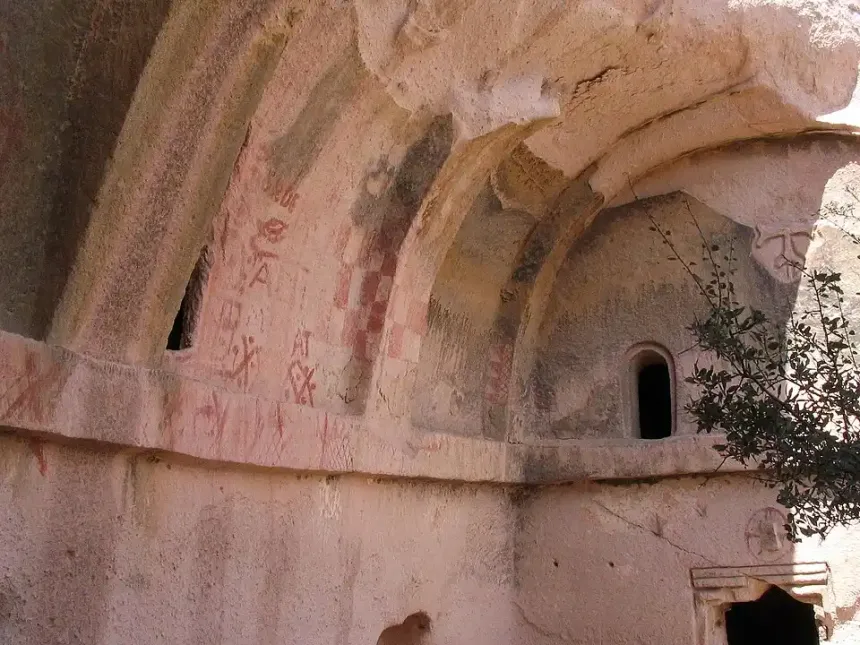
Many Cappadocian churches associated with this period were decorated with a limited visual vocabulary. Crosses, geometric forms and non-figurative symbols were used instead of detailed images of Christ, the Virgin Mary and the saints.
These interiors should not be dismissed as unfinished or less important. Their crosses, bands, symbols and architectural relationships form deliberate religious programs.
The current appearance may also be incomplete. Figurative paintings can be lost, covered or damaged, while simple red decoration may survive more visibly on exposed rock.
From Cross Motifs to Narrative Frescoes
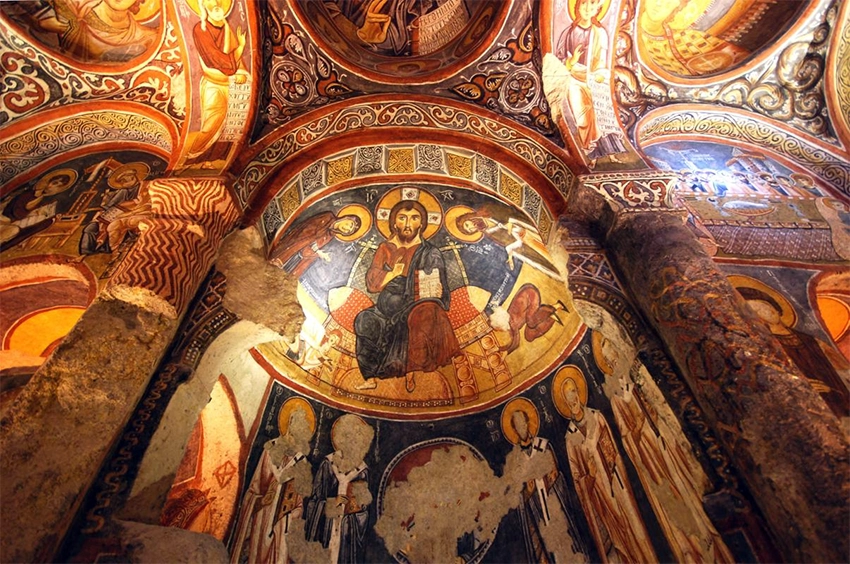
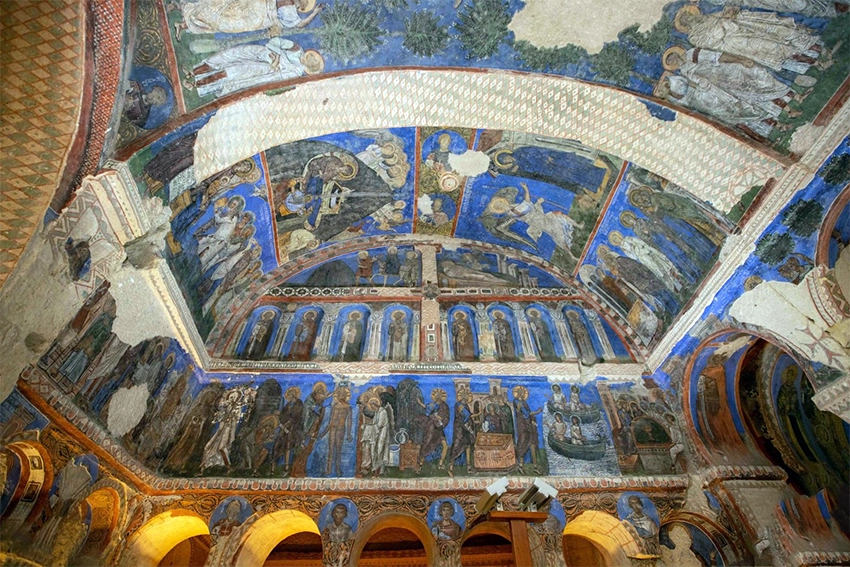
After the end of iconoclasm, new churches were carved and older interiors were decorated with colorful figurative paintings. These frescoes presented scenes from the life of Christ, the Virgin Mary, the apostles, saints and biblical narratives.
Narrative cycles allowed worshippers to encounter connected scenes across walls, vaults and domes. Their placement was not random. Important figures and events were arranged according to the architecture and religious use of the interior.
Different churches can organize the same biblical subject in different ways. Comparing several monuments is more useful than expecting one fixed Cappadocian painting formula.
The surviving churches show how Cappadocian religious art developed over time. Tokalı Church and El Nazar Church are generally associated with the 10th century. Saint Barbara Church and Saklı Church belong to later phases, while Karanlık Church preserves some of the region's most detailed Byzantine frescoes.
These dates help organize a visit, but church development was not a simple straight line from basic decoration to greater artistic quality. Regional workshops, patronage, conservation and later damage all affect what survives.
Karanlık Church appears especially rich partly because limited natural light helped protect its painted surfaces. Preservation conditions can influence modern impressions as strongly as the original artistic program.
Christian Symbols in Cappadocia's Rock-Cut Churches
Christian communities used symbols to communicate religious ideas before and alongside large narrative frescoes. The meaning and date of a symbol should always be evaluated together with the church's architecture, painting technique and archaeological context.
A carved or painted mark should not be identified from resemblance alone. Crosses, letters, circles and simple lines may belong to different periods, later visitors or practical marking systems.
The strongest interpretation considers location, scale, technique, surrounding imagery and whether similar forms appear elsewhere in the same monument.
The Cross
The cross is the most visible Christian symbol in Cappadocia's rock-cut churches. It appears in carved, painted and geometric forms. During the iconoclastic period, crosses were often used as the principal decoration in churches where figurative images were limited.
Common forms include the Greek cross, with arms of equal length, and the Latin cross, with a longer vertical arm.
Crosses may appear alone, within medallions, between geometric bands or as part of a more complex painted program. Their form does not provide a complete date without supporting evidence.
The Chi-Rho Monogram
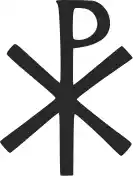
The Chi-Rho monogram combines the Greek letters Chi and Rho, the first two letters of the Greek word Christos. It became an important Christian symbol during the reign of Constantine I and appears in different forms throughout early and Byzantine Christian art.
The monogram can be combined with other letters or symbols. A damaged carving should not be identified confidently unless the surviving strokes support the reading.
The Fish Symbol
The fish was used by early Christians in connection with baptism, the Gospels and the identity of Christ. The Greek word for fish, Ichthys, was interpreted as an acrostic for the phrase Jesus Christ, Son of God, Savior.
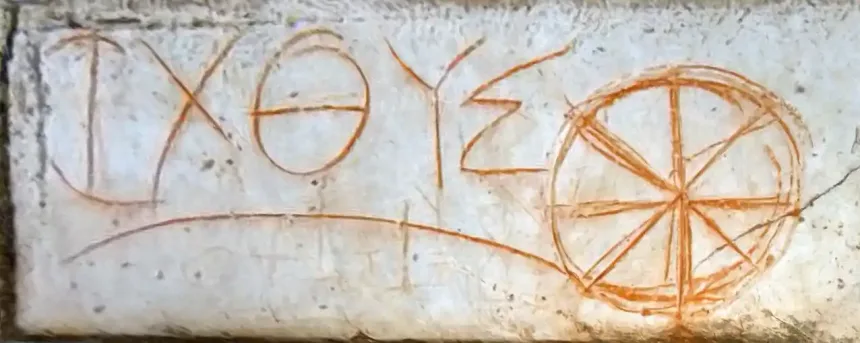
Although the fish is an important early Christian symbol, not every simple carved mark inside a Cappadocian cave can be identified securely without archaeological study.
This caution is important across the region. Modern visitors often interpret scratches as ancient symbols even when their date, author and purpose are unknown.
How to Look at Cappadocian Frescoes
Begin With the Architecture
Identify the apse, vault, dome and entrance before following individual scenes. The building provides the framework for the painting program.
Follow the Narrative Sequence
Scenes from the life of Christ may continue around several walls rather than appearing in modern reading order. A guide or current site plan can help connect damaged sections.
Separate Paint Loss From Original Simplicity
A bare area may have lost its plaster or paint. It should not automatically be interpreted as an intentionally undecorated section.
Notice Later Damage and Reuse
Smoke, moisture, scratching, repainting and structural change can overlap the original decoration. Modern appearance is the result of both creation and later history.
Respect Viewing Distance
Use your eyes or a moderate camera zoom rather than moving close to painted walls. Touching, leaning and bright flash contribute to deterioration.
Important Christian Sites in Cappadocia
Göreme Open-Air Museum
Göreme Open-Air Museum contains one of the region's most concentrated groups of rock-cut churches and monastic structures. Important monuments include Tokalı Church, Karanlık Church, Saint Barbara Church and the group presented together as Elmalı, Yılanlı and Çarıklı Churches.
The churches preserve different decorative styles, from simple red-painted geometric designs to complex fresco cycles covering walls, vaults and domes. The site is one of the best places to compare iconoclastic and post-iconoclastic religious art.
Allow at least two hours for a first visit, with additional time when Tokalı Church and Karanlık Church are priorities. Current ticket arrangements and separate admission conditions should be checked close to the visit.
The museum can become crowded. Read general information outside narrow interiors and avoid stopping doorways while another group is entering.
The complete route is covered in the Göreme Open-Air Museum guide.
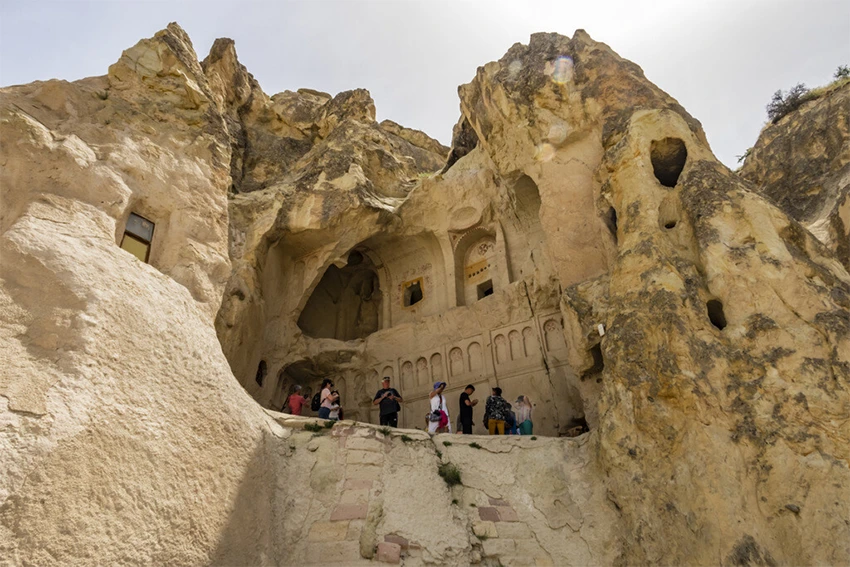
Ihlara Valley
Ihlara Valley contains churches carved into the cliffs above the Melendiz River. The valley's churches belong to different periods and display several regional painting styles.
Related Tours
Popular experiences for this destination
Pottery Workshop Cappadocia
Learn the ancient art of pottery from Avanos masters, try shaping clay…
AdventureATV Tour Cappadocia
Ride powerful ATVs through Cappadocia’s unique valleys, fairy chimneys…
Red TourRed Tour Cappadocia
Discover Göreme Open-Air Museum, Avanos pottery workshops, and breatht…
AdventureHorseback Riding Tour Cappadocia
Experience Cappadocia on horseback, riding through valleys, hidden tra…
AdventureTrekking Tours Cappadocia
Hike Cappadocia’s spectacular valleys, fairy chimneys, and cave dwelli…
Green TourGreen Tour Cappadocia
Explore Derinkuyu underground city, the beautiful Ihlara Valley, and S…
Blue TourBlue Tour Cappadocia
Explore hidden valleys, ancient churches, and cultural gems on Cappado…
BalloonCappadocia Hot Air Balloon Tour
See Cappadocia from the air at sunrise on a professionally operated ho…
Vip Mix Tour Cappadocia
Experience the ultimate Cappadocia highlights in comfort-historic vall…
BalloonBalloon Watching Tour Cappadocia
Watch the magical sight of hundreds of hot air balloons rising at sunr…
Cappadocia Rent A Car
Explore Cappadocia freely at your own pace with flexible car rental op…
Turkish Night Show Cappadocia
Enjoy a traditional Turkish dinner with live music, folk dances, and w…
Ağaçaltı Church is known for its vivid biblical scenes. Other churches are distributed along the walking routes between Ihlara, Belisırma and the surrounding settlements. Visitors interested in the wider route can also review the Ihlara Valley hiking routes.
Ihlara requires route planning as well as historical interest. Church visits are connected by stairs, river paths and different entrance points rather than one compact museum circuit.
Choose a manageable walking section and a limited group of churches. Attempting every accessible monument can turn the visit into a rushed sequence of climbs.
Soğanlı Valley
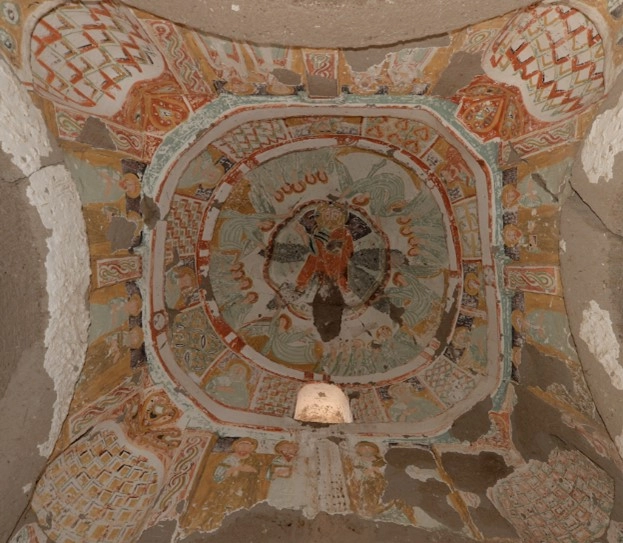
Soğanlı Valley preserves rock-cut churches, chapels and monastic spaces spread across a quieter rural landscape. The churches are less concentrated than those at Göreme, but they provide useful examples of religious life outside the region's most visited center.
Soğanlı also preserves the relationship between churches, pigeon houses, cultivated land and village life. The monuments should be interpreted within that complete rural setting.
Access and route conditions can vary between branches. One or two well-chosen churches usually provide a better first visit than attempting every named interior.
Çavuşin, Red Valley and Rose Valley
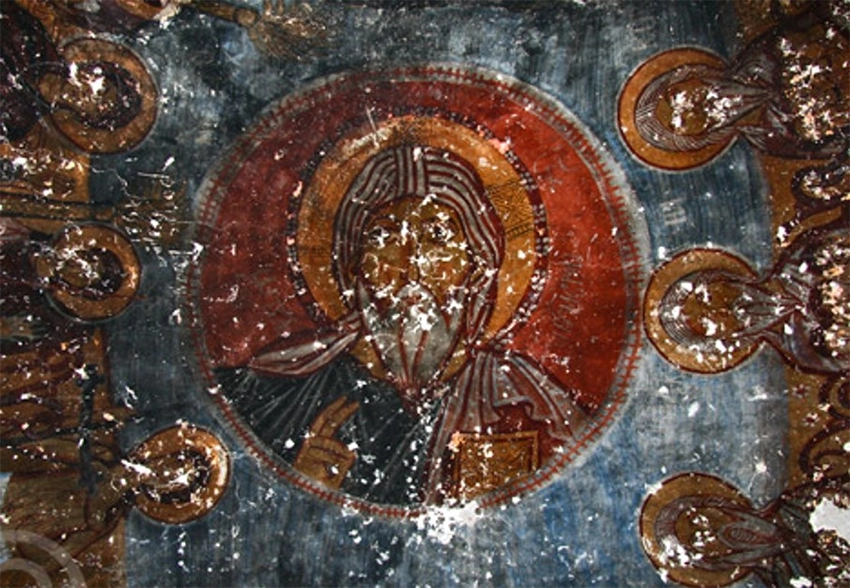
Çavuşin and the nearby Rose and Red Valleys contain churches, hermit cells and small chapels from different Byzantine periods. Some interiors preserve figurative frescoes, while others are decorated primarily with crosses and geometric forms.
Many of the smaller churches are reached by walking paths and may be affected by erosion, restoration work or temporary access restrictions.
Save the route before entering the valleys and finish church detours with enough daylight for the return. A map marker does not guarantee a maintained or publicly accessible entrance.
The separate Rose and Red Valleys guide explains the walking routes, transport and seasonal conditions.
Were Kaymaklı and Derinkuyu Built by Christians?
Mustafapaşa and the Southern Villages
Mustafapaşa preserves churches, chapels and later Christian architecture within a historic settlement. Its religious landscape includes both rock-cut spaces and masonry buildings connected with the town's Greek Orthodox history.
Pancarlık, Gomeda and nearby southern routes add rural churches and monastic spaces, but access should be confirmed before traveling specifically for one interior.
Güzelyurt and the Wider Ihlara Region
Güzelyurt provides another important setting for Christian history, with rock-cut monuments, later churches and connections to the wider Ihlara landscape.
These areas are farther from Göreme and work best as part of a dedicated southern or western route rather than a quick addition to a central sightseeing day.
Were Kaymaklı and Derinkuyu Built by Christians?
The complete origins of Cappadocia's underground settlements are complex, and their construction cannot be attributed to one community or one historical period. The spaces were altered and expanded across different centuries.
This distinction prevents two common errors: presenting every chamber as early Christian, or denying the major Christian phases of use because the earliest excavation may be older.
Underground settlements should be read as changing networks. Storage, animals, water, ventilation, worship and defense were connected according to the needs of different communities.
Christian communities used underground settlements such as Kaymaklı Underground City and Derinkuyu Underground City as protected living and refuge areas during periods of conflict. This does not mean every chamber was originally created by early Christians.
The underground cities include ventilation shafts, storage spaces, kitchens, stables, wells, connecting tunnels and rooms used by large communities. Some areas also contain religious spaces.
The presence of a church does not prove that the complete underground system was a monastery. In the same way, defensive stone doors do not mean every room was used only during an attack.
Visitors uncomfortable with confined spaces should choose according to physical comfort. Kaymaklı and Derinkuyu contain narrow, low and controlled passages despite their different layouts.

Visiting Cappadocia's Christian Heritage Sites
- Check current information: Opening hours, ticket prices, restoration closures and Museum Pass rules can change. Check official information before visiting.
- Follow photography rules: Flash photography, tripods or photography itself may be restricted inside some churches. Follow the signs and instructions at each site.
- Protect the frescoes: Do not touch painted surfaces, carved symbols or fragile rock walls.
- Prepare for uneven ground: Rock-cut churches may contain steep steps, low entrances, narrow passages and uneven floors.
- Consider accessibility: Many historic churches and underground settlements are not fully accessible for visitors with limited mobility.
- Use a knowledgeable guide: A guide can help explain the differences between iconoclastic decoration, later fresco cycles and regional church architecture.
Frequently Asked Questions
Responsible Visiting and Conservation
Rock-cut churches are vulnerable to water, temperature change, erosion, smoke, scratching and repeated human contact.
- Stay on the visitor route: Closed paths may protect unstable rock or sensitive paintings.
- Do not touch frescoes: Oils, moisture and repeated contact contribute to surface loss.
- Do not carve names: Modern scratches permanently damage historic interiors.
- Keep entrances clear: Small churches can become unsafe when groups stop in doorways.
- Respect worship: Some churches may still have religious meaning or occasional ceremonial use.
- Carry trash out: Remote chapels and valley routes may not have waste facilities.
- Use current information: Restoration and conservation decisions can change access without long advance notice.
Suggested Christian Heritage Itineraries
One Focused Day
Visit Göreme Open-Air Museum in the morning, then choose one nearby church or a short section of the Rose and Red Valleys. This provides both a concentrated painted complex and a wider landscape setting.
Two-Day Historical Route
Use the first day for Göreme and nearby valleys. Use the second day for Ihlara, Güzelyurt or Soğanlı according to travel time and walking preference.
Churches and Underground History
Combine one underground city with a limited above-ground church route. Visiting two underground cities and several church complexes in one day usually reduces attention and creates unnecessary travel.
Art-Focused Route
Prioritize Tokalı Church, Karanlık Church and selected Ihlara or Soğanlı interiors. Check current photography and access rules before building the schedule around one frescoed church.
Common Christian Heritage Planning Mistakes
- Calling every church an early Christian refuge: Most visible monuments belong to later Byzantine phases and ordinary religious life.
- Dating a church only from a cross motif: Architecture, technique and context must also be considered.
- Ignoring the building plan: Frescoes are easier to understand when the nave, apse, vault and burial spaces are identified first.
- Visiting too many interiors: A smaller number of carefully observed churches creates a stronger route.
- Assuming every cave was a monastery: Rock-cut spaces had religious, domestic, agricultural and storage functions.
- Expecting every church to be open: Erosion, restoration and conservation can change access.
- Using flash automatically: Photography rules vary and should be checked at each monument.
- Touching symbols to identify them: Carved and painted surfaces should be viewed without contact.
- Overloading a regional day: Ihlara, Soğanlı and Güzelyurt require significant driving and walking time.
Questions Travelers Ask About Cappadocia's Christian History
Why are there so many churches in Cappadocia?
The soft volcanic rock made it possible to carve churches, chapels and monastic spaces directly into the landscape. Cappadocia also supported important Christian and monastic communities during the Byzantine period.
What is the difference between iconoclastic and post-iconoclastic churches?
Iconoclastic churches generally use crosses, geometric designs and limited figurative imagery. Post-iconoclastic churches are more likely to contain painted scenes of Christ, the Virgin Mary, saints and biblical events.
Where can visitors see the best-preserved frescoes?
Göreme Open-Air Museum contains some of the region's most important frescoed churches, including Tokalı Church and Karanlık Church. Ihlara and Soğanlı valleys also preserve significant examples.
Were Cappadocia's underground cities constructed by early Christians?
Their origins and development cover several periods. Christian communities used and expanded underground spaces as settlements and refuges, but the entire complexes cannot be attributed to one group.
Can visitors photograph the frescoes?
Photography rules vary by church and may change for conservation reasons. Flash and tripods are frequently restricted, so visitors should follow the signs at each site.
Are all rock-cut churches open to visitors?
No. Some churches may be closed because of erosion, restoration, safety risks or conservation work. Access should be checked locally before planning a route.
Are Cappadocia's cave churches older than Christianity?
Some underground and rock-cut spaces may have earlier phases, but each church must be evaluated through its architecture, decoration and archaeological context. A cave location alone does not establish a pre-Christian date.
Did Christians hide in every underground city?
Christian communities used and expanded underground settlements during periods of danger, but the complete networks served storage, animals, production, water, worship and other functions across several periods.
Which site is best for a first Christian history visit?
Göreme Open-Air Museum provides the clearest concentrated introduction. Ihlara or Soğanlı is a useful second experience for understanding churches within a wider valley landscape.
Is a guide useful?
Yes, especially for connecting architecture with fresco cycles, explaining iconoclastic context and separating established history from local legends.
Can children visit rock-cut churches?
Yes, with close supervision around steep steps, low entrances, open graves and fragile painted surfaces.
Do all churches contain frescoes?
No. Some interiors emphasize carved crosses or simple painted decoration, while others have lost part of their original plaster and painting.
How Christian History Fits Into a Cappadocia Trip
Cappadocia's Christian heritage is best understood through several connected settings: theological centers such as Caesarea, rock-cut churches and monasteries, rural valley communities, underground settlements and later Christian towns.
No single monument explains the complete history. Göreme provides concentration, Ihlara and Soğanlı provide landscape context, and underground cities show how worship could become part of a protected communal system.
The strongest itinerary compares a small number of sites carefully. Architecture, paintings, inscriptions and surrounding rooms should be read together rather than treated as separate attractions.
A realistic visit also accepts uncertainty. Some dates, names and functions remain debated, and current access may change because conservation is part of the history these monuments continue to experience.
Use the Cappadocia trip planning guide to combine Christian heritage sites with appropriate travel time, walking distance and current access conditions.