Carpet & Kilim Weaving
Cappadocia Carpet and Kilim Weaving Guide
A Cappadocia carpet workshop introduces visitors to traditional looms, hand-knotting, flat weaving, yarn preparation and Anatolian textile design. The visit can be enjoyed as a cultural experience without any obligation to purchase a rug.
Travelers considering a Turkish carpet can also use the workshop to understand materials, dyes, construction, workmanship, pricing and international shipping before making a decision.
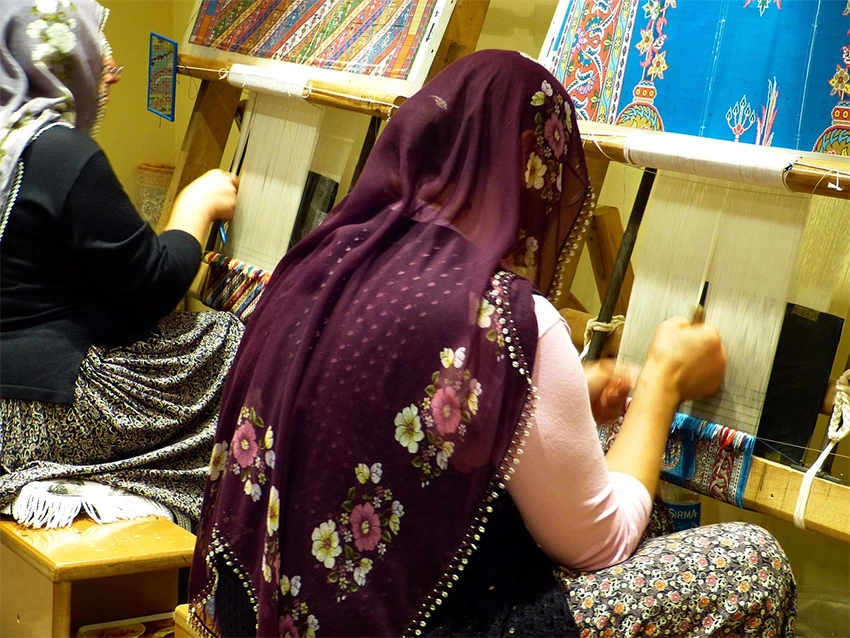
Most workshop presentations take approximately 30 to 60 minutes. A focused weaving experience with time for questions, loom practice or detailed buying advice can require 60 to 90 minutes or longer.
Workshop format, participation, transportation and purchasing conditions vary. Confirm whether the visit is primarily a cultural demonstration, a hands-on activity, a cooperative visit or a retail presentation.
Why Carpet Weaving Matters in Cappadocia
Carpet and kilim weaving belong to the wider craft economy of Cappadocia, alongside pottery, stonework, local dolls, jewelry and textile production.
Workshops may bring together weaving, yarn preparation, dye samples, design explanation, retail display and international delivery services.
Some textiles are woven within the region, while others come from established weaving areas elsewhere in Turkey.
A carpet sold in Cappadocia should not automatically be described as a Cappadocian carpet unless its actual place of production is documented.
The shop location, weaving origin, design tradition and seller are four separate pieces of information.
How to Plan a First Carpet Workshop Visit
Decide whether your priority is cultural learning, hands-on weaving, shopping or a combination of these.
Ask how long the loom demonstration lasts and how much of the visit is reserved for the showroom.
Confirm that purchasing is optional when you want a cultural visit without sales pressure.
Request a smaller presentation when traveling with children or when the group has limited time.
Keep photographs, receipts and written product details when considering a major purchase.
Do not make a high-value decision only because a tour schedule creates urgency.
Cappadocia Carpet Workshops at a Glance
| Experience | Typical Content | Best For | What to Confirm |
|---|---|---|---|
| Short demonstration | Loom explanation, knotting example and showroom visit | Travelers with limited time | Whether the visit includes any hands-on participation |
| Focused workshop visit | Materials, weaving techniques, motifs and detailed questions | Craft-focused travelers | Presentation length and language |
| Hands-on weaving experience | Guided practice on a small loom or sample textile | Families, couples and private groups | Individual practice time and minimum age |
| Buying appointment | Private viewing, comparison and shipping discussion | Visitors seriously considering a purchase | Origin, invoice, return policy and delivery terms |
What Happens at a Cappadocia Carpet Workshop?
A presentation usually begins beside a wooden loom.
The artisan or guide may explain how the foundation threads are prepared, how knots or flat-woven sections are formed and how each row is secured.
Depending on the workshop, visitors may also see:
- Wool, cotton or silk yarn preparation
- Hand-knotting and flat-weaving techniques
- Natural and synthetic dye samples
- Regional patterns and motif explanations
- Carpet finishing and pile trimming
- Finished carpets, kilims and smaller woven pieces
- Packaging and shipping preparation
A well-planned Cappadocia carpet weaving experience should leave time for questions and should not feel like a rushed commercial stop.
Demonstration, Workshop or Showroom Visit?
These terms are often used together, but they do not describe the same experience.
Demonstration
A weaver shows the basic knot or flat-weaving technique while visitors observe.
The demonstration may be brief and followed by a showroom presentation.
Hands-On Workshop
Visitors try a loom or create a small woven section with guidance.
This requires more time, a suitable loom and closer instruction.
Showroom Visit
Finished carpets and kilims are displayed for explanation and possible purchase.
A showroom can provide useful material comparisons, but it is not automatically a weaving lesson.
Cooperative or Production Visit
Some visits focus on production, training or the work of a local weaving group.
Ask how the artisans are paid and whether sales directly support the producers when this is important to you.
Carpet vs Kilim: What Is the Difference?
| Feature | Carpet | Kilim |
|---|---|---|
| Structure | Usually made with knots that create a raised pile | Flat-woven without a raised pile |
| Surface | Thicker, softer and three-dimensional | Flat, lighter and usually more flexible |
| Foundation | Warp and weft support rows of knots | Warp and colored weft create the visible design |
| Weight | Usually heavier for the same dimensions | Usually lighter and easier to fold |
| Common Use | Floor covering, decorative rug or collector textile | Floor covering, wall hanging, runner, cushion or textile panel |
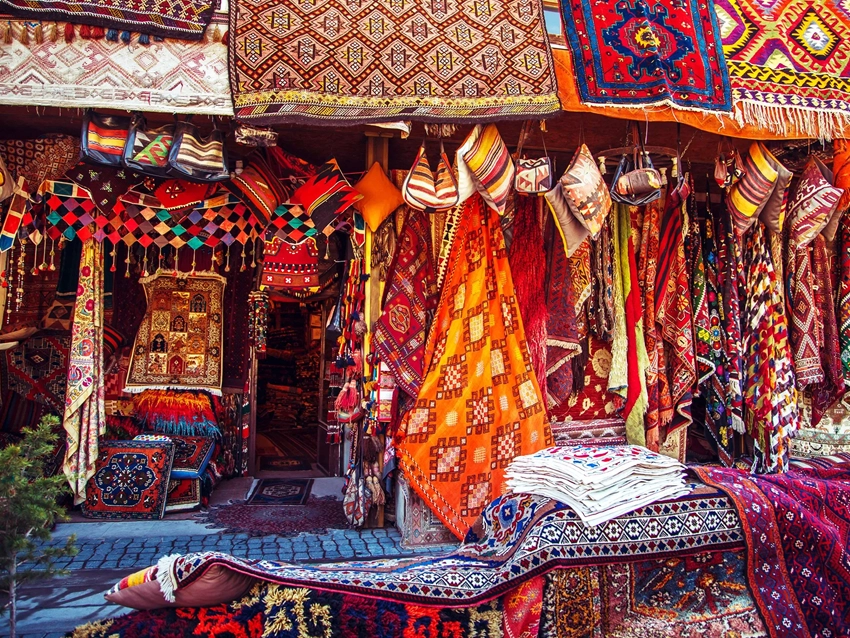
The word rug is often used broadly in English for both pile carpets and flat-woven textiles.
When comparing products, ask for the specific construction rather than relying only on the label Turkish rug.
How a Hand-Knotted Carpet Is Constructed
A hand-knotted carpet begins with vertical foundation threads called warps.
The weaver ties pile yarn around the warps and secures each row with horizontal wefts.
After each row, the weft and knots are packed firmly with a comb-like tool.
The pile is trimmed as the carpet develops or during later finishing.
The final surface results from thousands of repeated knots arranged according to a design.
Warp, Weft and Pile Explained
Warp
Warp threads run vertically through the loom and form the main foundation.
The fringe may continue directly from these threads when it is part of the original structure.
Related Tours
Popular experiences for this destination
Carpet Weaving Experience Cappadocia
Discover the art of Turkish carpet weaving, learn traditional techniqu…
Pottery Workshop Cappadocia
Learn the ancient art of pottery from Avanos masters, try shaping clay…
 Balloon
Cappadocia Hot Air Balloon Tour
See Cappadocia from the air at sunrise on a professionally operated ho…
Vip Mix Tour Cappadocia
Experience the ultimate Cappadocia highlights in comfort-historic vall…
 Red Tour
Red Tour Cappadocia
Discover Göreme Open-Air Museum, Avanos pottery workshops, and breatht…
Turkish Night Show Cappadocia
Enjoy a traditional Turkish dinner with live music, folk dances, and w…

Professional Photo Shoot Cappadocia
Capture your Cappadocia moments with a guided professional photo shoot…

Cappadocia Turkish Bath
Relax with a traditional hammam ritual including steam, scrubbing, and…
 Adventure
Trekking Tours Cappadocia
Hike Cappadocia’s spectacular valleys, fairy chimneys, and cave dwelli…
Wine Tasting Tour Cappadocia
Taste Cappadocia’s finest local wines in ancient vineyards and wine ho…
 Adventure
ATV Tour Cappadocia
Ride powerful ATVs through Cappadocia’s unique valleys, fairy chimneys…
 Green Tour
Green Tour Cappadocia
Explore Derinkuyu underground city, the beautiful Ihlara Valley, and S…
Weft
Weft threads pass horizontally between the warps and secure the rows.
They may be visible on the back or concealed within the structure.
Pile
Pile yarn creates the raised front surface of a knotted carpet.
Wool and silk are common pile materials, but the foundation can use a different fiber.
Ask the seller to identify all three components separately.
The Turkish Symmetrical Knot
Many Anatolian pile carpets use a symmetrical knot often called the Turkish knot or Gördes knot.
The yarn wraps around two neighboring warp threads and is drawn forward between them.
This structure can create a firm and durable pile.
Not every carpet sold in Turkey uses the same knot.
The knot should be checked from the back or explained by someone familiar with the specific textile.
Other Knot Structures
The asymmetrical knot is also used in many carpet-weaving regions.
It wraps around one warp and passes under or around the neighboring warp in a different arrangement.
Neither knot is automatically superior in every context.
Design tradition, material, density, finishing and intended use all affect quality.
A seller should not use one knot name as the sole proof of age, origin or value.
How Kilims Are Woven
Kilims are generally produced by interlacing warp and weft threads without adding a raised pile.
The colored weft creates most of the visible surface.
In slit-weave kilims, color areas can meet along a narrow opening where the wefts turn back around adjacent warps.
The structure creates clear geometric edges and contributes to the visual character of many Anatolian kilims.
Not every flat-woven textile uses the same method.
Kilim, Cicim, Zili and Sumak
The word kilim is often used broadly for flat-woven Turkish textiles, but Anatolian weaving includes several structures.
- Kilim: Usually weft-faced flat weaving without pile
- Cicim: Additional patterning threads create raised decorative details
- Zili: Supplementary wrapping produces a stronger textured pattern
- Sumak: Patterning wefts wrap around the warps to create a firm surface
Regional terminology and construction can vary.
Ask which technique was used instead of treating every flat textile as structurally identical.
How Long Does Weaving Take?
There is no reliable universal production time.
The schedule depends on size, materials, knot density, design complexity, loom width, working hours and the number of artisans involved.
A small kilim may take far less time than a finely knotted silk carpet.
A large wool carpet with a relatively open design can still require months of work.
Statements such as this carpet took several years should be supported by workshop records or a clear explanation.
Does Knot Count Determine Quality?
Knot density can influence detail and production time, but it is not the only measure of quality.
A very fine knot count can suit a silk pictorial carpet.
A coarser wool carpet may be more appropriate for daily floor use and can still show excellent weaving.
Material quality, design balance, edge finishing, color, condition and structural stability also matter.
Knot count should be measured consistently and should not be compared across different units without conversion.
Wool Carpets
Wool is widely used because it is resilient, warm and suitable for pile.
Its natural elasticity helps the pile recover after pressure.
Wool quality varies according to fiber length, preparation, spinning and treatment.
Hand-spun yarn can show small variations that contribute to surface character.
Ask whether the foundation is also wool or uses cotton.
Cotton Foundations
Cotton is frequently used for warp and weft foundations.
It can create a firm, regular structure that supports detailed knotting.
A wool-pile carpet on a cotton foundation is still correctly described as having wool pile, but it is not made entirely from wool.
Cotton can be more dimensionally regular than hand-spun wool.
The material combination should be written clearly on the invoice.
Silk Carpets
Silk allows very fine detail and a surface that changes with the viewing angle.
It is generally more delicate than robust wool pile.
The phrase silk carpet can refer to silk pile, a silk foundation, a blend or a material marketed as silk-like.
Ask for the pile, warp and weft materials separately.
High-value silk claims should be supported by specific written information rather than appearance alone.
Mixed and Modern Fibers
Some carpets combine wool, cotton, silk or manufactured fibers.
A mixed construction is not automatically poor quality, but it should be described accurately.
Viscose and other shiny fibers can resemble silk in showroom lighting.
They have different wear, cleaning and value characteristics.
Ask for the material name in writing rather than accepting the vague description silk touch.
Yarn Preparation and Spinning
Before weaving, fibers must be cleaned, prepared and spun into yarn.
Hand-spun yarn can vary slightly in thickness and twist.
Machine-spun yarn is usually more regular.
Yarn twist affects strength, texture and how dye is absorbed.
A workshop demonstration may show spinning, but not every studio completes all production stages on site.
Natural and Synthetic Dyes
Some workshops demonstrate plant-based dyes and naturally colored wool.
Others use synthetic dyes or combine several dyeing methods.
Natural dye should not be assumed simply because the colors are soft, muted or uneven.
Synthetic dyes can also produce subtle colors, while natural dyeing can produce strong shades.
Ask which dye materials were used and whether the answer can be included on the invoice or certificate.
Common Natural Dye Sources
Traditional dyeing can use roots, leaves, bark, flowers, fruit skins, insects and mineral mordants.
Examples commonly discussed in Anatolian textile traditions include madder for red tones, walnut for brown, onion skins for yellow and indigo for blue.
The final color depends on fiber, water, mordant, concentration, temperature and dyeing time.
A named plant does not prove that a specific carpet used that dye.
Documentation from the workshop is more useful than a general dye demonstration.
What Is Abrash?
Abrash describes visible color variation across a woven textile.
It can result from different yarn batches, dye lots, fiber preparation or changes in the weaving process.
Abrash can add character and provide evidence of small-batch production.
It does not by itself prove that a carpet is old, naturally dyed or handmade.
Machine-made and intentionally distressed products can imitate similar variation.
Colorfastness and Fading
All dyes can change under strong sunlight, moisture, unsuitable cleaning or long-term wear.
Natural dye does not mean completely fade-proof.
Ask how the textile should be used and whether direct sun should be limited.
Do not test colorfastness by rubbing a wet cloth on a showroom piece without permission.
A professional conservator or cleaner should evaluate a valuable or antique textile.
What Do Turkish Carpet Motifs Mean?
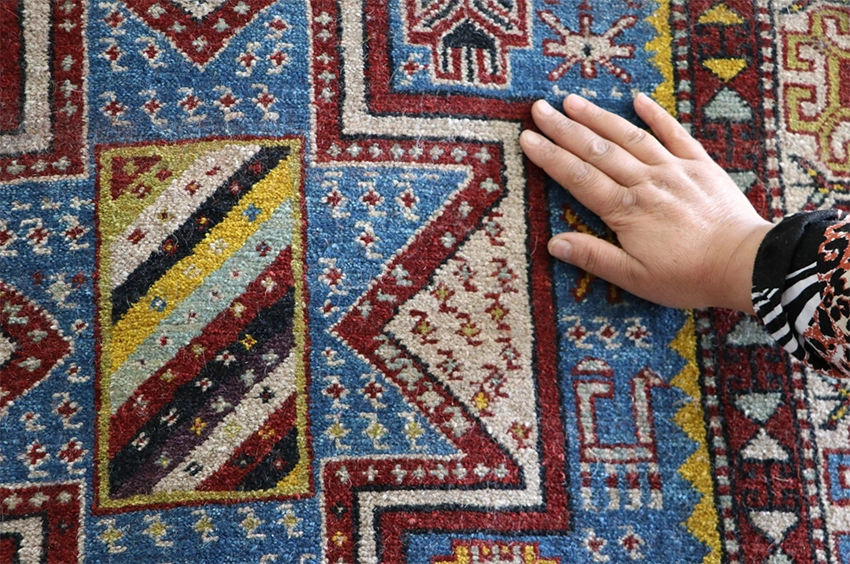
Geometric forms, flowers, animals, borders and repeated symbols can be connected with family, protection, fertility, abundance, nature, status or personal memory.
Motif meanings are not a universal code that applies identically across Anatolia.
The same form may have different names or explanations in different regions.
Modern sales presentations sometimes assign one romantic meaning to every symbol.
The most reliable interpretation comes from the known origin, maker, weaving community and design tradition of the specific textile.
Common Motif Categories
Geometric Motifs
Diamonds, hooks, triangles and stepped forms work well with the grid created by warp and weft.
Plant Motifs
Flowers, leaves, trees and vines may be stylized according to the weaving structure.
Animal Motifs
Birds, horns and abstract animal forms can appear in regional designs.
Protective Motifs
Some symbols are explained through ideas of protection or the avoidance of harm.
The specific meaning should be connected with documented regional use.
Medallions and Borders
A central medallion organizes the main field, while borders frame and stabilize the complete design.
Regional Design and Actual Origin
A design associated with one region can be woven elsewhere.
A Hereke-style, Oushak-style or tribal-inspired pattern does not necessarily prove the carpet was produced in that place or community.
Ask for the actual weaving region, workshop, cooperative or village.
Design origin and production origin should be listed separately when they differ.
The fact that a carpet is displayed in Cappadocia proves only where it is being sold.
How to Tell if a Turkish Carpet Is Handmade
No single quick test proves authenticity.
Use several observations together:
- Turn the carpet over and inspect the weaving structure.
- Check whether the design is visible from the back.
- Look for the individual knots or flat-woven interlacing.
- Inspect whether the fringe continues from the foundation.
- Compare repeated motifs for small human variations.
- Ask which knot or weaving technique was used.
- Request the dimensions, materials, origin and production method in writing.
Machine-made rugs can imitate traditional designs very effectively.
Inspecting the Back of a Carpet
The back reveals the knot structure, density, repairs and some color relationships more clearly than the pile surface.
Handmade knots are usually visible as part of the woven foundation.
Small irregularities can occur in handmade work, but extreme distortion is not automatically a sign of authenticity.
Look for repaired areas, replaced foundation threads and sections with different tension.
Use natural light where possible.
Checking the Fringe
In many hand-knotted carpets, the fringe continues from the warp foundation.
A fringe sewn onto the edge later may indicate a machine-made structure or a later repair.
However, damaged original fringe can also be replaced during restoration.
Fringe alone does not determine authenticity.
Ask whether the ends have been repaired and request that restoration be listed on the invoice for a valuable piece.
Pattern Irregularity and Handwork
Small differences in spacing, color or knot placement can occur in handmade textiles.
Perfect mechanical repetition can indicate machine production, but skilled workshop weaving can also be highly regular.
Deliberate irregularity can be added to modern products.
Inspect construction rather than relying only on the idea that imperfections prove handwork.
Machine-Made and Hand-Tufted Rugs
A machine-made rug is produced through mechanical weaving rather than individual hand-tied knots.
A hand-tufted rug is made by pushing yarn through a backing with a tool and securing it with adhesive or another backing layer.
Hand-tufted does not mean hand-knotted.
The back of a tufted rug is often covered, making the individual structure difficult to inspect.
These products can be attractive and useful, but they should be labeled and priced accurately.
What a Product Certificate Can and Cannot Prove
A certificate can record dimensions, materials, weaving region, technique, seller and date of sale.
It is useful only when the information is specific and the issuer is identifiable.
A decorative certificate does not automatically prove age, authenticity or investment value.
The invoice and certificate should describe the same object.
Keep photographs of the front, back, label and identifying details.
Antique and Vintage Claims
The words antique, old and vintage are often used loosely in showrooms.
Related Tours
Popular experiences for this destination
Carpet Weaving Experience Cappadocia
Discover the art of Turkish carpet weaving, learn traditional techniqu…
Pottery Workshop Cappadocia
Learn the ancient art of pottery from Avanos masters, try shaping clay…
BalloonCappadocia Hot Air Balloon Tour
See Cappadocia from the air at sunrise on a professionally operated ho…
Vip Mix Tour Cappadocia
Experience the ultimate Cappadocia highlights in comfort-historic vall…
Red TourRed Tour Cappadocia
Discover Göreme Open-Air Museum, Avanos pottery workshops, and breatht…
Turkish Night Show Cappadocia
Enjoy a traditional Turkish dinner with live music, folk dances, and w…
Professional Photo Shoot Cappadocia
Capture your Cappadocia moments with a guided professional photo shoot…
Cappadocia Turkish Bath
Relax with a traditional hammam ritual including steam, scrubbing, and…
AdventureTrekking Tours Cappadocia
Hike Cappadocia’s spectacular valleys, fairy chimneys, and cave dwelli…
Wine Tasting Tour Cappadocia
Taste Cappadocia’s finest local wines in ancient vineyards and wine ho…
AdventureATV Tour Cappadocia
Ride powerful ATVs through Cappadocia’s unique valleys, fairy chimneys…
Green TourGreen Tour Cappadocia
Explore Derinkuyu underground city, the beautiful Ihlara Valley, and S…
Age should be supported by condition, materials, dye analysis, provenance and specialist assessment.
Artificial wear, chemical washing and reproduction designs can create an older appearance.
A normal workshop presentation is not a substitute for independent appraisal.
Do not purchase a textile as an investment based only on a seller's verbal prediction of future value.
Restoration and Condition
Repairs are common in older carpets and are not automatically undesirable.
The important issue is whether restoration is stable, appropriate and disclosed.
Inspect:
- Rewoven pile areas
- Repaired edges and ends
- Foundation damage
- Holes, stains and moth activity
- Uneven fading
- Painted or altered color
- Previous adhesive or backing material
Significant restoration should be reflected in the description and price.
How Much Does a Turkish Carpet Cost in Cappadocia?
There is no reliable single price for a handmade Turkish carpet.
The final value can depend on:
- Size and total weaving area
- Wool, cotton, silk or mixed materials
- Weaving technique and knot structure
- Design complexity and labor time
- Production region and documented origin
- Age, condition and restoration history
- Workshop, artist or cooperative documentation
- Shipping, insurance and taxes
A high price does not prove authenticity, and a high knot count does not automatically make one carpet better for every use.
Comparing Prices Fairly
Compare carpets with similar dimensions, materials, construction and condition.
A silk-pile carpet should not be compared directly with a large utility wool kilim.
Ask whether shipping, insurance and taxes are included.
Request the price in one currency before comparing payment methods.
Take time away from the showroom when considering a substantial purchase.
Negotiation and Sales Pressure
Negotiation may be part of the showroom process, but the buyer is not required to complete a purchase.
Remain polite and clear about the budget.
Do not reveal a maximum budget before understanding the materials and construction.
Be cautious when a price is described as available only during the next few minutes.
A legitimate seller should allow time to read the invoice, shipping terms and return conditions.
Payment Questions
Before paying, confirm:
- The final price and currency
- Card fees or exchange-rate differences
- Deposit and balance conditions
- Refund or cancellation policy
- Whether shipping is included
- The business name appearing on the receipt
- Whether the invoice matches the selected carpet
Keep copies of card receipts, bank documents and written communication.
What Should Be Written on the Invoice?
| Invoice Detail | Why It Matters |
|---|---|
| Dimensions | Identifies the specific object and supports shipping claims |
| Pile, warp and weft materials | Prevents vague descriptions such as pure silk |
| Technique | Distinguishes hand-knotted, flat-woven, tufted and machine-made work |
| Production origin | Separates weaving location from shop location |
| Condition and restoration | Records repairs or age-related issues |
| Total price and shipping | Clarifies the complete financial agreement |
| Return and damage terms | Defines responsibilities after delivery |
Where to Buy a Carpet in Cappadocia
Carpet workshops and showrooms operate around Göreme, Ürgüp, Uçhisar and Avanos.
Some focus on demonstrations and tour groups.
Others provide private appointments, detailed textile comparisons and international shipping.
A larger showroom is not automatically better, and a smaller workshop is not automatically the producer of every displayed item.
Ask where the specific carpet was woven and whether the workshop can identify the artisan or cooperative.
Avanos and Craft-Focused Routes
Avanos can be combined with carpet weaving, pottery, a riverside meal and selected cultural stops.
The town's strongest craft identity is pottery, while textile workshops may be located in Avanos or elsewhere in the central Cappadocia area.
The Avanos pottery workshop guide explains the difference between a demonstration and a hands-on ceramic experience.
The wider Cappadocia handicrafts guide covers pottery, stonework, local dolls, bazaars and shopping questions.
Combining Carpet Weaving With a Private Tour
A private Cappadocia Mix Tour can include a selected carpet workshop when arranged in advance.
Private transportation does not automatically mean that the workshop presentation will be private.
Confirm the studio, visit duration and whether the stop includes shopping.
A balanced itinerary should avoid turning the full day into a sequence of commercial presentations.
Allow enough time for the monuments and landscapes that are the main purpose of the tour.
Can Carpet Shops Ship Internationally?
Some Cappadocia carpet businesses arrange international delivery.
Shipping terms vary according to destination, textile size, declared value and courier service.
Before paying, request written details covering:
- Final carpet dimensions and photographs
- Total purchase and shipping price
- Courier company and tracking method
- Insurance coverage
- Estimated dispatch and delivery process
- Return or damage procedure
- Possible customs duties and destination charges
Customs rules can change and depend on the destination country.
Customs and Export Questions
Modern handmade carpets and genuinely old cultural objects are not always treated the same way.
Age, provenance and cultural-property rules can affect documentation.
The seller should explain which documents accompany the textile.
Do not accept an instruction to hide value or provide false customs information.
For a high-value, antique or historically significant carpet, confirm current export and import requirements with the relevant authorities or a qualified specialist.
Insurance and Shipping Damage
Ask whether insurance covers the full purchase value and what evidence is required for a claim.
Photograph the carpet before packing.
Request photographs of the completed package when the carpet will be shipped after departure.
Inspect the parcel before signing when courier rules allow.
Report damage within the written claim period and keep all packaging.
Carrying a Kilim or Carpet by Air
A small kilim may be folded and carried more easily than a heavy pile carpet.
Repeated tight folding can create stress in some textiles.
Ask the seller how the specific material should be rolled or folded.
Check airline baggage dimensions and weight before relying on cabin transport.
Large or valuable carpets usually require professional packaging.
Basic Carpet Care at Home
Use a suitable underlay when the carpet will be placed on a hard floor.
Rotate the textile periodically to balance traffic and light exposure.
Avoid continuous direct sunlight when fading is a concern.
Vacuum carefully without aggressive rotating brushes on delicate pile or fringe.
Do not pull loose threads.
Keep written material and cleaning information from the seller.
Cleaning a Handmade Carpet
Do not use a general home carpet cleaner on a valuable handmade textile without specialist advice.
Water, detergent and mechanical scrubbing can cause color movement, shrinkage or foundation damage.
Choose a cleaner experienced with the specific material and weaving technique.
Photograph the carpet and record existing condition before cleaning.
Antique, silk or heavily restored pieces may require conservation rather than ordinary cleaning.
Moths, Moisture and Storage
Wool textiles can be vulnerable to moth activity, especially when stored without inspection.
Moisture can lead to odor, staining and structural damage.
Store the carpet clean, dry and protected from direct contact with damp floors.
Inspect folded or rolled textiles periodically.
Do not seal a damp carpet inside plastic.
Visiting With Children
A carpet workshop can work well for families when the presentation remains interactive and reasonably short.
Children may enjoy touching yarn samples, watching knotting and trying a small loom.
Parents should confirm:
- The recommended age
- Whether hands-on weaving is available
- How long the sales presentation lasts
- Whether fragile displays are within reach
- Whether stairs or low work areas are involved
Children should not pull yarn, touch valuable textiles without permission or move close to working tools.
Accessibility
Accessibility varies between modern showrooms, historic buildings and rock-cut workshop spaces.
Ask about steps, doorway width, toilets, seating and the distance between the vehicle and loom area.
A visitor who cannot use a floor-level or low loom may still be able to examine yarn, motifs and finished textiles at a table.
Confirm whether a wheelchair can enter both the demonstration room and showroom.
Do not assume that an accessible shop entrance means every section is accessible.
Photography and Workshop Etiquette
Ask before photographing artisans, staff or other visitors.
Do not interrupt the weaver's hands for repeated posed photographs.
Keep bags and clothing away from the loom.
Avoid placing drinks on textile displays.
Commercial filming, professional lighting and tripod use may require advance permission.
Respect a workshop that limits photography of designs or production methods.
Supporting Artisans Responsibly
A cultural visit can support craft knowledge when artisans receive fair payment and are credited for their work.
Ask whether the textile was made by the person demonstrating, another workshop, a cooperative or an outside producer.
Transparency is more useful than a vague claim that every sale directly supports one local family.
Purchasing a smaller documented item can be more responsible than buying an expensive piece under pressure.
A visitor can also support the workshop by paying fairly for a booked experience even without purchasing a carpet.
Common Carpet Workshop Mistakes
- Assuming the shop made every carpet: Ask for the actual weaving origin.
- Confusing a demonstration with a workshop: Confirm whether visitors receive loom time.
- Believing all soft colors are natural dyes: Request specific dye information.
- Treating motif meanings as universal: Regional context matters.
- Using knot count as the only quality measure: Material, condition and purpose also matter.
- Calling hand-tufted rugs hand-knotted: The construction is different.
- Buying because of time pressure: Read the documents and compare carefully.
- Accepting a vague silk description: Ask about pile, warp and weft.
- Shipping without written terms: Keep the invoice, tracking and insurance information.
- Treating a certificate as an independent appraisal: Check who issued it and what it proves.
Booking a Cappadocia Carpet Weaving Experience
Book the dedicated carpet weaving experience for a focused cultural visit rather than relying on an unplanned showroom stop.
Provide the travel date, hotel, group size, ages of children, preferred language and whether the priority is weaving, shopping or both.
Use the contact page to confirm transportation and the current workshop format.
Ask whether purchasing is optional and how much time is reserved for the loom demonstration.
Questions Travelers Ask About Carpet and Kilim Weaving
What is the difference between a carpet and a kilim?
A carpet normally has a raised pile created with knots. A kilim is a flat-woven textile without pile.
Can you visit a workshop without buying anything?
Yes. Confirm before visiting that the experience can be attended as a cultural presentation without a purchase requirement.
Can visitors try weaving?
Some workshops provide guided practice on a loom, while others offer only a demonstration.
How can you tell if a carpet is handmade?
Inspect the back, knots, foundation, fringe and pattern structure, then request written production details.
What is the Turkish knot?
It is a symmetrical knot commonly used in Anatolian pile carpets and often called the Gördes knot.
Are all Cappadocia carpets woven in Cappadocia?
No. A carpet sold in the region may have been produced elsewhere in Turkey.
Are all Turkish carpets naturally dyed?
No. Workshops may use natural dyes, synthetic dyes or a combination of methods.
Does abrash prove natural dye?
No. Color variation can result from several causes and does not prove dye type, age or origin by itself.
Is a higher knot count always better?
No. Knot density is only one factor. Material, design, condition, finishing and intended use also matter.
How much does a handmade Turkish carpet cost?
Prices vary widely according to size, materials, technique, origin, condition and documentation.
Can a shop ship internationally?
Some shops arrange shipping. Request the total cost, tracking, insurance, customs information and return terms in writing.
Can a kilim be carried in luggage?
Smaller kilims are easier to fold or roll, but baggage limits and the textile's condition should be checked.
Are motif meanings always the same?
No. Names and interpretations vary by region, maker and weaving tradition.
Is a certificate proof that a carpet is antique?
Not automatically. Age and value may require independent specialist evaluation.
Is a carpet workshop suitable for children?
Yes when the session is age-appropriate, interactive and supervised.
Is the experience accessible?
Accessibility depends on the building, loom arrangement and workshop layout. Confirm the conditions in advance.
A Practical Introduction to Anatolian Textiles
A Cappadocia carpet workshop can explain how fiber, knot, color and design become a finished textile.
The strongest visits distinguish pile carpets from kilims, identify warp, weft and pile materials and explain how regional designs can travel beyond their original production areas.
They also allow visitors to enjoy the craft without creating pressure to purchase an expensive object.
Travelers considering a rug should ask for clear written information about materials, technique, origin, condition, price and shipping.
For visitors who approach the experience with time and practical questions, carpet weaving provides valuable insight into Anatolian craft production and the modern tourism economy of Cappadocia.
Use the Cappadocia trip planning guide and the Cappadocia safety and essentials guide when adding the workshop to a wider regional itinerary.