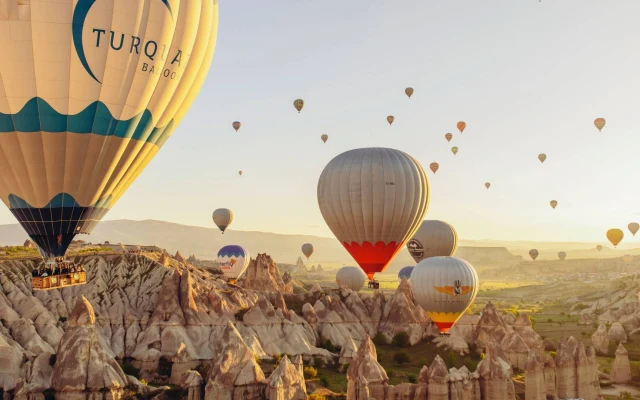
Belisirma Churches
Belisırma Churches in Ihlara Valley
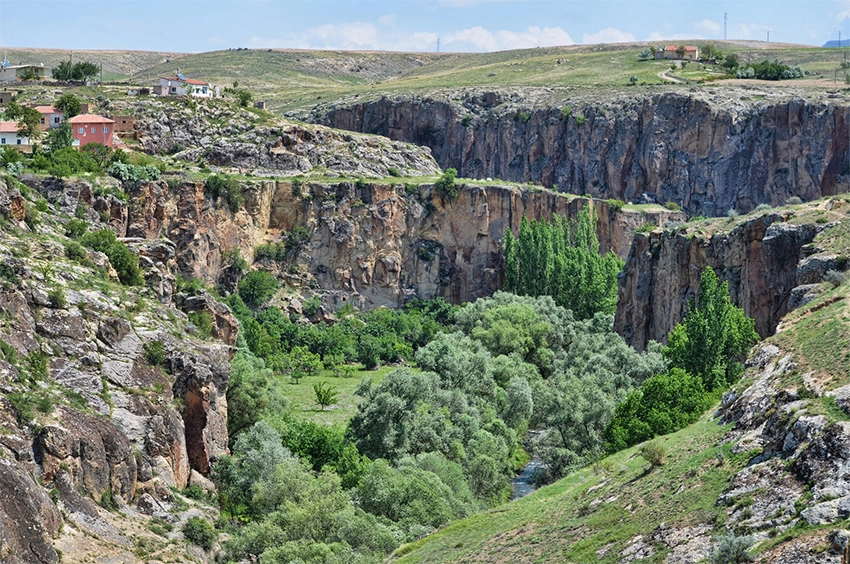
Belisırma is a riverside village near the central section of Ihlara Valley. The surrounding cliffs contain several Byzantine rock-cut churches, making the village a practical base for visitors who want to combine a shorter walk with medieval architecture, inscriptions and wall paintings.
The church group around Belisırma differs from many of the earlier sanctuaries near the southern Ihlara entrance. Several monuments are associated with the Middle and Late Byzantine periods, while Kırkdamaltı Church provides rare evidence for Christian patronage and artistic activity under Seljuk political rule.
Most travelers should allow at least two to three hours for a focused Belisırma visit that includes the river path and one or two churches. A longer route toward Selime requires additional daylight, transport planning and realistic walking time.
Access to individual churches can change because of erosion, rock instability, restoration and local management. Confirm current conditions before organizing the day around one interior.
Why Belisırma Is Important
Belisırma helps visitors understand that the Christian history of Cappadocia continued beyond the early rock-cut churches near the southern entrance of Ihlara Valley.
The local monuments preserve several phases of architecture and painting rather than one uniform valley style.
Direkli Church demonstrates a sophisticated column-supported cross-plan. Kırkdamaltı preserves donor portraits and inscriptions connected with the late 13th century. Bahattin Samanlığı records both religious use and later agricultural reuse. Ala Church belongs to a larger rock-cut group on the valley slope.
The village also provides a useful route center. Visitors can walk beside the Melendiz River, reach selected churches and arrange lunch or road transport without completing the full valley.
How to Plan a First Visit
Choose the churches before starting the walk. The names may appear close together on a map, but some approaches involve steps, steep soil or paths above the riverside trail.
Save an offline map and identify the correct return point. Mobile reception can weaken between the cliffs.
Wear walking shoes with reliable grip. Wet stones, loose tuff and polished steps can be slippery even when the main path feels easy.
Carry water independently of restaurant plans. Seasonal closures, private events or changes in opening hours can affect riverside services.
Leave enough daylight for the return or arrange a one-way pickup. Do not begin a church approach when the route will be completed after dark.
Enter only when the current signs permit access. An open-looking rock doorway does not override a barrier or conservation notice.
Belisırma Churches at a Glance
| Church | Approximate Context | Main Interest | Route Note |
|---|---|---|---|
| Kırkdamaltı Church | Late 13th century painting and inscriptions | Saint George, donors and Christian life under Seljuk rule | Approach can involve uneven valley terrain |
| Direkli Church | 10th to early 11th century | Column-supported cross-plan, dome and saint portraits | Allow time to examine the architecture |
| Bahattin Samanlığı | Byzantine church with later agricultural reuse | Painted remains and changing function | Current access should be confirmed |
| Ala Church | Large rock-cut complex with several phases | Architecture, sacred figures and valley setting | Located on the slope rather than directly beside every river section |
The dates and descriptions provide a route framework. Carving, painting, repairs and later reuse may belong to different periods within each monument.
The Belisırma Section of Ihlara Valley
Belisırma lies beside the Melendiz River near the middle of the valley system.
The village and nearby restaurants make it one of the most practical stopping points during an Ihlara journey.
The riverside path is generally easier than the approaches to churches higher in the cliffs.
Short bridges and local connections can change after weather damage or maintenance. Follow the marked public route rather than treating every restaurant bridge or agricultural track as part of the hiking trail.
The sound and vegetation around the river create a very different setting from the exposed plateau above.
This contrast is important to the churches. Worship spaces were carved into cliffs overlooking a corridor used for settlement, farming, water and movement.
Middle and Late Byzantine Belisırma
The churches near Belisırma are often discussed within the Middle and Late Byzantine development of Ihlara Valley.
This does not mean every monument was created at the same time or by the same community.
Direkli belongs to a sophisticated architectural tradition associated with the 10th and early 11th centuries.
Kırkdamaltı preserves late 13th-century inscriptions that place Christian donors within the political world of Seljuk Anatolia and the Byzantine Empire.
Later use, repairs and agricultural adaptation continued to change the monuments after their first religious phase.
The guide to Christian history in Cappadocia provides wider context for Byzantine worship and Christian communities under changing political powers.
Kırkdamaltı Church
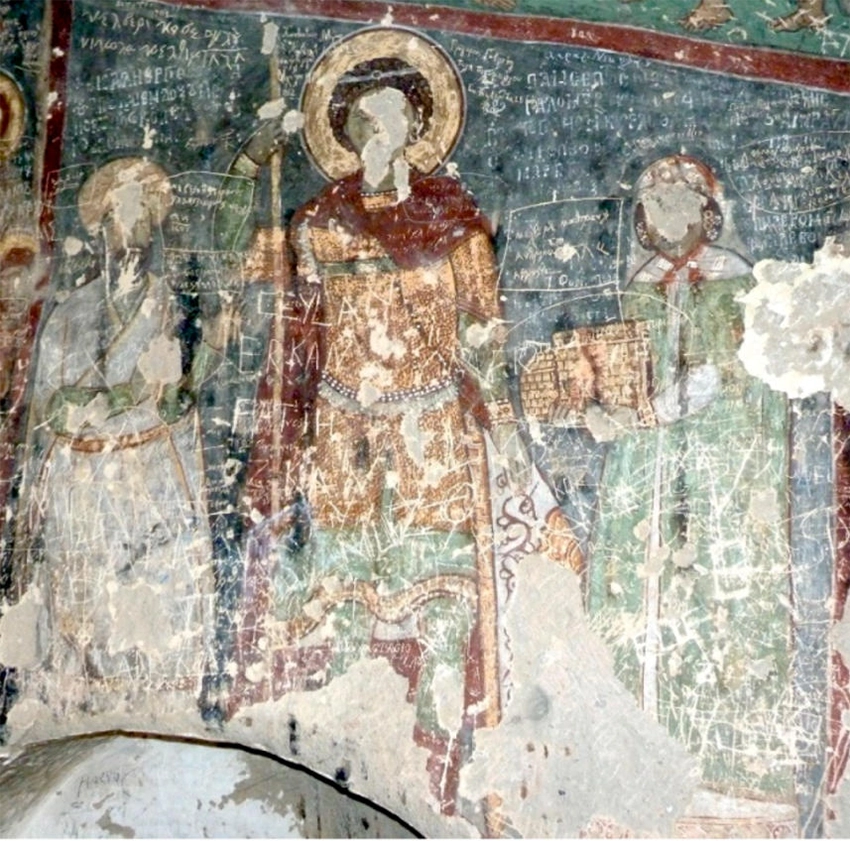
Kırkdamaltı Church, also known as Saint George Church, is one of the most historically informative monuments in Ihlara Valley.
Its importance comes from the combination of a Saint George dedication, donor imagery and inscriptions that mention rulers from both the Seljuk and Byzantine political worlds.
The church is generally associated with the late 13th century.
This dating places it well after many of the better-known early churches near the southern Ihlara entrance.
The monument demonstrates that Christian painting, patronage and worship continued in the region under Seljuk rule.
Related Tours
Popular experiences for this destination
 Green Tour
Green Tour Cappadocia
Explore Derinkuyu underground city, the beautiful Ihlara Valley, and S…
 Adventure
Trekking Tours Cappadocia
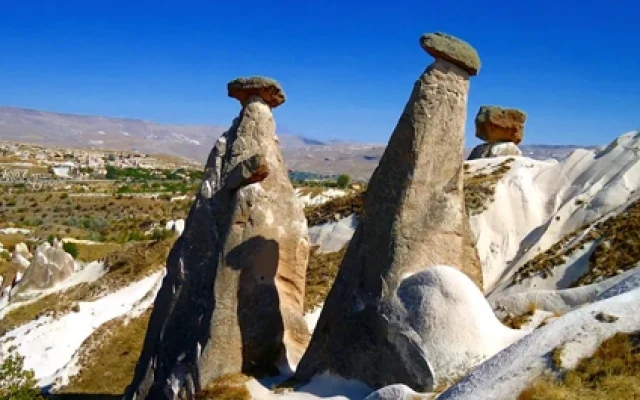
Hike Cappadocia’s spectacular valleys, fairy chimneys, and cave dwelli…
 Blue Tour
Blue Tour Cappadocia
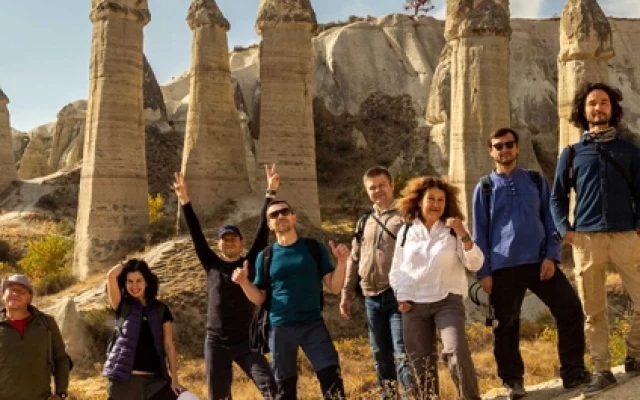
Explore hidden valleys, ancient churches, and cultural gems on Cappado…
Vip Mix Tour Cappadocia
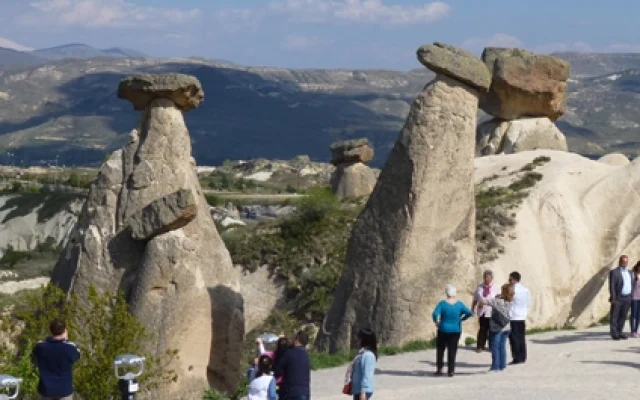
Experience the ultimate Cappadocia highlights in comfort-historic vall…
 Red Tour
Red Tour Cappadocia
Discover Göreme Open-Air Museum, Avanos pottery workshops, and breatht…

Classic Car Tour Cappadocia
Step into nostalgia with a vintage classic car ride through Cappadocia…
Cappadocia Turkish Bath
Relax with a traditional hammam ritual including steam, scrubbing, and…

Cappadocia Rent A Car
Explore Cappadocia freely at your own pace with flexible car rental op…

Nostalgic Electric Car Tour Cappadocia
Ride eco-friendly nostalgic electric cars through Cappadocia’s valleys…
 Adventure
ATV Tour Cappadocia
Ride powerful ATVs through Cappadocia’s unique valleys, fairy chimneys…
 Adventure
Horseback Riding Tour Cappadocia
Experience Cappadocia on horseback, riding through valleys, hidden tra…
Turkish Night Show Cappadocia
Enjoy a traditional Turkish dinner with live music, folk dances, and w…
Saint George and the Church Name
Saint George was one of the most widely venerated military saints in Byzantine Christianity.
He could be represented as a soldier, martyr or mounted saint defeating evil.
The name Kırkdamaltı is a modern Turkish place name, while Saint George identifies the church through its religious dedication and painted program.
The two names should not be treated as different monuments.
The presence of Saint George does not prove that the building served a military garrison. Military saints had broad devotional and protective importance.
The Donors Tamar and Basil Giakoupes
The church's inscriptions and donor compositions refer to Tamar and Basil Giakoupes.
These figures provide a rare personal dimension within the valley's medieval history.
Donors could support the carving, painting, repair or religious use of a church and might be commemorated through portraits and prayer inscriptions.
Their representation should not be judged as a modern naturalistic portrait. Clothing, scale, posture and position beside sacred figures communicate status, humility and patronage.
The surviving evidence should be used carefully. The inscriptions provide names and political context, but they do not support an invented complete biography of the donor family.
Mesud II and Andronikos II in the Inscriptions
The inscriptions refer respectfully to Seljuk Sultan Mesud II and Byzantine Emperor Andronikos II.
This combination is historically significant.
It shows that the local Christian community understood its world through more than one political reference.
The mention of the Seljuk sultan demonstrates the political authority under which the region functioned.
The Byzantine emperor remained an important symbol of Roman Christian identity and imperial tradition.
The inscription should not be simplified into a claim that two empires jointly administered one village in an equal modern partnership.
Christian Life Under Seljuk Rule
Kırkdamaltı is important evidence that the Seljuk conquest did not immediately end Christian religious life in Cappadocia.
Local communities continued worship, commissioned paintings and maintained cultural connections under new political conditions.
Coexistence should not be romanticized as a period without conflict or pressure.
The monument shows continuity and adaptation through one church and its donors, not the complete experience of every Christian community in Anatolia.
The inscriptions remain especially valuable because they record the political setting directly within a sacred interior.
How to Read the Donor Frescoes
Scale
Donors may be shown smaller than Christ, the Virgin Mary or Saint George.
The difference communicates sacred hierarchy rather than physical distance.
Clothing
Dress can indicate status, regional fashion and the political environment of the period.
It should be interpreted with inscriptions and art-historical comparison rather than one modern ethnic label.
Gesture
Prayer, presentation and prostration express humility and appeal.
The donors may be positioned beside a saint who acts as protector or intercessor.
Inscriptions
Written names and prayers are the strongest tools for identification.
Damaged words should not be silently expanded into a complete title when the reading remains disputed.
Direkli Church
Direkli Church takes its Turkish name from the rock-cut supports or columns that organize its interior.
It is generally associated with the 10th and early 11th centuries.
The church belongs to the closed Greek-cross architectural tradition used in Middle Byzantine Cappadocia.
A central domed area is organized through four supports, with cross arms and sanctuary spaces arranged around it.
The carved architecture imitates a constructed Byzantine church even though the interior was formed by removing volcanic rock.
How the Direkli Plan Works
Central Domed Bay
The central bay creates the main spatial focus.
The dome establishes an upper sacred zone and organizes the surrounding cross arms.
Four Rock-Cut Supports
The supports divide the interior into connected compartments and create changing views toward the sanctuary.
They also explain the Turkish name Direkli, meaning a place with pillars or supports.
Visitors should not lean against them because fragile painted or prepared surfaces may remain.
Cross Arms
The arms extend from the central space and provide separate fields for saint portraits and religious imagery.
The architecture allows the viewer to experience several visual directions from one center.
Eastern Sanctuary
The eastern section forms the liturgical focus.
Paintings near the sanctuary should be interpreted through their relationship with worship rather than as ordinary wall decoration.
Direkli Church Frescoes
Portraits of saints and sacred figures occupy the architecture of Direkli Church.
Upper surfaces, supports, walls and apsidal areas create a visual hierarchy.
Christ, the Virgin Mary, angels, bishops or saints may be distinguished through inscriptions, halos, clothing and attributes.
Surface loss can remove one identifying feature while leaving another visible.
A damaged figure should not be named from facial appearance alone.
The relationship between the architecture and the portraits is one of the main reasons to visit Direkli rather than treating it as a brief doorway stop.
Why Direkli Is Architecturally Distinctive
Many small Cappadocian churches use a simple single-nave plan because it was easier to carve and suited a limited community.
Direkli required a more complex design.
The builders had to control the proportions of a dome, four supports, cross arms and sanctuary spaces within the rock mass.
Its plan reflects the influence of constructed Middle Byzantine church architecture.
The supports are visually important even when their structural behavior differs from masonry columns.
Bahattin Samanlığı Church
Bahattin Samanlığı preserves religious paintings inside a rock-cut space that was later used for agricultural storage.
The modern Turkish name refers to a barn or hay-storage association rather than the church's original Byzantine dedication.
This later use is part of the monument's history.
Rock-cut churches could be adapted after their active liturgical period for storage, animal shelter or other rural needs.
Reuse sometimes protected an interior from complete abandonment, but it could also introduce smoke, dirt, partitions and surface damage.
How Later Agricultural Use Changes a Church
Floors may be leveled, widened or covered.
Niches may be reused for tools and supplies.
Openings can be enlarged for access or ventilation.
Paintings may be damaged by contact, soot or moisture associated with storage.
Visitors should not assume that every visible feature belongs to the Byzantine period.
The modern name records one later chapter without revealing the original dedication.
Reading the Surviving Paintings
Painted remains should be examined through their architectural position, inscriptions and surviving attributes.
A halo or garment fragment alone may not identify a saint securely.
Blank rock may represent lost plaster rather than an originally undecorated wall.
Later scratches and agricultural deposits can overlap the historic surface.
Current conservation restrictions should be respected even when the interior appears stable from the entrance.
Ala Church
Ala Church is a larger rock-cut complex on the valley slope near Belisırma.
Its surviving paintings include subjects connected with Christ, the Virgin Mary and Christian saints.
The term Ala is a modern identifying name and should not automatically be presented as the original dedication.
The complex scale suggests more than one carved area or architectural function, but each room should not be assigned a precise use without evidence.
Some parts may belong to different phases of construction, painting, repair and later occupation.
How to Approach Ala Church
Ala Church should not be assumed to stand directly beside the easiest riverside path.
The approach may involve a slope, worn steps or loose soil.
Check the current route before climbing away from the river.
Do not enter an unsupported opening or cross a barrier because another traveler appears to have used the route.
Allow additional time for the approach, interior and safe return to the main path.
Architecture and Painted Program at Ala Church
The larger rock-cut arrangement should be read from outside before entering.
Look for the relationship between openings, carved rooms and the cliff face.
Inside, identify apsidal spaces, vaults and divisions before searching for individual scenes.
Paintings of Christ, Mary and saints may occupy different architectural zones according to sacred hierarchy.
Damage and later use can make the original program appear incomplete.
The strongest interpretation distinguishes what is visible from what remains uncertain.
Other Churches in the Belisırma Area
Church lists for the central and northern Ihlara sections can vary according to naming, route boundaries and current access.
Smaller chapels and damaged rock-cut spaces may appear under local names that differ between maps and guides.
Do not assume that every named church is open, signposted or safe to enter.
When a monument is not clearly identified, use a specialist guide or official route information rather than attaching a nearby church's fresco history to it.
How Belisırma Art Differs From the Southern Entrance
| Feature | Belisırma Area | Southern Ihlara Entrance |
|---|---|---|
| General Emphasis | Middle and Late Byzantine architecture, donors and later continuity | Several early narrative programs and provincial painting traditions |
| Route Character | Village access, riverside walking and selected cliff approaches | Major staircase descent and concentrated early church stops |
| Key Example | Kırkdamaltı and Direkli | Ağaçaltı Church and nearby early sanctuaries |
| Best For | Shorter route options, lunch and later Byzantine context | First-time introduction to the southern church group |
The distinction is useful for planning, but the valley contains overlapping periods and local variations.
Related Tours
Popular experiences for this destination
Green TourGreen Tour Cappadocia
Explore Derinkuyu underground city, the beautiful Ihlara Valley, and S…
AdventureTrekking Tours Cappadocia
Hike Cappadocia’s spectacular valleys, fairy chimneys, and cave dwelli…
Blue TourBlue Tour Cappadocia
Explore hidden valleys, ancient churches, and cultural gems on Cappado…
Vip Mix Tour Cappadocia
Experience the ultimate Cappadocia highlights in comfort-historic vall…
Red TourRed Tour Cappadocia
Discover Göreme Open-Air Museum, Avanos pottery workshops, and breatht…
Classic Car Tour Cappadocia
Step into nostalgia with a vintage classic car ride through Cappadocia…
Cappadocia Turkish Bath
Relax with a traditional hammam ritual including steam, scrubbing, and…
Cappadocia Rent A Car
Explore Cappadocia freely at your own pace with flexible car rental op…
Nostalgic Electric Car Tour Cappadocia
Ride eco-friendly nostalgic electric cars through Cappadocia’s valleys…
AdventureATV Tour Cappadocia
Ride powerful ATVs through Cappadocia’s unique valleys, fairy chimneys…
AdventureHorseback Riding Tour Cappadocia
Experience Cappadocia on horseback, riding through valleys, hidden tra…
Turkish Night Show Cappadocia
Enjoy a traditional Turkish dinner with live music, folk dances, and w…
Belisırma Church Walk Options
Short Riverside and One-Church Walk
Allow approximately one to two hours.
Begin in Belisırma, follow the river and choose one church whose current access has been confirmed.
This plan suits visitors with limited time or families who do not want a long one-way hike.
Two-Church Heritage Walk
Allow approximately two to three hours.
Combine Kırkdamaltı and Direkli only when the approaches are open and the group is comfortable with uneven terrain.
Do not measure the route only by riverside distance because climbs and observation time add considerably to the outing.
Belisırma to Selime Route
A longer northern walk can continue toward Selime Cathedral.
The route requires several hours, suitable weather, enough daylight and a confirmed pickup or return plan.
Church detours increase the duration.
Belisırma Lunch Stop
Some guided itineraries use Belisırma mainly for a riverside lunch after a shorter valley walk.
This can be practical, but it does not guarantee a detailed church visit.
Ask which monuments are included before assuming the route covers Kırkdamaltı or Direkli.
Belisırma or the Main Ihlara Entrance?
Choose the main Ihlara entrance when the staircase experience and early churches such as Ağaçaltı are priorities.
Choose Belisırma for shorter walking options, riverside restaurants and access to churches including Kırkdamaltı and Direkli.
Travelers can also enter from one point and leave from another, but this requires vehicle coordination.
The best choice depends on walking ability, church interests, available daylight and the direction of the wider road journey.
Belisırma and Selime in One Day
Belisırma and Selime can be combined by road with a selected valley walk.
This is the common practical choice for visitors who want both riverside scenery and the monumental rock-cut complex at Selime.
Walking the complete northern route is a different plan and requires more time than driving between stops.
Do not schedule a long church walk, a relaxed lunch and a full Selime visit within an unrealistic short window.
Confirm final admission and road timing when Selime is the last monument of the day.
Green Tour and Belisırma
A Cappadocia Green Tour commonly includes an Ihlara Valley walk and lunch around Belisırma.
The precise walking section, lunch venue and church stops vary between operators.
Some tours focus on one short valley section and do not enter the churches near Belisırma.
Ask the operator:
- Where the walk begins and ends
- How long the group spends in the valley
- Which churches are included
- Whether entrance fees are covered
- Whether the route includes steep church approaches
- How much time is allowed at Selime
A private itinerary or Cappadocia trekking tour provides more control when the churches are the main reason for visiting.
Transport and Pickup Planning
Belisırma can be reached by road, making it practical for one-way hikes.
Share the exact pickup point before entering the valley. Restaurant names and village map pins may not identify the same parking area.
When using a taxi or private driver, agree on the waiting time and whether the vehicle will meet the group in Belisırma or Selime.
Do not depend entirely on mobile reception to change the pickup point after the walk.
Use the guide to getting to and around Cappadocia when comparing a rental car, tour, taxi and private driver.
Walking Conditions
The riverside path is often easier than the church approaches.
Conditions can include:
- Wet stones near the river
- Loose volcanic soil on slopes
- Worn rock steps
- Narrow sections beside vegetation
- Short but steep climbs
- Mud after rain
- Ice in shaded winter areas
A path described as easy may refer only to the main river section and not to the climb toward a church.
River Safety and Seasonal Water
The Melendiz River normally provides a calm visual center to the route, but water conditions can change after heavy rain or snowmelt.
Do not step onto wet rocks or enter the water to avoid a damaged section of trail.
Use marked bridges and public crossings.
Children should remain beside an adult near the river and on narrow banks.
When water or mud affects the route, turn back rather than creating an informal bypass across unstable ground.
Accessibility and Physical Conditions
Belisırma village and selected restaurant areas can be easier to reach by vehicle than the main Ihlara staircase.
This does not make the churches fully accessible.
Church approaches may include steps, slopes and uneven natural surfaces.
Full wheelchair access should not be assumed.
Strollers may work in limited village or restaurant areas but are not practical on most church paths.
Visitors with limited mobility should confirm the exact terrain for the chosen monument rather than relying on the general difficulty of the riverside walk.
Visiting With Children
Belisırma can work well for families when the route remains short and the church choice is realistic.
- Keep children beside an adult near the river.
- Do not allow climbing on church walls or unstable rock.
- Keep hands away from frescoes and inscriptions.
- Carry water and snacks even when lunch is planned.
- Use shoes with grip rather than open sandals.
- Return before children become tired on a steep approach.
A short riverside walk and one church is often more effective than a long checklist of monuments.
Seasonal Planning
Spring
Vegetation and cooler temperatures suit walking, but rain can create mud and slippery church approaches.
Summer
The canyon provides some shade, yet exposed climbs can become hot. Start earlier and carry enough water.
Autumn
Cooler air often provides comfortable hiking conditions. Shorter daylight should be considered for routes toward Selime.
Winter
Snow and ice can remain on shaded steps after roads and village areas appear clear.
Do not attempt a steep church approach when the surface is frozen.
How to Read the Frescoes
Begin With Architecture
Identify the apse, dome, supports, walls and entrance direction before looking for one famous scene.
Use Inscriptions
Greek inscriptions can identify saints, donors, rulers and prayers.
Damaged words should be interpreted cautiously.
Follow Gesture and Scale
Prayer, presentation and prostration can identify the role of donors.
Sacred figures are often larger than human patrons.
Separate Original Painting From Later Damage
Smoke, agricultural use, scratching and lost plaster can alter the surface.
A blank section may have lost its original painting.
Photography and Conservation
- Do not use flash or strong artificial lighting near frescoes.
- Follow current signs when photography is prohibited.
- Do not touch painted, plastered or carved surfaces.
- Keep bags, clothing and hair away from walls.
- Do not wet an inscription to improve contrast.
- Do not enter a closed side chamber.
- Keep narrow entrances clear.
- Carry all trash out of the valley.
A photograph is not worth damaging a surface that has survived for centuries.
Visitor Information
| Planning Point | Practical Guidance |
|---|---|
| Location | Belisırma section of Ihlara Valley beside the Melendiz River |
| Short Visit | Approximately one to two hours with one church |
| Church-Focused Visit | Approximately two to three hours for selected monuments |
| Selime Route | Several hours depending on pace and detours |
| Access | Confirm current church openings and trail conditions |
| Facilities | Available in parts of the village, but should not be assumed beside every church |
No permanent free-access status, opening schedule or single ticket rule should be assumed for every church.
Common Belisırma Planning Mistakes
- Treating every church as a riverside stop: Several approaches include slopes and steps.
- Assuming a Green Tour enters Kırkdamaltı: Church stops vary by operator.
- Calling all Belisırma churches the same period: Direkli and Kırkdamaltı represent different historical contexts.
- Ignoring donor inscriptions: Kırkdamaltı's political references are central to its importance.
- Reading coexistence as a simple story: One church cannot represent every Christian experience under Seljuk rule.
- Calling every room at Ala Church a monastery cell: Functions require evidence.
- Using an old trail description: Erosion and maintenance can change access.
- Starting the Selime route too late: Church detours require additional daylight.
- Depending only on restaurant services: Carry water independently.
Questions Travelers Ask About Belisırma Churches
Which churches are near Belisırma?
The best-known monuments include Kırkdamaltı, Direkli, Bahattin Samanlığı and Ala Church.
How long should you spend in Belisırma?
Allow one to two hours for a short walk with one church and two to three hours for a more focused heritage visit.
Is Kırkdamaltı the same as Saint George Church?
Yes. Kırkdamaltı is commonly identified as Saint George Church.
Why is Kırkdamaltı historically important?
Its late 13th-century donor images and inscriptions mention Tamar, Basil Giakoupes, Seljuk Sultan Mesud II and Byzantine Emperor Andronikos II.
Does Kırkdamaltı prove Christians lived freely everywhere under Seljuk rule?
No. It provides important evidence for continuity and patronage at one place, but broader social conditions varied across time and region.
Why is Direkli Church called Direkli?
The Turkish name refers to the rock-cut supports or pillars that organize its interior.
How old is Direkli Church?
It is generally associated with the 10th and early 11th centuries.
What does Bahattin Samanlığı mean?
The modern name reflects later use connected with agricultural storage rather than the original Byzantine dedication.
Can Belisırma and Selime be visited together?
Yes. They can be combined by road or through a longer one-way walking route with transport arranged at the finish.
Is Belisırma easier than the main Ihlara entrance?
Belisırma avoids the famous main staircase for some routes, but individual church approaches can still be steep and uneven.
Does every Green Tour visit the churches?
No. Tour routes and church stops vary. Confirm the exact itinerary before booking.
Can visitors photograph the frescoes?
Photography rules can change. Follow current signs and never use flash near painted surfaces.
Is the route wheelchair accessible?
Full access to the churches should not be assumed because the approaches include natural paths, steps and slopes.
Can children visit?
Yes, when the route is kept manageable and children remain under close supervision near the river and church approaches.
Is a guide useful?
Yes. A guide can explain the inscriptions, architecture, political context and differences between the churches while helping with route selection.
A Byzantine Church Route Beside the Melendiz River
Belisırma offers a different experience from the southern Ihlara entrance.
The village provides practical access to the river and a group of churches representing several phases of Byzantine and later medieval history.
Direkli Church preserves a complex Middle Byzantine architectural plan.
Kırkdamaltı records donors and rulers within the late 13th-century political world of Seljuk Anatolia.
Bahattin Samanlığı and Ala Church demonstrate how sacred spaces could be reused, altered and preserved unevenly.
For travelers who select a realistic route and allow enough time for the church approaches, Belisırma provides one of the strongest combinations of hiking, inscriptions and medieval art in Ihlara Valley.
Use the Cappadocia trip planning guide and the Cappadocia safety and essentials guide when organizing the wider route.