Madrasahs & Caravanserais
Seljuk Caravanserais and Madrasas Near Cappadocia
The medieval road network around Cappadocia reveals a side of the region that many visitors miss. Between Aksaray, Nevşehir and Kayseri, monumental caravanserais sheltered merchants, animals and goods, while madrasas, hospitals, mosques and tombs supported education, religion, medicine and urban life.
These monuments belong to a wider Anatolian system rather than one compact Cappadocia attraction. They are spread across several provinces and road corridors, so route planning matters as much as architectural interest.

For most travelers, Saruhan near Avanos is the easiest short introduction. Sultanhanı and Ağzıkarahan fit naturally into a journey toward Aksaray or Konya, while the Gevher Nesibe and Hunat Hatun complexes belong to a separate Kayseri city route.
Opening arrangements, entrance conditions, restoration work and event use can change. Check the current situation before traveling specifically for one interior.
How to Plan a First Seljuk Heritage Route
Begin by choosing one road corridor. Trying to combine Saruhan, Sultanhanı and central Kayseri in a normal sightseeing day creates excessive driving and leaves too little time for the monuments.
Visitors staying in Göreme, Ürgüp or Avanos can use Saruhan as a short architectural stop. Travelers continuing west toward Aksaray or Konya can add Ağzıkarahan and Sultanhanı. Kayseri's madrasas and hospital complexes deserve a separate city program.
Allow at least 30 to 60 minutes for most caravanserais. Sultanhanı often deserves longer because the scale of its courtyard, portal and covered hall is difficult to understand during a brief roadside stop.
Carry water and offline navigation on the Aksaray route. Services may be available in nearby towns, but the monuments should not be treated as full visitor centers.
Check whether a building is being used for a ceremony, exhibition, market or cultural event. Current use can affect access to courtyards, prayer spaces and covered halls.
Seljuk Rule in Central Anatolia
After the Seljuk Turks gained control of much of central Anatolia, the Sultanate of Rum developed cities, roads, markets and monumental architecture across the region.
Konya served as a major political center, while Kayseri, Aksaray, Sivas and other cities became important points within commercial and administrative networks.
The 13th century was especially significant for caravanserai construction. Sultans, members of the ruling family, officials and wealthy patrons supported buildings along routes connecting western, central and eastern Anatolia.
These monuments were not isolated decorations beside empty roads. They belonged to systems of taxation, security, trade, animal transport, urban markets and political authority.
The weakening of Seljuk power later changed administration and patronage, but many buildings continued to be repaired, reused or adapted under later rulers and local communities.
Seljuk Trade Routes Across Cappadocia
Routes connected Konya, Aksaray, Nevşehir, Kayseri and eastern Anatolia. Other branches linked towns, production areas, military centers and regional markets.
These roads are often described collectively as the Silk Road. The term is useful for general orientation, but medieval Anatolia contained several connected routes rather than one single road followed by every caravan.
Merchants moved textiles, metals, spices, leather, animals, ceramics and other goods according to market demand and the direction of the journey.
Travel also included officials, pilgrims, craftsmen, messengers and people moving between towns for education or religious purposes.
A caravanserai's location therefore reflected distance, water, security, road conditions and access to the next market or protected stop.
What Was a Caravanserai?
A caravanserai was a protected stopping place designed for travelers, merchants, animals and goods.
Its thick outer walls created a secure enclosure, while the interior brought together accommodation, storage, animal care, worship and practical services.
The word han is also used for inns and caravan buildings. Monument names can appear as Sultanhanı, Sultan Han, Saruhan, Sarıhan or Ağzıkarahan according to local usage and transliteration.
Not every han had the same scale or plan. Urban inns, rural caravanserais and fortified road stations answered different needs.
Typical Caravanserai Spaces
- Monumental portal: The principal entrance and the strongest display of carved stonework.
- Open courtyard: A summer working area surrounded by rooms and service spaces.
- Covered hall: A protected winter section for animals, people and goods.
- Stables: Areas for pack animals, feeding and tethering.
- Storage rooms: Secure chambers for merchandise, equipment and supplies.
- Traveler rooms: Spaces for rest, work and organization.
- Prayer space: A small mosque or raised prayer structure within the complex.
- Service areas: Rooms connected with food, repair, animal care or staff activity.
- Defensive walls: A controlled exterior designed to protect the interior.
Survival varies from site to site. A room label may depend on architectural interpretation, later restoration or comparison with better-preserved caravanserais.
How to Read a Caravanserai
Start With the Portal
The portal announced authority, patronage and craftsmanship before a traveler entered the building.
Geometric patterns, interlacing bands, carved borders and muqarnas decoration are often concentrated around the doorway.
Related Tours
Popular experiences for this destination

Airport Transfer Service Cappadocia
Travel comfortably and safely between Cappadocia’s airports and your h…
 Adventure
Trekking Tours Cappadocia
Hike Cappadocia’s spectacular valleys, fairy chimneys, and cave dwelli…
 Balloon
Cappadocia Hot Air Balloon Tour
See Cappadocia from the air at sunrise on a professionally operated ho…
Vip Mix Tour Cappadocia
Experience the ultimate Cappadocia highlights in comfort-historic vall…
 Red Tour
Red Tour Cappadocia
Discover Göreme Open-Air Museum, Avanos pottery workshops, and breatht…
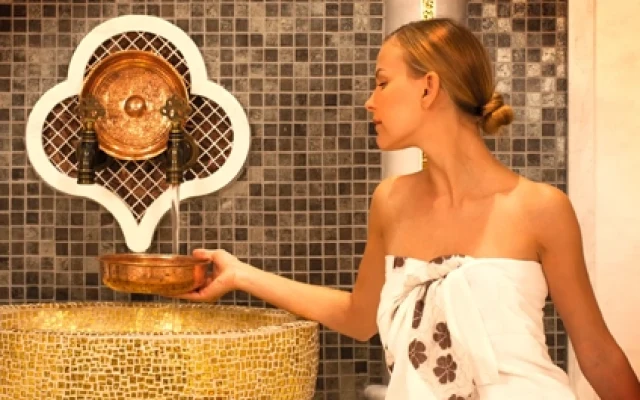
Cappadocia Turkish Bath
Relax with a traditional hammam ritual including steam, scrubbing, and…
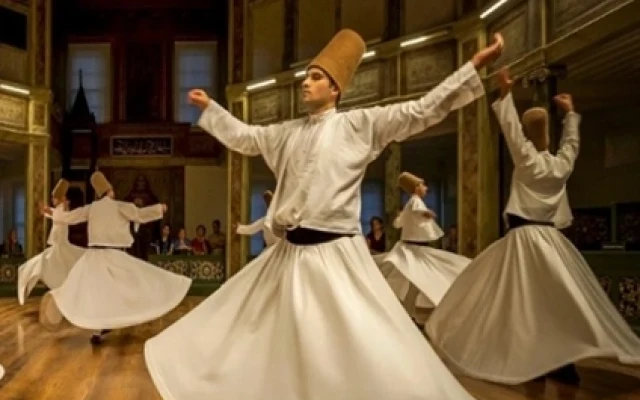
Whirling Dervish Show Cappadocia
Witness the spiritual Sufi ceremony of the Whirling Dervishes in a uni…
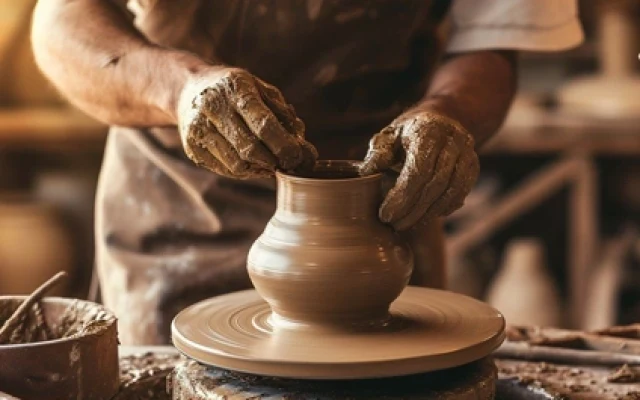
Pottery Workshop Cappadocia
Learn the ancient art of pottery from Avanos masters, try shaping clay…
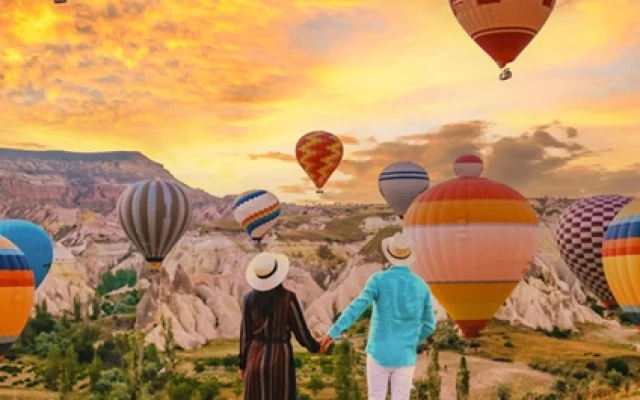 Balloon
Balloon Watching Tour Cappadocia
Watch the magical sight of hundreds of hot air balloons rising at sunr…
Carpet Weaving Experience Cappadocia
Discover the art of Turkish carpet weaving, learn traditional techniqu…
 Adventure
ATV Tour Cappadocia
Ride powerful ATVs through Cappadocia’s unique valleys, fairy chimneys…
 Green Tour
Green Tour Cappadocia
Explore Derinkuyu underground city, the beautiful Ihlara Valley, and S…
The portal should be viewed from a short distance before examining details. The relationship between height, shadow and the plain surrounding wall is part of the design.
Compare the Courtyard and Covered Hall
The open courtyard supported movement and work during suitable weather. The covered hall provided protection during winter and severe conditions.
The transition between these spaces explains how the building responded to seasons rather than functioning as one large room.
Look for Water and Animal Management
Caravan travel depended on animals. Stable organization, feeding areas, ventilation and access to water were essential practical concerns.
The strongest architecture was not only decorative. It helped move animals and goods while separating activities inside a secure enclosure.
Notice Later Repairs
Different stone color, mortar, replaced blocks or reconstructed surfaces may indicate restoration.
A well-preserved appearance does not mean every visible section belongs to the first construction phase.
Main Caravanserais Near Cappadocia
| Monument | Best Route | Typical Visit | Main Interest |
|---|---|---|---|
| Saruhan | Avanos and northern Cappadocia | 30 to 45 minutes | Accessible Seljuk road architecture and event use |
| Ağzıkarahan | Nevşehir to Aksaray road | 30 to 60 minutes | Fortified plan, courtyard and covered section |
| Sultanhanı | Aksaray to Konya route | 60 to 90 minutes | Scale, monumental portal and complete architectural sequence |
These times are planning ranges rather than official visit limits. Access, photography, restoration and current local use can change the duration.
Sultanhanı Caravanserai
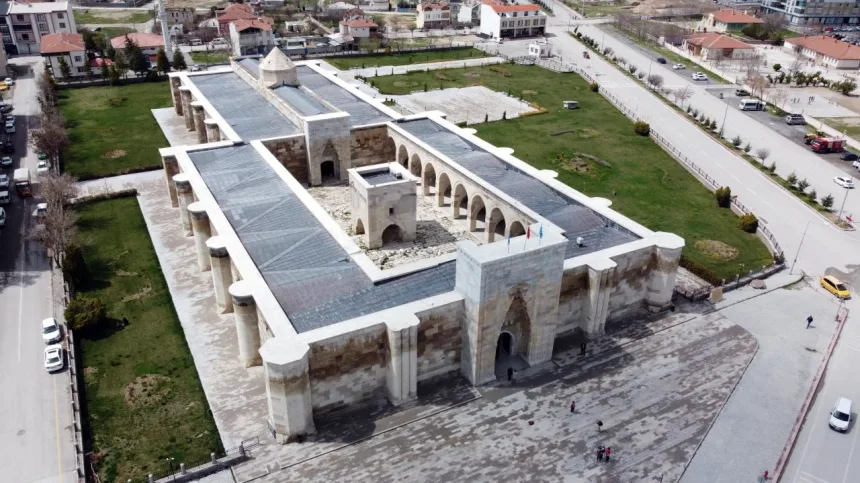
Sultanhanı stands west of Aksaray on the historic route toward Konya.
Built during the reign of Sultan Alaeddin Keykubad I and developed through later work, it is one of Anatolia's largest and best-preserved medieval caravanserais.
The complex includes an enormous decorated portal, an open courtyard, a raised prayer room and a covered winter section.
Its scale makes it the strongest choice for travelers primarily interested in Seljuk road architecture.
Sultanhanı should not be treated as a short addition from central Göreme. It fits more naturally into a transfer day between Cappadocia, Aksaray and Konya or a dedicated western route.
The Monumental Portal
The entrance frames the transition from an exposed road to a protected interior.
Carved geometric bands and the deeply modeled doorway use shadow to increase the sense of depth.
Stand back before photographing details. A close image of one carving does not show how the portal dominates the outer wall.
The Courtyard Mosque
A raised prayer structure occupies a central position within the courtyard.
Its elevation separates worship from the movement of animals and goods below while making the religious space visible throughout the enclosure.
Access to stairs or upper surfaces should follow current barriers. Do not climb areas closed for conservation.
The Covered Winter Hall
The covered section demonstrates how a caravanserai protected people, animals and merchandise during cold weather.
The darker interior, heavy supports and controlled openings create a different architectural experience from the open courtyard.
Allow time for your eyes to adjust before moving or photographing inside.
Ağzıkarahan Caravanserai
Ağzıkarahan is located near the road connecting Aksaray with Nevşehir.
The complex developed in stages during the 13th century and includes both an open courtyard and a covered hall.
Its fortified appearance, stone portal and central organization show how caravanserais combined accommodation, storage, worship and security.
Ağzıkarahan is often quieter than Sultanhanı and can be convenient for travelers driving between western Cappadocia and Aksaray.
The site works best as a planned road stop rather than an uncertain last-minute detour. Confirm the entrance and current access before leaving the main route.
Why the Building Feels Fortified
Thick walls and limited exterior openings protected the interior from weather, theft and uncontrolled access.
This does not make the caravanserai a castle in the normal military sense. Its defensive appearance supported commerce and safe accommodation.
Construction in More Than One Phase
Different sections can reflect separate building campaigns, repairs or later restoration.
Visitors should avoid assuming that every courtyard wall and interior surface was completed at one moment.
A guide or current site information can help distinguish original masonry from later intervention.
Saruhan Caravanserai Near Avanos
Saruhan, also written Sarıhan in some travel guides, stands near Avanos.
Its location makes it one of the most accessible caravanserais from central Cappadocia.
The medieval complex contains a courtyard, service rooms and a covered section for colder weather.
Its warm-colored stone and carved entrance create a strong contrast with the volcanic rock architecture around Göreme.
A normal architectural visit may take approximately 30 to 45 minutes, although access can be restricted when the building is being prepared for a ceremony or event.
Saruhan as a Short Heritage Stop
Saruhan can be combined with Avanos pottery workshops, the Kızılırmak riverside and a selected northern Cappadocia attraction.
Do not add it to an already overloaded day containing long visits to Zelve, Göreme Open-Air Museum and several valleys.
The building deserves enough time to compare its portal, courtyard and covered hall rather than functioning only as a photograph stop.
Name Variations
Saruhan and Sarıhan may refer to the same monument in local tourism material.
When sharing the location with a driver, send the current map pin rather than relying only on spelling.
Saruhan and Whirling Dervish Performances
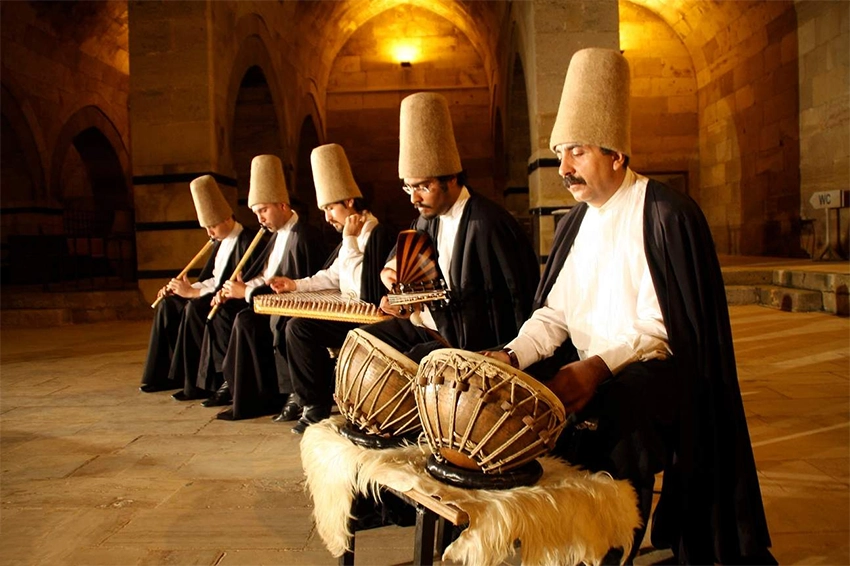
Evening sema performances may be organized at Saruhan or at other historic venues around Cappadocia.
A sema ceremony belongs to a religious and cultural tradition. It should not be approached only as an entertainment dance show.
Visitors should remain quiet, avoid flash photography and follow the rules announced before the ceremony.
The venue, transfer arrangement and performance time can change according to season and organization.
Confirm the exact location when booking a Cappadocia whirling dervish show.
What to Confirm Before Booking
- The exact venue
- Whether hotel transfer is included
- The pickup area and time
- The approximate ceremony duration
- Current photography rules
- Whether children are accepted
- The cancellation and venue-change policy
A ticket advertised with a caravanserai image does not guarantee that the ceremony will take place at Saruhan on every date.
Madrasas and Medical Complexes
Seljuk urban architecture included institutions for education, religion, medicine, charity and public life.
A madrasa was an educational institution, but its role depended on patronage, curriculum, location and connection with other buildings.
Some complexes combined a mosque, madrasa, bath, tomb and charitable services. Others connected medical treatment with formal learning.
Kayseri preserves several important examples and is the strongest city route for visitors interested in this wider institutional landscape.
Related Tours
Popular experiences for this destination
Airport Transfer Service Cappadocia
Travel comfortably and safely between Cappadocia’s airports and your h…
AdventureTrekking Tours Cappadocia
Hike Cappadocia’s spectacular valleys, fairy chimneys, and cave dwelli…
BalloonCappadocia Hot Air Balloon Tour
See Cappadocia from the air at sunrise on a professionally operated ho…
Vip Mix Tour Cappadocia
Experience the ultimate Cappadocia highlights in comfort-historic vall…
Red TourRed Tour Cappadocia
Discover Göreme Open-Air Museum, Avanos pottery workshops, and breatht…
Cappadocia Turkish Bath
Relax with a traditional hammam ritual including steam, scrubbing, and…
Whirling Dervish Show Cappadocia
Witness the spiritual Sufi ceremony of the Whirling Dervishes in a uni…
Pottery Workshop Cappadocia
Learn the ancient art of pottery from Avanos masters, try shaping clay…
BalloonBalloon Watching Tour Cappadocia
Watch the magical sight of hundreds of hot air balloons rising at sunr…
Carpet Weaving Experience Cappadocia
Discover the art of Turkish carpet weaving, learn traditional techniqu…
AdventureATV Tour Cappadocia
Ride powerful ATVs through Cappadocia’s unique valleys, fairy chimneys…
Green TourGreen Tour Cappadocia
Explore Derinkuyu underground city, the beautiful Ihlara Valley, and S…
Gevher Nesibe Complex
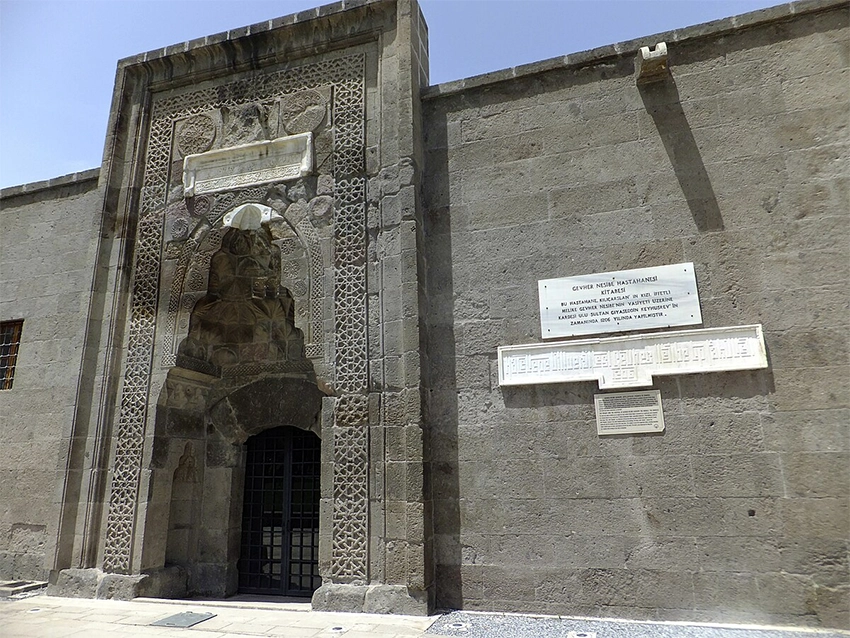
The Gevher Nesibe Complex in Kayseri combines an early 13th-century hospital with an adjoining educational section.
It is among Anatolia's most important surviving Seljuk medical and educational complexes.
Treatment, practical medical knowledge, charitable patronage and scholarly activity were brought together within one architectural setting.
The complex is often called Çifte Medrese, meaning Twin Madrasa, because of its connected sections.
Current museum displays and access arrangements should be checked before traveling.
Hospital and Education Together
The relationship between treatment and learning is central to understanding the monument.
Rooms around courtyards supported different activities rather than one large hospital hall.
The architecture created controlled circulation, light and separation while keeping connected functions within the same complex.
Patronage and Memory
Seljuk complexes often expressed charity, dynastic memory and religious responsibility through architecture.
The monument should therefore be read as both a practical institution and a statement of patronage.
Modern museum interpretation may emphasize medical history, but the original complex belonged to a broader social and religious environment.
Hunat Hatun Complex and Madrasa
Hunat Hatun Madrasa forms part of a larger 13th-century complex in central Kayseri.
The wider group includes a mosque, tomb, bath and madrasa.
The madrasa is arranged around a courtyard with rooms connected to teaching, study and institutional life.
Its monumental portal and stone decoration provide a useful comparison with caravanserai entrances.
The current use of the madrasa may include cultural, craft or commercial activity, so the visitor experience can differ from that of a conventional museum.
Reading the Complete Complex
Do not examine the madrasa as an isolated building when the mosque, tomb and bath remain part of the surrounding urban setting.
The group demonstrates how worship, education, commemoration and public services could be organized through one patronage project.
Modern roads and businesses can make the original relationship between the buildings less obvious. Walk around the complex before focusing on one doorway.
Taşkınpaşa Madrasa and Mosque
Taşkınpaşa, south of Ürgüp, preserves medieval religious and educational remains associated with the wider Seljuk and beylik-period landscape of Cappadocia.
The mosque and madrasa provide a more local alternative for travelers who do not have time for a full Kayseri route.
Access, conservation and the interpretation of surviving architectural elements can change.
Confirm current conditions before traveling specifically for the interior.
The site is best combined with a southern Cappadocia road route rather than a dense central Göreme program.
Caravanserais and Madrasas Compared
| Feature | Caravanserai | Madrasa or Institutional Complex |
|---|---|---|
| Main Setting | Road corridors and trade routes | Urban or town centers |
| Primary Function | Shelter, security, animals, goods and travel | Education, worship, medicine or charitable service |
| Typical Plan | Courtyard, covered hall and service spaces | Courtyard with teaching, treatment or religious rooms |
| Visitor Priority | Portal, seasonal spaces and animal logistics | Institutional layout, patronage and urban context |
Both building types use monumental portals and carefully organized courtyards, but their daily functions were different.
A strong route compares architecture without treating every decorated stone entrance as the same kind of monument.
How to Plan a Seljuk Heritage Route From Göreme
Short Route: Saruhan and Avanos
Saruhan is the easiest short addition from Göreme, Avanos or Ürgüp.
Combine it with Avanos, a pottery workshop and riverside walking.
This route works as a half-day program when travel and workshop time remain controlled.
Western Route: Ağzıkarahan and Sultanhanı
Ağzıkarahan and Sultanhanı fit naturally into a road journey toward Aksaray and Konya.
Visiting both requires more time than a standard central Cappadocia sightseeing day.
The strongest plan uses them during an intercity transfer rather than returning to Göreme immediately afterward.
Kayseri City Route
Gevher Nesibe and Hunat Hatun can be combined with Kayseri Castle, the archaeology museum and other city-center monuments.
Plan according to current museum hours, city traffic and parking.
Kayseri deserves a full day when both medieval and archaeological history are priorities.
Southern Route: Taşkınpaşa
Taşkınpaşa can be combined with Ürgüp, Mustafapaşa or another southern road stop.
Keep the route limited. Adding Saruhan, Kayseri and Aksaray monuments to the same day would create unnecessary driving.
Transport and Driving Considerations
A rental car or private driver is normally required for caravanserais outside town centers.
Download the route before leaving the hotel and save the exact entrance rather than only the nearest town.
When using a taxi, agree on waiting time, pickup point and the complete return journey before entering the monument.
Parking arrangements can change during events, restoration or busy travel periods.
Do not leave passports, bags or valuables visible in a parked vehicle.
Review the guide to getting around Cappadocia before planning a route across Nevşehir, Aksaray and Kayseri.
Accessibility and Family Planning
Accessibility differs considerably between monuments.
Courtyards may appear level but include worn stone, steps, drainage channels and uneven restored surfaces.
Covered halls can be dark, and raised prayer rooms or portal details may require stairs.
Visitors with limited mobility should confirm the closest vehicle access and whether the principal courtyard is currently reachable.
Families should keep children away from walls, stairs, restoration areas and vehicle entrances.
Strollers may work in selected courtyard sections but should not be assumed suitable throughout every complex.
Best Time and Seasonal Conditions
Spring
Mild weather suits open courtyards and regional driving, although rain can make stone surfaces slippery.
Summer
Begin earlier on the Aksaray route. Open courtyards can become hot, while covered halls remain considerably cooler.
Autumn
Cooler temperatures often suit longer architectural visits and intercity driving.
Winter
Covered halls become especially meaningful in cold weather, but snow and ice can affect roads, courtyards and steps.
Check regional road conditions before traveling between provinces during severe weather.
Photography and Conservation
Use side light to reveal portal carving and stone depth.
Do not touch, trace or climb carved surfaces. Repeated contact damages fragile edges and darkens stone.
Keep tripods outside entrance lines and narrow passages.
Ask permission before photographing an active ceremony, commercial event or craft activity inside a historic building.
Flash may be restricted in museums and during sema ceremonies.
Drone use depends on current aviation, heritage and local rules. A large open courtyard should not be treated as automatic permission.
Common Seljuk Heritage Planning Mistakes
- Calling every route the Silk Road: Medieval Anatolia contained several connected commercial roads.
- Combining Aksaray and Kayseri in one sightseeing day: Driving would dominate the itinerary.
- Allowing only ten minutes at Sultanhanı: Its scale requires time inside both courtyard and covered sections.
- Assuming Saruhan always hosts the ceremony: Sema venues can change.
- Treating a caravanserai as a castle: Its defensive form primarily protected commerce and accommodation.
- Ignoring later restoration: Not every visible stone belongs to the original construction phase.
- Expecting every madrasa to operate as a museum: Current cultural or commercial uses can vary.
- Relying on old opening times: Access and event schedules can change.
- Climbing portals or courtyard structures: Historic stonework and stairs require conservation.
Questions Travelers Ask About Seljuk Sites Near Cappadocia
Which caravanserai is closest to Göreme?
Saruhan near Avanos is generally more convenient from Göreme than Sultanhanı or Ağzıkarahan.
Which caravanserai is the most impressive?
Sultanhanı is the strongest choice for scale, portal decoration, courtyard organization and its covered winter hall.
Can Sultanhanı be visited during a Cappadocia trip?
Yes. It is best included while traveling between Cappadocia, Aksaray and Konya or on a dedicated western route.
Does Saruhan host whirling dervish shows?
Performances may be scheduled at Saruhan, but the current venue and time must be confirmed when booking.
What is the Gevher Nesibe Complex?
It is an early 13th-century Seljuk complex in Kayseri combining a hospital with an adjoining educational institution.
What is the Hunat Hatun Complex?
It is a major Kayseri complex containing a mosque, madrasa, tomb and bath.
How long do you need at a caravanserai?
Allow approximately 30 to 60 minutes for most individual caravanserais and 60 to 90 minutes for Sultanhanı.
Do you need a car?
A car, taxi or private driver is normally required for caravanserais outside city centers.
Are caravanserais free to enter?
Entrance conditions vary by monument and current management. Check current information rather than assuming all road monuments use the same policy.
Can children visit?
Yes, with supervision around stairs, uneven stone, dark halls and vehicle entrances.
Is a guide useful?
A guide is helpful for understanding construction phases, patronage, portal decoration and the practical relationship between courtyard and covered spaces.
Can Saruhan and Avanos be combined?
Yes. Their proximity makes them a practical half-day combination when pottery and riverside stops remain focused.
How Seljuk Heritage Fits Into a Cappadocia Trip
Caravanserais and madrasas show that Cappadocia was not isolated from medieval Anatolia.
The region stood within active networks of trade, education, religion, medicine and political power.
Saruhan provides the simplest introduction from central Cappadocia. Sultanhanı and Ağzıkarahan explain the western trade corridor, while Kayseri's complexes reveal the urban institutions supported by Seljuk patronage.
The strongest itinerary follows one corridor rather than collecting monuments across several provinces in one day.
Use the Cappadocia trip planning guide to decide whether Saruhan, Kayseri or the Aksaray route fits naturally into the journey.