Zelve Valley & Open-Air Museum
Zelve Valley and Open-Air Museum Travel Guide
Zelve Open-Air Museum is a former rock-cut settlement spread across three connected valleys in Cappadocia, close to Paşabağ and Avanos. Visitors can see cave homes, early churches, a mosque, pigeon houses, storage rooms, mills, agricultural spaces and distinctive volcanic formations.
Allow approximately 90 minutes for a basic visit. Two to three hours are better for travelers who want to examine the settlement slowly, take photographs and understand how people lived inside the cliffs.
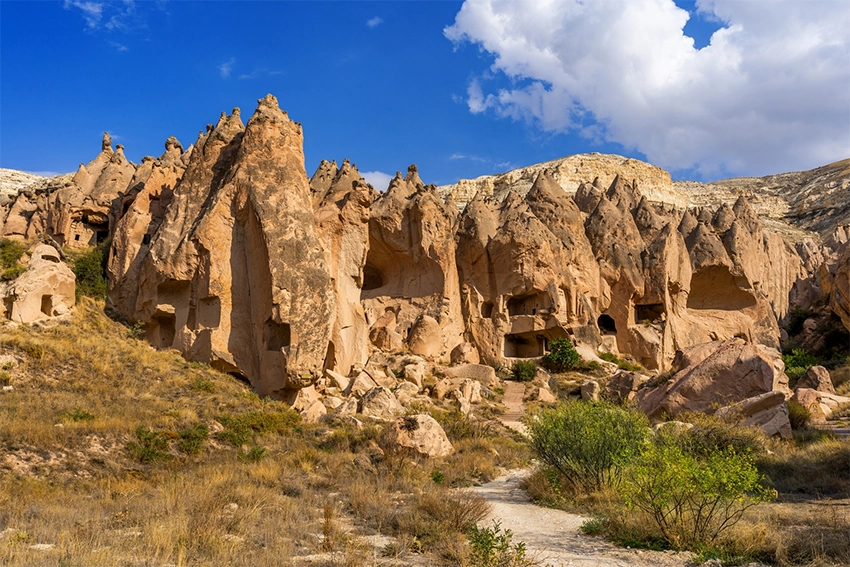
Zelve is one of the best places in Cappadocia to understand how an entire community adapted to a volcanic landscape. It was not only a religious center. Houses, churches, storage rooms, stables, mills, pigeon houses, workshops and agricultural areas formed a working village.
The site is very different from the Göreme Open-Air Museum. Göreme is best known for Byzantine church painting, while Zelve tells a broader story about ordinary life, farming, religion and survival inside the rock.
Zelve is best approached as a settlement walk rather than a checklist of churches. The route makes more sense when homes, storage areas, religious spaces, water systems and agricultural structures are read together.
The visitor circuit can change because of rockfall inspections and conservation work. An old map, travel video or earlier route description may show tunnels or upper paths that are no longer open.
For a balanced first visit, allow enough time to complete the marked valley route without rushing. Visitors who arrive close to final admission may see only the lower section and miss the relationship between the three valleys.
Why Visit Zelve Open-Air Museum?
- Three connected valleys: Zelve covers a wide landscape rather than one compact museum area.
- A complete rock settlement: Homes, storerooms, stables, mills and workshops reveal everyday village life.
- Early Christian monuments: Direkli, Balıklı, Üzümlü and Geyikli churches preserve symbolic decoration and early architectural forms.
- Muslim heritage: The historic mosque shows that Zelve continued as a living village after the Byzantine period.
- Distinctive geology: Pointed formations and irregular towers differ from the capped fairy chimneys of nearby Paşabağ.
- Walking and photography: The visit combines history with an outdoor valley route.
Where Is Zelve?
How to Plan a First Visit to Zelve
Begin by checking the current visitor map at the entrance. Note any closed valleys, tunnel restrictions and the direction of the official circuit before walking into the site.
A basic visit should include the lower domestic areas, selected churches, the mosque, pigeon houses and at least one broad valley viewpoint. Two hours provide a more realistic pace than a quick one-hour stop.
Visit early during hot weather. Much of the route is exposed, and the reflected heat from pale volcanic surfaces can make midday walking uncomfortable.
Carry water and use the restroom near the entrance before beginning. Facilities inside the valley are limited, and returning to the entrance may require repeating part of the route.
Do not build the plan around entering one specific tunnel or church. Safety conditions can change, so the strongest visit focuses on the complete settlement even when an individual interior is closed.
Where Is Zelve?
Zelve is located on the northern side of central Cappadocia, close to Paşabağ Monks Valley and between the wider landscapes of Göreme and Avanos.
The museum lies on the slopes of Aktepe and is normally reached by car, taxi, rental vehicle, private tour or an organized regional tour.
Public transport does not always reach the museum entrance directly. Travelers without a car should confirm both the outward journey and the return connection before leaving their hotel.
Paşabağ is nearby by road, but the two sites have separate entrances, parking areas and walking times. Do not assume that one ticket or one parking stop covers both.
Taxis may not wait automatically during a long visit. Confirm the return arrangement before entering, especially outside peak season or late in the afternoon.
When driving, use the designated parking area and avoid stopping along narrow approach roads. Tour vehicles and local traffic can make roadside parking unsafe.
What Is Zelve Open-Air Museum?
Zelve is a former village carved into three volcanic valleys. Unlike an archaeological site made up of separate monuments, it preserves the remains of a complete settlement.
The carved spaces supported:
- Religious worship
- Domestic housing
- Animal shelter
- Food and agricultural storage
- Grape processing and wine production
- Flour milling
- Pigeon breeding
- Water collection
- Movement between different valley sections
Not every opening was a house or church. Many spaces were used for animals, food storage, workshops, farming and access between different levels.
The present openings do not show the settlement exactly as residents experienced it. Wooden doors, stairs, balconies, partitions, roofs and working equipment have largely disappeared.
Rock collapse also changed the visible arrangement. A room that now appears isolated may once have connected to a terrace, exterior staircase or neighboring space that no longer survives.
A useful way to read Zelve is to look for groups of rooms rather than isolated caves. Domestic life depended on connected spaces with different functions, not one room serving every household need.
History of Zelve
The exact beginning of settlement at Zelve cannot be established from the visible rooms alone. Carved spaces were enlarged, connected and reused many times, making it difficult to assign the entire village to one period.
Zelve became an important Christian settlement and religious center, particularly between the 9th and 13th centuries. Some local traditions also connect the settlement with religious education and the training of clergy.
After Turkish and Muslim communities became established in Cappadocia, Zelve continued as an active village. Christian and Muslim heritage therefore survives within the same landscape.
The mosque, mills, pigeon houses, tunnels and domestic rooms show that Zelve did not become an empty religious complex after the Byzantine period. Families continued living, farming and working here for centuries.
The surviving churches should not be used to date the entire settlement. Carved rooms were reused across long periods, and the same valley could contain spaces created or modified at very different times.
Local traditions about clergy education and monastic use are important, but they should be separated from securely documented construction dates. The visible site does not preserve one complete historical moment.
Zelve's later Muslim history is equally important. The mosque and domestic remains show continuity of village life rather than a simple transition from Christian settlement to abandonment.
Why Was Zelve Abandoned?
Residents continued living in Zelve until the middle of the 20th century. The settlement was eventually evacuated because the cliffs and carved rooms had become increasingly unstable.
The volcanic rock was weakened by:
- Rain and surface runoff
- Freezing and thawing
- Temperature changes
- Natural fractures
- Long-term weathering
- Rockfalls and block movement
- Large numbers of closely positioned carved rooms
By 1952, the inhabited settlement had been evacuated. Many former residents were relocated to a new village known as Yeni Zelve, now associated with the Aktepe area.
The evacuation was not one sudden event affecting every family on the same day. It was part of a longer process in which unsafe areas were identified and residents gradually moved away from the deteriorating rock settlement.
Local stories sometimes connect later excavation methods and human intervention with faster structural damage. Natural erosion and rock instability, however, remain the clearest documented reasons for the evacuation.
The closely spaced carved rooms also reduced the amount of supporting rock in some sections. Fractures, weathering and the geometry of openings can combine to create unstable blocks and roof sections.
Rockfall danger remains relevant today. Barriers and route closures are not optional suggestions, even when a closed room appears intact from outside.
The former residents' relocation should not be treated only as a geological story. Leaving the old village also meant losing homes, familiar paths, agricultural spaces and community landmarks.
Is Zelve a UNESCO World Heritage Site?
Zelve is an important protected archaeological and natural site, but it is not independently listed as a UNESCO World Heritage property.
The official UNESCO property is named Göreme National Park and the Rock Sites of Cappadocia. Zelve is not listed as a separate component.
This does not reduce its importance. Zelve remains one of the most complete rock-cut village landscapes open to visitors in Cappadocia.
UNESCO status and national site management are separate questions. Current tickets, conservation work and visitor rules are determined by the responsible Turkish authorities rather than by a separate Zelve UNESCO designation.
Geology of Zelve Valley
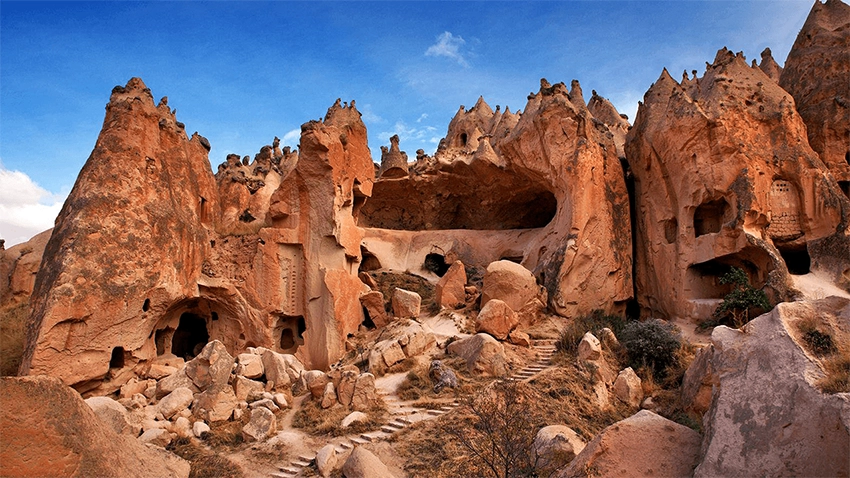
Zelve's cliffs and fairy chimneys developed within volcanic deposits commonly identified as the Zelve Ignimbrite.
Related Tours
Popular experiences for this destination
 Adventure
Trekking Tours Cappadocia
Hike Cappadocia’s spectacular valleys, fairy chimneys, and cave dwelli…
 Red Tour
Red Tour Cappadocia
Discover Göreme Open-Air Museum, Avanos pottery workshops, and breatht…
 Adventure
ATV Tour Cappadocia
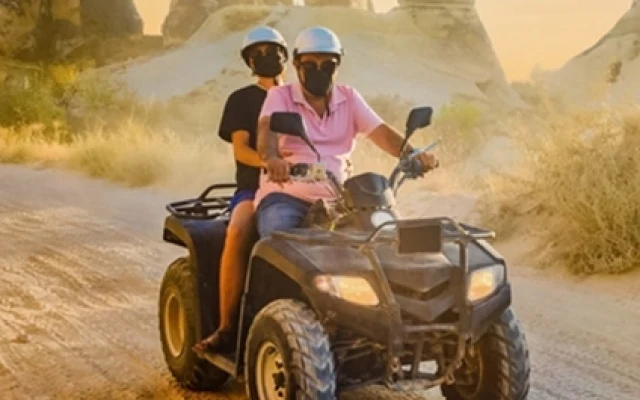
Ride powerful ATVs through Cappadocia’s unique valleys, fairy chimneys…
 Adventure
Horseback Riding Tour Cappadocia
Experience Cappadocia on horseback, riding through valleys, hidden tra…
Pottery Workshop Cappadocia
Learn the ancient art of pottery from Avanos masters, try shaping clay…
Vip Mix Tour Cappadocia
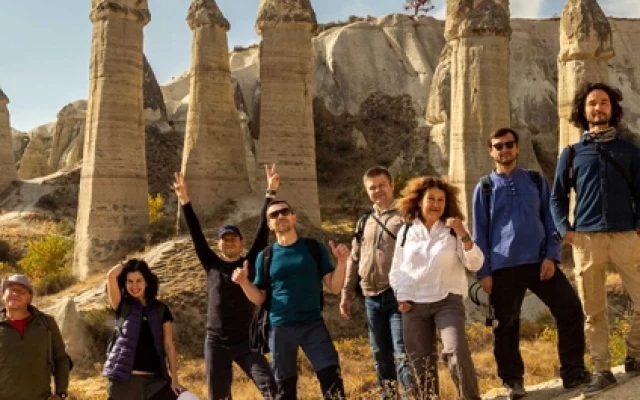
Experience the ultimate Cappadocia highlights in comfort-historic vall…
 Green Tour
Green Tour Cappadocia
Explore Derinkuyu underground city, the beautiful Ihlara Valley, and S…
 Blue Tour
Blue Tour Cappadocia
Explore hidden valleys, ancient churches, and cultural gems on Cappado…
Professional Photo Shoot Cappadocia
Capture your Cappadocia moments with a guided professional photo shoot…

Classic Car Tour Cappadocia
Step into nostalgia with a vintage classic car ride through Cappadocia…

Cappadocia Rent A Car
Explore Cappadocia freely at your own pace with flexible car rental op…

Nostalgic Electric Car Tour Cappadocia
Ride eco-friendly nostalgic electric cars through Cappadocia’s valleys…
Ignimbrite forms when ash, pumice and other volcanic material from explosive eruptions spread across the landscape and later become consolidated rock.
The Zelve rock is relatively vulnerable to water, frost, heating, cooling and gravity. This softness made it possible for people to carve rooms into the cliffs, but it also created long-term structural risks.
The ignimbrite is not uniform. Pumice-rich layers, ash deposits, harder vertical zones and natural fractures weather at different rates, producing irregular walls and towers.
Water enters pores and fractures, then weakens exposed surfaces through repeated wetting, drying and winter freeze-thaw cycles. These processes are especially important near entrances and cliff faces.
The geology explains both Zelve's usefulness and its danger. Easily carved rock supported settlement, but the same material remains vulnerable after centuries of exposure and excavation.
Why Do Zelve's Fairy Chimneys Look Different?
Many formations around Zelve look more irregular than the classic capped fairy chimneys at Paşabağ.
Research into the Zelve Ignimbrite suggests that ancient volcanic gas escape structures created harder vertical zones inside the rock. As the softer material around them eroded, these stronger sections influenced the development of narrow towers, ribs and irregular pillars.
Look closely at the taller formations and exposed cliff walls. Vertical lines that resemble hard seams may belong to these ancient volcanic structures rather than later human carving.
Gas escape pipes formed while hot volcanic deposits were settling and releasing gas. Some became relatively resistant vertical zones, so surrounding softer material eroded faster.
This helps explain why Zelve formations can appear narrow, ribbed or asymmetrical rather than carrying the regular capstones associated with some Paşabağ chimneys.
Do not identify every vertical line as a gas pipe. Fractures, runoff channels and human-cut edges can create similar visual patterns from a distance.
Read the guide to the formation of Cappadocia's fairy chimneys for a fuller explanation of ignimbrite, erosion and volcanic layers.
Churches of Zelve
Zelve's churches are generally simpler than the richly painted monuments of Göreme. Their importance comes from early architectural forms, carved crosses, red-painted lines and symbolic motifs.
Several churches are connected with the Iconoclastic environment of the Byzantine period. However, simple decoration alone cannot provide a definite date because buildings were reused and paintings could be added later.
Church names are often modern Turkish descriptions based on visible motifs. They do not necessarily preserve the original dedication used by the community.
Access to individual churches can change because painted surfaces and carved supports are vulnerable. An exterior view can still reveal the relationship between the church and nearby domestic areas.
Do not use flash, touch pigments or apply water to faded decoration. These actions can damage surfaces that have already survived centuries of moisture and erosion.
Direkli Church
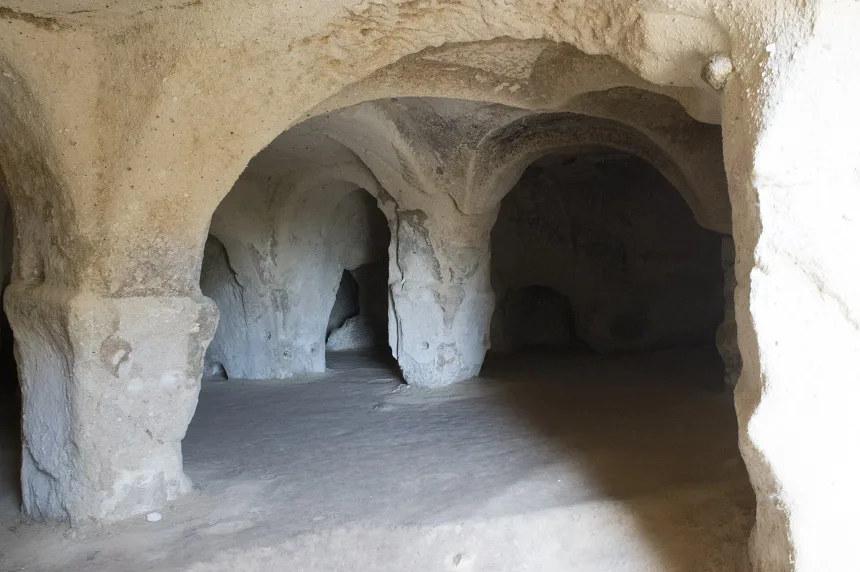
Direkli Church, whose name refers to its carved columns, is associated with an early phase of religious life at Zelve.
Its significance comes mainly from its plan, carved interior divisions and relationship with the surrounding settlement rather than from a large surviving fresco program.
Access may be restricted because of rock stability. View the church only from authorized paths and openings.
The carved columns should be read as structural and spatial features, not only as decoration. They organize the interior and imitate forms used in constructed church architecture.
Balıklı Church
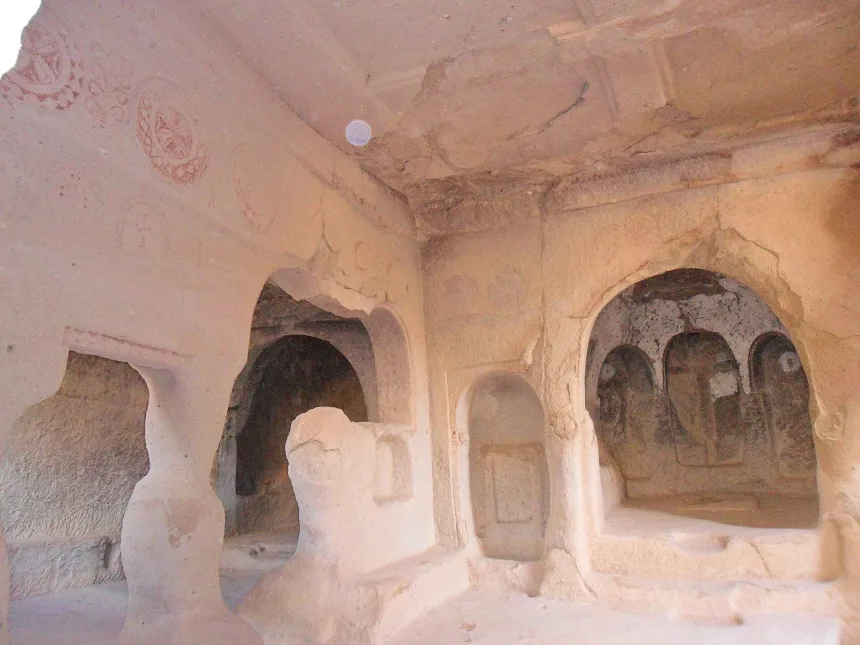
Balıklı Church takes its Turkish name from fish motifs associated with its decoration.
The fish appeared widely in early Christian visual culture and could represent Christ, baptism, faith and salvation.
It is better to understand the motif as part of Christian symbolism rather than automatically describing it as a secret sign used during persecution.
Because only limited decoration survives, avoid reconstructing a complete theological program from one motif. The fish should be interpreted within the remaining architectural and painted context.
Üzümlü Church
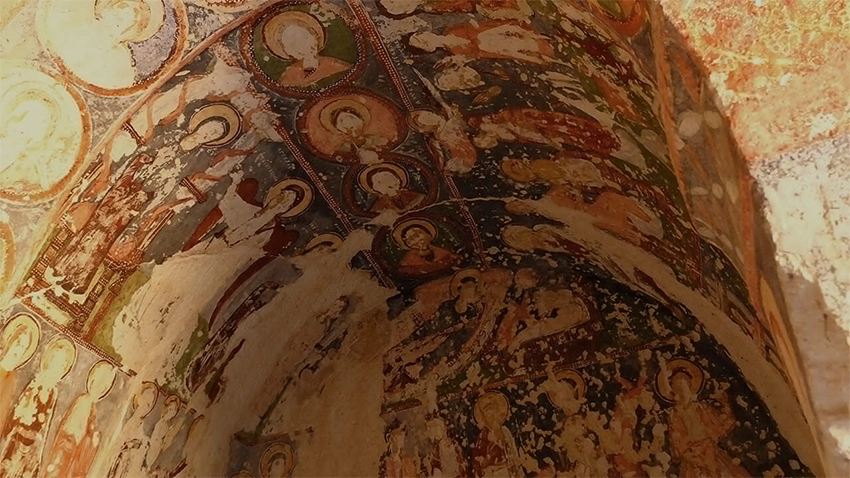
Üzümlü Church is named after its grape and vine decoration.
Grapes were an important part of local agriculture and were processed into wine, juice, dried fruit and molasses. In Christian art, vines and wine were also associated with Christ, the Eucharist and spiritual life.
The decoration therefore connects the religious and agricultural sides of Zelve's history.
The grape motif also reflects the daily landscape around the settlement. Vineyards, crushing basins, storage rooms and church imagery belonged to overlapping economic and religious worlds.
Geyikli Church
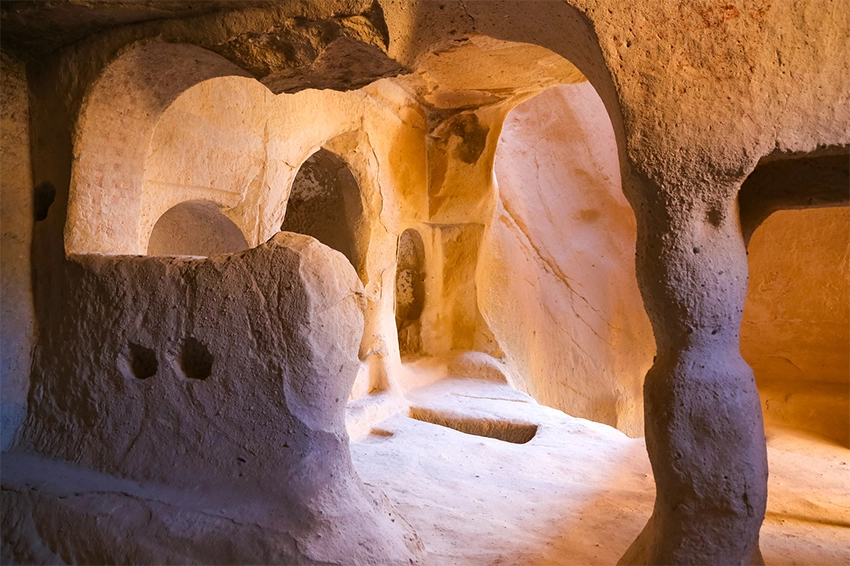
Geyikli Church is named after deer imagery identified in its surviving decoration.
In Christian art, deer can represent spiritual longing, baptismal water, renewal and the believer's search for God.
Only fragments of the original decoration remain. Do not touch painted surfaces, even when they appear faded or damaged.
Names based on animals can make the churches easy to remember, but the surviving motif should not be treated as the only important feature. Plan, location and later reuse are equally relevant.
The Rock-Cut Mosque
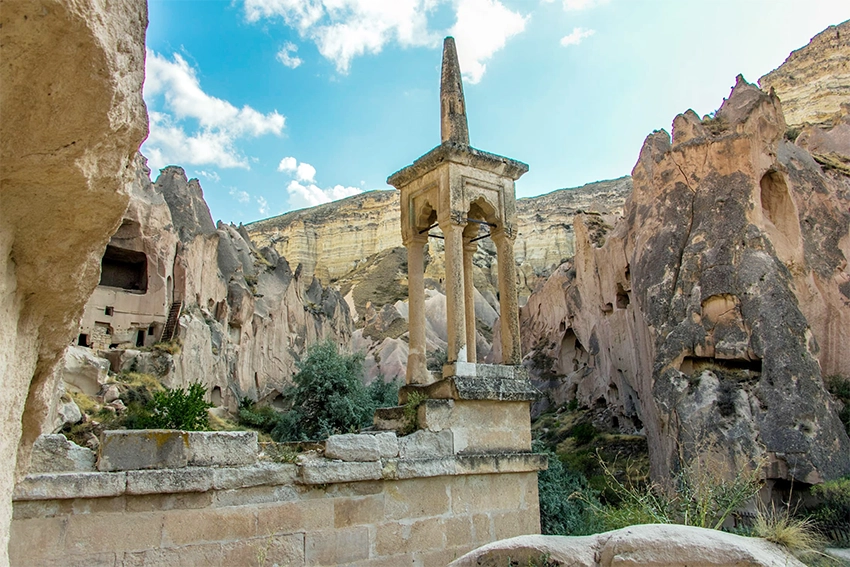
Zelve's mosque is one of the clearest reminders that the valley continued as a Muslim village after the Byzantine period.
The building combines a prayer space adapted to the rock with constructed stone elements. Its small minaret is one of the settlement's most recognizable later additions.
The mosque should not automatically be described as a converted church unless its construction phases are demonstrated clearly.
Its real importance lies in showing how Christian and Muslim communities belonged to different periods of the same living settlement.
The mosque should be viewed together with nearby houses, paths and working spaces. It served residents of an active village rather than visitors to an isolated monument.
Respect barriers and current access instructions. The small minaret and adjoining rock surfaces remain exposed to the same erosion that affects the rest of Zelve.
How People Lived in Zelve
The domestic areas were not simple natural caves. Residents enlarged openings, leveled floors, carved shelves and connected rooms according to everyday needs.
A household complex could include:
- Living and sleeping rooms
- A kitchen or food-preparation area
- Storage chambers
- A stable
- A rock-cut oven
- A grape-crushing basin
- A cellar
- A courtyard or terrace
Some rooms were originally reached by ladders or external steps that no longer survive. Openings that now appear isolated high above the valley floor may once have connected with balconies, wooden structures or sections of rock that later collapsed.
Human detail: When looking at a row of openings, imagine the missing wooden doors, ladders, terraces, animals and stored food. Zelve once sounded and moved like a real village, not an empty archaeological site.
Smoke staining, carved niches, floor basins and tethering holes can help identify former use, but one feature rarely proves a room's complete function. Spaces changed as household needs changed.
Residents did not live permanently in every carved chamber. Some rooms were seasonal, agricultural or used only for storage and animals.
High openings should not be approached by climbing. Missing access systems and collapsed ledges make modern entry far more dangerous than it would have been when the village was occupied.
Grape Processing and Storage
Vineyards were an important part of Cappadocia's economy. Carved basins at Zelve were used to crush grapes, while lower collecting areas received the juice.
The resulting liquid could be consumed fresh or processed into wine and grape molasses. Rock-cut rooms provided relatively stable temperatures for storage.
Crushing basins and channels should be examined without stepping inside them. Repeated foot traffic can wear carved surfaces and introduce dirt into drainage details.
Learn more in the guide to Cappadocia wine tasting and underground cellars.
Pigeon Houses
Zelve contains numerous pigeon houses carved into elevated cliff surfaces.
Pigeons were valuable mainly because their manure could be collected and used as fertilizer in vineyards and fields. Many facades were painted or decorated to attract the birds and help them recognize their entrances.
The pigeon houses were working agricultural structures, not simply decorative holes in the cliffs.
Many pigeon houses are positioned high above the valley floor to protect the birds and provide controlled access for collecting manure. Their elevation also makes them unsafe targets for climbing.
Painted entrance patterns may be difficult to see from below. Use a camera zoom rather than leaving the visitor route.
Mills and Water Systems
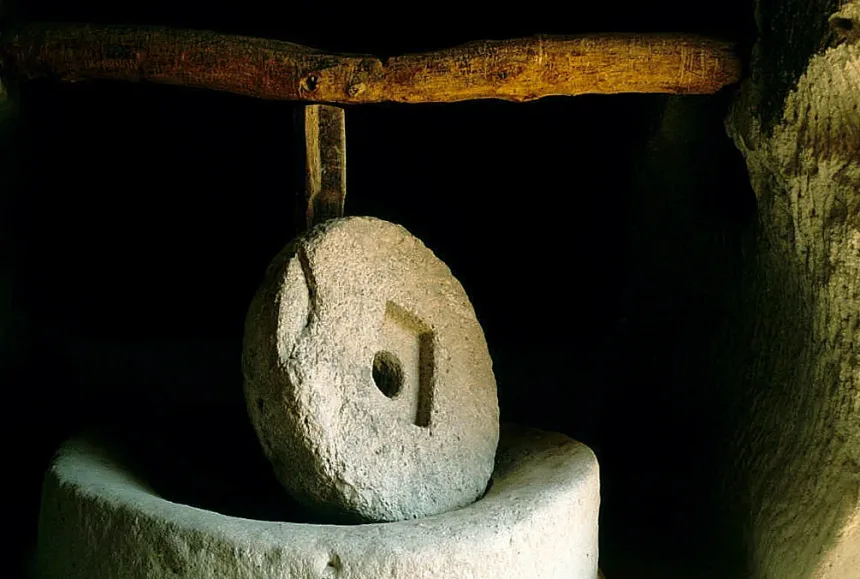
Historic mills and water channels show how residents used seasonal water flowing through the valleys.
The mills supported grain production and flour preparation. Storage rooms, terraces and water channels formed parts of one agricultural system rather than separate monuments.
Some structures are difficult to recognize today because erosion removed wooden machinery, dividing walls and working surfaces.
Water systems depended on seasonal flow and maintenance. Channels visible today may be incomplete, blocked or disconnected from the original mill arrangement.
Interpret the mill, storage rooms and fields as one production network. Grain processing required water control, working space, storage and routes for moving animals and food.
The Zelve Tunnel
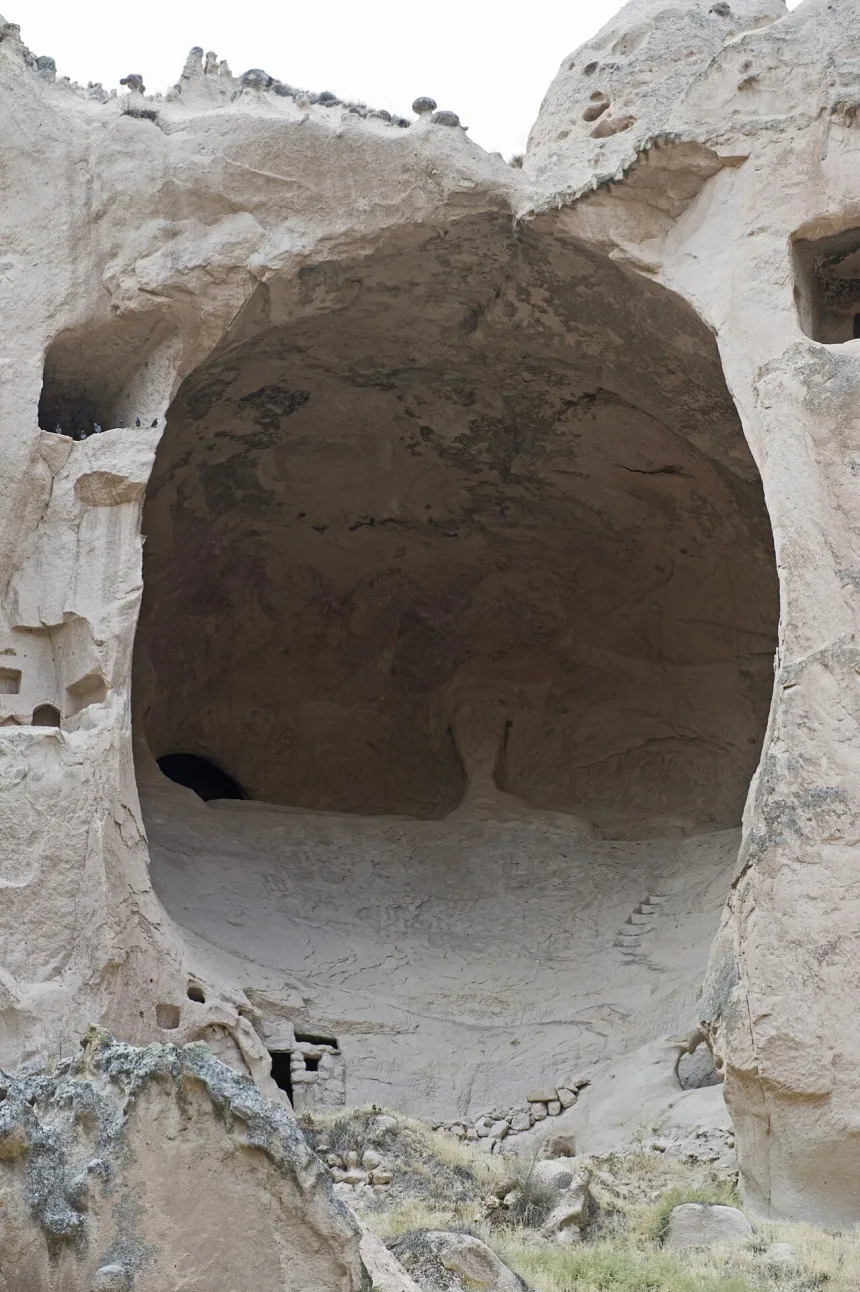
A rock-cut tunnel historically connected different parts of the Zelve settlement. It allowed residents to move between valley sections without following the longer route outside the cliffs.
Related Tours
Popular experiences for this destination
AdventureTrekking Tours Cappadocia
Hike Cappadocia’s spectacular valleys, fairy chimneys, and cave dwelli…
Red TourRed Tour Cappadocia
Discover Göreme Open-Air Museum, Avanos pottery workshops, and breatht…
AdventureATV Tour Cappadocia
Ride powerful ATVs through Cappadocia’s unique valleys, fairy chimneys…
AdventureHorseback Riding Tour Cappadocia
Experience Cappadocia on horseback, riding through valleys, hidden tra…
Pottery Workshop Cappadocia
Learn the ancient art of pottery from Avanos masters, try shaping clay…
Vip Mix Tour Cappadocia
Experience the ultimate Cappadocia highlights in comfort-historic vall…
Green TourGreen Tour Cappadocia
Explore Derinkuyu underground city, the beautiful Ihlara Valley, and S…
Blue TourBlue Tour Cappadocia
Explore hidden valleys, ancient churches, and cultural gems on Cappado…
Professional Photo Shoot Cappadocia
Capture your Cappadocia moments with a guided professional photo shoot…
Classic Car Tour Cappadocia
Step into nostalgia with a vintage classic car ride through Cappadocia…
Cappadocia Rent A Car
Explore Cappadocia freely at your own pace with flexible car rental op…
Nostalgic Electric Car Tour Cappadocia
Ride eco-friendly nostalgic electric cars through Cappadocia’s valleys…
The tunnel is one of Zelve's most intriguing features, but access depends entirely on current safety conditions. Rockfalls, maintenance and structural inspections may lead to partial or complete closure.
Enter only when the route is officially open and included within the marked visitor circuit. Follow staff instructions, use the available handrails and lighting, and watch for low sections.
Do not cross a barrier or enter a dark passage simply because the opening appears accessible. A historic shortcut is not worth entering when the rock has been declared unsafe.
Tunnel access should be treated as a variable part of the visit, not a guaranteed attraction. A closure does not make the museum incomplete because the settlement can still be understood from the open valley circuit.
When open, move slowly and allow space between visitors. Low ceilings, dust, uneven footing and two-way traffic can make narrow passages uncomfortable.
Visitors with claustrophobia, balance concerns or breathing difficulties should use the exterior route rather than feeling pressured to enter.
Walking Route Through Zelve
The museum route passes through three valley sections. Temporary barriers and rock stability work may change the exact circuit.
Follow the current marked route instead of depending on an old map or photograph.
The route may function as a loop, partial loop or out-and-back path depending on current closures. Confirm the exit direction before committing to the farther valley section.
Take short pauses at junctions and look back. Zelve's settlement pattern becomes clearer when the relationship between lower paths and upper carved levels is viewed from several angles.
First Valley Section
The first section introduces the scale of the settlement with domestic openings, carved facades and lower valley paths.
Look for places where built stone walls were added in front of rooms carved directly into the cliff.
These mixed construction techniques show that Zelve was not composed only of natural caves. Residents combined carving, masonry and timber according to the condition of the rock and the needs of each space.
Central Valley Section
The central area contains several religious and communal structures. Churches, pigeon houses and settlement levels can be examined together.
This is a useful place to slow down. Moving too quickly between named churches can make the domestic and agricultural parts of the settlement disappear from the story.
Outer Valley Section
The farther section provides broader views of the eroded landscape and some of Zelve's most dramatic volcanic walls.
Upper routes may close when rockfall risk increases. Never bypass a barrier to complete an old version of the walking circuit.
The outer valley can feel quieter, but quiet does not mean unmanaged or safe for exploration beyond the path. Loose rock and unsupported openings remain serious hazards.
Stop and Listen
Zelve's enclosed valley walls can carry the sound of wind, birds and distant footsteps across the cliffs.
In a quiet part of the route, stop speaking for a moment and listen. Wind moving through empty openings and pigeons calling from high rock faces help reveal the scale and emptiness of the former village.
This simple pause often creates a stronger memory than rushing between every church and viewpoint.
How Long Does It Take to Visit Zelve?
- Basic visit: Approximately 60 to 90 minutes
- Standard visit: Around two hours
- Detailed visit: Two to three hours with photography and historical interpretation
Summer heat, crowded paths and temporary route closures may increase the time needed.
Photography, interpretation panels and waiting at narrow sections can also extend the visit. Do not schedule Paşabağ immediately after Zelve with no time margin.
Visitors joining a group tour should ask how much independent walking time is allowed. A short tour stop may not cover the full museum circuit.
How Difficult Is the Walking Route?
The route does not require technical climbing, but it includes uneven ground, slopes, stone steps and exposed sections.
Visitors may encounter loose volcanic soil, short steep sections, dust, mud after rain and ice during winter.
Wear shoes with reliable grip. Smooth-soled sandals are unsuitable for the complete route.
The route is easier for visitors who are comfortable with irregular outdoor surfaces. Knee or balance concerns may make the descent more tiring than the climb.
After rain or snow, staff may close sections that are normally manageable. Follow the current decision rather than relying on conditions seen earlier in the day.
Accessibility and Family Visiting
Zelve can be enjoyable for families because it feels like an abandoned rock village. Children must remain close to an adult around cliff edges, carved facades and closed passages.
The complete museum route is not wheelchair or pushchair accessible because of uneven ground, steps and natural valley surfaces. Some entrance areas may be easier to view, but access to churches and upper sections is limited.
Visitors with reduced mobility should ask staff which parts of the current route can be reached safely before beginning the visit.
A meaningful partial visit is still possible from lower entrance areas and selected viewpoints. The complete historical experience does not require entering every church or upper passage.
Families using a stroller may find a child carrier more practical, but exposed edges and loose ground still require close supervision.
Best Time to Visit Zelve
Early Morning
Morning usually provides cooler temperatures, fewer groups and softer light. It is the most comfortable period during summer.
Late Afternoon
Late-afternoon light gives the volcanic cliffs warmer cream, orange and pink tones. Allow enough time to finish the route before closing.
Spring and Autumn
Spring and autumn generally offer the most comfortable walking temperatures. Rain may make the paths muddy and slippery.
Summer
Summer can be hot and exposed. Visit early or later in the day because shade is limited inside much of the valley.
Winter
Snow creates dramatic scenery, but ice and strong wind may make parts of the route unsafe. Temporary closures are possible.
Weather can change quickly between the open parking area and the enclosed valley sections. Carry a light layer outside midsummer and check the forecast before a winter visit.
Late arrival is risky because the route takes longer than the distance appears. Enter with enough time to return before the final closing procedure begins.
Photography Tips
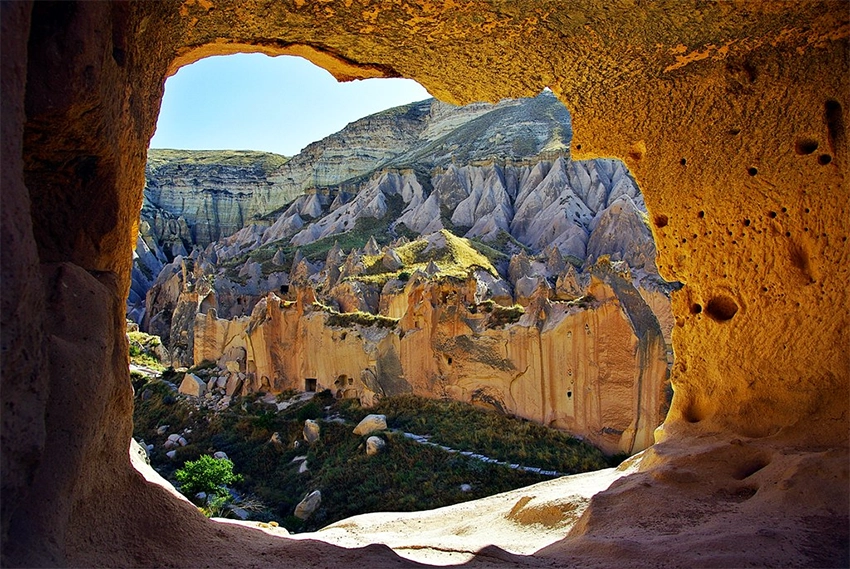
- Use a wide composition: Show the cliffs, openings and valley floor together.
- Include a person for scale: The carved settlement levels can look smaller in photographs than they feel in reality.
- Use side light: Morning and late-afternoon light reveal grooves, fractures and openings.
- Protect painted surfaces: Photograph church details only where permitted and never touch the walls.
- Control bright entrances: Dark interiors and bright valley light create strong contrast.
- Stay on the route: Do not enter unstable rooms to create a more dramatic photograph.
Zelve or Göreme Open-Air Museum?
Tripods should be used only where they do not block narrow paths. Do not step backward toward an edge while framing a cliff facade.
Drone use may be restricted by aviation, heritage and site-management rules. Confirm current permission requirements before launching near the museum.
Dark interiors and bright openings create strong contrast. Adjust exposure from the marked path rather than moving deeper into a closed room for a cleaner image.
Zelve or Göreme Open-Air Museum?
Choose Zelve For
- A complete cave settlement
- Domestic and agricultural history
- Longer outdoor walking
- Christian and Muslim heritage together
Choose Göreme Open-Air Museum For
- Major Byzantine frescoes
- A more compact monastic complex
- Tokalı Church and Dark Church
- A stronger focus on Christian painting
The two museums are complementary rather than interchangeable. Göreme explains Byzantine religious art, while Zelve shows how a complete community lived inside Cappadocia's volcanic landscape.
When time allows, visit Göreme for church painting and Zelve for settlement history. Choosing only one should depend on interest, walking ability and the amount of time available.
Zelve generally requires more outdoor walking and offers fewer richly painted interiors. Göreme is more compact but can feel busier and includes several monuments with separate access arrangements.
Zelve or Paşabağ?
- Choose Paşabağ for: Iconic capped and multi-headed fairy chimneys.
- Choose Zelve for: History, walking and a complete settlement landscape.
- Combine both for: A half-day route exploring geology and human adaptation.
Places to Visit Near Zelve
Combining Zelve and Paşabağ works best when at least half a day is available. Zelve normally needs the larger share of time because it includes a complete walking circuit rather than one concentrated formation area.
Places to Visit Near Zelve
Paşabağ Monks Valley
Paşabağ is located close to Zelve and contains some of Cappadocia's best-known multi-headed fairy chimneys.
Devrent Imagination Valley
Devrent Valley contains naturally eroded formations resembling animals, faces and familiar objects.
Avanos
Avanos offers pottery workshops, ceramic museums, historic stone houses and riverside walking beside the Kızılırmak.
Göreme Open-Air Museum
The Göreme Open-Air Museum contains major Byzantine churches and some of Cappadocia's most important surviving frescoes.
How to Plan the Northern Cappadocia Route
Zelve, Paşabağ, Devrent and Avanos form a logical road circuit, but they should not receive equal time. Zelve and Paşabağ involve the longest walking and interpretation.
Devrent is usually a shorter landscape stop, while Avanos may take from one hour to half a day depending on whether a pottery workshop or museum is included.
A realistic independent day normally includes Zelve in the morning, Paşabağ before or after lunch, then Devrent and Avanos. Reverse the order when heat, crowd levels or photography light make another sequence more practical.
Do not assume that every Red Tour includes enough time for the complete Zelve circuit. Confirm whether the program enters the museum or stops only at a nearby viewpoint.
How to Get to Zelve
From Göreme
Zelve can be reached by taxi, rental car, private driver or organized tour. Travelers using local transport should confirm current connections and return times.
From Avanos
Zelve is a short road journey from Avanos. A taxi or rental car is usually the simplest independent option.
By Rental Car
A rental car makes it easy to combine Zelve with Paşabağ, Devrent and Avanos. Follow current parking signs and avoid stopping on narrow access roads.
By Guided Tour
Zelve, Paşabağ, Avanos and Devrent are commonly connected through the Cappadocia Red Tour.
Not every Red Tour follows the same route. Confirm whether the Zelve entrance ticket, guide service and time inside the museum are included before booking.
Review the guide to getting to and around Cappadocia when comparing tours, taxis and rental vehicles.
Shared tours may use either Zelve or another northern site depending on the operator's route. Ask for the written stop list rather than relying only on the name Red Tour.
For an independent visit, arrange the return taxi before entering or keep a local contact number available. Mobile reception may be less reliable in enclosed valley sections.
Opening Hours and Tickets
Zelve is a ticketed archaeological site. Opening hours, admission prices, museum pass acceptance and final entry times can change according to season and administrative decisions.
Before visiting, confirm:
- The current opening and closing time
- The final admission time
- The current entrance fee
- Whether your museum pass is accepted
- Whether any valley section or tunnel is closed
Temporary closures are possible because of rockfall inspections, restoration, snow, ice or maintenance.
Ticket information found in old blogs can become outdated quickly. Check the official entrance information on the day, especially for final admission and pass validity.
A ticket does not guarantee access to every room, tunnel or upper path. Safety closures can remain in place while the museum itself stays open.
Practical Tips and Responsible Visiting
- Wear shoes with reliable grip and carry drinking water.
- Use the restroom near the entrance before beginning the route.
- Stay on the designated visitor path.
- Do not enter closed caves or tunnels.
- Do not cross rockfall barriers.
- Do not climb church facades or domestic rooms.
- Do not touch surviving painted decoration.
- Keep children close near exposed edges.
- Avoid the route during thunderstorms, ice or severe wind.
- Carry all trash back to the entrance.
- Check the Cappadocia safety and essentials guide before independent valley visits.
Explore Zelve on the Cappadocia Red Tour
Common Zelve Planning Mistakes
- Allowing only a quick photo stop: Zelve requires walking to understand the settlement.
- Following an old route map: Tunnels and upper paths can close because of rock instability.
- Focusing only on churches: Homes, mills, storage rooms and pigeon houses explain the village equally well.
- Comparing Zelve directly with Göreme: The sites answer different historical questions.
- Starting close to closing time: The three valley sections take longer than they appear.
- Wearing smooth sandals: Loose soil, steps and slopes require reliable grip.
- Crossing barriers for photographs: Closed openings may contain unstable roofs and rockfall zones.
- Scheduling Paşabağ immediately afterward: Parking, walking and summer heat require a time margin.
Explore Zelve on the Cappadocia Red Tour
Zelve, Paşabağ, Devrent and Avanos form one of the strongest routes for understanding northern Cappadocia.
The Cappadocia Red Tour allows visitors to compare Zelve's complete rock settlement with Paşabağ's capped fairy chimneys, Devrent's unusual formations and Avanos's living pottery tradition.
Check whether the selected program includes Zelve Open-Air Museum rather than only a nearby panoramic stop.
Also confirm the amount of time inside the museum. A program can list Zelve while allowing only enough time for the entrance section rather than the complete route.
Entrance fees and museum pass arrangements may be included, excluded or handled separately. Request clear information before the tour begins.
Questions Travelers Ask About Zelve
Is Zelve Open-Air Museum worth visiting?
Yes. Zelve is one of Cappadocia's strongest sites for understanding cave housing, early churches, agriculture, Muslim heritage and volcanic geology within one settlement.
How long do you need at Zelve?
Allow around 90 minutes for a basic visit and two to three hours for a slower exploration with photography and historical stops.
Why was Zelve abandoned?
The settlement became unsafe because of erosion, fractures and rockfall risk. Residents were relocated, and the inhabited village had been evacuated by 1952.
Is Zelve a UNESCO World Heritage Site?
No. Zelve is not independently included in the UNESCO World Heritage property, although it remains an important protected archaeological site.
Can visitors enter the Zelve tunnel?
Access depends on current safety conditions. Tunnel sections may be closed because of collapse, maintenance or rock stability risks.
Is Zelve difficult to walk?
The route is moderately demanding because of uneven ground, slopes and stone steps. It does not require technical hiking skills.
Can Zelve and Paşabağ be visited together?
Yes. They are close to each other and form a practical half-day route. Paşabağ focuses on fairy chimneys, while Zelve offers a broader settlement experience.
Is Zelve suitable for children?
Yes, but children must remain close to an adult around slopes, cliff edges, barriers and dark passages. The route is not suitable for unrestricted climbing or cave exploration.
Can Zelve be visited without entering caves?
Yes. Much of the settlement can be understood from the marked exterior route, valley views and lower openings. Closed or uncomfortable interiors can be skipped.
Is Zelve better in the morning or afternoon?
Morning is generally cooler and quieter, while late afternoon provides warmer light. The best choice depends on season, closing time and current route conditions.
Are all three valleys always open?
No. Rockfall inspections, restoration and weather can change the circuit. Check the current map at the entrance.
How Zelve Fits Into a Cappadocia Itinerary
Zelve shows that Cappadocia's carved landscapes were not created only for monks or temporary refuge. They supported complete communities with houses, farms, churches, a mosque, mills, pigeon houses and storage systems.
The site also reveals the limits of human adaptation. The same volcanic rock that made carving possible continued to erode until living inside the old settlement was no longer safe.
Zelve is strongest when visited as both a cultural and geological site. The settlement cannot be understood without the rock, and the rock cannot be understood fully without seeing how residents carved, reinforced and reused it.
A careful visit separates documented history from local tradition, open visitor routes from unsafe abandoned spaces and early Christian monuments from the later Muslim village.
Zelve is most memorable when visitors stop seeing the openings as empty caves and begin imagining the people who cooked, prayed, stored grain, raised animals and moved between the valleys.
Use the Cappadocia trip planning guide to combine Zelve with Paşabağ, Avanos, Devrent and Göreme without rushing the northern route.