Pasabag Monks Valley
Paşabağ Monks Valley Cappadocia Guide
Paşabağ, also known as Monks Valley, is where the capped fairy chimneys of Cappadocia stop looking like distant scenery and become structures you can examine from ground level.
The site is compact, but it contains several of the region's most recognizable single, double and multi-headed formations. It also preserves rock-cut chambers and a small chapel connected with the Christian hermit tradition associated with Saint Simeon.
Most first-time visitors should allow 60 to 90 minutes. This gives enough time to compare the main formations, examine the Saint Simeon area and move beyond the first crowded path without turning the visit into a long hike.
Paşabağ is a managed visitor site, so opening hours, admission arrangements, barriers and accessible chambers can change. Current official signs and staff instructions should take priority over old photographs or route descriptions.
The site is compact but not completely flat or paved. Fine volcanic dust, short slopes and uneven ground become important for families, older visitors and anyone arriving after a full sightseeing day.
How to Plan a First Visit to Paşabağ
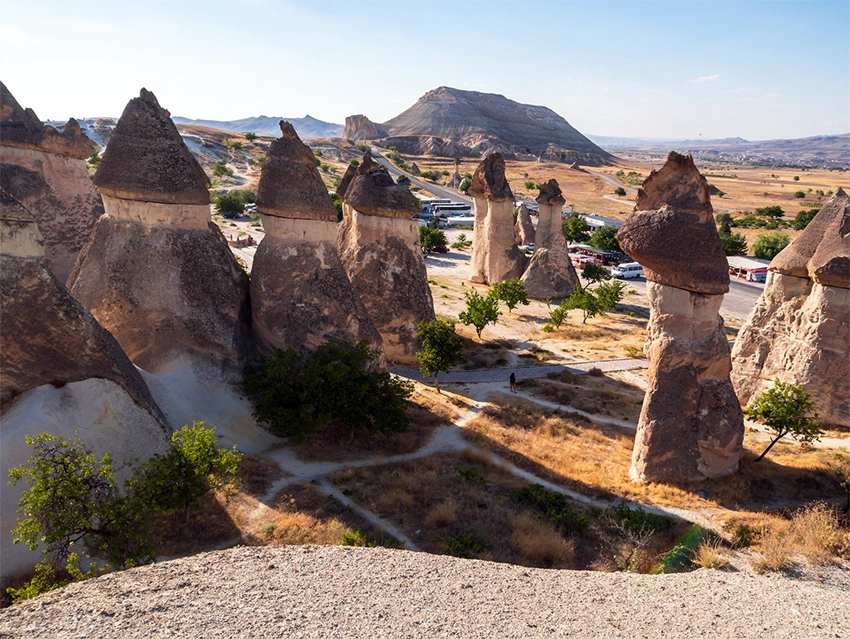
Begin with the broad central formations, then continue toward the multi-headed chimneys and Saint Simeon area. Do not spend the entire visit beside the first large group visible from the entrance.
Allow extra time when Paşabağ and Zelve are covered by a linked ticket or same-day admission arrangement. The two sites are close by road but provide different experiences.
Wear shoes with grip and carry water. The main paths are short, but volcanic dust can become slippery on inclines and uncomfortable during hot, dry weather.
Visit early when quiet photography is important. Later afternoon can also provide useful side light, although current closing and final admission times must be checked before relying on a late visit.
Use barriers as route information. A chamber or path shown as accessible in an older guide may be closed because of erosion, rockfall risk or conservation work.
Many visitors treat Paşabağ as a quick photograph stop between Göreme and Avanos. That is enough to see the largest formations, but not enough to understand why the site matters. Its real value lies in the relationship between geology, rock-cut religious life and the continuing erosion visible across the chimneys.
Why Paşabağ Is One of Cappadocia's Essential Stops
Paşabağ contains some of Cappadocia's clearest examples of capped fairy chimneys. Several formations stand close together, making it possible to compare how their bodies, caps and multiple heads developed.
The most striking formations are not simply tall. Some divide near the upper section and support two or three separate caps above a shared volcanic body.
These multi-headed structures make Paşabağ particularly useful for understanding how fairy chimneys change over time. One formation may retain a broad protective cap, while another nearby chimney may already be losing the harder layer that helped preserve its softer body.
The site is also connected with Christian ascetic life. Small chambers and a chapel were carved into formations that offered isolation above the surrounding valley floor.
This combination makes Paşabağ different from a simple roadside panorama. Visitors can compare geological form, carved architecture and current conservation within a concentrated area.
The single, double and multi-headed chimneys should be viewed as different stages and expressions of erosion rather than separate artificial designs.
Paşabağ is especially useful for visitors who have already seen distant fairy chimneys from a viewpoint. At ground level, the relationship between the cap, body, fractures and carved openings becomes much clearer.
How the Capped Fairy Chimneys Formed
The Paşabağ formations developed because different volcanic layers did not erode at the same speed.
Softer material formed the main bodies, while more resistant rock remained above as protective caps. Rainwater, runoff, frost and gravity gradually removed the surrounding slopes and separated the individual chimneys.
In some formations, erosion divided the upper body into several sections before the complete cap disappeared. This produced the double and triple-headed fairy chimneys now associated with Paşabağ.
The broader Cappadocian landscape developed within volcanic deposits that include different ignimbrite, tuff and sedimentary units. Their hardness, welding, fractures and position on the slope influence the form that remains after erosion.
A cap can consist of more resistant material that slows the loss of the softer body below. It does not stop erosion completely. Water still enters cracks, frost widens weak zones and gravity removes unsupported sections.
The common mushroom description is visually useful but geologically incomplete. Each chimney reflects the interaction of rock type, slope, runoff, fractures and time.
Wind moves loose particles and increases surface wear, but it should not be presented as the only force that created the formations. Water and differential erosion are central to the process.
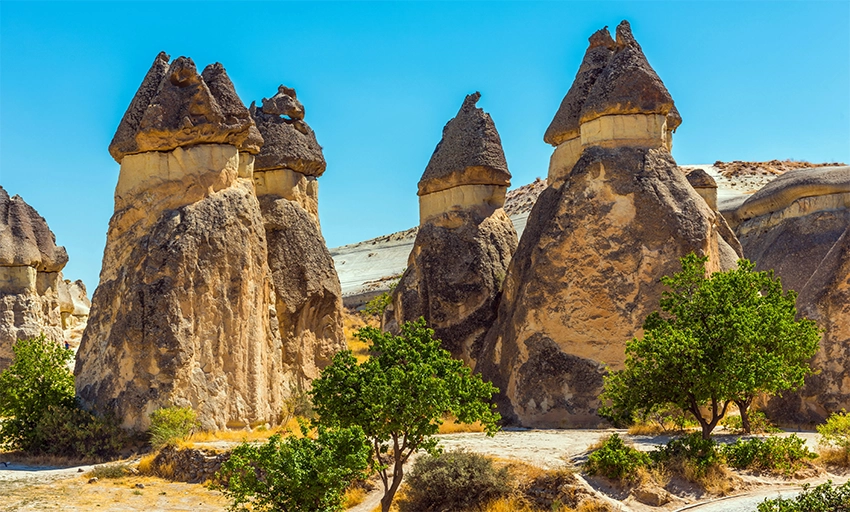
The caps do not protect the formations permanently. Cracks widen, narrow sections weaken and unsupported parts eventually collapse. Paşabağ is therefore not a finished geological monument. It is a landscape still being altered by erosion.
Fresh debris, newly exposed cracks and closed sections can indicate recent change. Do not stand beneath fractured overhangs or cross a barrier to inspect a fallen area.
Related Tours
Popular experiences for this destination
 Adventure
Trekking Tours Cappadocia
Hike Cappadocia’s spectacular valleys, fairy chimneys, and cave dwelli…
 Adventure
ATV Tour Cappadocia
Ride powerful ATVs through Cappadocia’s unique valleys, fairy chimneys…
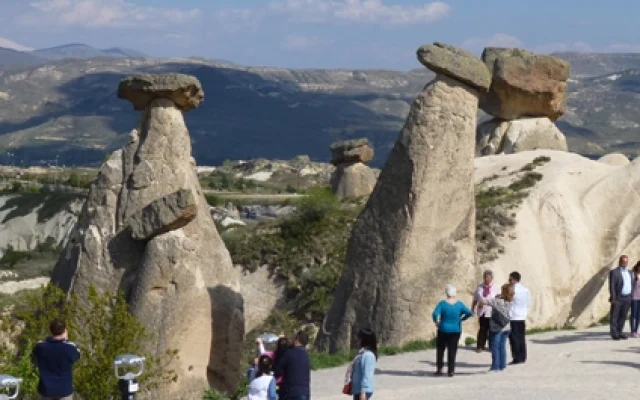 Red Tour
Red Tour Cappadocia
Discover Göreme Open-Air Museum, Avanos pottery workshops, and breatht…
 Adventure
Horseback Riding Tour Cappadocia
Experience Cappadocia on horseback, riding through valleys, hidden tra…

Pottery Workshop Cappadocia
Learn the ancient art of pottery from Avanos masters, try shaping clay…
Vip Mix Tour Cappadocia
Experience the ultimate Cappadocia highlights in comfort-historic vall…
Professional Photo Shoot Cappadocia
Capture your Cappadocia moments with a guided professional photo shoot…

Classic Car Tour Cappadocia
Step into nostalgia with a vintage classic car ride through Cappadocia…
Nostalgic Electric Car Tour Cappadocia
Ride eco-friendly nostalgic electric cars through Cappadocia’s valleys…
 Balloon
Cappadocia Hot Air Balloon Tour
See Cappadocia from the air at sunrise on a professionally operated ho…
 Green Tour
Green Tour Cappadocia
Explore Derinkuyu underground city, the beautiful Ihlara Valley, and S…
Turkish Night Show Cappadocia
Enjoy a traditional Turkish dinner with live music, folk dances, and w…
Human pressure also matters. Climbing, repeated touching and walking directly against the bases accelerate damage to surfaces already weakened naturally.
The geological development of Paşabağ should be understood as ongoing. The formations seen today represent one stage in a much longer cycle of separation, cap loss and collapse.
Read the guide to the formation of Cappadocia's fairy chimneys for a fuller explanation of volcanic deposits and differential erosion.
The Three-Headed Fairy Chimney
The three-headed formation is one of Paşabağ's defining landmarks. A single lower body rises before dividing beneath several resistant caps.
Its shape makes the erosion process easier to understand than a distant panorama does. The protected sections remain standing, while the exposed material between them gradually disappears.
Do not focus only on the caps. Examine the lower body for cracks, carved openings, surface loss and differences in texture. These details show how natural erosion and human use affected the same formation.
The exact walking route around fragile formations may change as barriers are moved for conservation or rockfall safety.
View the formation from more than one side. From one angle the heads appear separate, while another position reveals how they share a lower mass.
Use a moderate zoom for cap and fracture details instead of moving beneath restricted rock. The complete shape is usually easier to understand from a short distance.
Do not describe every multi-headed chimney as the same age or erosion stage. Nearby formations can respond differently because their fractures, caps and exposed surfaces are not identical.
Saint Simeon Chapel and the Hermit Tradition
One of the large fairy chimneys contains a small rock-cut chapel and chambers traditionally associated with Saint Simeon.
The association requires careful explanation. Saint Simeon Stylites became famous for practising an extreme form of Christian asceticism in Syria. He lived apart from ordinary society and spent years on top of a pillar as an act of spiritual discipline.
The Paşabağ chambers reflect the ascetic tradition connected with his example. Their presence does not prove that Saint Simeon personally lived inside this exact Cappadocian formation.
Later monks and hermits could use isolated rock chambers to withdraw from village life, pray and restrict contact with the outside world.
The chapel associated with Hagios Simeon Stylites is carved near the base of a large conical rock mass. Research describes a single-nave plan with a narthex and a horseshoe-shaped apse.
Surviving decoration has included carved and painted cross motifs, while parts of the wall painting have been lost or damaged. The remaining details should be viewed without touching the surface or using flash where photography rules prohibit it.
The dedication connects the monument with the reputation of Saint Simeon Stylites and the wider stylite tradition. It should not be used as proof that the Syrian saint personally occupied this exact chamber.
Rock-cut religious spaces could be altered and reused over time. One visible opening does not reveal the complete original arrangement or every phase of occupation.
Look Above the Main Chamber
Small elevated openings can be seen on parts of the formation. These upper spaces demonstrate how religious isolation could be expressed through architecture as well as daily practice.
Access to upper rooms may be restricted because the carved steps, chambers and surrounding volcanic rock are fragile. A doorway visible above the trail should not be interpreted as an invitation to climb toward it.
Follow the current visitor route and barriers rather than old photographs showing access that may no longer be permitted.
Upper openings may once have been reached by wooden ladders, carved steps or connections that no longer survive. Their present inaccessibility is part of the monument's physical history.
Do not climb toward an elevated chamber for a photograph. The exterior surface is fragile, and a narrow opening may lead to an unsupported or closed interior.
How Long Should You Spend at Paşabağ?
| Visit Style | Approximate Time | Best For | What You Can See |
|---|---|---|---|
| Quick Main Area Visit | 30 to 45 minutes | Visitors with a limited itinerary | The principal capped formations and central walking area |
| Standard Paşabağ Visit | 60 to 90 minutes | Most first-time visitors | Multi-headed chimneys, Saint Simeon area and quieter side paths |
| Slow Geological and Historical Visit | Up to 2 hours | Photography, geology and history interests | Detailed comparison of caps, carved chambers and erosion stages |
These times are practical ranges rather than official visit limits. Crowds, ticket arrangements, photography and temporary route closures can change the duration.
When Paşabağ is part of a shared tour, ask how much free walking time is included. A listed stop can mean anything from a quick central-area visit to a more complete route.
Paşabağ is not a long valley hike. The main experience consists of relatively short paths around a concentrated group of formations.
The most common mistake is spending all available time beside the first chimneys and leaving before exploring the formations farther inside the site.
A useful route moves gradually from the entrance toward the main multi-headed groups, then returns through a different broad section when current paths allow.
Look back while walking away from the ticket area. The formations overlap, and the return direction may appear less obvious after the central crowd disappears behind them.
There is no need to create a shortcut between chimneys. Use the established visitor route and avoid stepping onto loose bases or planted areas.
The Paşabağ Crowd Pattern
Paşabağ is a standard stop on many northern Cappadocia itineraries, including the Cappadocia Red Tour.
This creates noticeable changes in crowd density. The site may feel calm, then become busy within minutes when several tour vehicles arrive together.
Late morning and early afternoon are often active because many operators schedule Paşabağ between other northern attractions. The exact rush period cannot be guaranteed because each company chooses a different stop order.
When Is Paşabağ Usually Quieter?
Early morning normally offers the strongest chance of seeing the main formations before large groups arrive.
Late afternoon may also become calmer after organized tours begin returning toward Göreme and Ürgüp. Low light produces stronger shadows beneath the caps and makes the multi-headed shapes easier to distinguish.
When a group arrives, continue toward another open section instead of waiting beside the most photographed formation. Many group visits are short, and the central area may become quieter again after the vehicles leave.
Early arrival is more effective than searching for an unofficial quiet path. The recognized route already contains several broad areas where visitors can spread out.
Do not stand in a narrow passage with a tripod or photography setup while a group is moving through. Use wider ground and return to the preferred angle later.
Weekends, holidays and clear weather can change the crowd pattern. Quiet periods should be presented as likely rather than guaranteed.
Paşabağ and Zelve Are Separate Sites
Paşabağ and Zelve are close to each other, but they should not be treated as two names for the same attraction.
| Feature | Paşabağ Monks Valley | Zelve Open-Air Museum |
|---|---|---|
| Main Experience | Capped and multi-headed fairy chimneys | A former rock-cut settlement spread across several valleys |
| Historical Focus | Hermit chambers and the Saint Simeon tradition | Homes, churches, a mosque, mills, pigeon houses and village life |
| Walking Effort | Short paths within a compact site | Longer route with steps, slopes and wider exploration |
| Suggested Time | 45 to 90 minutes | 2 to 3 hours |
| Best Choice For | Close views of classic fairy chimney forms | Understanding how people lived inside the volcanic landscape |
Visitors with enough time should see both. Paşabağ explains the geological form, while Zelve demonstrates how similar rock was adapted for settlement, worship and agriculture.
Paşabağ can be visited first when the priority is geology and quiet morning light. Zelve can follow when more walking time and a settlement-focused interpretation are available.
Visitors with limited energy should not assume the two sites require the same effort. Zelve includes longer routes, more elevation change and a wider archaeological landscape.
Do not use the names interchangeably with a driver. Each site has its own entrance, parking and visitor route.
Read the Zelve Open-Air Museum guide before planning the combined visit.
Tickets, Museum Pass and the Zelve Connection
Paşabağ is a managed visitor site. Entrance fees, opening hours, final admission times, Museum Pass conditions and ticket combinations can change.
Do not assume that an old ticket arrangement still applies. Paşabağ and Zelve have at times been presented through linked or combined visiting arrangements, but the current official condition should be checked before arrival.
Before purchasing a ticket, ask whether it includes:
- Paşabağ only
- Zelve Open-Air Museum
- Both sites under one admission
- Any time or same-day entry restriction
When both sites are included, do not leave the area without using the Zelve admission unless the itinerary genuinely lacks enough time.
Museum Pass acceptance should also be confirmed under the current official rules rather than copied from an older travel article.
Check current opening hours and final admission on the day of the visit, especially outside summer. A linked ticket has little value when there is not enough time to enter both sites.
Keep the ticket until the complete visit is finished. Staff may need to check it again at a connected entrance.
Entrance rules are variable information. This guide avoids presenting one price or one ticket combination as permanent.
What the Main Walking Route Is Like
The first section follows relatively open ground between the ticket area and the main chimney groups.
Farther inside, visitors encounter loose volcanic soil, sandy steps and short slopes around the formations. The route is not technically difficult, but it is not a completely paved museum path.
Fine volcanic dust collects on heavily used sections. It can become slippery on inclines and airborne when the ground is dry and crowded.
The initial area may be easier for visitors with limited mobility than the complete route. Reaching every formation and elevated chamber requires negotiating less even terrain.
Related Tours
Popular experiences for this destination
AdventureTrekking Tours Cappadocia
Hike Cappadocia’s spectacular valleys, fairy chimneys, and cave dwelli…
AdventureATV Tour Cappadocia
Ride powerful ATVs through Cappadocia’s unique valleys, fairy chimneys…
Red TourRed Tour Cappadocia
Discover Göreme Open-Air Museum, Avanos pottery workshops, and breatht…
AdventureHorseback Riding Tour Cappadocia
Experience Cappadocia on horseback, riding through valleys, hidden tra…
Pottery Workshop Cappadocia
Learn the ancient art of pottery from Avanos masters, try shaping clay…
Vip Mix Tour Cappadocia
Experience the ultimate Cappadocia highlights in comfort-historic vall…
Professional Photo Shoot Cappadocia
Capture your Cappadocia moments with a guided professional photo shoot…
Classic Car Tour Cappadocia
Step into nostalgia with a vintage classic car ride through Cappadocia…
Nostalgic Electric Car Tour Cappadocia
Ride eco-friendly nostalgic electric cars through Cappadocia’s valleys…
BalloonCappadocia Hot Air Balloon Tour
See Cappadocia from the air at sunrise on a professionally operated ho…
Green TourGreen Tour Cappadocia
Explore Derinkuyu underground city, the beautiful Ihlara Valley, and S…
Turkish Night Show Cappadocia
Enjoy a traditional Turkish dinner with live music, folk dances, and w…
Visitors with reduced mobility can still see major formations from the broad initial area, but the full route should not be described as completely accessible.
Families should keep children close around stairs, chamber openings and crowded paths. Soft rock edges and barriers are not play areas.
Strollers may work only on selected firm sections near the entrance. Fine dust and uneven slopes make the interior route less practical.
After rain or snow, shaded surfaces can remain slippery even when the access road appears clear. Walk slowly and avoid narrow inclines when footing is uncertain.
Can You Enter the Fairy Chimneys?
Only chambers that are clearly included in the current visitor route should be entered.
Some rock-cut spaces may be accessible through official steps or openings. Others remain closed because of erosion, structural weakness or conservation work.
Climbing the exterior of a fairy chimney is different from entering an authorized chamber. Exterior climbing damages the soft surface and places the visitor beneath unstable rock.
Never cross a barrier because an older photograph shows someone standing inside a room that is closed today.
Do not assume that every opening was a monk's cell. Some spaces may have had religious, storage or later practical functions that cannot be identified from one doorway.
Interior air, steps and ceiling stability can vary. Enter only spaces clearly prepared for visitors and leave enough room for others to exit.
Do not touch carved crosses, painted surfaces or fragile walls. Contact damage accumulates even when one touch appears harmless.
The Entrance Market and Visitor Area
The Paşabağ entrance area is more commercial than the walking landscape itself.
Visitors may find souvenir stalls, drinks, snacks and seasonal vendors near the parking and ticket area. This is useful when Paşabağ is part of a longer northern route, but prices and opening periods vary.
The market should not be confused with the historical site. Once visitors move beyond the entrance zone, the experience is dominated by the formations and open volcanic ground.
Anyone seeking local pottery or a wider selection of regional products may prefer to compare the entrance stalls with workshops and shops in Avanos.
Use the entrance area for water and basic needs, but do not depend on every stall, restroom or payment method operating throughout the year.
Keep some Turkish lira available when small vendors do not accept cards. Prices and operating hours belong to individual businesses.
Carry all trash out of the walking area. Wind can move cups and light packaging between the formations.
How to Reach Paşabağ From Göreme
Paşabağ lies near Çavuşin and the road network connecting Göreme, Avanos, Zelve and Devrent Valley.
By Taxi, Rental Car or Private Driver
Independent visitors can reach the site by taxi, rental car or private vehicle.
Use the exact Paşabağ Monks Valley entrance point. Nearby Zelve has a separate visitor entrance, and asking only for Zelve or Paşabağ may create confusion.
Parking arrangements and separate vehicle charges may change. Follow the current signs rather than stopping on the access road.
Save the correct entrance pin before leaving Göreme. Searching only for Monks Valley can produce nearby but less useful map results.
When using a taxi, agree on waiting time or return pickup before entering. Finding an available vehicle at the exit should not be assumed.
A rental car is practical for combining Paşabağ with Zelve and Devrent, but the driver should allow for crowded parking during group-tour periods.
By Public Transport
Local vehicles traveling between Göreme, Avanos and nearby settlements may pass through the wider road network, but a direct stop at the ticket entrance should not be assumed.
Confirm the drop-off point, walking distance and return connection before relying on public transport.
Walking along the regional road from an uncertain minibus stop is not a good general plan. Traffic, road shoulders and the return connection may be unsuitable.
Use the guide to getting to and around Cappadocia when comparing a rental car, taxi and tour.
By Red Tour
Paşabağ is commonly included in the Cappadocia Red Tour, together with other northern Cappadocia attractions.
Programs differ between operators. One tour may combine Paşabağ with Zelve and Devrent, while another may prioritize Göreme Open-Air Museum, Avanos or a pottery workshop.
Confirm the exact itinerary, entrance inclusions and time allowed at each stop before booking.
Also ask whether the tour visits Paşabağ and Zelve separately or treats the area as one combined stop. The practical difference affects both walking time and historical interpretation.
Paşabağ, Devrent and Zelve in One Route
These three attractions are often combined because each answers a different question about Cappadocia.
- Paşabağ: What does the classic capped fairy chimney look like at close range?
- Devrent: How can natural erosion create rocks that resemble animals and human figures?
- Zelve: How did people transform volcanic cliffs into homes, churches, agricultural rooms and a village?
Devrent Imagination Valley is the shortest stop and focuses on naturally sculpted forms such as Camel Rock.
Zelve Open-Air Museum requires the most time because it contains a complete settlement landscape.
Paşabağ sits between these experiences, combining an exceptional geological display with a smaller but meaningful rock-cut religious story.
A balanced route normally gives Paşabağ at least one hour, Devrent 30 to 60 minutes and Zelve two or more hours. Exact timing should follow current opening hours and the group's walking pace.
Do not add every northern attraction only because they are close on the map. Avanos, lunch, pottery demonstrations and Göreme Open-Air Museum can make the day rushed.
Avanos After Paşabağ
Avanos is a practical next stop for lunch, pottery workshops and a walk beside the Kızılırmak River.
The contrast is useful. Paşabağ shows how volcanic rock shaped the landscape, while Avanos shows how local crafts developed around river clay and settled town life.
Avanos is also practical for lunch and facilities after the exposed walking areas around Paşabağ and Zelve.
Allow enough time for a genuine pottery demonstration when craft production is an interest. A rushed shop stop should not replace the Paşabağ visit.
Explore Paşabağ on a Cappadocia Red Tour
Paşabağ is easy to reach independently, but a well-planned northern route reduces repeated driving between Paşabağ, Zelve, Devrent and Avanos.
A Cappadocia Red Tour can combine the principal northern attractions with transport and historical interpretation.
Before booking, confirm:
- Whether Paşabağ is included
- Whether Zelve or Göreme Open-Air Museum is visited
- How long the group remains at Paşabağ
- Which entrance tickets are included
- Whether lunch and pottery demonstrations are part of the itinerary
A short tour stop is enough to see the main chimneys. Travelers interested in the Saint Simeon chambers, erosion details and quieter parts of the site should choose an itinerary that allows at least one hour.
A private route provides more control over the Paşabağ and Zelve balance, while a shared Red Tour is practical for transport and a structured northern itinerary.
Check whether lunch, museum admissions and pottery stops are included rather than assuming every Red Tour uses the same package.
Best Time and Seasonal Conditions
Spring
Cool weather can suit a slower visit, but rain may turn fine volcanic soil into slippery mud. Check the walking surface rather than relying only on the road condition.
Summer
Visit early, carry water and use sun protection. Shade is limited across much of the main formation area.
Autumn
Cooler temperatures and lower side light often make the caps and fractures easier to photograph. Later-season closing times may be earlier.
Winter
Snow creates strong contrast around the chimneys, but ice can remain on shaded steps and compacted visitor paths.
Photography Without Damaging the Formations
Use people on established ground for scale instead of placing them against a chimney. A moderate zoom reveals cap texture and carved openings without approaching restricted surfaces.
Move sideways to separate overlapping heads and caps. Perspective often matters more than moving closer.
Keep tripods, long dresses and bags outside narrow visitor lines. The site becomes difficult to move through when photography equipment blocks short passages.
Do not climb a formation to remove other visitors from the frame. Waiting for a group to move is safer and more respectful.
Drone use depends on current aviation, heritage and local restrictions. A managed open-air site should not be treated as automatic permission.
Accessibility and Family Planning
Paşabağ is easier than a long valley hike, but the complete site is not consistently level, paved or barrier protected.
Visitors with limited mobility can focus on the entrance-side formations and broad central area. Confirm current vehicle drop-off and route conditions before arrival.
Older visitors should allow time for dusty descents. Walking downhill on fine volcanic material may be harder than the short climb.
Families can visit comfortably when children remain close to an adult around chambers, steps and conservation barriers.
Common Paşabağ Planning Mistakes
- Allowing only ten minutes: The first formations do not explain the complete site.
- Confusing Paşabağ with Zelve: They have separate entrances and different visitor routes.
- Assuming one permanent ticket arrangement: Combined admission and Museum Pass rules can change.
- Climbing the exterior: Soft volcanic surfaces are fragile and unstable.
- Calling every chamber a monk's cell: Visible openings can reflect different uses and periods.
- Ignoring the Saint Simeon distinction: The local dedication does not prove that the Syrian saint lived here.
- Visiting only at the busiest tour hour: Early morning often provides a calmer route.
- Expecting a fully paved site: Dust, steps and short slopes remain part of the visit.
Questions Travelers Ask About Paşabağ
How long should you spend at Paşabağ?
Most first-time visitors should allow 60 to 90 minutes. A quick visit can be completed in 30 to 45 minutes, while photography and geological study can take longer.
Is Paşabağ the same as Zelve?
No. Paşabağ focuses on capped fairy chimneys and the Saint Simeon tradition, while Zelve Open-Air Museum preserves a wider settlement landscape.
Can you enter the fairy chimneys?
Only enter chambers clearly included in the current visitor route. Closed spaces and exterior formations should not be climbed.
Is Paşabağ suitable for children?
Yes, with close supervision around steps, chamber openings, crowds and conservation barriers.
Is Paşabağ accessible?
The initial area is easier than the full route, but uneven ground and volcanic dust mean the site is not completely accessible.
Is Paşabağ included in the Red Tour?
It is commonly included, but itineraries vary. Confirm the actual stop time, ticket inclusions and whether Zelve is also visited.
Are there toilets and refreshments?
Facilities and vendors may operate near the entrance, but hours and payment methods can vary by season.
Can you see balloons from Paşabağ?
Balloons may appear in the wider sky on some mornings, but Paşabağ is not a reliable primary balloon viewpoint. Use the Cappadocia hot-air balloon guide when choosing a sunrise location.
How Paşabağ Fits Into a Cappadocia Itinerary
Paşabağ is often reduced to one image of three mushroom-shaped rocks. That image is famous because it captures the classic Cappadocian silhouette, but it does not explain the whole site.
Walking between the formations reveals different stages of erosion. Some chimneys still carry broad caps. Others divide into several heads, contain carved chambers or show fractures that may eventually change their shape.
The Saint Simeon tradition adds a human layer to the geology. The same formations admired today as natural sculptures were once understood as places where religious withdrawal and physical isolation could become part of spiritual life.
Paşabağ works best when it is not treated as a race between the ticket gate and the tour bus. Give the formations enough time to become more than a backdrop, then continue to Zelve to see how people built an entire settlement within the same volcanic world.
For most first-time visitors, Paşabağ belongs in a northern route with Zelve, Devrent and Avanos. Each stop should retain a different purpose rather than becoming another quick fairy-chimney photograph.
The strongest visit compares caps, bodies, fractures and carved chambers while respecting current barriers. Geology and religious history remain connected because the same rock provided both the natural formation and the space adapted by people.
Paşabağ is compact enough for a focused visit but detailed enough to reward slower observation. One hour of careful walking usually provides more value than a rushed sequence of photographs.